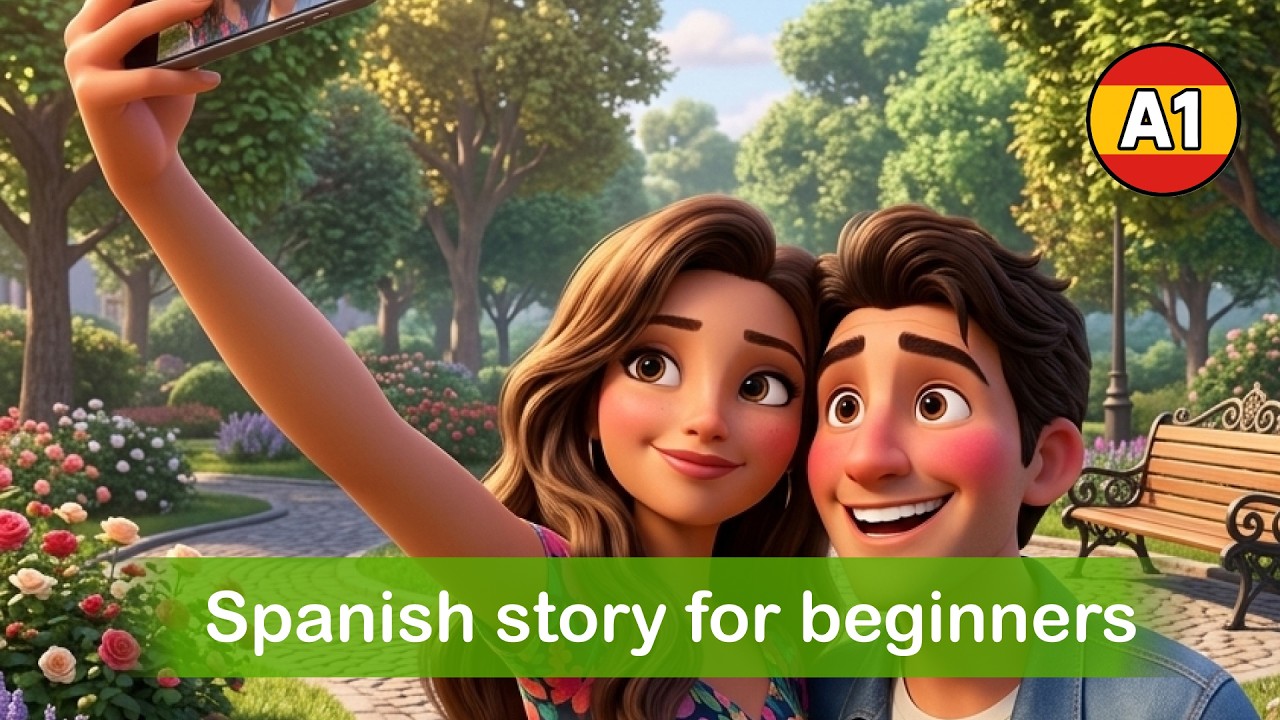
Talking About Photography in Spanish: Taking a Selfie Dialogue 📸
Learn essential Spanish vocabulary for taking photos and describing physical traits in this fun beginner dialogue about capturing the perfect selfie.
- Video 53 of 64 in this unit
- Beginner · A1 — First words, greetings, and basic phrases
- Immersion — for mastery, on the Immersion path only


Holding my phone up against the park trees after our bookstore stroll, I counted down so Maria, my partner, and I could take a quick photo together. She laughed at the screen when she saw her closed eyes, joking that you can always trust me, Diego, to capture the silliest faces. In this lesson, you will describe physical traits and personality using the verb ser (to be) with adjectives like alto (tall) and simpático (friendly).
💬 Video Transcript
Diego: ¡Hola, Maria! El parque es muy bonito hoy.
(Diego: Hello, Maria! The park is very beautiful today.)
Maria: ¡Hola, Diego! Sí, es muy bonito. El sol es amarillo y el cielo es azul.
(Maria: Hello, Diego! Yes, it is very beautiful. The sun is yellow and the sky is blue.)
Diego: Y las flores son rojas. ¡Me gusta mucho!
(Diego: And the flowers are red. I like it a lot!)
Maria: A mí también me gusta mucho el parque.
(Maria: I also like the park a lot.)
Diego: Maria, quiero una foto.
(Diego: Maria, I want a photo.)
Maria: ¿Una foto? ¿Una foto de las flores?
(Maria: A photo? A photo of the flowers?)
Diego: No. Una foto de nosotros. Una foto de tú y yo.
(Diego: No. A photo of us. A photo of you and me.)
Maria: ¡Ah, qué buena idea, Diego! Una foto de nosotros.
(Maria: Ah, what a good idea, Diego! A photo of us.)
Diego: Sí. Con mi teléfono. Mira mi teléfono.
(Diego: Yes. With my phone. Look at my phone.)
Maria: Tu teléfono es muy moderno. ¡Me gusta!
(Maria: Your phone is very modern. I like it!)
Diego: Gracias. Vale, vamos a hacer la foto. Ponte aquí, a mi lado.
(Diego: Thank you. Okay, let’s take the photo. Stand here, next to me.)
Maria: Muy bien. Estoy a tu lado.
(Maria: Very well. I am next to you.)
Diego: Perfecto. Ahora, mira el teléfono. Y sonríe.
(Diego: Perfect. Now, look at the phone. And smile.)
Maria: ¡Sonrío!
(Maria: I am smiling!)
Diego: Uno, dos, tres… ¡Click!
(Diego: One, two, three… Click!)
Maria: ¿Ya está? ¿Tenemos la foto?
(Maria: Is it done? Do we have the photo?)
Diego: Sí. Mira la foto en el teléfono.
(Diego: Yes. Look at the photo on the phone.)
Maria: A ver… ¡Oh, no, Diego!
(Maria: Let’s see… Oh, no, Diego!)
Diego: ¿Qué pasa? ¿No te gusta la foto?
(Diego: What’s wrong? Don’t you like the photo?)
Maria: No. Mis ojos están cerrados en la foto.
(Maria: No. My eyes are closed in the photo.)
Diego: Oh, es verdad. Tus ojos están cerrados. La foto no es buena.
(Diego: Oh, it’s true. Your eyes are closed. The photo is not good.)
Maria: No, no es una buena foto.
(Maria: No, it is not a good photo.)
Diego: Vale. Hacemos otra foto. No hay problema.
(Diego: Okay. Let’s take another photo. No problem.)
Maria: Vale, Diego. Otra foto.
(Maria: Okay, Diego. Another photo.)
Diego: Prepárate. Mira el teléfono. Tus ojos abiertos, por favor.
(Diego: Get ready. Look at the phone. Your eyes open, please.)
Maria: Miro el teléfono. Mis ojos están muy abiertos.
(Maria: I look at the phone. My eyes are very wide open.)
Diego: Y… ¡sonríe! Una sonrisa grande.
(Diego: And… smile! A big smile.)
Maria: ¡Sí!
(Maria: Yes!)
Diego: Uno, dos, tres… ¡Click!
(Diego: One, two, three… Click!)
Maria: ¿Y ahora? ¿La foto es buena ahora?
(Maria: And now? Is the photo good now?)
Diego: No sé. Vamos a ver. Mira.
(Diego: I don’t know. Let’s see. Look.)
Maria: ¡Oh, no! ¡Esta foto es muy mala!
(Maria: Oh, no! This photo is very bad!)
Diego: ¿Por qué? Tus ojos están abiertos.
(Diego: Why? Your eyes are open.)
Maria: Sí, pero la foto está borrosa. No se ve bien.
(Maria: Yes, but the photo is blurry. It doesn’t look good.)
Diego: Es verdad. Está muy borrosa. No es una buena foto.
(Diego: It’s true. It’s very blurry. It’s not a good photo.)
Maria: No, es una foto muy, muy mala.
(Maria: No, it is a very, very bad photo.)
Diego: ¡Qué difícil es hacer una foto! Hacemos otra. La tercera es la buena.
(Diego: How difficult it is to take a photo! Let’s take another one. Third time’s the charm.)
Maria: Vale, Diego. La tercera foto. ¡La última!
(Maria: Okay, Diego. The third photo. The last one!)
Diego: A ver… mi brazo… ¡Uf!
(Diego: Let’s see… my arm… Oof!)
Maria: ¿Qué pasa ahora, Diego?
(Maria: What’s happening now, Diego?)
Diego: Mi brazo es muy corto. La foto está muy cerca.
(Diego: My arm is very short. The photo is very close.)
Maria: ¿Tu brazo es corto?
(Maria: Your arm is short?)
Diego: Sí, mira la foto. ¡Solo se ve mi nariz!
(Diego: Yes, look at the photo. You can only see my nose!)
Maria: Jajaja, ¡es verdad! Tu nariz es muy grande en la foto.
(Maria: Hahaha, it’s true! Your nose is very big in the photo.)
Diego: ¡No es gracioso! No podemos hacer una buena foto. Mi brazo es corto.
(Diego: It’s not funny! We can’t take a good photo. My arm is short.)
Maria: Diego, tengo una idea.
(Maria: Diego, I have an idea.)
Diego: ¿Qué idea?
(Diego: What idea?)
Maria: Mi brazo es más largo que tu brazo.
(Maria: My arm is longer than your arm.)
Diego: ¿Tu brazo es más largo?
(Diego: Your arm is longer?)
Maria: Sí. Yo puedo hacer la foto. Dame el teléfono, por favor.
(Maria: Yes. I can take the photo. Give me the phone, please.)
Diego: ¿Tú haces la foto? Es una buena idea. Toma mi teléfono.
(Diego: You take the photo? It’s a good idea. Take my phone.)
Maria: Gracias. Vale. Ahora, ponte a mi lado.
(Maria: Thank you. Okay. Now, stand by my side.)
Diego: Estoy a tu lado, Maria.
(Diego: I am by your side, Maria.)
Maria: Muy bien. Ahora, mira el teléfono y sonríe mucho.
(Maria: Very good. Now, look at the phone and smile a lot.)
Diego: ¡Sonrío mucho!
(Diego: I am smiling a lot!)
Maria: Preparados… Uno, dos, tres… ¡Click!
(Maria: Ready… One, two, three… Click!)
Diego: ¿Qué tal? ¿Es una buena foto? ¡Quiero ver!
(Diego: How is it? Is it a good photo? I want to see!)
Maria: Espera… mira. ¿Te gusta?
(Maria: Wait… look. Do you like it?)
Diego: ¡Wow! ¡Maria, esta foto es perfecta!
(Diego: Wow! Maria, this photo is perfect!)
Maria: ¡Sí! ¡Es muy bonita!
(Maria: Yes! It’s very beautiful!)
Diego: ¡Me encanta! Se ven las flores, el cielo… ¡y nosotros! Nuestros ojos están abiertos.
(Diego: I love it! You can see the flowers, the sky… and us! Our eyes are open.)
Maria: Y no está borrosa.
(Maria: And it’s not blurry.)
Diego: ¡Es la mejor foto! ¡Gracias, Maria! Eres una fotógrafa excelente.
(Diego: It’s the best photo! Thank you, Maria! You are an excellent photographer.)
Maria: De nada, Diego. Ha sido fácil.
(Maria: You’re welcome, Diego. It was easy.)
Diego: Estoy muy feliz con nuestra foto.
(Diego: I am very happy with our photo.)
Maria: Yo también. Es un bonito recuerdo.
(Maria: Me too. It is a beautiful memory.)

📝 Essential Vocabulary
| Target Language | English Translation | Listen |
|---|---|---|
| la foto | the photo | |
| el teléfono | the phone | |
| sonreír | to smile | |
| los ojos | the eyes | |
| cerrados | closed | |
| abiertos | open | |
| borrosa | blurry | |
| el brazo | the arm | |
| corto | short | |
| largo | long |
🔍 Grammar Focus
The Verb “Estar” for Conditions
In Spanish, we use the verb estar to describe temporary conditions or states, rather than permanent characteristics. When talking about a photograph, things like being blurry or having your eyes closed are conditions!
Notice how Maria and Diego use it:
- Mis ojos están cerrados. (My eyes are closed.)
- La foto está borrosa. (The photo is blurry.)
Adjective Agreement
Spanish adjectives must match the noun they describe in both gender (masculine/feminine) and number (singular/plural). Notice how the endings change to match the noun being described:
- Una foto borrosa (Feminine, singular)
- Un brazo corto (Masculine, singular)
- Los ojos cerrados (Masculine, plural)

🃏 Flip & Learn
💡 Key Takeaways
- Taking Photos: Use the phrase hacer una foto when you want to take a picture in Spanish.
- Describing States: Remember to use the verb estar for temporary visual states like está borrosa (it is blurry) or están cerrados (they are closed).
- Body Parts: Master key words like ojos (eyes), brazo (arm), and nariz (nose) to help pose or correct your friends in pictures!
- Comparisons: To say something is “more [adjective] than”, use más [adjective] que. Diego’s arm is short, but Maria’s arm is más largo que (longer than) his.
🎯 Practice Quiz
Quick check
Quick check
Quick check
✍️ Fill in the Blanks
Let’s test your spelling and memory! Fill in the missing words below. Use correct spelling.
Fill in the blank
Fill in the blank


Back PandaTwin
Diego here! We're building this course a lesson at a time, and your support is what keeps it moving.