
How to Take a Photo in Spanish: A Beginner Dialogue About Selfies 📸
Learn essential Spanish for taking photos and describing common problems like blurry pictures or closed eyes. This beginner dialogue will boost your vocabulary for everyday situations.
- Video 52 of 64 in this unit
- Beginner · A1 — First words, greetings, and basic phrases
- Immersion — for mastery, on the Immersion path only
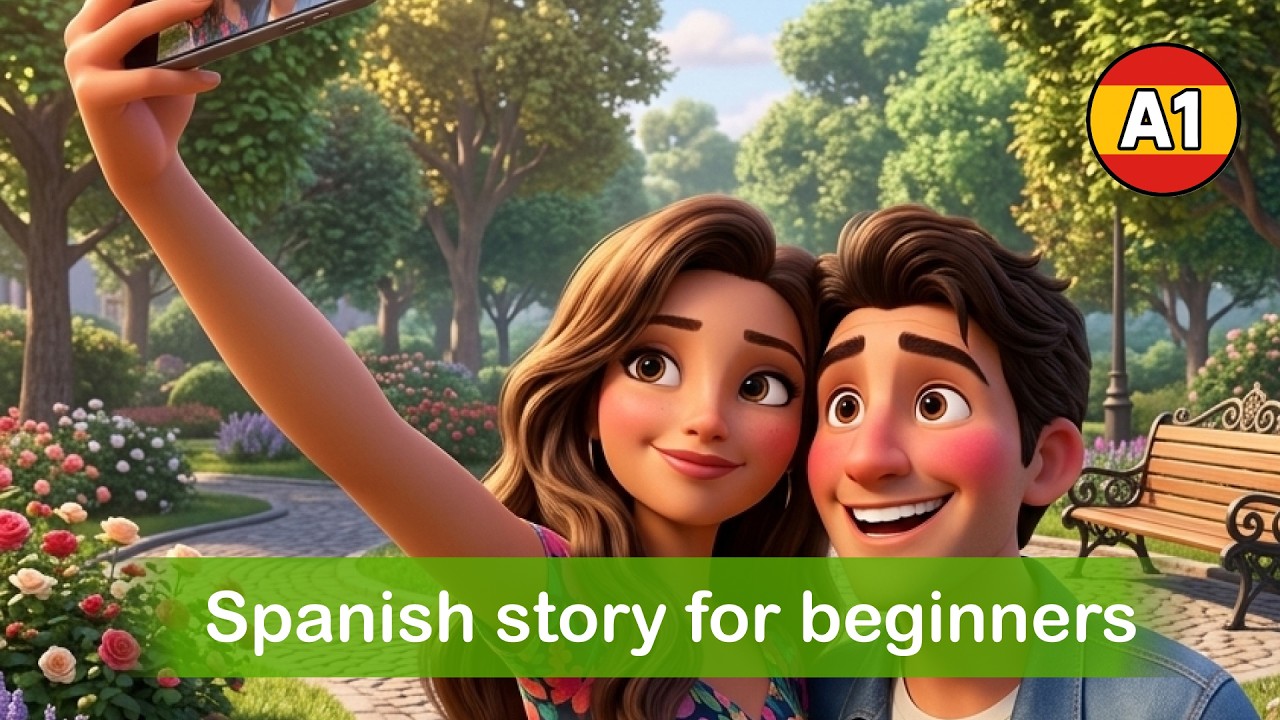
I’m Diego, and I want a bright park photo with María before we visit my mom’s flower stall in Coyoacán, but she blinked! Now we have to reset so I can catch her warm sonrisa (smile) and open ojos (eyes) on screen. In this lesson, you will learn how to describe facial features and physical traits with matching Spanish adjectives.
💬 Video Transcript
Diego: ¡Hola, Maria! El parque es muy bonito hoy.
(Diego: Hello, Maria! The park is very pretty today.)
Maria: ¡Hola, Diego! Sí, es muy bonito. El sol es amarillo y el cielo es azul.
(Maria: Hello, Diego! Yes, it’s very pretty. The sun is yellow and the sky is blue.)
Diego: Y las flores son rojas. ¡Me gusta mucho!
(Diego: And the flowers are red. I like it a lot!)
Maria: A mí también me gusta mucho el parque.
(Maria: I also like the park a lot.)
Diego: Maria, quiero una foto.
(Diego: Maria, I want a photo.)
Maria: ¿Una foto? ¿Una foto de las flores?
(Maria: A photo? A photo of the flowers?)
Diego: No. Una foto de nosotros. Una foto de tú y yo.
(Diego: No. A photo of us. A photo of you and me.)
Maria: ¡Ah, qué buena idea, Diego! Una foto de nosotros.
(Maria: Ah, what a good idea, Diego! A photo of us.)
Diego: Sí. Con mi teléfono. Mira mi teléfono.
(Diego: Yes. With my phone. Look at my phone.)
Maria: Tu teléfono es muy moderno. ¡Me gusta!
(Maria: Your phone is very modern. I like it!)
Diego: Gracias. Vale, vamos a hacer la foto. Ponte aquí, a mi lado.
(Diego: Thanks. Okay, let’s take the photo. Stand here, next to me.)
Maria: Muy bien. Estoy a tu lado.
(Maria: Very well. I’m next to you.)
Diego: Perfecto. Ahora, mira el teléfono. Y sonríe.
(Diego: Perfect. Now, look at the phone. And smile.)
Maria: ¡Sonrío!
(Maria: I’m smiling!)
Diego: Uno, dos, tres… ¡Click!
(Diego: One, two, three… Click!)
Maria: ¿Ya está? ¿Tenemos la foto?
(Maria: Is it done? Do we have the photo?)
Diego: Sí. Mira la foto en el teléfono.
(Diego: Yes. Look at the photo on the phone.)
Maria: A ver… ¡Oh, no, Diego!
(Maria: Let’s see… Oh, no, Diego!)
Diego: ¿Qué pasa? ¿No te gusta la foto?
(Diego: What’s wrong? You don’t like the photo?)
Maria: No. Mis ojos están cerrados en la foto.
(Maria: No. My eyes are closed in the photo.)
Diego: Oh, es verdad. Tus ojos están cerrados. La foto no es buena.
(Diego: Oh, it’s true. Your eyes are closed. The photo is not good.)
Maria: No, no es una buena foto.
(Maria: No, it’s not a good photo.)
Diego: Vale. Hacemos otra foto. No hay problema.
(Diego: Okay. We’ll take another photo. No problem.)
Maria: Vale, Diego. Otra foto.
(Maria: Okay, Diego. Another photo.)
Diego: Prepárate. Mira el teléfono. Tus ojos abiertos, por favor.
(Diego: Get ready. Look at the phone. Your eyes open, please.)
Maria: Miro el teléfono. Mis ojos están muy abiertos.
(Maria: I’m looking at the phone. My eyes are very open.)
Diego: Y… ¡sonríe! Una sonrisa grande.
(Diego: And… smile! A big smile.)
Maria: ¡Sí!
(Maria: Yes!)
Diego: Uno, dos, tres… ¡Click!
(Diego: One, two, three… Click!)
Maria: ¿Y ahora? ¿La foto es buena ahora?
(Maria: And now? Is the photo good now?)
Diego: No sé. Vamos a ver. Mira.
(Diego: I don’t know. Let’s see. Look.)
Maria: ¡Oh, no! ¡Esta foto es muy mala!
(Maria: Oh, no! This photo is very bad!)
Diego: ¿Por qué? Tus ojos están abiertos.
(Diego: Why? Your eyes are open.)
Maria: Sí, pero la foto está borrosa. No se ve bien.
(Maria: Yes, but the photo is blurry. You can’t see it well.)
Diego: Es verdad. Está muy borrosa. No es una buena foto.
(Diego: It’s true. It’s very blurry. It’s not a good photo.)
Maria: No, es una foto muy, muy mala.
(Maria: No, it’s a very, very bad photo.)
Diego: ¡Qué difícil es hacer una foto! Hacemos otra. La tercera es la buena.
(Diego: How difficult it is to take a photo! Let’s take another. The third one’s the charm.)
Maria: Vale, Diego. La tercera foto. ¡La última!
(Maria: Okay, Diego. The third photo. The last one!)
Diego: A ver… mi brazo… ¡Uf!
(Diego: Let’s see… my arm… Ugh!)
Maria: ¿Qué pasa ahora, Diego?
(Maria: What’s wrong now, Diego?)
Diego: Mi brazo es muy corto. La foto está muy cerca.
(Diego: My arm is very short. The photo is very close.)
Maria: ¿Tu brazo es corto?
(Maria: Your arm is short?)
Diego: Sí, mira la foto. ¡Solo se ve mi nariz!
(Diego: Yes, look at the photo. You can only see my nose!)
Maria: Jajaja, ¡es verdad! Tu nariz es muy grande en la foto.
(Maria: Hahaha, it’s true! Your nose is very big in the photo.)
Diego: ¡No es gracioso! No podemos hacer una buena foto. Mi brazo es corto.
(Diego: It’s not funny! We can’t take a good photo. My arm is short.)
Maria: Diego, tengo una idea.
(Maria: Diego, I have an idea.)
Diego: ¿Qué idea?
(Diego: What idea?)
Maria: Mi brazo es más largo que tu brazo.
(Maria: My arm is longer than your arm.)
Diego: ¿Tu brazo es más largo?
(Diego: Your arm is longer?)
Maria: Sí. Yo puedo hacer la foto. Dame el teléfono, por favor.
(Maria: Yes. I can take the photo. Give me the phone, please.)
Diego: ¿Tú haces la foto? Es una buena idea. Toma mi teléfono.
(Diego: You’ll take the photo? That’s a good idea. Take my phone.)
Maria: Gracias. Vale. Ahora, ponte a mi lado.
(Maria: Thanks. Okay. Now, stand next to me.)
Diego: Estoy a tu lado, Maria.
(Diego: I’m next to you, Maria.)
Maria: Muy bien. Ahora, mira el teléfono y sonríe mucho.
(Maria: Very good. Now, look at the phone and smile a lot.)
Diego: ¡Sonrío mucho!
(Diego: I’m smiling a lot!)
Maria: Preparados… Uno, dos, tres… ¡Click!
(Maria: Ready… One, two, three… Click!)
Diego: ¿Qué tal? ¿Es una buena foto? ¡Quiero ver!
(Diego: How is it? Is it a good photo? I want to see!)
Maria: Espera… mira. ¿Te gusta?
(Maria: Wait… look. Do you like it?)
Diego: ¡Wow! ¡Maria, esta foto es perfecta!
(Diego: Wow! Maria, this photo is perfect!)
Maria: ¡Sí! ¡Es muy bonita!
(Maria: Yes! It’s very pretty!)
Diego: ¡Me encanta! Se ven las flores, el cielo… ¡y nosotros! Nuestros ojos están abiertos.
(Diego: I love it! You can see the flowers, the sky… and us! Our eyes are open.)
Maria: Y no está borrosa.
(Maria: And it’s not blurry.)
Diego: ¡Es la mejor foto! ¡Gracias, Maria! Eres una fotógrafa excelente.
(Diego: It’s the best photo! Thanks, Maria! You are an excellent photographer.)
Maria: De nada, Diego. Ha sido fácil.
(Maria: You’re welcome, Diego. It was easy.)
Diego: Estoy muy feliz con nuestra foto.
(Diego: I am very happy with our photo.)
Maria: Yo también. Es un bonito recuerdo.
(Maria: Me too. It’s a beautiful memory.)
📝 Essential Vocabulary
Here are some key words and phrases from the dialogue. Practice them to improve your recall.
| Spanish | English | Listen |
|---|---|---|
| una foto | a photo | |
| nosotros | we / us | |
| sonríe | smile | |
| ojos cerrados | closed eyes | |
| borrosa | blurry | |
| el brazo | the arm | |
| corto / largo | short / long | |
| perfecta | perfect |
🔍 Grammar Focus
Let’s look at two important grammar concepts from Diego and Maria’s conversation.
1. Adjective Agreement
In Spanish, adjectives (describing words) must match the gender (masculine/feminine) and number (singular/plural) of the noun they describe. You can see this pattern throughout the dialogue.
- Masculine Singular:
El sol es amarillo.Tu teléfono es muy moderno.Mi brazo es muy corto. - Feminine Singular:
Una buenaidea.La foto está borrosa.Una sonrisagrande. - Masculine Plural:
Mis ojos están cerrados. - Feminine Plural:
Las flores son rojas.
Notice how the ending of the adjective changes. For example, rojo (red) becomes rojas to match las flores (the flowers), which is feminine and plural.
2. Ser vs. Estar (To Be)
Spanish has two verbs for “to be”: ser and estar. They are not interchangeable.
Ser is used for more permanent characteristics, descriptions, origins, and identities.
- El parque es muy bonito. (The park is very pretty. - a characteristic)
- El cielo es azul. (The sky is blue. - a defining quality)
Eres una fotógrafa excelente.(You are an excellent photographer. - identity/profession)
Estar is used for temporary states, conditions, emotions, and locations.
- Mis ojos están cerrados. (My eyes are closed. - a temporary condition)
- La foto está borrosa. (The photo is blurry. - a temporary state)
- Estoy a tu lado. (I am next to you. - location)
- Estoy muy feliz. (I am very happy. - an emotion)
🃏 Flip & Learn
Use these flashcards to test your memory of key phrases from the story.
💡 Key Takeaways
Here are the most important points to remember from this lesson:
- Suggesting a Photo: You can say
Quiero una foto(I want a photo) or more specifically,Quiero una foto de nosotros(I want a photo of us). - Describing Photo Problems: Two common issues are
mis ojos están cerrados(my eyes are closed) andla foto está borrosa(the photo is blurry). - Adjective Agreement is Key: Remember to change the endings of adjectives to match the noun, like in
foto buena(good photo) andojos abiertos(open eyes). - Ser vs. Estar: Use
serfor what something is (el cielo es azul) andestarfor how something is at the moment (la foto está borrosa). - Giving Instructions: Simple commands like
mira el teléfono(look at the phone) andsonríe(smile) are very useful.
🎯 Practice Quiz
Let’s check what you’ve learned. Choose the best answer for each question.
Quick check
Quick check
Quick check
✍️ Fill in the Blanks
Let’s test your spelling and memory! Fill in the missing words below. Use correct spelling.
Fill in the blank
Fill in the blank


 🎮 Bonus round

Back PandaTwin
María says: Every lesson you share helps someone find their way into a new language. Thank you for being part of this.


