
Shopping for Groceries in Spanish: Ingredient Vocabulary & Birthday Cake Story 🛒
Follow Diego as he shops for a surprise birthday cake in this simple Spanish story for beginners. Learn essential vocabulary for ingredients and shopping.
- Video 22 of 55 in this unit
- Beginner · A1 — First words, greetings, and basic phrases
- Explore — extra practice and context, on Explore and Immersion
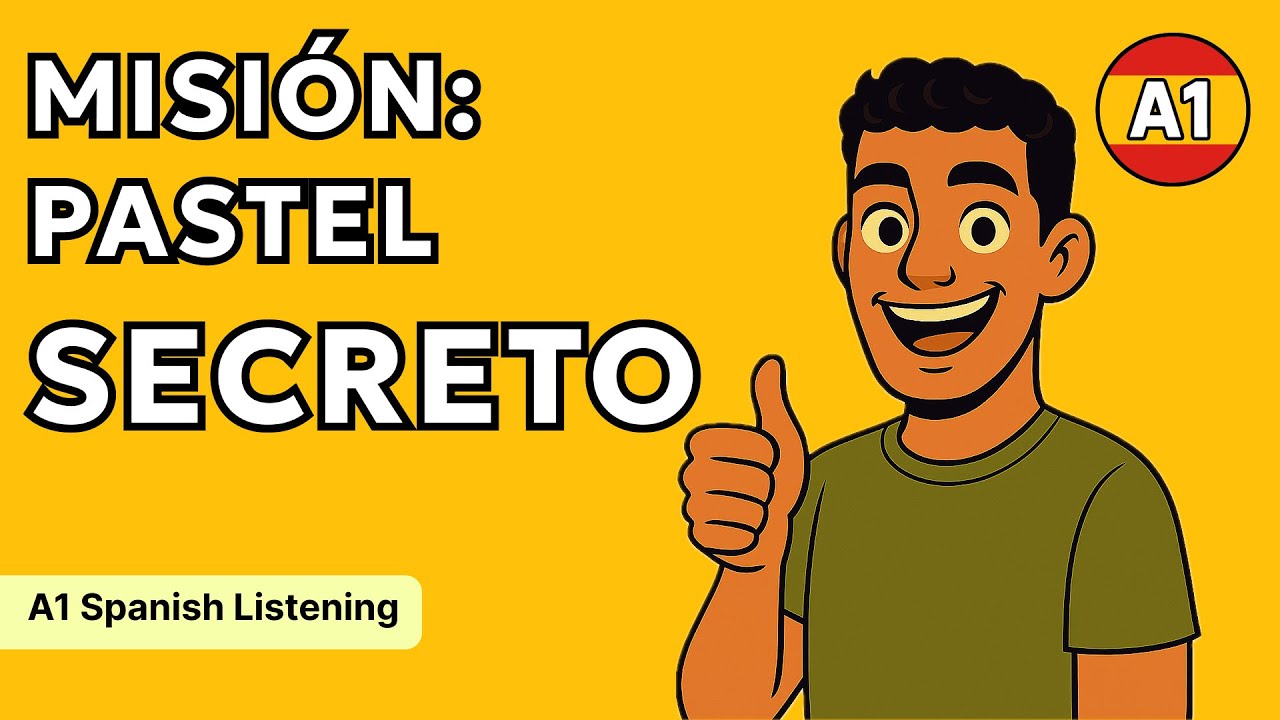
I am carefully balancing a carton of fragile eggs and a huge bar of dark chocolate right in the supermarket aisle. María thinks I am studying at UNAM, but I’m Diego, and I have a secret mission to bake my partner a surprise treat before our families arrive for the posada. In this lesson, you will practice shopping for celebration ingredients and sharing joyful phrases like ¡Feliz cumpleaños! (Happy birthday!) before everyone gathers to partir el pastel (cut the cake).
Join Diego as he goes to the supermarket to buy ingredients for a surprise birthday cake! This simple A1-A2 level story is perfect for practicing vocabulary related to food, shopping, and expressing feelings in Spanish.
💬 Video Transcript
Diego: Hola, me llamo Diego.
(Diego: Hello, my name is Diego.)
Diego: Hoy es un día muy especial. Es el cumpleaños de mi amiga, María.
(Diego: Today is a very special day. It’s my friend María’s birthday.)
Diego: ¡Me gusta mucho María! Ella es muy simpática.
(Diego: I like María a lot! She is very nice.)
Diego: Quiero preparar una sorpresa para ella.
(Diego: I want to prepare a surprise for her.)
Diego: Quiero cocinar un pastel de chocolate. A María le encanta el chocolate.
(Diego: I want to bake a chocolate cake. María loves chocolate.)
Diego: Para el pastel, necesito ingredientes. Voy al supermercado.
(Diego: For the cake, I need ingredients. I’m going to the supermarket.)
Diego: El supermercado es grande y tiene muchas cosas.
(Diego: The supermarket is big and has many things.)
Diego: Primero, necesito harina y azúcar. Busco en el pasillo número tres. ¡Aquí están! Fácil.
(Diego: First, I need flour and sugar. I look in aisle number three. Here they are! Easy.)
Diego: Después, busco los huevos. ¡Oh! Los huevos son muy frágiles.
(Diego: Next, I look for the eggs. Oh! The eggs are very fragile.)
Diego: Tomo la caja de huevos con mucho cuidado.
(Diego: I take the box of eggs very carefully.)
Diego: ¡Uy! ¡La caja casi se cae de mis manos!
(Diego: Oops! The box almost falls from my hands!)
Diego: Mi corazón late muy, muy rápido. ¡Qué susto!
(Diego: My heart is beating very, very fast. What a scare!)
Diego: Pero, ¡todo está bien! Los huevos están perfectos.
(Diego: But, everything is okay! The eggs are perfect.)
Diego: Finalmente, busco el chocolate. Esta es mi parte favorita. ¡Mmm, chocolate!
(Diego: Finally, I look for the chocolate. This is my favorite part. Mmm, chocolate!)
Diego: Tomo una tableta de chocolate muy grande.
(Diego: I take a very big bar of chocolate.)
Diego: Ahora tengo todos los ingredientes en mi cesta: harina, azúcar, huevos y chocolate.
(Diego: Now I have all the ingredients in my basket: flour, sugar, eggs, and chocolate.)
Diego: Voy a la caja para pagar. Estoy muy contento.
(Diego: I’m going to the register to pay. I am very happy.)
Diego: Ahora, voy a casa. Voy a preparar el mejor pastel de chocolate para María.
(Diego: Now, I’m going home. I am going to prepare the best chocolate cake for María.)
Diego: ¡Espero que sea una sorpresa fantástica!
(Diego: I hope it’s a fantastic surprise!)
📝 Essential Vocabulary
Here are some key words from the story. Listen to the pronunciation and practice saying them out loud.
| Target Language | English Translation | Listen |
|---|---|---|
| El cumpleaños | The birthday | |
| Una sorpresa | A surprise | |
| Un pastel | A cake | |
| Ingredientes | Ingredients | |
| El supermercado | The supermarket | |
| Harina | Flour | |
| Azúcar | Sugar | |
| Huevos | Eggs | |
| Frágiles | Fragile | |
| ¡Qué susto! | What a scare! |
🔍 Grammar Focus
Let’s look at two important grammar structures used in the story.
1. Expressing What You Want: Querer + Infinitivo
When you want to say you “want to do” something in Spanish, you use the verb querer (to want) followed by an infinitive verb (the basic, unconjugated form of a verb, like hablar, comer, or vivir). This is a very common and useful pattern.
In the story, Diego says:
- Quiero preparar una sorpresa para ella. (I want to prepare a surprise for her.)
- Quiero cocinar un pastel de chocolate. (I want to bake a chocolate cake.)
Notice that querer is conjugated (quiero for “I want”), but the verb that follows (preparar, cocinar) remains in its infinitive form.
2. Expressing Likes and Loves: Gustar and Encantar
In Spanish, expressing “likes” and “loves” works differently than in English. The verbs gustar (to be pleasing to) and encantar (to delight/love) are used. The thing that is liked is the subject of the sentence.
Let’s look at Diego’s examples:
- Me gusta mucho María. (Literally: To me, María is very pleasing. We translate it as: I like María a lot.)
- A María le encanta el chocolate. (Literally: To María, chocolate is delightful. We translate it as: María loves chocolate.)
The structure is: A + [Person] + [Indirect Object Pronoun] + [gustar/encantar conjugated] + [Thing liked]
- The
A + [Person]part (likeA María) is for emphasis or clarity. - The pronoun (
me,te,le,nos,os,les) is mandatory.
🃏 Flip & Learn
Practice the key phrases from Diego’s shopping trip with these flashcards.
💡 Key Takeaways
Here are the most important points to remember from this lesson:
- Shopping Vocabulary: You learned essential words for grocery shopping like
supermercado,ingredientes,harina,azúcar,huevos, andchocolate. - Expressing Desires: To say you “want to do” something, use the simple formula
quiero+[infinitive verb]. For example,quiero cocinar(I want to cook). - Using
gustarandencantar: Remember that these verbs work differently. The structure focuses on what is pleasing to the person. For example,Me gusta el chocolate(I like chocolate). - Expressing Feelings: You saw how Diego expresses his feelings with simple phrases like
Estoy muy contento(I am very happy) and¡Qué susto!(What a scare!).
🎯 Practice Quiz
Test your understanding of the story and vocabulary.
Quick check
Quick check
Quick check
✍️ Fill in the Blanks
Let’s test your spelling and memory! Fill in the missing words below. Use correct spelling.
Fill in the blank
Fill in the blank


 🎮 Bonus round

Back PandaTwin
Diego here! We're building this course a lesson at a time, and your support is what keeps it moving.


