Building a Snowman in Russian: Winter Vocabulary & Past Tense Narration ☃️
Learn Russian winter vocabulary and practice past tense verbs with this charming story about building a snowman and finding a creative solution for its missing nose.
Immerse yourself in a snowy Russian landscape with this simple and charming story. You’ll follow Vanya and his friend Anya as they build a snowman, face a small problem, and find a creative solution. This lesson is perfect for practicing essential winter vocabulary and listening to the past tense in a natural context.
💬 Video Transcript
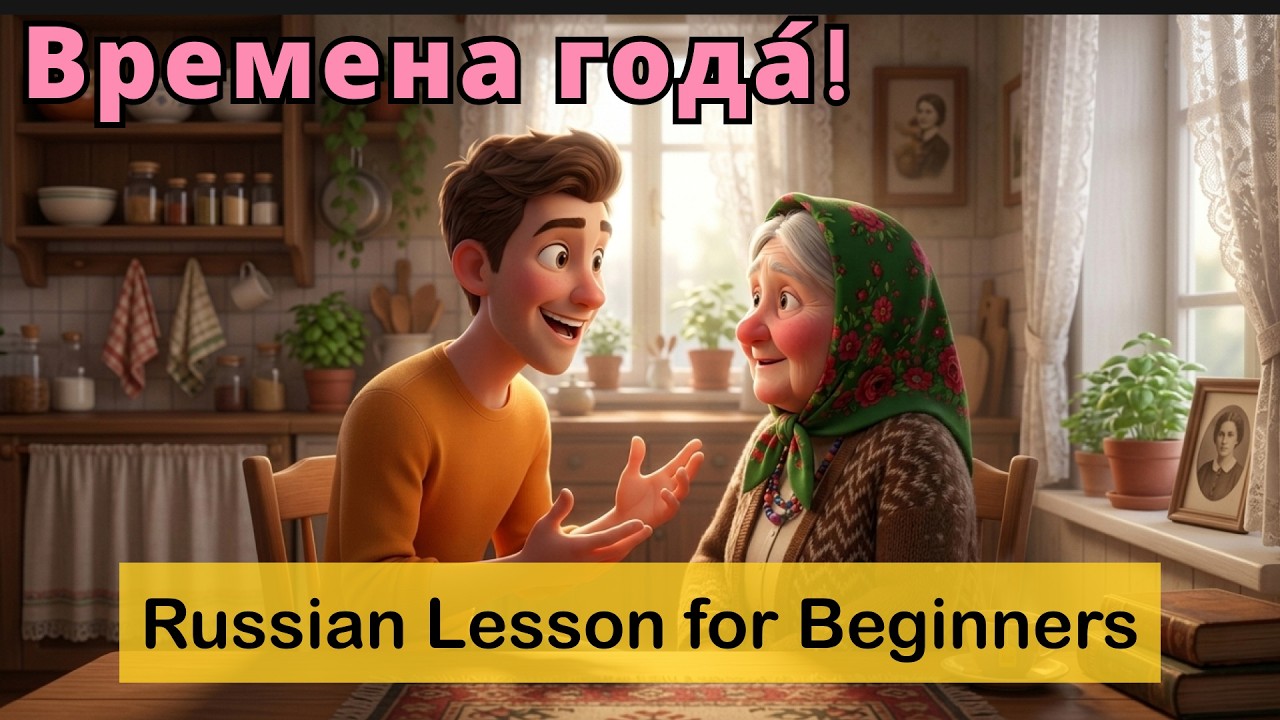
Narrator: Однажды утром я проснулся в доме у моей бабушки. Я посмотрел в окно и увидел чудо. Всю ночь шёл снег! Всё было белое и красивое. Деревья, дом, земля — всё было в снегу.
(Narrator: One morning I woke up at my grandmother’s house. I looked out the window and saw a miracle. It had been snowing all night! Everything was white and beautiful. The trees, the house, the ground — everything was covered in snow.)
Narrator: Я сразу побежал на кухню. Бабушка уже готовила завтрак.
(Narrator: I immediately ran to the kitchen. Grandma was already making breakfast.)
Ivan: «Бабушка, смотри! Сколько снега! Давай сегодня сделаем снеговика!»
(Ivan: “Grandma, look! So much snow! Let’s make a snowman today!”)
Grandmother: «Конечно, Ваня. Это отличная идея».
(Grandmother: “Of course, Vanya. That’s an excellent idea.”)
Narrator: После завтрака ко мне пришла моя подруга Аня. Она тоже увидела снег и была очень рада.
(Narrator: After breakfast, my friend Anya came over. She also saw the snow and was very happy.)
Ivan: «Аня, привет! Мы будем делать снеговика. Ты с нами?»
(Ivan: “Anya, hi! We’re going to make a snowman. Are you with us?”)
Anya: «Да, с удовольствием!»
(Anya: “Yes, with pleasure!”)
Narrator: Мы надели тёплые куртки, шапки и перчатки и вышли на улицу. Воздух был свежий и холодный. Мы начали работать. Сначала мы сделали очень большой снежный шар. Это было тело нашего снеговика. Потом мы сделали шар поменьше. Это была голова.
(Narrator: We put on warm jackets, hats, and gloves and went outside. The air was fresh and cold. We started to work. First, we made a very big snowball. This was our snowman’s body. Then we made a smaller ball. This was the head.)
Narrator: Мы поставили голову на тело. Получилось отлично! Наш снеговик был почти готов. Но чего-то не хватало.
(Narrator: We put the head on the body. It turned out great! Our snowman was almost ready. But something was missing.)
Anya: «Ему нужно лицо. И нос! Классический нос для снеговика — это морковка».
(Anya: “He needs a face. And a nose! The classic nose for a snowman is a carrot.”)
Ivan: «Точно! Я сейчас!»
(Ivan: “Exactly! I’ll be right back!”)
Narrator: Я побежал в дом.
(Narrator: I ran into the house.)
Ivan: «Бабушка, нам нужна одна морковка, пожалуйста. Для носа снеговика».
(Ivan: “Grandma, we need one carrot, please. For the snowman’s nose.”)
Narrator: Бабушка пошла к холодильнику. Она посмотрела внутри, потом посмотрела на меня.
(Narrator: Grandma went to the refrigerator. She looked inside, then looked at me.)
Grandmother: «Ой, Ваня, у меня нет ни одной морковки. Я вчера сварила суп и использовала последнюю».
(Grandmother: “Oh, Vanya, I don’t have a single carrot. I made soup yesterday and used the last one.”)
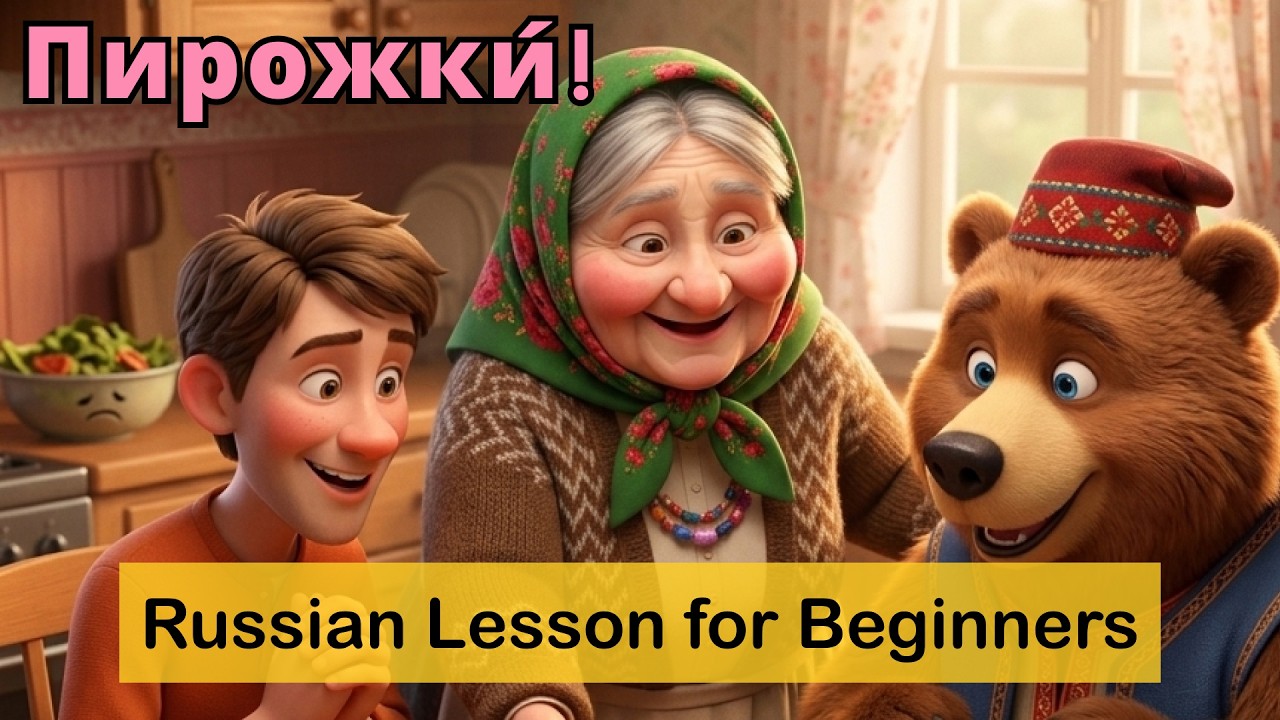
Narrator: Вот проблема! Снеговик без носа? Это очень грустно. Мы с Аней стояли и думали, что делать. Вдруг мы увидели, что к нам идёт наш старый друг. Это был медведь Миша. Он шёл к бабушке за пирожками.
(Narrator: What a problem! A snowman without a nose? That’s very sad. Anya and I stood and thought about what to do. Suddenly, we saw our old friend coming towards us. It was Misha the bear. He was going to grandma’s for pirozhki.)
Narrator: Миша увидел нас и нашего грустного снеговика без носа. Он всё понял без слов. Миша посмотрел вокруг. Рядом рос куст рябины с яркими красными ягодами. Миша подошёл к кусту, аккуратно взял маленькую веточку с красными ягодами и протянул её мне.
(Narrator: Misha saw us and our sad, noseless snowman. He understood everything without words. Misha looked around. Nearby grew a rowan bush with bright red berries. Misha went to the bush, carefully took a small branch with red berries, and handed it to me.)
Narrator: Это была гениальная идея! Мы поставили веточку на место носа. Маленькие красные ягоды были как идеальный, смешной нос. Потом мы нашли маленькие тёмные камни для глаз и рта, а две ветки стали руками.
(Narrator: It was a genius idea! We put the branch in place of the nose. The small red berries were like a perfect, funny nose. Then we found small dark stones for the eyes and mouth, and two branches became arms.)
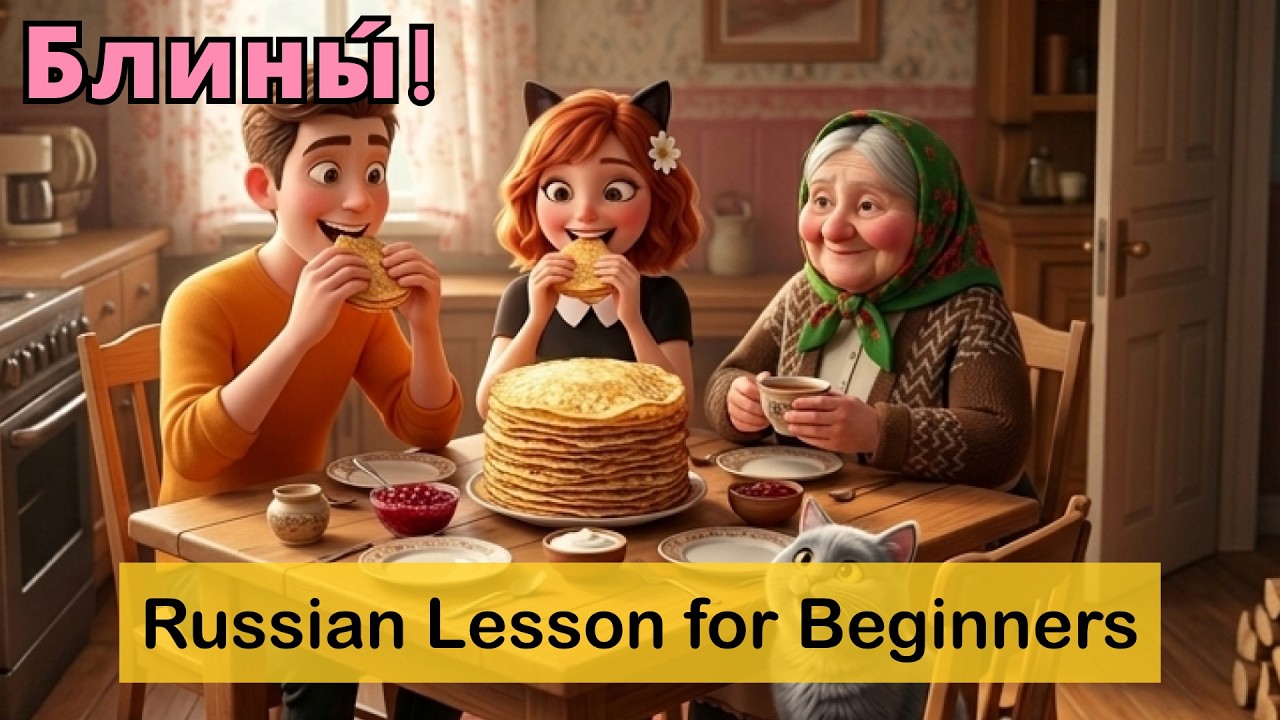
Narrator: Теперь наш снеговик был готов! Он был уникальный и очень весёлый. В этот момент из дома вышла бабушка. Она принесла нам горячий чай в термосе и тёплые пирожки. Мы стояли все вместе — я, Аня, бабушка и Миша, — пили чай, ели пирожки и смотрели на нашего замечательного снеговика. Это был прекрасный зимний день.
(Narrator: Now our snowman was ready! He was unique and very cheerful. At that moment, Grandma came out of the house. She brought us hot tea in a thermos and warm pirozhki. We all stood together — me, Anya, Grandma, and Misha — drinking tea, eating pirozhki, and looking at our wonderful snowman. It was a beautiful winter day.)
📝 Essential Vocabulary
Here are some key words and phrases from the story. Listen to the pronunciation and practice saying them out loud.
| Target Language | English Translation | Pronunciation |
|---|---|---|
| Снеговик | Snowman | |
| Снег | Snow | |
| Морковка | Carrot | |
| Куртка | Jacket | |
| Перчатки | Gloves | |
| Ягоды | Berries | |
| Пирожки | Pirozhki (small pies) | |
| Прекрасный день | A wonderful day |
🔍 Grammar Focus
Let’s look at two important grammar patterns you can learn from this story.
1. The Genitive Case After “Нет”
In Russian, when you want to say you don’t have something, you use the structure У + [pronoun in genitive] + нет + [noun in genitive]. The word нет (no, not have) always requires the noun that follows to be in the genitive case.
In the story, when Vanya’s grandmother realizes she’s out of carrots, she says:
- «У меня нет ни одной морковки». — “I don’t have a single carrot.”
Notice that морковка (nominative case) changes to морковки (genitive singular case). This is a fundamental rule for expressing absence or non-existence in Russian.
2. Telling Stories with the Past Tense
This entire story is told in the past tense. In Russian, forming the simple past tense is straightforward. You typically take the infinitive form of the verb, drop the ending, and add a new ending based on the gender and number of the subject.
- -л for masculine subjects (e.g., я проснулся,
он увидел) - -ла for feminine subjects (e.g., бабушка пошла, Аня пришла)
- -ли for plural subjects (e.g., мы надели, мы сделали)
Look at these examples from the text:
- Я посмотрел в окно. — (I (male) looked out the window.)
- Бабушка пошла к холодильнику. — (Grandma (female) went to the refrigerator.)
- We сделали очень большой снежный шар. — (We (plural) made a very big snowball.)
🌍 Cultural Tip
🃏 Flip & Learn
Review the key vocabulary and phrases from our winter adventure with these flashcards.
Snowman
Снеговик
We need one carrot.
Нам нужна одна морковка.
With pleasure!
С удовольствием!
It was a beautiful winter day.
Это был прекрасный зимний день.
Something was missing.
Чего-то не хватало.
💡 Key Takeaways
Here are the most important points to remember from this lesson:
- Winter Vocabulary: You learned essential words for a winter day, like
снег(snow),снеговик(snowman),куртка(jacket),шапка(hat), andперчатки(gloves). - Expressing Absence: To say you don’t have something, use the construction
у меня нетfollowed by the noun in the genitive case (e.g.,нет морковки). - Past Tense Narration: The past tense is essential for storytelling. Remember the endings:
-л(masculine),-ла(feminine), and-ли(plural). - Creative Problem-Solving: The story shows how a simple problem (a missing nose) was solved creatively using
веточка с красными ягодами(a branch with red berries).
🎯 Practice Quiz
Test your understanding of the story and its vocabulary.
Question
Question
Question
✍️ Fill in the Blanks
Let’s test your spelling and memory! Fill in the missing words below. Use correct spelling.
Fill in the blank
Fill in the blank
Support Us
Did you find this lesson helpful? Your support is what makes it possible for us to keep creating free, high-quality educational content.