Talking About Food and Animals in Russian: Beginner Detective Story 🕵️
Learn beginner Russian vocabulary and grammar through a fun detective story about missing honey. Practice reading and listening skills with a slow-paced narrative.
Join Detective Ivan and his friend Anya as they solve a delicious mystery in this slow Russian story for beginners. You’ll learn essential vocabulary for food, animals, and descriptions, all while practicing your listening and reading comprehension skills.
💬 Video Transcript
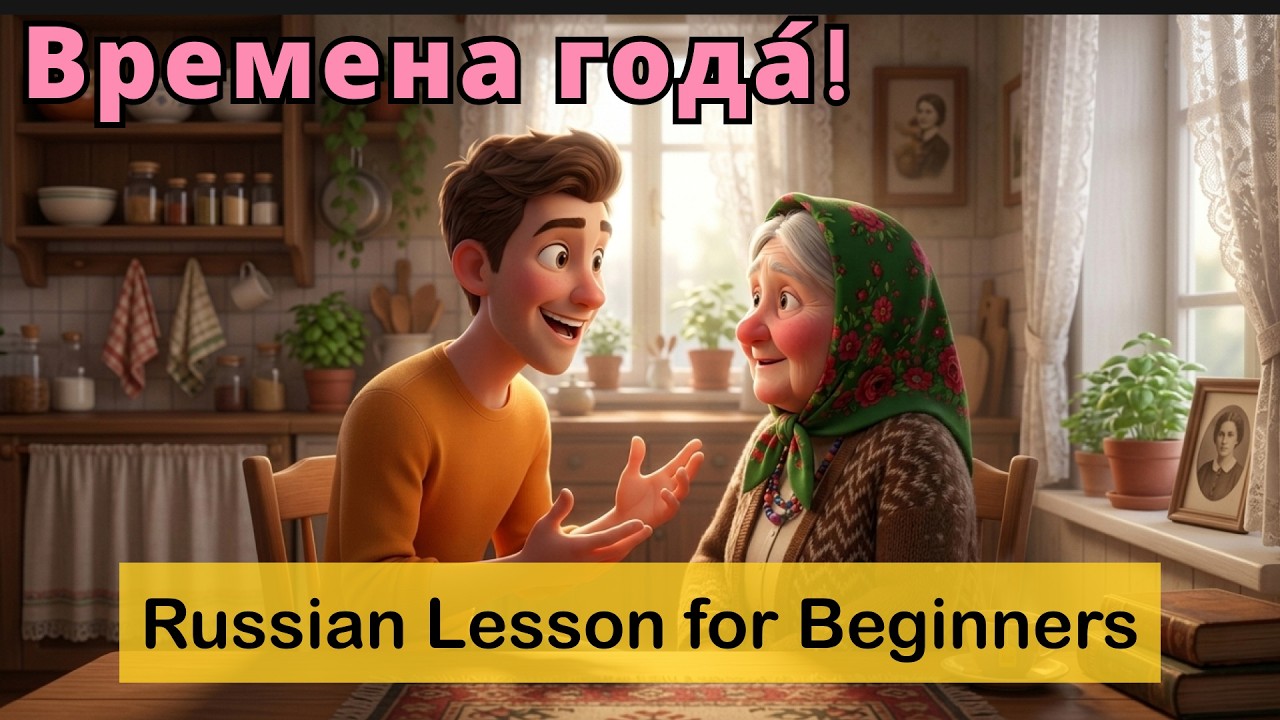
Ivan: Я люблю быть в доме у моей бабушки. Там всегда тепло и вкусно пахнет. Сегодня утром я сидел на кухне. Моя бабушка хотела сделать чай.
(Ivan: I love being at my grandmother’s house. It’s always warm and smells delicious there. This morning I was sitting in the kitchen. My grandmother wanted to make tea.)
Бабушка: «Иван, где мой мёд?» — спросила она.
(Grandmother: “Ivan, where is my honey?” — she asked.)
Ivan: Я посмотрел на полку. Там была банка с вареньем, но не было банки с мёдом. «Я не знаю, бабушка», — ответил я. Бабушка была немного грустная. Она очень любит чай с мёдом. «Не волнуйся!» — сказал я. — «Я детектив Иван! Я найду мёд».
(Ivan: I looked at the shelf. There was a jar of jam, but there was no jar of honey. “I don’t know, Grandma,” — I answered. Grandmother was a little sad. She loves tea with honey very much. “Don’t worry!” — I said. — “I am Detective Ivan! I will find the honey.”)
Ivan: Сначала я посмотрел на моего кота Бориса. Он спал на стуле. Борис очень ленивый кот. Он любит спать и есть. Но он не любит мёд. Значит, это не Борис.
(Ivan: First, I looked at my cat, Boris. He was sleeping on a chair. Boris is a very lazy cat. He likes to sleep and eat. But he doesn’t like honey. So, it’s not Boris.)
Ivan: В этот момент пришла моя подруга Аня. С ней был её кот, Персик. Персик — очень умный и активный кот. «Аня, привет! У нас проблема. Пропал мёд!» — сказал я.
(Ivan: At that moment, my friend Anya arrived. Her cat, Persik, was with her. Persik is a very smart and active cat. “Anya, hi! We have a problem. The honey is missing!” — I said.)
Аня: Аня посмотрела на Персика. Персик смотрел в окно. «Персик любит играть, но он не ест мёд», — сказала Аня.
(Anya: Anya looked at Persik. Persik was looking out the window. “Persik likes to play, but he doesn’t eat honey,” — said Anya.)
Ivan: Мы посмотрели на кухню ещё раз. Аня увидела что-то на полу у окна.
(Ivan: We looked at the kitchen one more time. Anya saw something on the floor by the window.)
Аня: «Смотри, Иван! Это большая шерсть. И она не серая, как у Бориса, и не рыжая, как у Персика. Она коричневая».
(Anya: “Look, Ivan! This is large fur. And it’s not gray, like Boris’s, and not ginger, like Persik’s. It’s brown.”)
Ivan: Я посмотрел в открытое окно. На земле были большие следы. Очень большие. Мы с Аней посмотрели друг на друга и улыбнулись. Мы поняли. Мы вышли на улицу.
(Ivan: I looked out the open window. On the ground, there were large tracks. Very large. Anya and I looked at each other and smiled. We understood. We went outside.)
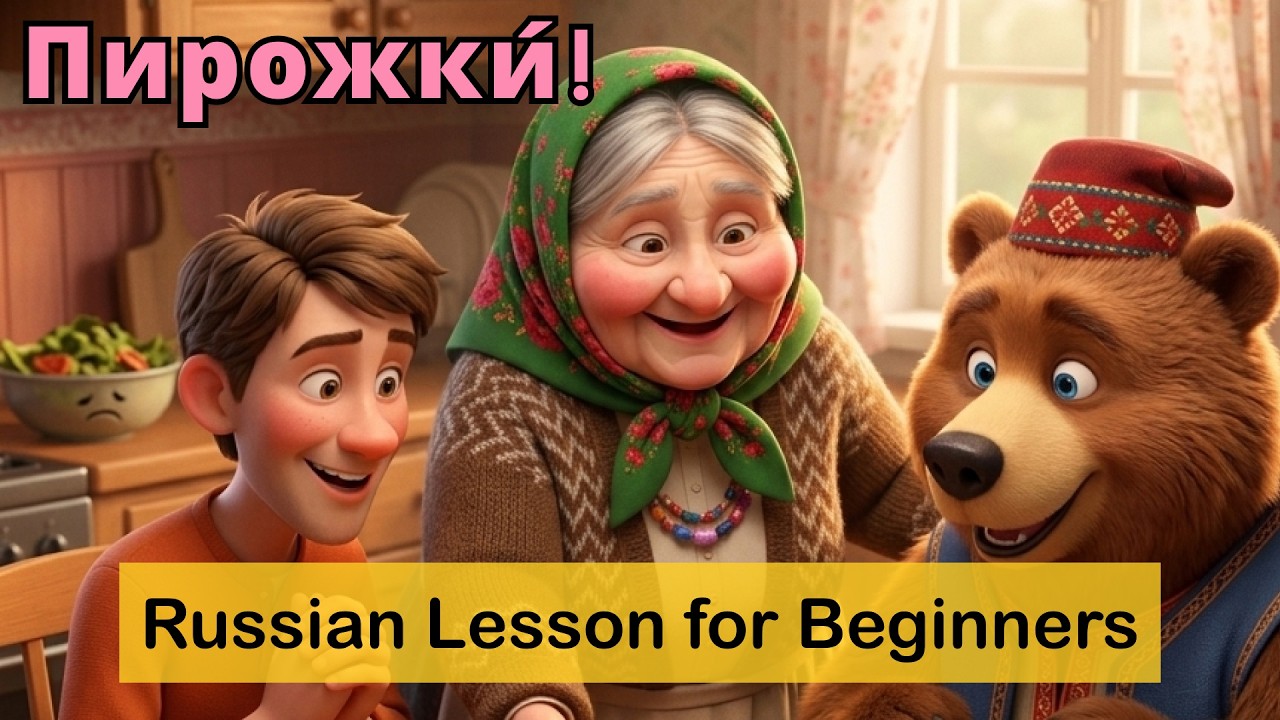
Ivan: Под большим деревом сидел наш друг, медведь Миша. Рядом с ним стояла банка с мёдом. Миша ел мёд большой ложкой. Он выглядел очень счастливым. Когда Миша нас увидел, он показал лапой на маленькую корзину. В корзине были свежие, красные ягоды.
(Ivan: Under a big tree sat our friend, Misha the bear. Next to him stood the jar of honey. Misha was eating the honey with a big spoon. He looked very happy. When Misha saw us, he pointed with his paw to a small basket. In the basket were fresh, red berries.)
Бабушка: Бабушка вышла на улицу. Она увидела Мишу с мёдом и засмеялась. «Ах, Миша! Ты взял мёд?» — спросила она.
(Grandmother: Grandmother came outside. She saw Misha with the honey and laughed. “Oh, Misha! Did you take the honey?” — she asked.)
Ivan: Миша кивнул и показал на корзину с ягодами.
(Ivan: Misha nodded and pointed to the basket of berries.)
Бабушка: «Это обмен? Мёд за ягоды? Хорошо!» — сказала бабушка.
(Grandmother: “Is this an exchange? Honey for berries? Alright!” — said Grandmother.)
Ivan: Мы взяли ягоды и пошли пить чай. Это был очень вкусный чай. С ягодами от нашего друга Миши.
(Ivan: We took the berries and went to drink tea. It was a very tasty tea. With berries from our friend Misha.)
📝 Essential Vocabulary
Here are some key words and phrases from the story. Listen to the pronunciation to improve your speaking skills.
| Target Language | English Translation | Pronunciation |
|---|---|---|
| Мёд | Honey | |
| Бабушка | Grandmother | |
| Детектив | Detective | |
| Пропал | Went missing / Disappeared | |
| Кот | Cat | |
| Шерсть | Fur / Wool | |
| Следы | Footprints / Tracks | |
| Медведь | Bear | |
| Ягоды | Berries | |
| Обмен | An exchange / A trade |
🔍 Grammar Focus
Let’s explore two important grammar concepts from the story.
1. Genitive Case for Absence (не было + Genitive)
In Russian, when you want to say that something “was not there” or “didn’t exist,” you use the construction не было followed by the noun in the genitive case. The nominative case (the dictionary form) is used for presence, while the genitive is used for absence.
Notice this in the script:
- Presence: Там была банка с вареньем… (There was a jar of jam…) -
банкаis nominative. - Absence: …но не было банки с мёдом. (…but there was no jar of honey.) -
банкиis the genitive form ofбанка.
This is a very common pattern. If you see нет (there is no) or не было (there was no), the noun that follows will almost always be in the genitive case.
2. Adjective Agreement (Gender and Number)
In Russian, adjectives must “agree” with the nouns they describe. This means their endings change based on the noun’s gender (masculine, feminine, neuter) and number (singular, plural).
Let’s look at examples from the story:
- Masculine Singular: Борис очень ленивый кот. (Boris is a very lazy cat.) -
котis masculine, so the adjective ends in-ый. - Feminine Singular: Это большая шерсть. (This is large fur.) -
шерстьis feminine, so the adjective ends in-ая. - Plural: На земле были большие следы. (On the ground were large tracks.) -
следыis plural, so the adjective ends in-ие. - Plural: В корзине были свежие, красные ягоды. (In the basket were fresh, red berries.) -
ягодыis plural, so both adjectives end in-ие.
🌍 Cultural Tip
🃏 Flip & Learn
Use these flashcards to test your memory of the key vocabulary from the detective story.
Honey
Мёд
Detective
Детектив
The honey is missing!
Пропал мёд!
Large footprints
Большие следы
Fresh, red berries
Свежие, красные ягоды
💡 Key Takeaways
Here are the most important points to remember from this lesson:
- To say something is missing, you can use the verb пропасть. For example, Пропал мёд! (The honey is missing!).
- Russian has different words for animals, like кот (cat) and медведь (bear).
- To express that something wasn’t there, use не было followed by the noun in the genitive case (e.g., не было банки).
- Adjectives change their endings to match the gender and number of the noun they describe (e.g., ленивый кот, большая шерсть, большие следы).
🎯 Practice Quiz
Check your understanding of the story and its vocabulary with this short quiz.
Question
Question
Question
✍️ Fill in the Blanks
Let’s test your spelling and memory! Fill in the missing words below. Use correct spelling.
Fill in the blank
Fill in the blank
Support Us
Did you find this lesson helpful? Your support is what makes it possible for us to keep creating free, high-quality educational content.