Talking About Stereotypes in Russian: Culture & Listening Practice 🪆
Master Russian vocabulary for seasons, instruments, and everyday items while exploring common cultural stereotypes in this A1 dialogue.
In this engaging listening and conversation practice, you will learn how to discuss popular cultural stereotypes about Russia in the target language. By following Ivan and Anya’s humorous dialogue, you will master essential vocabulary covering the four seasons, iconic cultural items like the balalaika and matryoshka, and everyday animals. You’ll also see practical examples of how to express possessing or lacking something in Russian.
💬 Video Transcript
Иван: Привет, Аня!
(Ivan: Hi, Anya!)
Аня: Привет, Иван! Что ты читаешь?
(Anya: Hi, Ivan! What are you reading?)
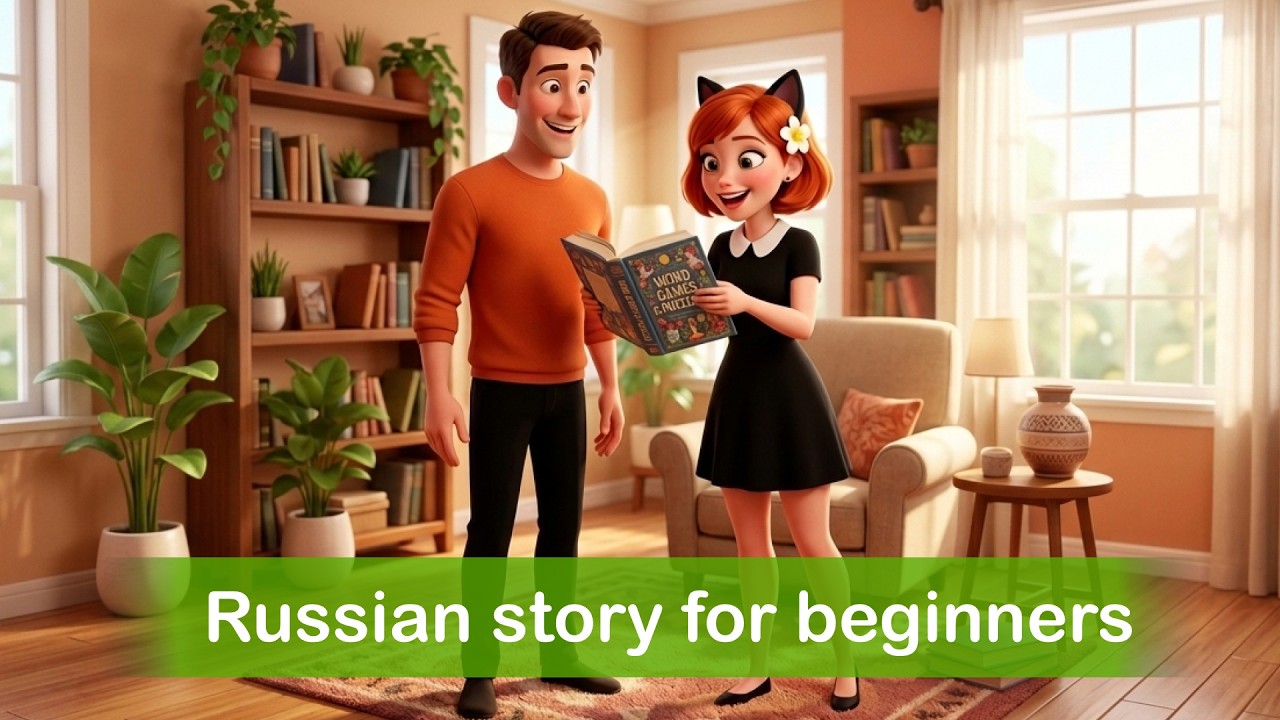
Иван: Я читаю книгу. Это книга про Россию. Иностранная книга.
(Ivan: I am reading a book. It is a book about Russia. A foreign book.)
Аня: Иностранная книга про Россию? Это очень интересно.
(Anya: A foreign book about Russia? That is very interesting.)
Иван: Да, очень. Тут есть смешные стереотипы. Стереотипы о нас. О русских.
(Ivan: Yes, very. There are funny stereotypes here. Stereotypes about us. About Russians.)
Аня: Стереотипы? Какие стереотипы? Читай!
(Anya: Stereotypes? What stereotypes? Read!)
Иван: Стереотип номер один. В России всегда зима. Всегда идет снег. Везде очень, очень холодно.
(Ivan: Stereotype number one. In Russia it is always winter. It is always snowing. It is very, very cold everywhere.)
Аня: Ха-ха! Это неправда. У нас четыре сезона. Зима, весна, лето и осень.
(Anya: Haha! That is not true. We have four seasons. Winter, spring, summer, and autumn.)
Иван: Правильно. Зимой холодно. А летом у нас жарко. Ярко светит солнце. Значит, это стереотип.
(Ivan: Right. In winter it is cold. And in summer it is hot here. The sun shines brightly. So, it is a stereotype.)
Аня: Да, это неправда. А какой стереотип номер два?
(Anya: Yes, that is not true. And what is stereotype number two?)
Иван: Стереотип номер два. У всех русских людей есть матрёшка. И все играют на балалайке.
(Ivan: Stereotype number two. All Russian people have a matryoshka. And everyone plays the balalaika.)
Аня: Хм. Матрёшка… У меня дома есть матрёшка. Стоит на столе.
(Anya: Hmm. A matryoshka… I have a matryoshka at home. It stands on the table.)
Иван: И у меня есть матрёшка. Она очень красивая. Но у меня нет балалайки!
(Ivan: And I have a matryoshka. It is very beautiful. But I don’t have a balalaika!)
Аня: И у меня нет балалайки. Я не умею играть на балалайке. Я играю на гитаре.
(Anya: And I don’t have a balalaika. I don’t know how to play the balalaika. I play the guitar.)
Иван: Значит, матрёшка — это правда. А балалайка — это стереотип.
(Ivan: So, the matryoshka is true. And the balalaika is a stereotype.)
Аня: Согласна. Что еще там написано?
(Anya: Agreed. What else is written there?)
Иван: Стереотип номер три. Русские люди очень серьезные. Они никогда не улыбаются.
(Ivan: Stereotype number three. Russian people are very serious. They never smile.)
Аня: Что? Это совсем неправда! Посмотри на меня. Я улыбаюсь.
(Anya: What? That is completely untrue! Look at me. I am smiling.)
Иван: И я улыбаюсь! Мы часто смеемся. Мы веселые.
(Ivan: And I am smiling! We laugh often. We are cheerful.)
Аня: Да, мы любим шутить. Это глупый стереотип.
(Anya: Yes, we love to joke. It is a silly stereotype.)
Иван: А вот стереотип номер четыре. Мой любимый.
(Ivan: And here is stereotype number four. My favorite.)
Аня: Так, так. Слушаю.
(Anya: Well, well. I’m listening.)
Иван: В России по улицам ходят медведи. Медведь — это домашнее животное.
(Ivan: In Russia, bears walk on the streets. A bear is a pet.)
Аня: Ха-ха-ха! Медведь идет по улице? В городе?
(Anya: Hahaha! A bear walking on the street? In the city?)
Иван: Да! Идет по улице, пьет чай и играет на балалайке.
(Ivan: Yes! It walks down the street, drinks tea, and plays the balalaika.)
Аня: Это очень смешно. У нас нет медведей на улице. Медведи живут в лесу. А у нас дома живут коты и собаки.
(Anya: That is very funny. We don’t have bears on the street. Bears live in the forest. And cats and dogs live at our homes.)
Иван: Да, у меня живет ленивый кот Борис.
(Ivan: Yes, my lazy cat Boris lives with me.)
Аня: А у меня живет умный кот Персик.
(Anya: And my smart cat Persik lives with me.)
Иван: Но… Аня… У моей бабушки есть друг.
(Ivan: But… Anya… My grandmother has a friend.)
Аня: Какой друг?
(Anya: What friend?)
Иван: Его зовут Миша. И он — медведь. Бывший цирковой медведь.
(Ivan: His name is Misha. And he is a bear. A former circus bear.)
Аня: Точно! Медведь Миша! Бабушка дает ему пирожки.
(Anya: Right! Bear Misha! Grandma gives him pies.)
Иван: Да! Миша очень любит бабушкины пирожки. И малиновое варенье.
(Ivan: Yes! Misha really loves grandma’s pies. And raspberry jam.)
Аня: Значит, медведь — это не стереотип?
(Anya: So, the bear is not a stereotype?)
Иван: Наверное, это чуть-чуть правда. Но он не ходит по улице в Москве. Он живет в деревне. И он очень добрый.
(Ivan: Maybe it is a little bit true. But he doesn’t walk on the street in Moscow. He lives in a village. And he is very kind.)
Аня: Хорошо. Медведь Миша — это исключение.
(Anya: Alright. Bear Misha is an exception.)
Иван: Да. А теперь, давай пить горячий чай!
(Ivan: Yes. And now, let’s drink hot tea!)
Аня: Чай? Отличная идея! Из самовара?
(Anya: Tea? Great idea! From a samovar?)
Иван: Конечно, из самовара! И с блинами!
(Ivan: Of course, from a samovar! And with blini!)
Аня: Самовар, блины и медведь Миша… Иван, мы с тобой — настоящий русский стереотип!
(Anya: Samovar, blini, and Bear Misha… Ivan, you and I are a true Russian stereotype!)
Иван: Ха-ха-ха! Это точно. Приятного аппетита, Аня!
(Ivan: Hahaha! That’s for sure. Bon appétit, Anya!)
Аня: Спасибо, Иван! И тебе!
(Anya: Thanks, Ivan! You too!)
📝 Essential Vocabulary
| Target Language | English Translation | Pronunciation |
|---|---|---|
| Стереотип | Stereotype | |
| Иностранная | Foreign | |
| Зима | Winter | |
| Матрёшка | Matryoshka (nesting doll) | |
| Балалайка | Balalaika (string instrument) | |
| Улыбаться | To smile | |
| Медведь | Bear | |
| Исключение | Exception | |
| Самовар | Samovar (tea urn) |
🔍 Grammar Focus
Expressing Possession (“У меня есть” vs. “У меня нет”)
In Russian, you do not use a verb equivalent to “I have”. Instead, you use the construction У меня есть (literally “By me there is”) followed by the noun in the Nominative case. Conversely, to say you do not have something, you use У меня нет (literally “By me there is not”) followed by the noun in the Genitive case.
Notice how the endings change in the dialogue:
- У меня есть матрёшка. (I have a matryoshka.) — Nominative case
- Но у меня нет балалайки! (But I don’t have a balalaika!) — Genitive case
Because of the word нет, the final “-а” in балалайка shifts to “-и”.
The Prepositional Case with Instruments
When discussing playing a musical instrument, Russian uses the verb играть (to play) followed by the preposition на and the instrument in the Prepositional case.
- И все играют на балалайке. (And everyone plays the balalaika.)
- Я играю на гитаре. (I play the guitar.)
🌍 Cultural Tip
🃏 Flip & Learn
Stereotype
Стереотип
Winter
Зима
To smile
Улыбаться
Bear
Медведь
Exception
Исключение
💡 Key Takeaways
- The Four Seasons: The seasons are зима (winter), весна (spring), лето (summer), and осень (autumn).
- Possession Rules: Use У меня есть + Nominative case to say you have an item, and У меня нет + Genitive case to express that you lack it.
- Playing Instruments: Use играть на + Prepositional case to say you play a musical instrument (e.g., играть на гитаре).
- Cultural Context: Russians might look unsmiling to strangers, but they are famously warm and hospitable with friends—especially over a pot of tea from a самовар.
🎯 Practice Quiz
Question
Question
Question
✍️ Fill in the Blanks
Let’s test your spelling and memory! Fill in the missing words below. Use correct spelling.
Fill in the blank
Fill in the blank
Support Us
Did you find this lesson helpful? Your support is what makes it possible for us to keep creating free, high-quality educational content.