Giving Gifts in Russian: Holiday Vocabulary & Family Dialogue 🎁
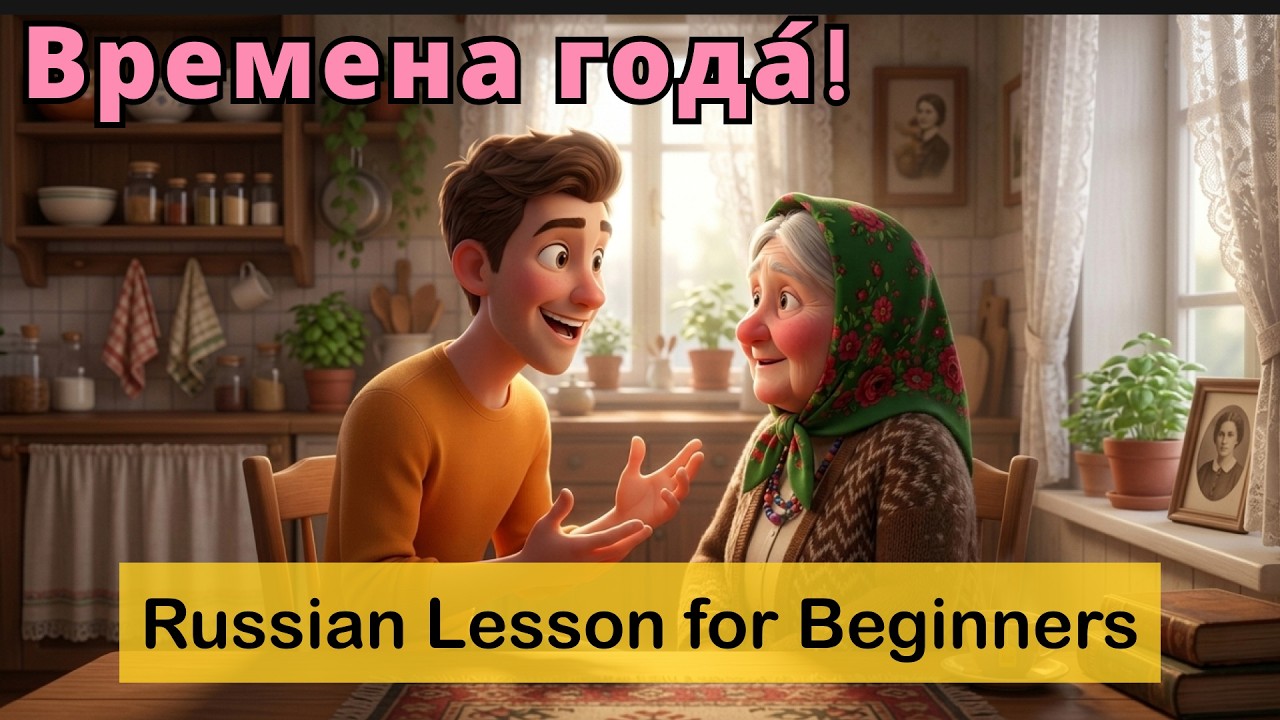
Learn essential Russian vocabulary for giving gifts and celebrating March 8th. Follow along as Ivan surprises his grandmother with flowers and a thoughtful present.
In this A1 Russian lesson, you’ll witness a heartwarming moment as Ivan surprises his grandmother for International Women’s Day (March 8th). You’ll learn essential phrases for greeting family, giving and receiving gifts, and expressing likes and gratitude. This dialogue is perfect for beginners looking to practice real-life conversational Russian.
💬 Video Transcript
Иван: Бабушка, привет!
(Ivan: Grandma, hello!)
Бабушка: Ваня! Привет, мой хороший! Входи.
(Grandma: Vanya! Hello, my dear! Come in.)
Иван: Как твои дела, бабушка?
(Ivan: How are you, Grandma?)
Бабушка: У меня всё хорошо. Я очень рада тебя видеть. А у тебя как дела?
(Grandma: I am doing well. I’m very happy to see you. And how are you?)
Иван: У меня тоже всё отлично. Бабушка, это тебе.
(Ivan: I’m also doing great. Grandma, this is for you.)
Бабушка: Ой! Что это? Какая красота!
(Grandma: Oh! What is this? How beautiful!)
Иван: Это цветы. С праздником! С Восьмым марта!
(Ivan: These are flowers. Happy holiday! Happy March 8th!)
Бабушка: Спасибо, Ваня! Спасибо большое! Какие красивые цветы!
(Grandma: Thank you, Vanya! Thank you very much! What beautiful flowers!)
Иван: Тебе нравятся?
(Ivan: Do you like them?)
Бабушка: Очень! Это жёлтые тюльпаны.
(Grandma: Very much! These are yellow tulips.)
Иван: Да, жёлтые тюльпаны. Я знаю, ты любишь жёлтый цвет.
(Ivan: Yes, yellow tulips. I know you love the color yellow.)
Бабушка: Да, это мой любимый цвет. Солнечный цвет. Спасибо!
(Grandma: Yes, it’s my favorite color. A sunny color. Thank you!)
Иван: Пожалуйста. Но это ещё не всё.
(Ivan: You’re welcome. But that’s not all.)
Бабушка: Не всё? Какой сюрприз!
(Grandma: Not all? What a surprise!)
Иван: Вот. Это маленький подарок.
(Ivan: Here. It’s a small gift.)
Бабушка: Подарок? Для меня? Что там?
(Grandma: A gift? For me? What’s in there?)
Иван: Там новый платок. Красивый, тёплый платок.
(Ivan: There’s a new shawl. A beautiful, warm shawl.)
Бабушка: Ой, Ваня! Какой красивый платок! И он тоже жёлтый!
(Grandma: Oh, Vanya! What a beautiful shawl! And it’s also yellow!)
Иван: Да, я видел и думал: «Это для бабушки».
(Ivan: Yes, I saw it and thought: “This is for Grandma.”)
Бабушка: Спасибо, мой дорогой. У меня теперь есть красивые цветы и красивый платок.
(Grandma: Thank you, my dear. I now have beautiful flowers and a beautiful shawl.)
Иван: Я очень рад, что тебе нравится.
(Ivan: I am very happy that you like it.)
Бабушка: Это лучший праздник.
(Grandma: This is the best holiday.)
Иван: Я тоже так думаю.
(Ivan: I think so too.)
Бабушка: А теперь… пойдём пить чай?
(Grandma: And now… shall we go drink tea?)
Иван: Конечно! С удовольствием.
(Ivan: Of course! With pleasure.)
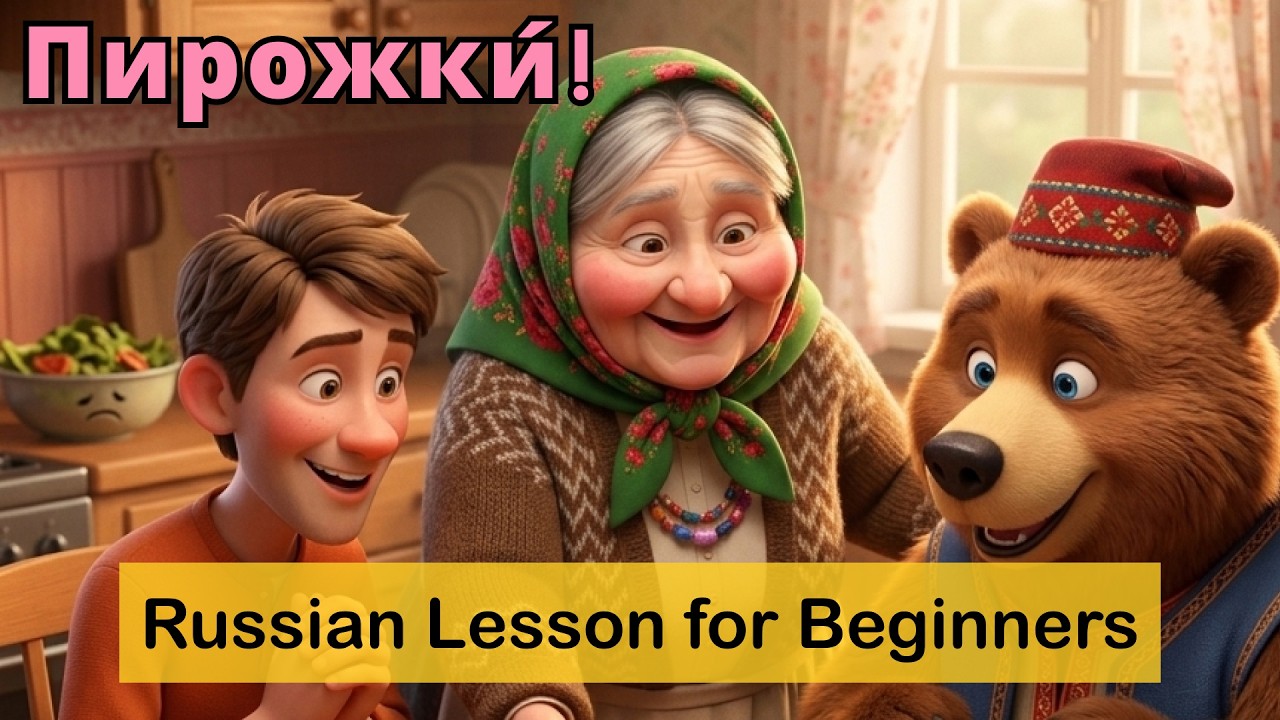
Бабушка: У меня есть пирожки. Свежие, горячие пирожки.
(Grandma: I have pirozhki. Fresh, hot pirozhki.)
Иван: Ммм, твои пирожки! Мои любимые!
(Ivan: Mmm, your pirozhki! My favorites!)
Бабушка: Тогда пойдём на кухню. Будем пить чай и есть пирожки.
(Grandma: Then let’s go to the kitchen. We will drink tea and eat pirozhki.)
Иван: Отличная идея, бабушка! Я помогу.
(Ivan: Great idea, Grandma! I’ll help.)
Бабушка: Спасибо, Ваня. Какой ты у меня хороший.
(Grandma: Thank you, Vanya. You are so good to me.)
📝 Essential Vocabulary
Here are some key words and phrases from the video. Listen to the pronunciation and practice saying them out loud.
| Target Language | English Translation | Pronunciation |
|---|---|---|
| Праздник | Holiday | |
| Цветы | Flowers | |
| Подарок | Gift / Present | |
| Сюрприз | Surprise | |
| Тебе нравятся? | Do you like them? | |
| Любимый цвет | Favorite color | |
| С удовольствием | With pleasure | |
| Пирожки | Small pies |
🔍 Grammar Focus
Let’s break down two important grammar points from Ivan and his Grandma’s conversation.
1. Expressing “To Like”: The Verb Нравиться
In English, we say “I like something.” In Russian, the structure is different. It’s more like “To me, something is pleasing.” This uses the verb нравиться and the dative case.
Notice when Ivan asks his grandma if she likes the flowers:
- Иван: Тебе нравятся? (Ivan: Do you like them?)
Here, Тебе is the dative form of “you” (ты). The verb form нравятся (plural) agrees with the object being liked, which is цветы (flowers, plural).
Later, Ivan says:
- Иван: Я очень рад, что тебе нравится. (Ivan: I am very happy that you like it.)
This time, the verb is нравится (singular) because it implicitly refers to the whole situation or the gift (подарок, singular).
2. Possessive Adjectives
In the dialogue, you can see possessive adjectives like “my” and “your”. In Russian, these words must agree in gender and number with the noun they describe.
- мой (masculine), моя (feminine), моё (neuter), мои (plural) - my
- твой (masculine), твоя (feminine), твоё (neuter), твои (plural) - your
Let’s look at examples from the script:
- Бабушка: Привет, мой хороший! (Hello, my dear!) -
хорошийis masculine. - Иван: Как твои дела…? (How are your affairs/things?) -
делаis plural. - Бабушка: Да, это мой любимый цвет. (Yes, it’s my favorite color.) -
цветis masculine. - Иван: Ммм, твои пирожки! Мои любимые! (Mmm, your pirozhki! My favorites!) -
пирожкиandлюбимыеare plural.
🌍 Cultural Tip
🃏 Flip & Learn
Use these flashcards to test your memory on key phrases from the video.
Happy holiday!
С праздником!
This is for you.
Это тебе.
Do you like them?
Тебе нравятся?
My favorite color
Мой любимый цвет
With pleasure
С удовольствием
💡 Key Takeaways
Here are the most important points to remember from this lesson:
- Greeting family: Use informal greetings like Привет! with close family members.
- Giving a gift: A simple and common way to present a gift is by saying Это тебе (This is for you).
- Holiday wishes: To wish someone a happy holiday, say С праздником! For March 8th specifically, you can say С Восьмым марта!
- Expressing “like”: Remember the construction Мне/Тебе нравится (I/You like). The verb changes to нравятся for plural nouns.
- Cultural note: March 8th (International Women’s Day) is a major holiday in Russia. It’s traditional to give flowers, cards, and gifts to women like mothers, grandmothers, sisters, and colleagues.
🎯 Practice Quiz
Check your understanding with a few questions based on the dialogue.
Question
Question
Question
✍️ Fill in the Blanks
Let’s test your spelling and memory! Fill in the missing words below. Use correct spelling.
Fill in the blank
Fill in the blank
Support Us
Did you find this lesson helpful? Your support is what makes it possible for us to keep creating free, high-quality educational content.