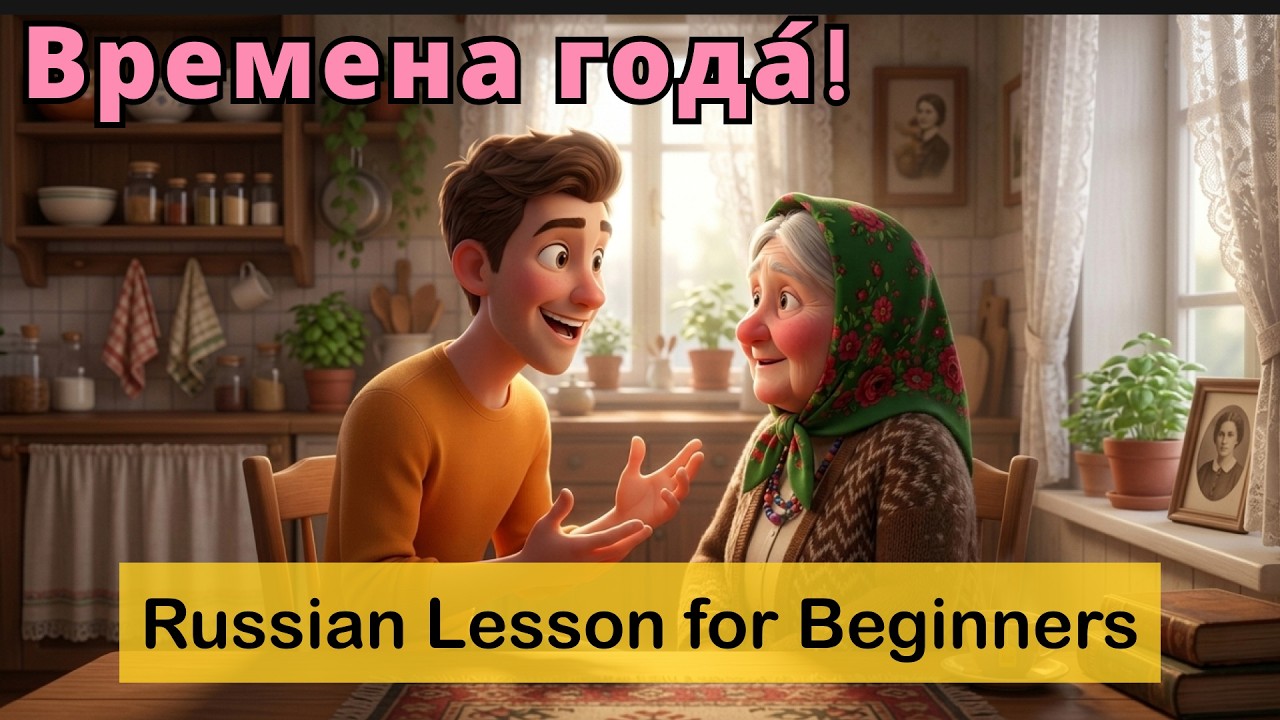
Talking About Pets and Household Items in Russian: DIY Cat House Story 🐈
Learn everyday Russian vocabulary for hobbies, pets, and home activities with our slow-paced story about building a DIY cat house. Perfect for A1-A2 learners.
In this slow Russian listening practice for A1-A2 beginners, you’ll hear a simple story about a rainy day project. Learn essential vocabulary for pets, household items, and feelings as Ivan and Anya decide to build a cozy cardboard box house for their two cats, Boris and Persik.
💬 Video Transcript
Ivan: Привет! Я Иван. Сегодня моя подруга Аня у меня дома.
(Ivan: Hello! I’m Ivan. Today my friend Anya is at my house.)
Ivan: На улице идёт дождь, и нам скучно. Мой серый кот Борис, как всегда, спит на диване.
(Ivan: It’s raining outside, and we are bored. My gray cat Boris, as always, is sleeping on the sofa.)
Ivan: Борис — очень ленивый кот. А рыжий кот Ани, Персик, не спит. Он ходит по комнате и смотрит в окно. Ему тоже скучно.
(Ivan: Boris is a very lazy cat. But Anya’s ginger cat, Persik, is not sleeping. He is walking around the room and looking out the window. He is also bored.)
Ivan: Вдруг Аня говорит: «Иван, у меня есть идея! Давай сделаем дом для котов!» Я думаю, что это прекрасная идея.
(Ivan: Suddenly Anya says: “Ivan, I have an idea! Let’s make a house for the cats!” I think that this is a wonderful idea.)
Ivan: Мы находим большую картонную коробку. Очень большую. Я говорю: «Это будут стены нашего дома».
(Ivan: We find a big cardboard box. Very big one. I say: “These will be the walls of our house.”)
Ivan: Аня находит старое, мягкое одеяло. «А это будет пол и кровать», — говорит она.
(Ivan: Anya finds an old, soft blanket. “And this will be the floor and the bed,” she says.)
Ivan: Мы кладём одеяло внутрь коробки. Потом я делаю маленькую дверь и одно круглое окно. Наш дом для котов готов! Он выглядит очень уютно.
(Ivan: We put the blanket inside the box. Then I make a small door and one round window. Our house for the cats is ready! It looks very cozy.)
Ivan: «Персик, Борис, идите сюда!» — зовёт Аня. «Смотрите, это ваш новый дом!»
(Ivan: “Persik, Boris, come here!” calls Anya. “Look, this is your new house!”)
Ivan: Персик, умный и любопытный кот, сразу подходит к коробке. Он смотрит на дверь. Потом он аккуратно заходит внутрь.
(Ivan: Persik, a smart and curious cat, immediately comes up to the box. He looks at the door. Then he carefully goes inside.)
Ivan: Через секунду мы видим его рыжий нос в окне. Кажется, Персику нравится его новый дом.
(Ivan: A second later, we see his ginger nose in the window. It seems Persik likes his new house.)
Ivan: А что же Борис? Борис открывает один глаз. Он смотрит на нас, потом на коробку. И снова закрывает глаз.
(Ivan: And what about Boris? Boris opens one eye. He looks at us, then at the box. And closes his eye again.)
Ivan: Он не хочет идти в новый дом. Он хочет спать на диване. Мне немного грустно. Я думаю: «Может, ему не нравится наш дом?»
(Ivan: He doesn’t want to go into the new house. He wants to sleep on the sofa. I feel a little sad. I think: “Maybe he doesn’t like our house?”)
Ivan: Но Аня — очень умная. Она берёт любимую подушку Бориса с дивана. Это маленькая, синяя подушка. Она кладёт подушку в коробку.
(Ivan: But Anya is very smart. She takes Boris’s favorite pillow from the sofa. It’s a small, blue pillow. She puts the pillow in the box.)
Ivan: Борис видит свою подушку. Он медленно встаёт. Очень медленно. Он идёт к коробке, заходит внутрь, ложится на подушку и сразу засыпает.
(Ivan: Boris sees his pillow. He slowly gets up. Very slowly. He goes to the box, goes inside, lies down on the pillow and immediately falls asleep.)
Ivan: Мы с Аней тихо смеёмся. Для Персика — это интересный дом для игр. А для Бориса — это просто новая, удобная кровать. Но им обоим нравится. И мы очень рады, что наш скучный день стал весёлым.
(Ivan: Anya and I laugh quietly. For Persik, it’s an interesting house for games. And for Boris, it’s just a new, comfortable bed. But they both like it. And we are very happy that our boring day became fun.)
📝 Essential Vocabulary
Here are some key words and phrases from the video. Listen to the pronunciation and practice saying them yourself.
| Target Language | English Translation | Pronunciation |
|---|---|---|
| Идёт дождь | It’s raining | |
| Скучно | Boring / (to feel) bored | |
| Кот | Cat (male) | |
| Ленивый | Lazy | |
| Идея | Idea | |
| Картонная коробка | Cardboard box | |
| Одеяло | Blanket | |
| Уютно | Cozy | |
| Подушка | Pillow / Cushion |
🔍 Grammar Focus
Let’s look at two important grammar points that appear in the story.
1. Describing Feelings with the Dative Case
In English, we say “I am bored” or “He likes it.” In Russian, these concepts are often expressed differently. The person experiencing the feeling or the state is put into the Dative case, and the verb or adverb describes the situation.
Notice these sentences from the script:
- Нам скучно. (Literally: “To us it is boring.”) - We are bored.
- Ему тоже скучно. (Literally: “To him also it is boring.”) - He is also bored.
- Кажется, Персику нравится его новый дом. (Literally: “It seems, to Persik is pleasing his new house.”) - It seems Persik likes his new house.
In these examples, нам (to us), ему (to him), and Персику (to Persik) are all in the Dative case. This is a very common structure for expressing feelings, needs, and likes in Russian.
2. Adjective and Noun Agreement
In Russian, adjectives must “agree” with the nouns they describe. This means the adjective’s ending changes based on the noun’s gender, number, and case. You can see this throughout the story.
- Masculine noun: серый кот (a gray cat), ленивый кот (a lazy cat)
- Feminine noun: большую картонную коробку (a big cardboard box - Accusative case), маленькая, синяя подушка (a small, blue pillow - Nominative case)
- Neuter noun: старое, мягкое одеяло (an old, soft blanket - Accusative case), круглое окно (a round window - Accusative case)
Pay attention to how the endings of adjectives like серый (gray), синяя (blue), and старое (old) change to match the noun. This is a fundamental concept in Russian grammar!
🌍 Cultural Tip
🃏 Flip & Learn
Use these flashcards to test your memory of key phrases from the story.
We are bored
Нам скучно
A lazy cat
Ленивый кот
Cardboard box
Картонная коробка
It looks very cozy
Он выглядит очень уютно
His new house
Его новый дом
💡 Key Takeaways
Here are the most important points to remember from this lesson:
- To say someone is bored in Russian, use the Dative case + скучно. For example: Мне скучно (I am bored), Ему скучно (He is bored).
- The verb нравится (to like) also uses the Dative case for the person who likes something: Персику нравится дом (Persik likes the house).
- Adjectives must agree with nouns in gender. Notice the different endings: серый кот (masculine), синяя подушка (feminine), старое одеяло (neuter).
- You learned useful everyday vocabulary for describing pets (ленивый, умный, любопытный) and household objects (коробка, одеяло, подушка).
🎯 Practice Quiz
Check your understanding with a few quick questions.
Question
Question
Question
✍️ Fill in the Blanks
Let’s test your spelling and memory! Fill in the missing words below. Use correct spelling.
Fill in the blank
Fill in the blank
Support Us
Did you find this lesson helpful? Your support is what makes it possible for us to keep creating free, high-quality educational content.