Talking About Favorite Seasons in Russian: Weather Dialogue & Vocabulary 🌦️
Learn how to talk about your favorite seasons in Russian! This A1-level dialogue covers key vocabulary for summer, winter, weather, and making plans.
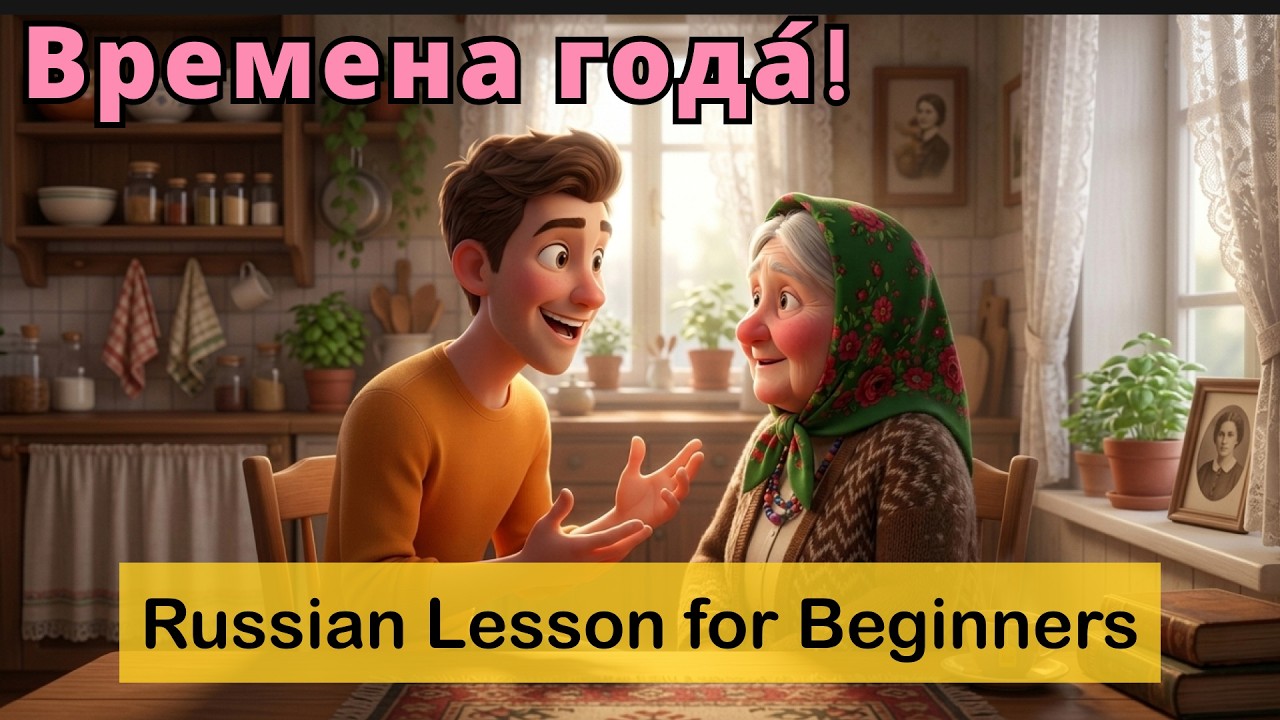
In this beginner-friendly Russian lesson, you’ll listen to a simple conversation between Ivan and Anya as they discuss their favorite seasons. You will learn essential A1 vocabulary for talking about summer, winter, weather, and common activities like walking in the park or drinking hot tea.
💬 Video Transcript
Иван: Привет, Аня!
(Ivan: Hello, Anya!)
Аня: Привет, Иван! Какая сегодня хорошая погода!
(Anya: Hello, Ivan! What nice weather today!)
Иван: Да, очень хорошая. Светит солнце.
(Ivan: Yes, very nice. The sun is shining.)
Аня: Я очень люблю, когда светит солнце. Я люблю лето.
(Anya: I really love it when the sun shines. I love summer.)
Иван: Лето? Правда? А я люблю зиму.
(Ivan: Summer? Really? But I love winter.)
Аня: Зиму? Но зимой холодно. Бррр.
(Anya: Winter? But in winter it’s cold. Brrr.)
Иван: Да, холодно. Но зимой есть снег. Белый, красивый снег.
(Ivan: Yes, it’s cold. But in winter there is snow. White, beautiful snow.)
Аня: Хм, снег это красиво. Но я не люблю, когда холодно. А что ты делаешь зимой?
(Anya: Hmm, snow is beautiful. But I don’t like when it’s cold. And what do you do in the winter?)
Иван: Зимой я люблю сидеть дома. Я пью горячий чай и читаю книгу. Это очень уютно.
(Ivan: In the winter, I like to sit at home. I drink hot tea and read a book. It’s very cozy.)
Аня: Понятно. А я люблю гулять. Летом тепло. Можно долго гулять в парке.
(Anya: I see. But I like to walk. In the summer it’s warm. You can walk in the park for a long time.)
Иван: А я не люблю, когда жарко. Очень жарко.
(Ivan: But I don’t like when it’s hot. Very hot.)
Аня: А я люблю! Летом можно есть мороженое на улице. Я очень люблю мороженое.
(Anya: But I love it! In the summer you can eat ice cream outside. I really love ice cream.)
Иван: Я тоже люблю мороженое. Но я люблю есть его дома.
(Ivan: I also love ice cream. But I like to eat it at home.)
Аня: Так, ты любишь зиму, снег и горячий чай.
(Anya: So, you love winter, snow, and hot tea.)
Иван: Да. А ты любишь лето, солнце и мороженое.
(Ivan: Yes. And you love summer, sun, and ice cream.)
Аня: Да! Мы очень разные.
(Anya: Yes! We are very different.)
Иван: Но сегодня не зима и не лето. Сегодня весна. И погода идеальная.
(Ivan: But today is not winter and not summer. Today is spring. And the weather is perfect.)
Аня: Ты прав. Не холодно и не жарко.
(Anya: You’re right. Not cold and not hot.)
Иван: Пойдём в парк? Сейчас там очень хорошо.
(Ivan: Shall we go to the park? It’s very nice there now.)
Аня: Отличная идея! Пойдём в парк вместе.
(Anya: Great idea! Let’s go to the park together.)
Иван: Супер! А потом можем выпить чай. Или съесть мороженое.
(Ivan: Super! And afterwards we can drink tea. Or eat ice cream.)
Аня: Ха-ха, хорошо. И чай, и мороженое!
(Anya: Ha-ha, okay. Both tea and ice cream!)
📝 Essential Vocabulary
Here are some key words and phrases from the dialogue. Practice your pronunciation with the audio clips!
| Target Language | English Translation | Pronunciation |
|---|---|---|
| погода | weather | |
| светит солнце | the sun is shining | |
| лето | summer | |
| зима | winter | |
| холодно | cold / it’s cold | |
| жарко | hot / it’s hot | |
| снег | snow | |
| мороженое | ice cream | |
| весна | spring | |
| уютно | cozy |
🔍 Grammar Focus
Let’s look at two important grammar points from Ivan and Anya’s conversation.
1. Describing Weather with Adverbs
In Russian, you can describe the weather or a general state using adverbs like холодно (cold), тепло (warm), and жарко (hot). Notice how there is no subject like “it” as in “it is cold.” The adverb itself conveys the entire meaning.
Examples from the script:
- Аня: Но зимой холодно.
- (Anya: But in winter it’s cold.)
- Аня: Летом тепло.
- (Anya: In summer it’s warm.)
- Иван: А я не люблю, когда жарко.
- (Ivan: But I don’t like when it’s hot.)
You can use this structure for many conditions: хорошо (good), плохо (bad), скучно (boring).
2. Expressing Likes and Dislikes with “любить”
The verb любить (to love, to like) is very common and versatile. You can use it to talk about things you like (nouns) or activities you like to do (verbs).
любить + Noun
When you like a thing, you use любить followed by the noun in the accusative case.
- Аня: Я люблю лето.
- (Anya: I love summer.)
- Иван: А я люблю зиму.
- (Ivan: But I love winter.)
- Аня: Я очень люблю мороженое.
- (Anya: I really love ice cream.)
любить + Verb
When you like to do an activity, you use любить followed by the infinitive form of the verb (the basic “-ть” form).
- Иван: Зимой я люблю сидеть дома.
- (Ivan: In the winter, I like to sit at home.)
- Аня: А я люблю гулять.
- (Anya: But I like to walk.)
🌍 Cultural Tip
🃏 Flip & Learn
Review the key vocabulary from this lesson with these flashcards.
Summer
Лето
Winter
Зима
The sun is shining
Светит солнце
It's cold
Холодно
To walk / stroll
Гулять
💡 Key Takeaways
Here are the most important points to remember from this lesson:
- State your favorite season: You can say
Я люблю лето(I love summer) orЯ люблю зиму(I love winter). - Talk about the weather: Use key words like
погода(weather),солнце(sun), andснег(snow). Use adverbs likeхолодно(it’s cold),тепло(it’s warm), andжарко(it’s hot). - Express what you like to do: Use the structure
Я люблю+ an infinitive verb, likeЯ люблю гулять(I like to walk) orЯ люблю читать(I like to read). - Make a simple suggestion: Use
Пойдём...?(Shall we go…?) to invite someone to do something. For example:Пойдём в парк?(Shall we go to the park?).
🎯 Practice Quiz
Test your understanding of the dialogue and vocabulary.
Question
Question
Question
✍️ Fill in the Blanks
Let’s test your spelling and memory! Fill in the missing words below. Use correct spelling.
Fill in the blank
Fill in the blank
Support Us
Did you find this lesson helpful? Your support is what makes it possible for us to keep creating free, high-quality educational content.