Talking About Games in Russian: Past Tense & Daily Activities ☕
Learn essential Russian vocabulary and past tense verbs through a funny story about a game of charades gone wrong. Follow Ivan and Anya as a simple request for tea turns into an unexpected dance party!
In this lesson, you’ll improve your Russian listening skills with a fun and simple story about a communication breakdown. Learn vocabulary for everyday feelings and actions as Ivan tries to guess what his friend Anya wants during their “no-words” game. Pay close attention to how past tense verbs are used throughout the story!
💬 Video Transcript
Here is the full transcript of the story. Read along as you watch the video to improve your comprehension.
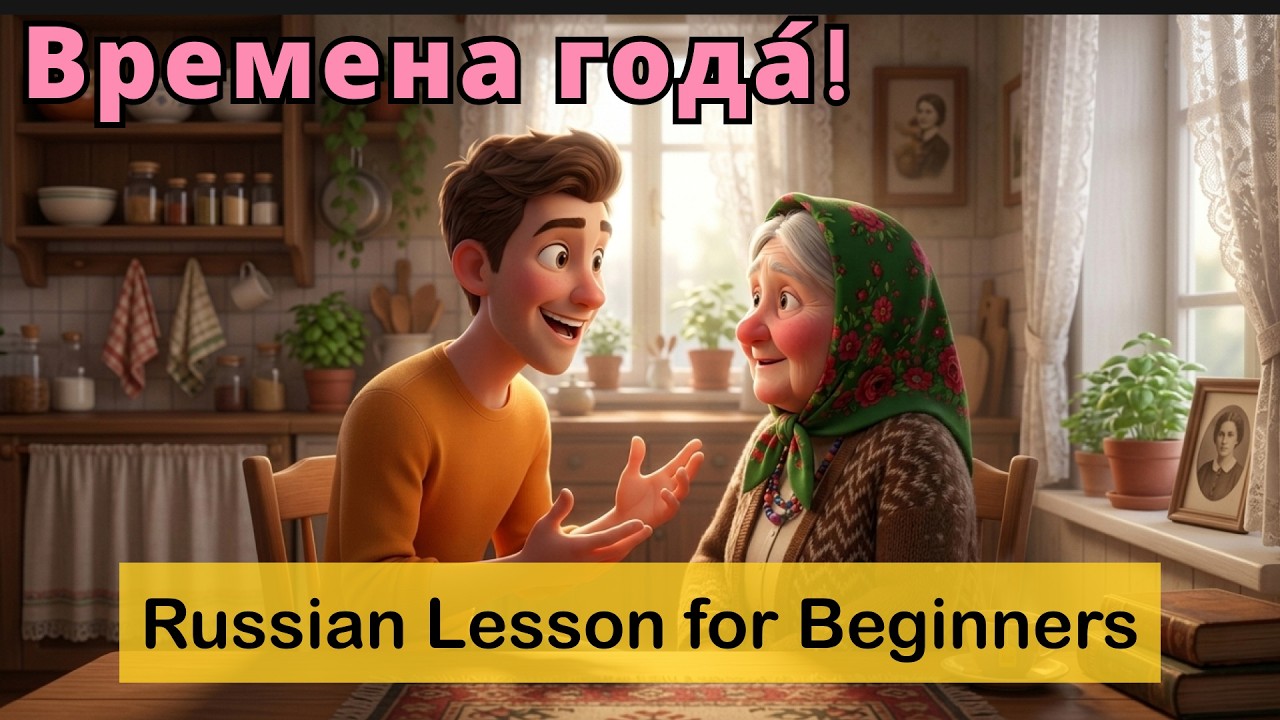
Narrator: Вчера был скучный день. Я сидел дома и смотрел в окно. Мой кот Борис спал на диване. Он всегда спит. Вдруг позвонила моя подруга Аня. «Привет, Иван! Что ты делаешь?» — спросила она. «Ничего, — сказал я. — Мне скучно». «Я тоже дома. Можно я приду?» — спросила Аня. «Конечно!» — обрадовался я.
(Narrator: Yesterday was a boring day. I was sitting at home and looking out the window. My cat Boris was sleeping on the sofa. He is always sleeping. Suddenly, my friend Anya called. “Hi, Ivan! What are you doing?” she asked. “Nothing,” I said. “I’m bored.” “I’m at home too. Can I come over?” asked Anya. “Of course!” I said happily.)
Narrator: Когда Аня пришла, мы сидели и думали, что делать. И у меня появилась идея. «Аня, давай играть в игру?» — предложил я. «В какую игру?» — спросила она. «Мы будем говорить без слов. Только жесты. Один час. Как в старом, немом кино». Ане понравилась эта идея. Она улыбнулась и кивнула головой. Это значит «да».
(Narrator: When Anya arrived, we sat and thought about what to do. And I had an idea. “Anya, let’s play a game?” I suggested. “What kind of game?” she asked. “We will talk without words. Only gestures. For one hour. Like in an old, silent movie.” Anya liked this idea. She smiled and nodded her head. That means “yes”.)
Narrator: Игра началась. Сначала всё было просто. Я показал на книгу. Аня поняла и дала мне книгу. Потом Аня показала, что хочет пить. Она сделала жест, как будто пьёт из стакана. Я понял и принёс ей воду. Она улыбнулась и сказала жестами «спасибо».
(Narrator: The game began. At first, everything was simple. I pointed to a book. Anya understood and gave me the book. Then Anya showed that she wanted to drink. She made a gesture as if she were drinking from a glass. I understood and brought her water. She smiled and said “thank you” with gestures.)
Narrator: Потом мне стало немного холодно. Я показал, что дрожу, и указал на окно. Аня сразу поняла и закрыла окно. «Отлично!» — подумал я. «Мы хорошо понимаем друг друга без слов». Борис открыл один глаз, посмотрел на нас и снова заснул. Ему наша игра была не интересна.
(Narrator: Then I got a little cold. I showed that I was shivering and pointed to the window. Anya understood immediately and closed the window. “Excellent!” I thought. “We understand each other well without words.” Boris opened one eye, looked at us, and fell asleep again. Our game was not interesting to him.)
Narrator: И вот тут началось самое смешное. Аня встала. Она показала на кухню. Потом она сделала жест, как будто включает чайник. А потом она начала делать руками красивые, волнообразные движения вверх. Я смотрел на неё очень внимательно. «Кухня… чайник… красивые движения…» — думал я. И я понял! Конечно! Она хочет танцевать!
(Narrator: And this is where the funniest part began. Anya stood up. She pointed to the kitchen. Then she made a gesture as if turning on a kettle. And then she started making beautiful, wave-like movements upwards with her hands. I watched her very attentively. “Kitchen… kettle… beautiful movements…” I thought. And I understood! Of course! She wants to dance!)
Narrator: Я вскочил с дивана. Я улыбнулся и тоже начал танцевать. Я танцевал очень смешно. Аня посмотрела на меня. Её глаза были очень большие и удивлённые. Она покачала головой. «Нет?» — подумал я. Она снова показала на кухню, потом на чашку, а потом сделала жест, как будто пьёт что-то горячее. И тут я всё понял.
(Narrator: I jumped up from the sofa. I smiled and also started to dance. I danced very funnily. Anya looked at me. Her eyes were very big and surprised. She shook her head. “No?” I thought. She pointed to the kitchen again, then to a cup, and then made a gesture as if drinking something hot. And then I understood everything.)
Narrator: Я перестал танцевать. «Чай?» — спросил я шёпотом. Аня засмеялась и громко сказала: «Да! Я просто хотела чай! А ты устроил дискотеку!» Мы оба начали громко смеяться. Наша игра «без слов» закончилась. Мы пошли на кухню, чтобы сделать горячий и вкусный чай. Говорить словами всё-таки легче. А иногда и веселее.
(Narrator: I stopped dancing. “Tea?” I asked in a whisper. Anya laughed and said loudly: “Yes! I just wanted tea! And you started a disco!” We both started laughing loudly. Our “no words” game was over. We went to the kitchen to make hot and tasty tea. Speaking with words is easier after all. And sometimes more fun.)
📝 Essential Vocabulary
Here are some key words and phrases from the video. Listen to the pronunciation and practice saying them out loud.
| Target Language | English Translation | Pronunciation |
|---|---|---|
| скучно | boring / to be bored | |
| жесты | gestures | |
| немое кино | silent movie | |
| понимать | to understand | |
| холодно | cold / to be cold | |
| чайник | kettle | |
| танцевать | to dance | |
| удивлённый | surprised |
🔍 Grammar Focus
This story is told in the past tense. In Russian, forming the past tense is quite simple, but you need to pay attention to the gender of the person or object performing the action.
The Russian Past Tense
To form the past tense, you take the infinitive form of the verb (e.g., читать - to read), remove the -ть ending, and add a new ending based on gender:
- Masculine: Add `-л (e.g., он читал - he read)
- Feminine: Add -ла (e.g., она читала - she read)
- Neuter: Add -ло (e.g., оно читало - it read)
- Plural: Add -ли (e.g., они читали - they read)
You can see this pattern throughout the story:
- Masculine (Ivan is speaking, the cat Boris):
- «Я сидел дома…» (I was sitting at home…)
- «Мой кот Борис спал…» (My cat Boris was sleeping…)
- Feminine (Anya):
- «…позвонила моя подруга Аня.» (…my friend Anya called.)
- «Аня поняла и дала мне книгу.» (Anya understood and gave me the book.)
- Plural (Ivan and Anya together):
- «Мы сидели и думали…» (We were sitting and thinking…)
- «Мы оба начали громко смеяться.» (We both started to laugh loudly.)
🌍 Cultural Tip
🃏 Flip & Learn
Use these flashcards to test your memory of key phrases from the story.
To be bored
Мне скучно
Silent movie
Немое кино
To understand each other
Понимать друг друга
She wants to dance
Она хочет танцевать
I just wanted tea!
Я просто хотела чай!
💡 Key Takeaways
Here are the most important points to remember from this lesson:
- Expressing Boredom: The phrase Мне скучно` literally means “To me, it is boring,” and it’s the most common way to say “I’m bored.”
- Past Tense Endings: Remember that Russian past tense verbs must agree in gender and number with the subject. Look for the endings
-л,-ла,-ло, and-ли. - Context is Key: This story is a funny reminder that even with simple gestures, communication can fail without shared context. Anya’s “wave-like movements” meant “steam,” but Ivan interpreted them as “dancing”!
- Useful Verbs: The story includes many high-frequency verbs in the past tense, such as
был(was),сидел(sat),позвонила(called),пришла(arrived), andпонял(understood).
🎯 Practice Quiz
Let’s check what you’ve learned. Choose the best answer for each question.
Question
Question
Question
✍️ Fill in the Blanks
Let’s test your spelling and memory! Fill in the missing words below. Use correct spelling.
Fill in the blank
Fill in the blank
Support Us
Did you find this lesson helpful? Your support is what makes it possible for us to keep creating free, high-quality educational content.