Telling a Story in Russian: Past Tense & Narrative Practice 🧶
Improve your Russian listening with this simple story about a boy, his grandma, and a helpful bear. Learn key vocabulary for finding lost items and expressing emotions.
In this beginner Russian story, you’ll follow a heartwarming tale about a boy helping his grandmother find her favorite red ball of yarn with the help of a special friend. This lesson is perfect for practicing past tense verbs, learning vocabulary for common household objects, and understanding how to express emotions like sadness and happiness in Russian.
💬 Video Transcript
Here is the full transcript of the story. Listen to the video while reading along to connect the spoken and written words.
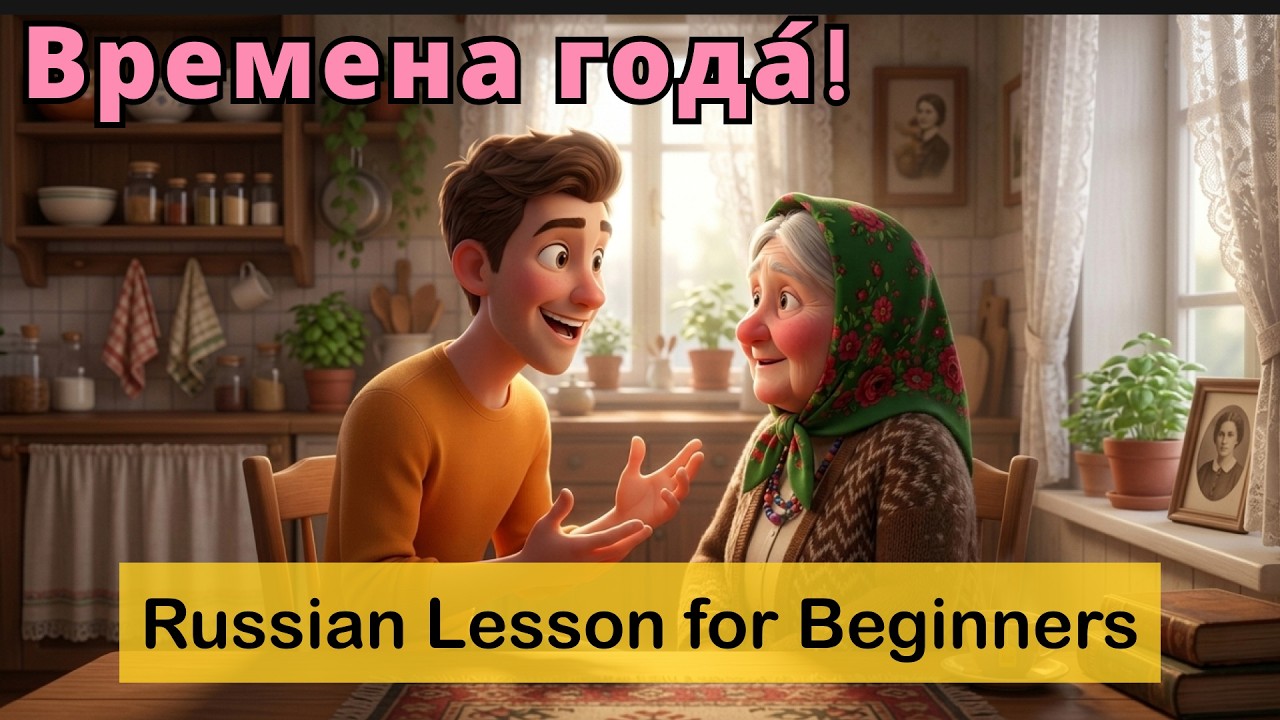
Narrator: Я пришёл в гости к моей бабушке. “Привет, бабушка!” – сказал я. Но моя бабушка не была весёлая. Она была грустная. Я спросил: “Бабушка, что случилось?” Она ответила: “Мой красный клубок шерсти пропал. Я не могу вязать”. Это был её любимый клубок.
(Narrator: I came to visit my grandmother. “Hello, Grandma!” I said. But my grandmother was not cheerful. She was sad. I asked: “Grandma, what happened?” She answered: “My red ball of yarn is missing. I can’t knit.” It was her favorite ball of yarn.)
Narrator: Я хотел помочь. “Не волнуйся, я найду его!” – сказал я. Я искал в доме. Я смотрел под столом. Потом я смотрел на стуле. Клубка нигде не было. Мы были очень расстроены.
(Narrator: I wanted to help. “Don’t worry, I’ll find it!” I said. I searched in the house. I looked under the table. Then I looked on the chair. The ball of yarn was nowhere. We were very upset.)
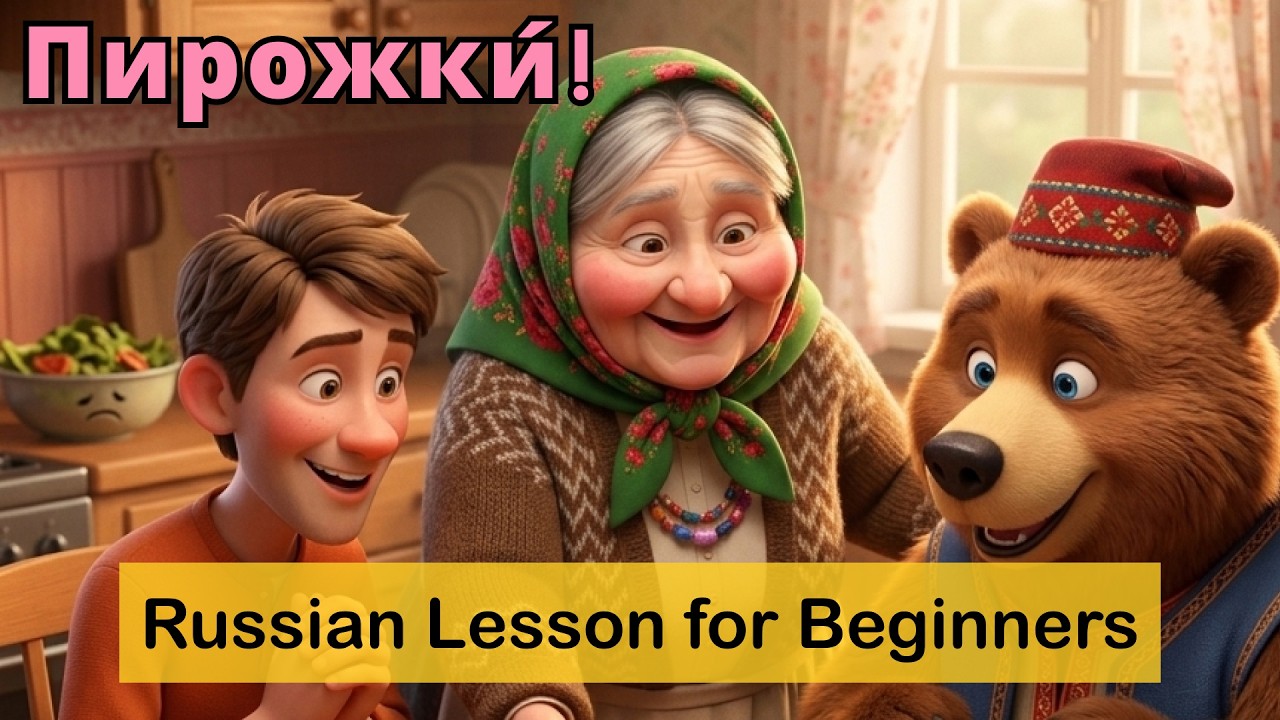
Narrator: Вдруг мы услышали тихий звук в окне. Тук-тук. Это был наш друг, медведь Миша. Он пришёл за пирожками. Бабушка дала Мише пирожок, но она всё ещё была грустная. Миша увидел, что мы грустные. Он посмотрел на меня, потом на бабушку. Он наклонил голову, как будто спрашивал: “Что не так?”.
(Narrator: Suddenly we heard a quiet sound at the window. Knock-knock. It was our friend, Misha the bear. He came for pies. Grandma gave Misha a pie, but she was still sad. Misha saw that we were sad. He looked at me, then at Grandma. He tilted his head as if asking, “What’s wrong?”.)
Narrator: Я сказал: “Миша, мы потеряли красный клубок”.
(Narrator: I said: “Misha, we lost the red ball of yarn”.)
Narrator: Миша посмотрел по сторонам. Потом он поднял свою большую лапу. Он показал на улицу, на большое дерево в саду. Мы с бабушкой вышли на улицу. Мы посмотрели на дерево. И там, высоко на ветке, был красный клубок! Наверное, его унесла птица.
(Narrator: Misha looked around. Then he raised his big paw. He pointed outside, to a big tree in the garden. Grandma and I went outside. We looked at the tree. And there, high on a branch, was the red ball of yarn! A bird must have taken it.)
Narrator: “Ох, как же его достать?” – спросила бабушка. Дерево было очень высокое. Но Миша был цирковым медведем. Он был сильный и умный. Он подошёл к дереву и аккуратно полез вверх. Только немного. Он взял клубок своей лапой и осторожно спустился. Он отдал клубок бабушке.
(Narrator: “Oh, how can we get it down?” asked Grandma. The tree was very tall. But Misha was a circus bear. He was strong and smart. He went to the tree and carefully climbed up. Just a little. He took the ball of yarn with his paw and carefully climbed down. He gave the ball of yarn to Grandma.)
Narrator: Бабушка была так счастлива! “Спасибо, Миша! Ты самый лучший друг!” – сказала она. Она пошла в дом и дала ему ещё три тёплых пирожка. Миша был очень рад. А я был рад, потому что моя бабушка снова улыбалась и могла вязать.
(Narrator: Grandma was so happy! “Thank you, Misha! You are the best friend!” she said. She went into the house and gave him three more warm pies. Misha was very glad. And I was glad because my grandma was smiling again and could knit.)
📝 Essential Vocabulary
Here are some of the most important words and phrases you’ll hear in the story. Listen to the pronunciation to improve your listening and speaking skills.
| Target Language | English Translation | Pronunciation |
|---|---|---|
| бабушка | grandmother | |
| грустная | sad (feminine) | |
| клубок шерсти | ball of yarn | |
| пропал | disappeared / got lost (masculine) | |
| искал | I was looking for / I searched (masculine) | |
| медведь | bear | |
| дерево | tree | |
| помочь | to help | |
| счастлива | happy (feminine) |
🔍 Grammar Focus
Let’s look at a key grammar point featured in this story: the simple past tense.
Masculine Past Tense Verbs
This story is told from the perspective of the grandson, so you see many verbs in the masculine past tense. In Russian, the most common ending for masculine past tense verbs is -л.
Notice how this pattern appears throughout the script:
- Я пришёл… – I came…
- …сказал я. – …I said.
- Я спросил… – I asked…
- Я хотел помочь. – I wanted to help.
- Я искал в доме. – I searched in the house.
You can see this same ending used for Misha the bear:
- Это был наш friend… – It was our friend…
- Он пришёл за пирожками. – He came for pies.
- Он подошёл к дереву… – He went to the tree…
Compare this to the feminine form for the grandmother (Она была грустная - She was sad) or the neuter form (что случилось? - what happened?).
🌍 Cultural Tip
🃏 Flip & Learn
Practice the key vocabulary from the story with these interactive flashcards.
Grandmother
Бабушка
Sad (feminine)
Грустная
It got lost / disappeared (masculine)
Пропал
Ball of yarn
Клубок шерсти
He helped
Он помог
💡 Key Takeaways
Here are the most important points to remember from this lesson:
- Expressing Emotions: You learned how to say someone is sad (
Она была грустная) or happy (Бабушка была так счастлива!). - Past Tense Verbs: The masculine past tense verb ending is usually
-л, as inя сказал(I said) andон пришёл(he came). - Finding Lost Items: Key verbs for this theme are
искать(to look for),найти(to find), and the past tenseпропал(it disappeared). - Key Vocabulary: Remember the core nouns from the story:
бабушка(grandmother),клубок(ball of yarn),медведь(bear), andдерево(tree).
🎯 Practice Quiz
Test your understanding of the story and vocabulary with this short quiz.
Question
Question
Question
✍️ Fill in the Blanks
Let’s test your spelling and memory! Fill in the missing words below. Use correct spelling.
Fill in the blank
Fill in the blank
Support Us
Did you find this lesson helpful? Your support is what makes it possible for us to keep creating free, high-quality educational content.