Learning to Ride a Bike in Russian: Bicycle Vocabulary & Commands 🚲
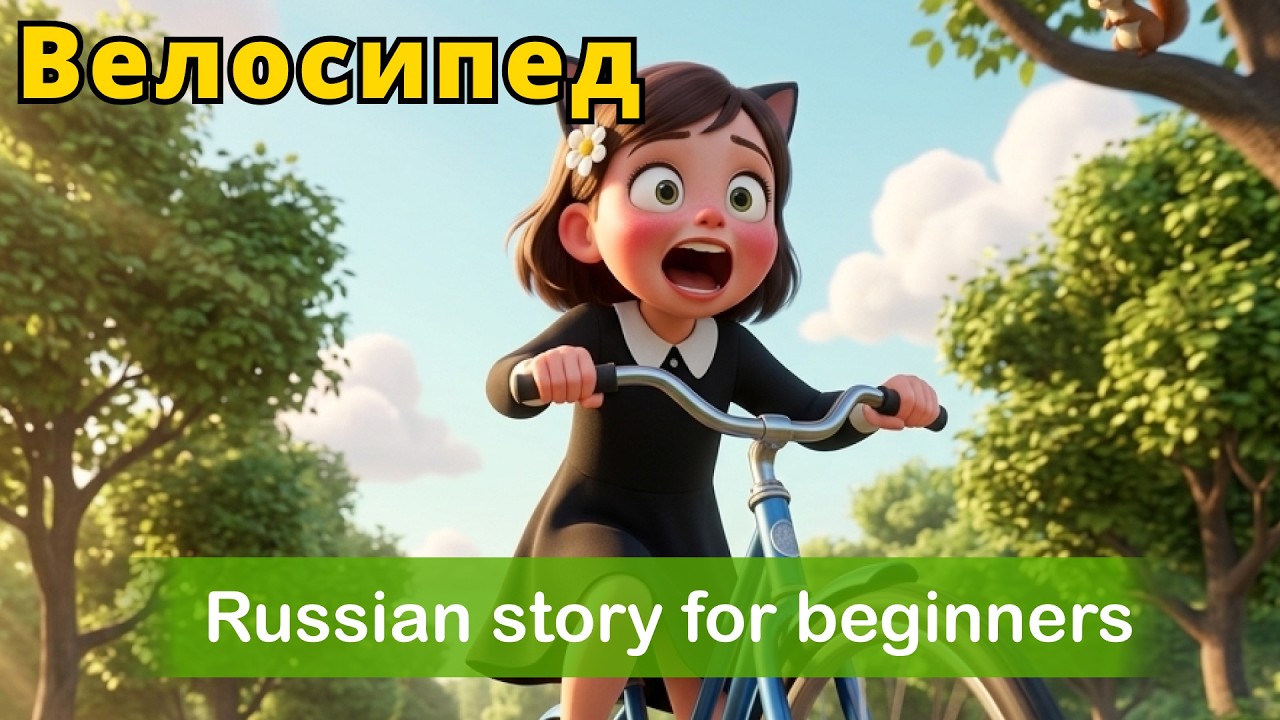
Learn essential Russian vocabulary and verbs of motion as Ivan teaches Anya how to ride a bicycle in this A1 beginner dialogue.
In this beginner Russian dialogue, you’ll join Anya as she learns to ride a bicycle for the very first time with her friend Ivan. You’ll learn essential vocabulary for parts of a bike, action verbs, and encouraging phrases, all in slow, clear Russian perfect for A1 learners.
💬 Video Transcript
Иван: Привет, Аня! Смотри, это мой новый велосипед.
(Ivan: Hi, Anya! Look, this is my new bicycle.)
Аня: Привет, Иван! Ого, какой красивый велосипед! Он синий!
(Anya: Hi, Ivan! Wow, what a beautiful bicycle! It’s blue!)
Иван: Да, он синий. Синий — мой любимый цвет. Тебе нравится?
(Ivan: Yes, it’s blue. Blue is my favorite color. Do you like it?)
Аня: Да, очень нравится. Он большой и красивый.
(Anya: Yes, I like it a lot. It’s big and beautiful.)
Иван: Спасибо! Аня, ты умеешь кататься на велосипеде?
(Ivan: Thanks! Anya, do you know how to ride a bicycle?)
Аня: Нет, я не умею. Когда я была маленькая, у меня не было велосипеда.
(Anya: No, I don’t know how. When I was little, I didn’t have a bicycle.)
Иван: Это не проблема. Хочешь, я тебя научу? Это очень просто.
(Ivan: That’s not a problem. Do you want me to teach you? It’s very simple.)
Аня: Правда? Да, я очень хочу! Но… это не страшно?
(Anya: Really? Yes, I really want to! But… isn’t it scary?)
Иван: Нет, не страшно. Я помогу. Я буду рядом. Смотри, это руль.
(Ivan: No, it’s not scary. I will help. I’ll be right here. Look, this is the handlebar.)
Аня: Руль. Понятно.
(Anya: Handlebar. Got it.)
Иван: А это — педали. Вот одна педаль, вот вторая педаль.
(Ivan: And these are the pedals. Here is one pedal, here is the second pedal.)
Аня: Педали. Хорошо. Я понимаю.
(Anya: Pedals. Okay. I understand.)
Иван: А это седло. Садись сюда.
(Ivan: And this is the seat. Sit here.)
Аня: Хорошо. Ой, как высоко!
(Anya: Okay. Oh, it’s so high!)
Иван: Не бойся. Я держу велосипед. Теперь ставь ноги на педали.
(Ivan: Don’t be afraid. I’m holding the bicycle. Now put your feet on the pedals.)
Аня: Так? Ноги на педали.
(Anya: Like this? Feet on the pedals.)
Иван: Да, отлично. А руки на руль.
(Ivan: Yes, excellent. And hands on the handlebar.)
Аня: Руки на руль. Хорошо. Что теперь?
(Anya: Hands on the handlebar. Okay. What now?)
Иван: Теперь медленно крути педали. Медленно-медленно. Я держу.
(Ivan: Now slowly turn the pedals. Slowly, slowly. I’m holding on.)
Аня: Ой! Он едет! Иван, он едет!
(Anya: Oh! It’s moving! Ivan, it’s moving!)
Иван: Да! Ты молодец! Крути педали, крути!
(Ivan: Yes! You’re doing great! Pedal, pedal!)
Аня: Я еду! Я сама еду! Ура!
(Anya: I’m riding! I’m riding by myself! Hooray!)
Иван: Молодец, Аня! Очень хорошо! Теперь тормози. Медленно.
(Ivan: Well done, Anya! Very good! Now brake. Slowly.)
Аня: Как? А, вот так. Фух. Я остановилась.
(Anya: How? Ah, like this. Phew. I’ve stopped.)
Иван: Отлично! Это было очень хорошо для первого раза. Давай ещё раз?
(Ivan: Excellent! That was very good for the first time. Want to go again?)
Аня: Да, давай! Мне нравится! Это очень весело!
(Anya: Yes, let’s go! I like it! This is very fun!)
Иван: Хорошо. Садись. Руки на руль, ноги на педали. Я держу.
(Ivan: Okay. Get on. Hands on the handlebar, feet on the pedals. I’m holding on.)
Аня: Я готова. Поехали!
(Anya: I’m ready. Let’s go!)
Иван: Крути педали! Ты едешь!
(Ivan: Turn the pedals! You’re riding!)
Аня: Я еду! Смотри, Иван, я еду! Спасибо тебе большое!
(Anya: I’m riding! Look, Ivan, I’m riding! Thank you so much!)
Иван: Пожалуйста! Ты очень хорошая ученица. Ты быстро учишься.
(Ivan: You’re welcome! You are a very good student. You learn quickly.)
Аня: Спасибо! Теперь я почти умею кататься на велосипеде.
(Anya: Thank you! Now I almost know how to ride a bicycle.)
Иван: Да! Ты молодец. А теперь пойдём есть мороженое?
(Ivan: Yes! You did great. And now, shall we go get some ice cream?)
📝 Essential Vocabulary
Here are some key words and phrases from the video. Listen to the pronunciation and practice saying them out loud.
| Target Language | English Translation | Pronunciation |
|---|---|---|
| Велосипед | Bicycle | |
| Кататься на велосипеде | To ride a bicycle | |
| Уметь | To know how to / to be able to | |
| Научу | I will teach | |
| Руль | Handlebar | |
| Педали | Pedals | |
| Седло | Saddle / Seat | |
| Крути педали | Pedal / Turn the pedals | |
| Тормози | Brake! | |
| Молодец | Well done / Good job |
🔍 Grammar Focus
Let’s look at two important grammar points from Ivan and Anya’s conversation.
1. Expressing Ability with “Уметь”
The verb уметь (umet’) means “to know how to” or “to be able to” do something that requires a learned skill. In the dialogue, Ivan asks Anya if she has this skill:
- Иван: Аня, ты умеешь кататься на велосипеде?
(Ivan: Anya, do you know how to ride a bicycle?)
Anya replies that she does not have this skill:
- Аня: Нет, я не умею.
(Anya: No, I don’t know how.)
Notice that уметь is followed by an infinitive verb (e.g., кататься - to ride). This is a common pattern for expressing what you can and can’t do.
2. Giving Commands (Informal Imperative)
When Ivan teaches Anya, he gives her simple instructions. In Russian, this is done using the imperative mood. Since he’s talking to a friend, he uses the informal “ты” form.
- Смотри, это мой новый велосипед. (Look, this is my new bicycle.)
- Садись сюда. (Sit here.)
- Не бойся. (Don’t be afraid.)
- Ставь ноги на педали. (Put your feet on the pedals.)
- Медленно крути педали. (Slowly turn the pedals.)
- Теперь тормози. (Now brake.)
These short, direct commands are very common when giving instructions to one person you know well.
🌍 Cultural Tip
🃏 Flip & Learn
Use these flashcards to test your memory of the key vocabulary from the lesson.
Bicycle
Велосипед
To ride a bicycle
Кататься на велосипеде
Handlebar
Руль
Pedals
Педали
Well done! / Good job!
Молодец!
💡 Key Takeaways
Here are the most important points to remember from this lesson:
- To ask if someone knows how to do something, use Ты умеешь…? (Do you know how to…?). To say you don’t, use Я не умею.
- The main parts of a bicycle have simple names in Russian: руль (handlebar), педали (pedals), and седло (seat).
- To give simple instructions to a friend, you can use the imperative form of verbs, like крути (pedal!), тормози (brake!), and смотри (look!).
- Молодец! is a great and very common way to praise someone and say “Good job!” or “Well done!”.
🎯 Practice Quiz
Check your understanding with a few questions about the dialogue.
Question
Question
Question
✍️ Fill in the Blanks
Let’s test your spelling and memory! Fill in the missing words below. Use correct spelling.
Fill in the blank
Fill in the blank
Support Us
Did you find this lesson helpful? Your support is what makes it possible for us to keep creating free, high-quality educational content.