Talking About the Countryside in Russian: Dacha Story & Past Tense Verbs 🏡
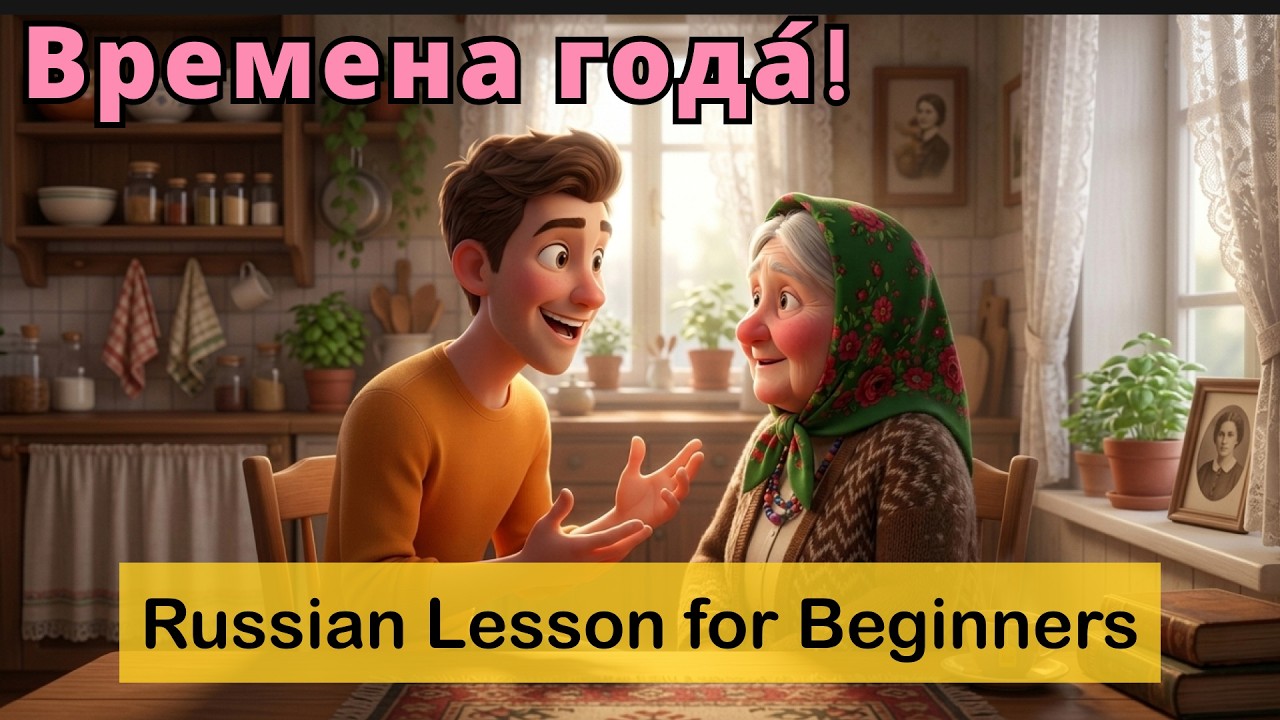
Join Ivan and his cat Boris for a relaxing day at the dacha! This A1-A2 Russian story is perfect for practicing past tense verbs and learning vocabulary related to nature and the countryside.
Join Ivan and his cat, Boris, for a wonderful Saturday at their dacha (country house). This slow and simple story for A1-A2 learners is perfect for practicing your listening comprehension and seeing the Russian past tense in action. You’ll learn essential vocabulary for describing a day in the countryside, from working in the garden to relaxing with tea.
💬 Video Transcript
Иван: Привет! Меня зовут Иван. Сегодня суббота. Утром погода была очень хорошая. Светило солнце.
(Ivan: Hello! My name is Ivan. Today is Saturday. In the morning, the weather was very good. The sun was shining.)
Иван: Моя бабушка сказала: «Иван, давай поедем на дачу». Я сказал: «Конечно, бабушка! Отличная идея!».
(Ivan: My grandmother said: “Ivan, let’s go to the dacha.” I said: “Of course, Grandma! Excellent idea!”)
Иван: Дача – это наш маленький дом за городом. Там есть большой сад. Мы взяли с собой моего кота, Бориса. Борис не любит машины, но он любит дачу.
(Ivan: The dacha is our small house outside the city. There is a big garden there. We took my cat, Boris, with us. Boris doesn’t like cars, but he loves the dacha.)
Иван: Когда мы приехали, я увидел наш маленький дом и большой сад. В саду было много цветов и деревьев.
(Ivan: When we arrived, I saw our small house and big garden. In the garden, there were many flowers and trees.)
Иван: Бабушка сказала: «Сначала немного поработаем, потом будем отдыхать». Я спросил: «Что нужно делать?».
(Ivan: Grandma said: “First, we’ll work a little, then we will rest.” I asked: “What needs to be done?”)
Иван: Она улыбнулась и дала мне корзину. «Нужно собрать яблоки. Смотри, какие они красные и красивые».
(Ivan: She smiled and gave me a basket. “We need to pick the apples. Look how red and beautiful they are.”)
Иван: Я пошёл в сад. Яблоки были большие и спелые. Я клал яблоки в корзину.
(Ivan: I went into the garden. The apples were big and ripe. I put the apples in the basket.)
Иван: Мой кот Борис нашёл тёплое место на траве и сразу уснул. Он не любит работать.
(Ivan: My cat Boris found a warm spot on the grass and immediately fell asleep. He doesn’t like to work.)
Иван: Я нашёл очень большое и красное яблоко. Я съел его. Оно было очень сладкое и вкусное.
(Ivan: I found a very big and red apple. I ate it. It was very sweet and tasty.)
Иван: Когда корзина была полная, бабушка сказала: «Молодец, Иван! А теперь обед».
(Ivan: When the basket was full, Grandma said: “Well done, Ivan! And now, lunch.”)
Иван: Мы сидели на улице и ели суп и хлеб. Было очень хорошо. После обеда мы отдыхали.
(Ivan: We sat outside and ate soup and bread. It was very nice. After lunch, we rested.)
Иван: Бабушка читала книгу, а я играл с Борисом. Он проснулся и был очень активный. Мы играли с маленьким мячиком.
(Ivan: Grandma read a book, and I played with Boris. He woke up and was very active. We played with a small ball.)
Иван: Вечером мы пили чай с яблоки. Я подумал, что дача – это прекрасное место. Здесь можно и работать, и отдыхать. Я был очень рад, что мы приехали.
(Ivan: In the evening, we drank tea with apples. I thought that the dacha is a wonderful place. Here you can both work and relax. I was very glad that we came.)
📝 Essential Vocabulary
Here are some of the key words and phrases you’ll hear in Ivan’s story. Listen to the pronunciation and get ready to hear them in context.
| Target Language | English Translation | Pronunciation |
|---|---|---|
| Дача | Country house / cottage | |
| Погода | Weather | |
| Сад | Garden / Orchard | |
| Собирать яблоки | To pick apples | |
| Корзина | Basket | |
| Работать | To work | |
| Отдыхать | To rest / relax | |
| Вкусное | Tasty / Delicious (neuter) |
🔍 Grammar Focus
This story is full of verbs in the past tense, which is essential for telling stories about what happened yesterday, last week, or on a sunny Saturday!
The Russian Past Tense
In Russian, forming the past tense is relatively simple. For most verbs, you drop the infinitive ending (like -ть) and add a new ending that agrees with the gender and number of the subject.
- -л for masculine subjects (я, ты, он - I, you, he)
- -ла for feminine subjects (я, ты, она - I, you, she)
- -ло for neuter subjects (оно, солнце - it, the sun)
- -ли for plural subjects (мы, вы, они - we, you, they)
Let’s look at examples from Ivan’s story:
Masculine subject (Я - Ivan):
- Я сказал… (I said…)
- Я увидел… (I saw…)
- Я съел… (I ate…)
- Я был очень рад… (I was very happy…)
Feminine subject (Бабушка - Grandmother):
- Моя бабушка сказала… (My grandmother said…)
- Она улыбнулась… (She smiled…)
- Бабушка читала книгу… (Grandma was reading a book…)
Neuter subject (Солнце - Sun):
- Светило солнце. (The sun was shining.)
- Было очень хорошо. (It was very nice.)
Plural subject (Мы - We):
- Мы приехали. (We arrived.)
- Мы сидели… и ели… (We were sitting… and eating…)
- Мы отдыхали. (We were resting.)
Notice how the verb ending changes to match who or what is performing the action. This is a key pattern to master for telling your own stories in Russian.
🌍 Cultural Tip
🃏 Flip & Learn
Practice the key vocabulary from Ivan’s day at the dacha.
Country house
Дача
The weather was good.
Погода была хорошая.
To pick apples
Собирать яблоки
He doesn't like to work.
Он не любит работать.
It was very sweet and tasty.
Оно было очень сладкое и вкусное.
💡 Key Takeaways
Here are the most important points to remember from this lesson:
- A
дачаis a fundamental part of Russian culture—a country house where people go to garden, relax, and spend time with family, especially in the summer. - To talk about the past in Russian, you must change the verb ending to match the subject’s gender and number: -л (masc.), -ла (fem.), -ло (neuter), -ли (plural).
- The story uses many common verbs perfect for beginners: быть (to be), сказать (to say), видеть (to see), есть (to eat), работать (to work), and отдыхать (to rest).
- Notice the phrase
много цветов и деревьев(many flowers and trees). The wordмного(many/a lot of) is followed by the Genitive plural case.
🎯 Practice Quiz
Test your understanding of the story and vocabulary.
Question
Question
Question
✍️ Fill in the Blanks
Let’s test your spelling and memory! Fill in the missing words below. Use correct spelling.
Fill in the blank
Fill in the blank
Support Us
Did you find this lesson helpful? Your support is what makes it possible for us to keep creating free, high-quality educational content.