Talking About Food and Technology in Russian: Grandma’s Recipe Dialogue 🥟
Learn essential A1 Russian vocabulary by listening to a fun dialogue where a grandson's computer tries to compete with his grandma's secret pirozhki recipe.
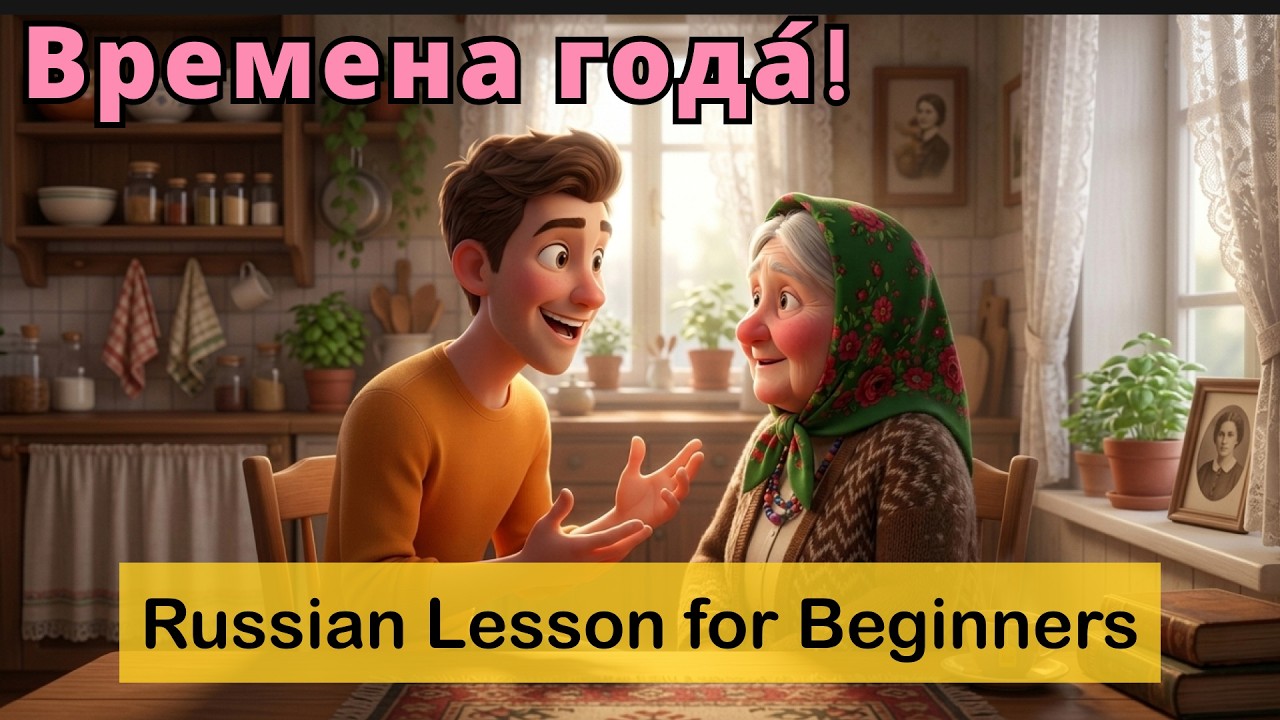
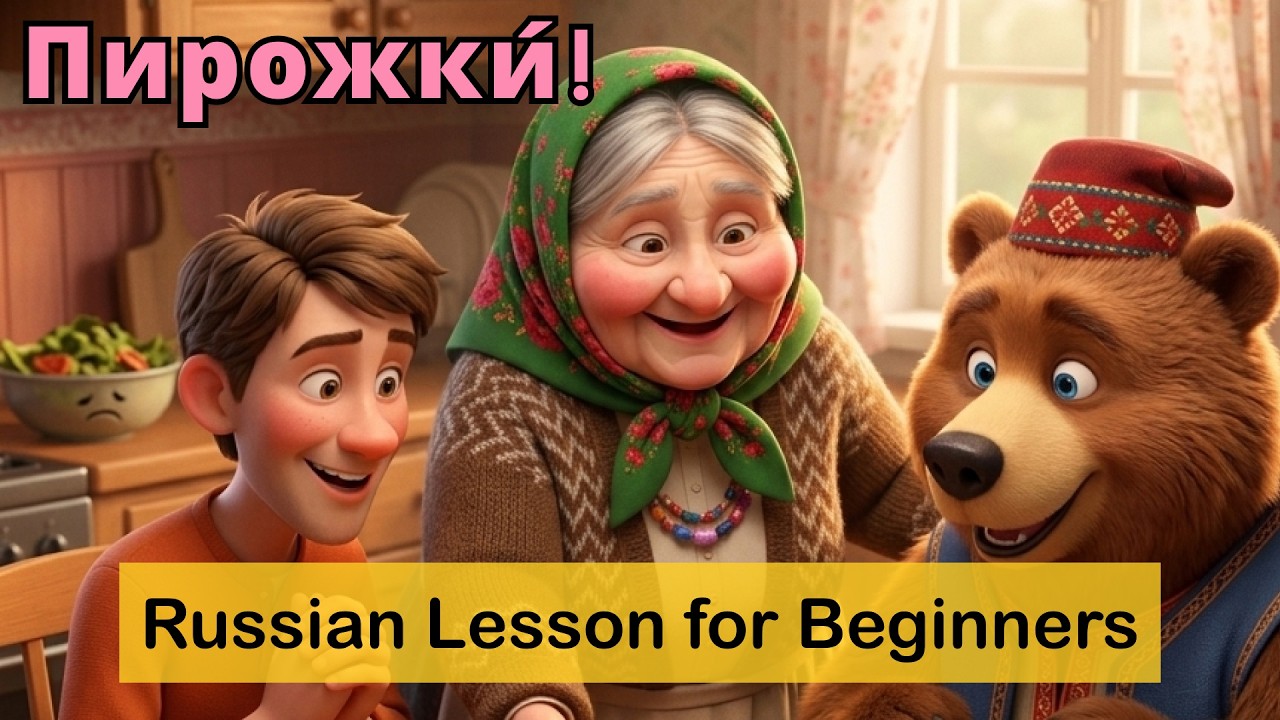
In this slow Russian dialogue for beginners, listen to a heartwarming conversation between Ivan and his grandmother. You’ll learn essential vocabulary related to technology, food, and asking questions as they put a modern computer program to the ultimate test: can it replicate grandma’s famous pirozhki?
💬 Video Transcript
Иван: Привет, бабушка!
(Ivan: Hello, grandma!)
Бабушка: Ваня, привет, дорогой! Как твои дела?
(Grandma: Vanya, hello, dear! How are your things?)
Иван: У меня всё хорошо, спасибо. А у тебя?
(Ivan: I’m doing well, thank you. And you?)
Бабушка: У меня тоже всё хорошо. Смотрю телевизор. Хочешь чай?
(Grandma: I’m also doing well. I’m watching TV. Do you want some tea?)
Иван: Да, хочу! Спасибо. Бабушка, смотри. Это мой компьютер.
(Ivan: Yes, I want some! Thank you. Grandma, look. This is my computer.)
Бабушка: О, компьютер. Я знаю. Очень умная машина. А что ты делаешь?
(Grandma: Oh, a computer. I know. A very smart machine. And what are you doing?)
Иван: Я работаю. А ещё тут есть очень интересная программа.
(Ivan: I’m working. And there’s also a very interesting program here.)
Бабушка: Программа? Что это за программа?
(Grandma: A program? What kind of program is it?)
Иван: Эта программа может говорить. Она отвечает на вопросы. На любые вопросы.
(Ivan: This program can talk. It answers questions. Any questions.)
Бабушка: Говорит? Как человек? Не верю.
(Grandma: It talks? Like a person? I don’t believe it.)
Иван: Ну… она не говорит, она пишет. Смотри. Я задаю вопрос, а она пишет ответ.
(Ivan: Well… it doesn’t talk, it writes. Look. I ask a question, and it writes an answer.)
Бабушка: Правда? И она всё-всё знает?
(Grandma: Really? And it knows everything?)
Иван: Да, почти всё. Давай спросим что-нибудь. Что ты хочешь знать?
(Ivan: Yes, almost everything. Let’s ask something. What do you want to know?)
Бабушка: Хм… даже не знаю. Это очень странно. Спроси у неё, какая сегодня погода.
(Grandma: Hmm… I don’t even know. This is very strange. Ask it what the weather is today.)
Иван: Хорошо. Смотри, я пишу: «Какая сегодня погода?». И вот… ответ. Сегодня тепло. Солнечно.
(Ivan: Okay. Look, I’m writing: “What is the weather today?”. And here… is the answer. Today it’s warm. Sunny.)
Бабушка: Ого! Правильно! На улице правда солнце. Интересно… А спроси что-то сложное.
(Grandma: Wow! That’s right! It really is sunny outside. Interesting… Now ask something difficult.)
Иван: Хорошо. Какой вопрос?
(Ivan: Okay. What question?)
Бабушка: Спроси её… как сделать самые вкусные в мире пирожки!
(Grandma: Ask it… how to make the most delicious pirozhki in the world!)
Иван: Ха-ха, хороший вопрос! Сейчас напишу. «Как… сделать… самые… вкусные… пирожки?». Готово. Смотри, она пишет ответ.
(Ivan: Ha-ha, good question! I’ll write it now. “How… to make… the most… delicious… pirozhki?”. Done. Look, it’s writing the answer.)
Бабушка: Что? Что она пишет? Читай!
(Grandma: What? What is it writing? Read!)
Иван: Она пишет: «Возьмите 500 грамм муки, 10 грамм сухих дрожжей, 250 миллилитров тёплого молока…»
(Ivan: It writes: “Take 500 grams of flour, 10 grams of dry yeast, 250 milliliters of warm milk…”)
Бабушка: Граммы? Миллилитры? Ха-ха-ха! Это не рецепт! Это химия какая-то!
(Grandma: Grams? Milliliters? Ha-ha-ha! That’s not a recipe! That’s some kind of chemistry!)
Иван: Программа очень точная. Она даёт точный рецепт.
(Ivan: The program is very precise. It gives a precise recipe.)
Бабушка: Нет. Мой рецепт лучше. Потому что мой секрет – это не граммы. Мой секрет – это любовь.
(Grandma: No. My recipe is better. Because my secret isn’t grams. My secret is love.)
Иван: Я знаю, бабушка. Твои пирожки – самые лучшие в мире. Это правда.
(Ivan: I know, grandma. Your pirozhki are the best in the world. That’s true.)
Бабушка: Конечно! И никакая программа не знает мой рецепт. Пойдём на кухню. Я дам тебе настоящий, вкусный пирожок. А твой компьютер пусть ест свои граммы.
(Grandma: Of course! And no program knows my recipe. Let’s go to the kitchen. I’ll give you a real, tasty pirozhok. And let your computer eat its grams.)
📝 Essential Vocabulary
Here are some key words and phrases from the video. Listen and repeat to practice your pronunciation.
| Target Language | English Translation | Pronunciation |
|---|---|---|
| Компьютер | Computer | |
| Программа | Program / Software | |
| Отвечает на вопросы | Answers questions | |
| Погода | Weather | |
| Сложное | Complicated / Difficult | |
| Пирожки | Small pies (baked or fried buns) | |
| Рецепт | Recipe | |
| Секрет | Secret | |
| Любовь | Love |
🔍 Grammar Focus
Let’s look at two simple but important grammar points from the dialogue.
1. Asking Questions with Что (What) and Как (How)
In the dialogue, you see several basic questions. Notice the use of Что (What) and Как (How). These are fundamental question words in Russian.
- Как твои дела? - How are your things? (How are you?)
- Что ты делаешь? - What are you doing?
- Что это за программа? - What kind of program is this?
- Что ты хочешь знать? - What do you want to know?
In Russian, these question words usually come at the beginning of the sentence, just like in English.
2. Possessive Pronouns: Мой (My) and Твой (Your)
Ivan and his grandma use possessive pronouns to talk about their things. In this dialogue, they use the masculine forms мой (my) and твой (your).
You use these forms when the noun they describe is masculine.
- Это мой компьютер. - This is my computer. (
компьютерis a masculine noun). - Мой рецепт лучше. - My recipe is better. (
рецептis a masculine noun). - Мой секрет – это любовь. - My secret is love. (
секретis a masculine noun). - Как твои дела? - How are your things? (Here
твоиis the plural form ofтвойbecauseделаis plural). - А твой компьютер пусть ест свои граммы. - And let your computer eat its grams. (
компьютерis masculine).
🌍 Cultural Tip
pirozhki are more than just a snack; they are a staple of comfort food, often associated with family gatherings and a grandmother’s love. Traditional recipes are frequently passed down orally through generations, valued more for the personal touch and ‘secret ingredients’ like care and intuition than for precise measurements.🃏 Flip & Learn
Review the key vocabulary from this lesson with these flashcards.
How are you?
Как твои дела?
Recipe
Рецепт
My secret is love.
Мой секрет – это любовь.
The most delicious in the world
Самые вкусные в мире
💡 Key Takeaways
Here are the most important points to remember from this lesson:
- You can ask simple questions using words like Как (How) and Что (What) at the start of a sentence.
- Use мой for “my” and твой for “your” when talking about a masculine noun, like компьютер or рецепт.
- Learn key vocabulary for technology (компьютер, программа) and food (пирожки, рецепт, вкусный).
- A cultural insight: For many, the “secret ingredient” in traditional Russian home cooking isn’t a precise measurement, but care and любовь (love).
🎯 Practice Quiz
Test your understanding of the dialogue and vocabulary.
Question
Question
Question
✍️ Fill in the Blanks
Let’s test your spelling and memory! Fill in the missing words below. Use correct spelling.
Fill in the blank
Fill in the blank
Support Us
Did you find this lesson helpful? Your support is what makes it possible for us to keep creating free, high-quality educational content.