Describing a Snowy Day in Russian: Winter Vocabulary & Dialogue ❄️
Learn essential Russian winter vocabulary by listening to a slow, clear dialogue about snow, a snowman, and the perfect cold-weather drink: hot tea.
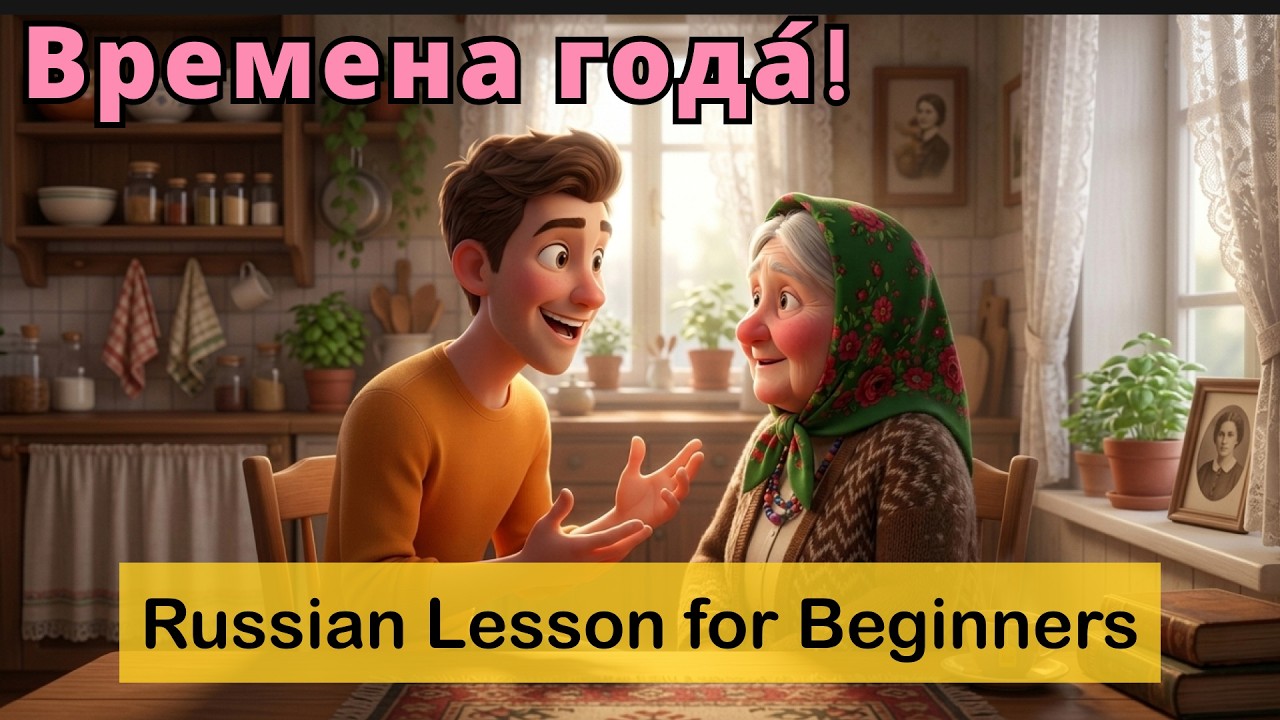
Join Ivan and Anya as they discover a winter wonderland right outside their window! This slow and simple Russian dialogue is perfect for beginners to practice essential vocabulary for describing a snowy day, from the white snow to a funny snowman, and the cozy idea of warming up with hot tea.
💬 Video Transcript
Иван: Аня, иди сюда! Иди сюда!
(Ivan: Anya, come here! Come here!)
Аня: Что, Иван? Что там?
(Anya: What, Ivan? What’s there?)
Иван: Смотри! Смотри в окно!
(Ivan: Look! Look out the window!)
Аня: О! Я вижу. Что это?
(Anya: Oh! I see. What is it?)
Иван: Это зима, Аня. Зима!
(Ivan: It’s winter, Anya. Winter!)
Аня: Зима? Как красиво!
(Anya: Winter? How beautiful!)
Иван: Да, зима. Смотри, это снег.
(Ivan: Yes, winter. Look, this is snow.)
Аня: Снег? Так много снега!
(Anya: Snow? So much snow!)
Иван: Да, много снега. Снег белый.
(Ivan: Yes, a lot of snow. The snow is white.)
Аня: Да, я вижу. Снег очень белый и красивый.
(Anya: Yes, I see. The snow is very white and beautiful.)
Иван: На улице холодно. Очень холодно.
(Ivan: It’s cold outside. Very cold.)
Аня: Холодно? Да, я думаю, что там очень холодно.
(Anya: Cold? Yes, I think that it’s very cold there.)
Иван: Смотри, там дом. Дом белый.
(Ivan: Look, there’s a house. The house is white.)
Аня: Да, дом белый, потому что там снег.
(Anya: Yes, the house is white because there is snow.)
Иван: И смотри, там дерево. Дерево тоже белое.
(Ivan: And look, there’s a tree. The tree is also white.)
Аня: И дом белый, и дерево белое. Всё белое!
(Anya: And the house is white, and the tree is white. Everything is white!)
Иван: Да, всё белое. Это зима.
(Ivan: Yes, everything is white. This is winter.)
Аня: Мне нравится зима. Мне нравится снег.
(Anya: I like winter. I like snow.)
Иван: Мне тоже нравится. О! Аня, смотри! Что это там?
(Ivan: I like it too. Oh! Anya, look! What is that over there?)
Аня: Где? Я не вижу.
(Anya: Where? I don’t see.)
Иван: Там! Слева. Это большой снеговик!
(Ivan: There! To the left. It’s a big snowman!)
Аня: О, да! Это снеговик! Какой он большой!
(Anya: Oh, yes! It’s a snowman! How big it is!)
Иван: Да, большой и белый снеговик. Он из снега.
(Ivan: Yes, a big and white snowman. It’s made of snow.)
Аня: У него есть нос. Это морковка!
(Anya: It has a nose. It’s a carrot!)
Иван: Да, у него нос-морковка. И у него есть глаза.
(Ivan: Yes, it has a carrot nose. And it has eyes.)
Аня: Какой смешной снеговик!
(Anya: What a funny snowman!)
Иван: Да, очень хороший снеговик. Мне он нравится.
(Ivan: Yes, a very good snowman. I like it.)
Аня: Мне тоже нравится. Спасибо, что показал.
(Anya: I like it too. Thanks for showing me.)
Иван: Пожалуйста. Но сейчас мне холодно, даже дома.
(Ivan: You’re welcome. But now I’m cold, even at home.)
Аня: Да, когда я смотрю на снег, мне тоже холодно.
(Anya: Yes, when I look at the snow, I feel cold too.)
Иван: Давай пить горячий чай?
(Ivan: Let’s drink hot tea?)
Аня: Горячий чай? Отличная идея, Иван!
(Anya: Hot tea? Excellent idea, Ivan!)
Иван: Да, зима, снег и горячий чай. Это очень хорошо.
(Ivan: Yes, winter, snow, and hot tea. This is very good.)
Аня: Да, это очень хорошо. Пойдём на кухню.
(Anya: Yes, this is very good. Let’s go to the kitchen.)
📝 Essential Vocabulary
Here are some of the key words and phrases you’ll hear in the video. Listen and repeat to practice your pronunciation.
| Target Language | English Translation | Pronunciation |
|---|---|---|
| Зима | Winter | |
| Снег | Snow | |
| Красиво | Beautiful(ly) | |
| Холодно | Cold | |
| Белый | White | |
| Дерево | Tree | |
| Снеговик | Snowman | |
| Морковка | Carrot | |
| Горячий чай | Hot tea |
🔍 Grammar Focus
Let’s look at two important grammar points from the dialogue.
1. Adjective Agreement: Masculine and Neuter
In Russian, adjectives must agree in gender with the nouns they describe. In the dialogue, you see two examples of this with the adjective белый (white).
Дом белый. (The house is white.)
- The noun дом (house) is masculine, so the adjective takes the masculine ending -ый.
Дерево белое. (The tree is white.)
- The noun дерево (tree) is neuter, so the adjective takes the neuter ending -ое.
Notice how the ending of the adjective changes to match the noun. This is a fundamental rule in Russian grammar.
2. Expressing “Cold”: На улице холодно vs. Мне холодно
Russian uses different constructions to talk about the weather versus how a person feels.
На улице холодно. (It is cold outside.)
- This is an impersonal statement describing the general condition of the weather. Холодно is an adverb here.
Мне холодно. (I am cold / I feel cold.)
- This construction describes a personal feeling. You use the dative case pronoun мне (to me) followed by the adverb холодно. You don’t say “Я холодный” (I am a cold person) to express this feeling.
🌍 Cultural Tip
🃏 Flip & Learn
Practice the new vocabulary from this lesson with these flashcards.
Winter
Зима
Snow
Снег
Snowman
Снеговик
I am cold
Мне холодно
Hot tea
Горячий чай
💡 Key Takeaways
Here are the most important points to remember from this lesson:
- Use words like зима (winter), снег (snow), and снеговик (snowman) to describe a winter scene.
- Adjectives must agree with the nouns they modify. For example: белый дом (masculine) and белое дерево (neuter).
- To say “It’s cold outside,” use the phrase На улице холодно.
- To say “I feel cold,” use the personal construction Мне холодно.
- A warm drink like горячий чай (hot tea) is a perfect solution for a cold day in Russia!
🎯 Practice Quiz
Test your understanding of the vocabulary and grammar from this dialogue.
Question
Question
Question
✍️ Fill in the Blanks
Let’s test your spelling and memory! Fill in the missing words below. Use correct spelling.
Fill in the blank
Fill in the blank
Support Us
Did you find this lesson helpful? Your support is what makes it possible for us to keep creating free, high-quality educational content.