Solving a Household Mystery in Russian: Past Tense & Detective Story 🕵️
Follow Ivan as he solves the mystery of his missing chocolate cookie! This A1-A2 Russian story is perfect for practicing past tense verbs and descriptive adjectives.
In this slow Russian story for beginners, you’ll join Ivan in a fun detective mystery at home. When a delicious, freshly-baked chocolate cookie disappears from the kitchen table, everyone is a suspect! This lesson is perfect for practicing essential A1-A2 vocabulary, listening comprehension, and seeing the Russian past tense in action.
💬 Video Transcript
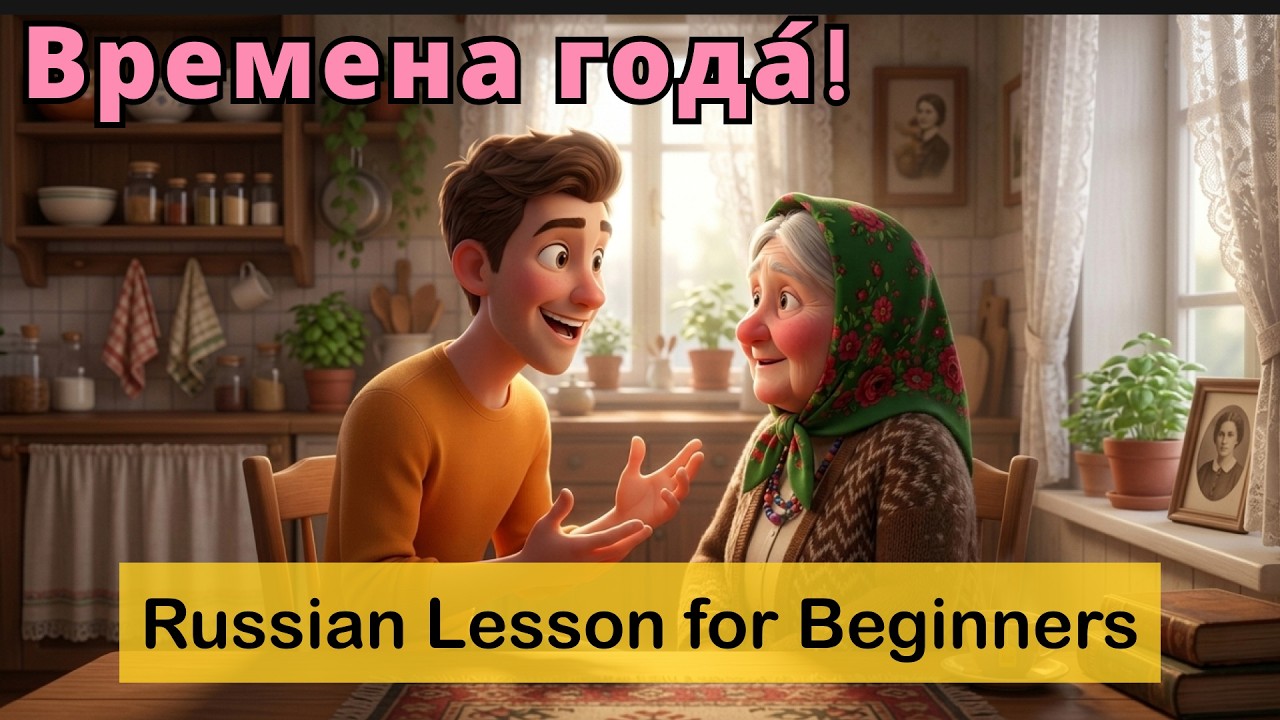
Иван: Привет! Меня зовут Иван. Я студент, и я живу с моей бабушкой. Моя бабушка готовит очень, очень вкусно. Сегодня был особенный день. Бабушка испекла одно большое шоколадное печенье. Только одно! Оно было круглое, с большими кусками шоколада. Это печенье было для меня.
(Ivan: Hello! My name is Ivan. I’m a student, and I live with my grandmother. My grandmother cooks very, very deliciously. Today was a special day. Grandma baked one big chocolate cookie. Only one! It was round, with big pieces of chocolate. This cookie was for me.)
Иван: Бабушка положила печенье на стол на кухне. Она сказала: «Иван, подожди пять минут. Печенье очень горячее». Я сказал: «Хорошо, бабушка». Я пошёл в свою комнату, чтобы взять книгу. Я думал о печенье. Ммм, шоколадное печенье.
(Ivan: Grandma put the cookie on the table in the kitchen. She said: “Ivan, wait five minutes. The cookie is very hot.” I said: “Okay, Grandma.” I went to my room to get a book. I was thinking about the cookie. Mmm, a chocolate cookie.)
Иван: Когда я вернулся на кухню, я посмотрел на стол. Печенья не было! Тарелка была пустая. Я спросил: «Бабушка, а где моё печенье?».
(Ivan: When I returned to the kitchen, I looked at the table. The cookie was gone! The plate was empty. I asked: “Grandma, where is my cookie?”.)
Бабушка: Я не знаю, Иван. Я была в гостиной.
(Grandma: I don’t know, Ivan. I was in the living room.)
Иван: Хм. Это была загадка. Я решил, что я — детектив Иван. Моя миссия — найти печенье.
(Ivan: Hmm. It was a mystery. I decided that I am Detective Ivan. My mission is to find the cookie.)
Иван: Мой друг Аня была у нас в гостях. Она сидела на диване и читала журнал. Я подошёл к ней. Я спросил очень серьёзно: «Аня, ты видела моё печенье?».
(Ivan: My friend Anya was visiting us. She was sitting on the sofa and reading a magazine. I went up to her. I asked very seriously: “Anya, did you see my cookie?”.)
Аня: Да, я видела его на столе. Но я его не ела. Я не люблю шоколад.
(Anya: Yes, I saw it on the table. But I didn’t eat it. I don’t like chocolate.)
Иван: Хорошо. Значит, это не Аня. Кто ещё был дома? Мой кот Борис! Борис — серый и очень ленивый кот. Он спал на кресле. Я подошёл к нему. «Борис, это ты съел печенье?». Борис открыл один глаз, посмотрел на меня и снова заснул. На нём не было ни одной крошки. Борис слишком ленивый, чтобы прыгать на стол. Значит, это не Борис.
(Ivan: Okay. So, it’s not Anya. Who else was home? My cat Boris! Boris is a grey and very lazy cat. He was sleeping in the armchair. I went up to him. “Boris, did you eat the cookie?”. Boris opened one eye, looked at me, and fell asleep again. There wasn’t a single crumb on him. Boris is too lazy to jump on the table. So, it’s not Boris.)
Иван: Но у Ани тоже есть кот. Его зовут Персик. Персик — рыжий кот. Он не ленивый. Он очень умный и быстрый. Где же Персик? Мы с Аней начали его искать. Мы посмотрели под диваном. Мы посмотрели за шкафом. Потом мы посмотрели под столом на кухне.
(Ivan: But Anya also has a cat. His name is Persik. Persik is a ginger cat. He is not lazy. He is very smart and fast. Where is Persik? Anya and I started to look for him. We looked under the sofa. We looked behind the wardrobe. Then we looked under the table in the kitchen.)
Иван: И там сидел Персик. Он спокойно сидел и смотрел на нас. Я внимательно посмотрел на него. Сначала я ничего не увидел. Но потом… потом я увидел! На его рыжем носу была одна очень маленькая шоколадная крошка. Совсем маленькая!
(Ivan: And there sat Persik. He was sitting calmly and looking at us. I looked at him carefully. At first, I didn’t see anything. But then… then I saw it! On his ginger nose, there was one very small chocolate crumb. A very tiny one!)
Иван: «Ага!» — сказал я громко. — «Вот вор! Персик съел печенье!».
(Ivan: “Aha!” I said loudly. “Here is the thief! Persik ate the cookie!”.)
Аня: Персик!
(Anya: Persik!)
Иван: Персик быстро облизал нос. Крошки больше не было. Мы все засмеялись. Бабушка тоже засмеялась. Сегодня я остался без печенья. Но это была очень весёлая детективная история. А Персик, кажется, был очень доволен.
(Ivan: Persik quickly licked his nose. The crumb was gone. We all laughed. Grandma laughed too. Today I was left without a cookie. But it was a very fun detective story. And Persik, it seems, was very pleased.)
📝 Essential Vocabulary
Here are some key words and phrases from the story. Pay attention to how they are used in the transcript below.
| Target Language | English Translation | Pronunciation |
|---|---|---|
| печенье | cookie | |
| бабушка | grandmother | |
| вкусно | tasty / delicious | |
| горячее | hot | |
| загадка | a mystery / a riddle | |
| детектив | detective | |
| кот | cat | |
| ленивый | lazy | |
| крошка | a crumb | |
| вор | a thief |
🔍 Grammar Focus
This story is a great example of two fundamental Russian grammar concepts: the past tense and adjective agreement.
1. Simple Past Tense
The entire story is told in the past tense. In Russian, forming the past tense is relatively simple. For most verbs, you drop the infinitive ending (like -ть) and add a suffix based on the gender and number of the subject.
- -л for masculine subjects (e.g., Иван, кот)
- -ла for feminine subjects (e.g., бабушка, Аня)
- -ло for neuter subjects (e.g., печенье)
- -ли for plural subjects (e.g., мы)
Examples from the script:
- Бабушка испек-ла одно печенье. (Grandma baked one cookie. Бабушка is feminine.)
- Я пошё-л в свою комнату. (I went to my room. Иван is masculine.)
- Печенья не бы-ло. (The cookie was not there. Печенье is neuter.)
- Мы… нача-ли его искать. (We… started to look for him. Мы is plural.)
2. Adjective-Noun Agreement
In Russian, adjectives must agree in gender, number, and case with the noun they describe. Notice how the adjectives change their endings to match the noun “печенье” (neuter), “кот” (masculine), and “крошка” (feminine).
- Neuter: одно большое шоколадное печенье (one big chocolate cookie)
- Masculine: серый и очень ленивый кот (a grey and very lazy cat)
- Feminine: одна очень маленькая шоколадная крошка (one very small chocolate crumb)
Paying attention to these endings is key to sounding natural in Russian.
🌍 Cultural Tip
🃏 Flip & Learn
Use these flashcards to test your memory on the key vocabulary from the story.
The cookie was very hot.
Печенье очень горячее.
A detective's mission
Миссия детектива
A lazy cat
Ленивый кот
A chocolate crumb
Шоколадная крошка
Where is my cookie?
Где моё печенье?
💡 Key Takeaways
Here are the most important points to remember from this lesson:
- Telling a Story in the Past: You learned how to use basic past tense verbs (был, сказала, пошёл, увидел) to narrate a sequence of events.
- Describing Objects: Practice describing things using adjective-noun agreement, like большое шоколадное печенье (a big chocolate cookie) and рыжий кот (a ginger cat).
- Asking “Where is…?”: The key question “Где моё печенье?” (Where is my cookie?) is a useful phrase for locating missing items.
- Solving a Mystery: You learned vocabulary related to investigation, such as загадка (mystery), детектив (detective), искать (to look for), and вор (thief).
🎯 Practice Quiz
Check your understanding of the story and its vocabulary with these questions.
Question
Question
Question
✍️ Fill in the Blanks
Let’s test your spelling and memory! Fill in the missing words below. Use correct spelling.
Fill in the blank
Fill in the blank
Support Us
Did you find this lesson helpful? Your support is what makes it possible for us to keep creating free, high-quality educational content.