Talking About Food in Russian: Beginner Family Dialogue 🥧
Improve your Russian listening skills with this slow A1 dialogue about Ivan's visit to his grandmother's house for a delicious homemade meal.
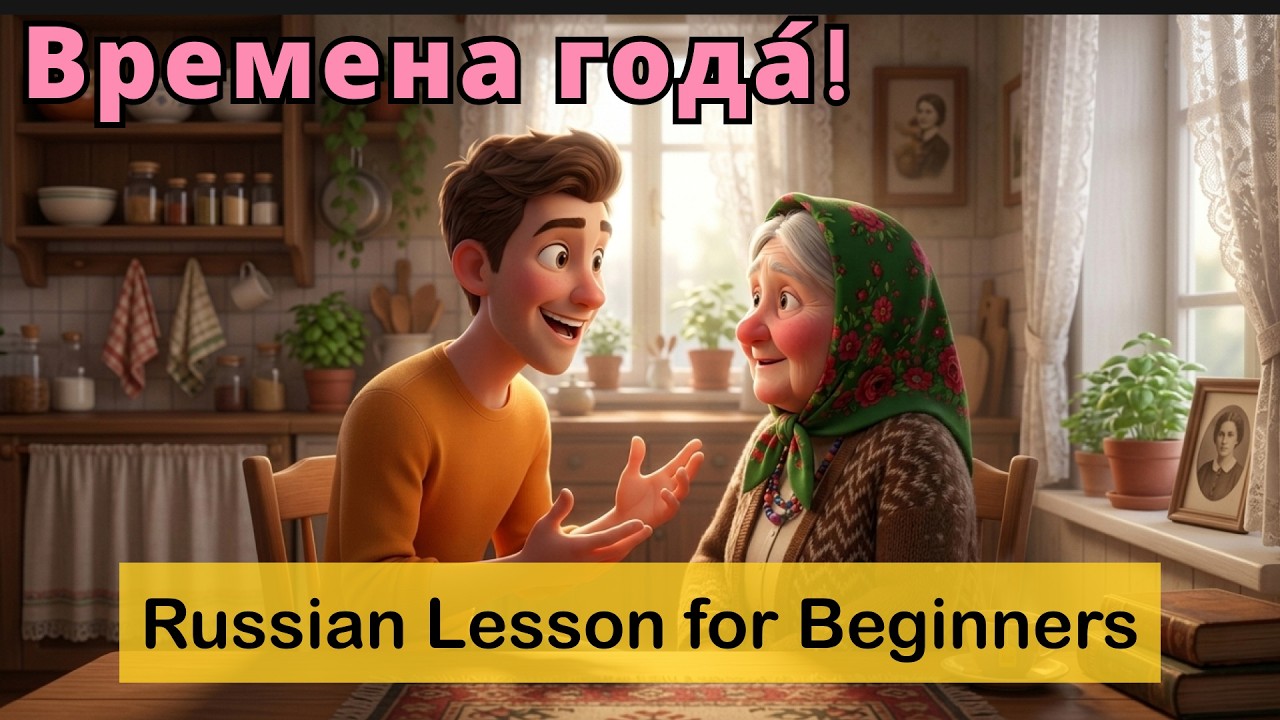
In this slow Russian listening practice for beginners, you’ll join Ivan as he visits his grandmother (бабушка) for lunch. This lesson is perfect for A1 learners to practice common greetings, food vocabulary, and basic conversational questions about daily activities.
💬 Video Transcript
Listen to the dialogue while you read along. Notice how Ivan and his grandmother greet each other and talk about their day.
Иван: Бабушка, привет! Это я, Иван.
(Ivan: Grandma, hello! It’s me, Ivan.)
Бабушка: Ваня! Здравствуй, мой дорогой внук! Входи, входи!
(Babushka: Vanya! Hello, my dear grandson! Come in, come in!)
Иван: Привет! Как ты?
(Ivan: Hello! How are you?)
Бабушка: Я хорошо. А ты как? Ты голодный?
(Babushka: I am well. And you? Are you hungry?)
Иван: Да, я очень голодный. Я шёл из университета.
(Ivan: Yes, I’m very hungry. I was walking from the university.)
Бабушка: Конечно, ты голодный. Садись за стол. У меня есть суп.
(Babushka: Of course, you’re hungry. Sit down at the table. I have soup.)
Иван: О, суп! Я люблю твой суп. Спасибо, бабушка!
(Ivan: Oh, soup! I love your soup. Thank you, Grandma!)
Бабушка: Пожалуйста. Вот суп. И вот хлеб. Кушай.
(Babushka: You’re welcome. Here is the soup. And here is the bread. Eat.)
Иван: Ммм… очень вкусно! Это мой любимый суп.
(Ivan: Mmm… very delicious! This is my favorite soup.)
Бабушка: Я знаю. Поэтому я его и сделала. Ешь, ешь. Тебе нужна ещё ложка?
(Babushka: I know. That’s why I made it. Eat, eat. Do you need another spoon?)
Иван: Нет, спасибо. Всё есть. Суп очень-очень вкусный.
(Ivan: No, thank you. Everything is here. The soup is very, very tasty.)
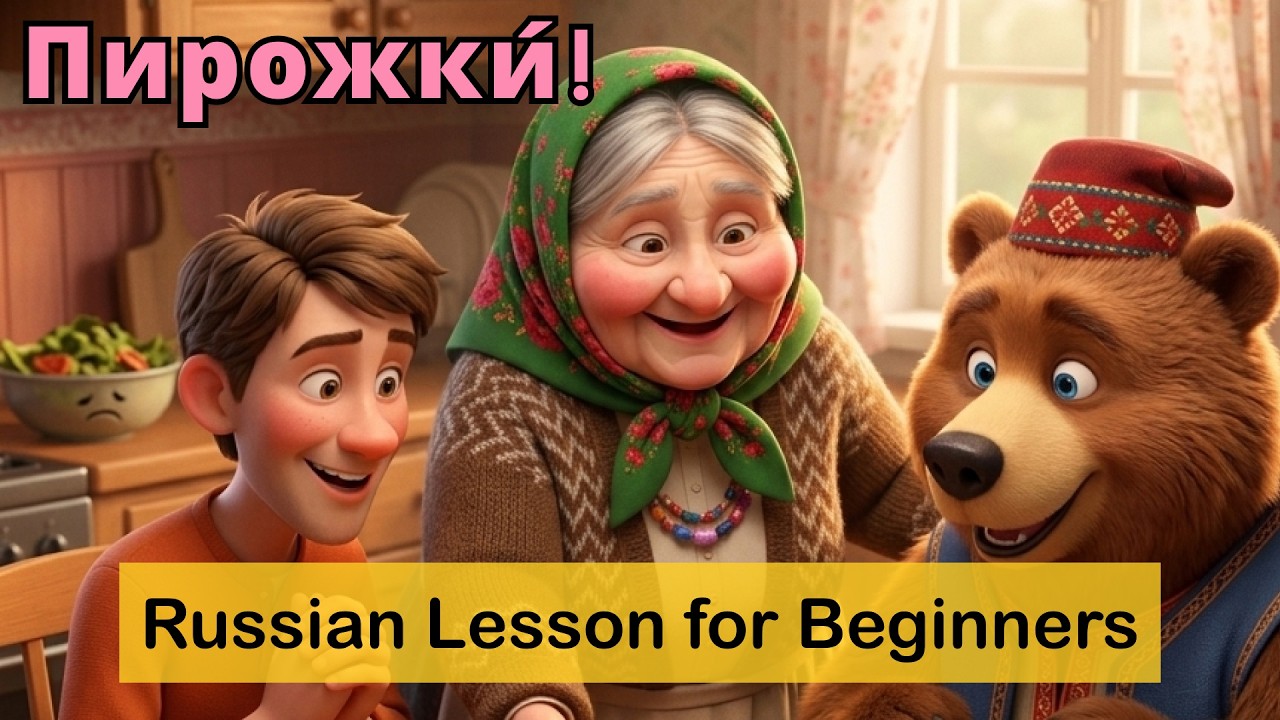
Бабушка: Это хорошо. А ещё у меня есть пирожки.
(Babushka: That’s good. And I also have pirozhki.)
Иван: Пирожки? С чем пирожки?
(Ivan: Pirozhki? Pirozhki with what?)
Бабушка: С картошкой. Твои любимые пирожки.
(Babushka: With potato. Your favorite pirozhki.)
Иван: Ура! Суп и пирожки! Это лучший обед!
(Ivan: Hooray! Soup and pirozhki! This is the best lunch!)
Бабушка: Кушай, мой хороший. Как дела в университете?
(Babushka: Eat, my good one. How are things at the university?)
Иван: Всё хорошо. Сегодня был интересный урок. Мы читали.
(Ivan: Everything is good. Today there was an interesting lesson. We were reading.)
Бабушка: Читали? Это хорошо. Читать — это очень полезно.
(Babushka: Reading? That’s good. To read is very useful.)
Иван: Да. А как твои дела? Что ты делала сегодня?
(Ivan: Yes. And how are you? What did you do today?)
Бабушка: Я? Я смотрела телевизор. Там был интересный фильм.
(Babushka: Me? I was watching television. There was an interesting film.)
Иван: Фильм? Про что?
(Ivan: A film? About what?)
Бабушка: Про любовь. Старый, хороший фильм. А потом я готовила суп.
(Babushka: About love. An old, good film. And then I was cooking soup.)
Иван: Понятно. Суп получился прекрасный!
(Ivan: I see. The soup turned out wonderful!)
Бабушка: Спасибо. А где твой кот Борис? Он дома?
(Babushka: Thank you. And where is your cat Boris? Is he at home?)
Иван: Да, Борис дома. Он, как всегда, спит.
(Ivan: Yes, Boris is at home. He, as always, is sleeping.)
Бабушка: Он всегда спит? Какой ленивый кот!
(Babushka: He always sleeps? What a lazy cat!)
Иван: Да, он очень ленивый. Он спит, ест, и снова спит.
(Ivan: Yes, he is very lazy. He sleeps, eats, and sleeps again.)
Бабушка: Ха-ха-ха! Забавный кот. Ну, ты хочешь чай?
(Babushka: Ha-ha-ha! A funny cat. Well, do you want tea?)
Иван: Чай? Да, конечно, хочу. Спасибо.
(Ivan: Tea? Yes, of course, I want some. Thank you.)
Бабушка: Хорошо. Я сейчас поставлю чайник. Будешь чай с пирожком?
(Babushka: Good. I’ll put the kettle on now. Will you have tea with a pirozhok?)
Иван: Да! Ещё один пирожок! Они очень вкусные.
(Ivan: Yes! One more pirozhok! They are very tasty.)
Бабушка: Конечно. Для тебя у меня всегда есть пирожки.
(Babushka: Of course. For you, I always have pirozhki.)
Иван: Спасибо, бабушка! Ты самая лучшая!
(Ivan: Thank you, Grandma! You are the best!)
Бабушка: Пожалуйста, мой дорогой. Я очень рада, когда ты приходишь.
(Babushka: You’re welcome, my dear. I am very happy when you come.)
Иван: Я тоже очень рад.
(Ivan: I am also very happy.)
Бабушка: Ну вот, чайник готов. Будем пить чай.
(Babushka: Well now, the kettle is ready. We will drink tea.)
📝 Essential Vocabulary
Here are some of the key words and phrases you’ll hear in Ivan’s conversation with his grandmother. Listen to the pronunciation and get ready to hear them in context.
| Target Language | English Translation | Pronunciation |
|---|---|---|
| Бабушка | Grandmother | |
| Внук | Grandson | |
| Голодный | Hungry | |
| Суп | Soup | |
| Пирожки | Small pies/turnovers | |
| Вкусно | Tasty / Delicious | |
| Любимый | Favorite | |
| Университет | University | |
| Готовила | (She) was cooking | |
| Чайник | Kettle |
🔍 Grammar Focus
Let’s look at two important grammar points from the dialogue.
1. Past Tense Verbs (and Gender Agreement)
In the dialogue, Ivan and his grandmother talk about what they did earlier in the day. Notice how the past tense verbs change depending on who is speaking.
- When Ivan (masculine) talks about himself:
Я **шёл** из университета.(I was walking…) - When Babushka (feminine) talks about herself:
Я **смотрела** телевизор.(I was watching…) or...я его и **сделала**.(…I made it.) - When they talk about a group (“we”):
Мы **читали**.(We were reading.)
In Russian, past tense verbs must agree in gender (masculine, feminine, neuter) and number (singular, plural) with the subject.
- -л for masculine singular (он шёл)
- -ла for feminine singular (она делала)
- -ло for neuter singular (оно было)
- -ли for plural (они/мы/вы читали)
2. Instrumental Case with “C” (With)
When Ivan asks what the pirozhki are filled with, he uses a key grammatical structure:
- Иван:
С **чем** пирожки?(Pirozhki with what?) - Бабушка:
С **картошкой**.(With potato.)
The preposition C (meaning “with”) requires the noun that follows it to be in the Instrumental case. Что (what) becomes чем in the Instrumental case. The word for potato, картошка (which ends in -а), changes its ending to -ой to become картошкой. This is a common pattern for feminine nouns.
🌍 Cultural Tip
🃏 Flip & Learn
Review the key phrases from Ivan’s visit with these interactive flashcards.
Very delicious!
Очень вкусно!
My favorite soup
Мой любимый суп
What are the pies with?
С чем пирожки?
A lazy cat
Ленивый кот
We will drink tea
Будем пить чай
💡 Key Takeaways
Here are the most important points to remember from this lesson:
- Greetings and Politeness: Use
Приветfor informal hellos andСпасибо/Пожалуйстаfor “thank you” and “you’re welcome.” - Expressing Hunger: The phrase
Я очень голодный(I am very hungry) is a simple and common way to express that you need to eat. - Talking About Food: You learned key vocabulary like
суп(soup),хлеб(bread), andпирожки(pies). Notice the phraseС картошкой(With potato) to describe fillings. - “I have…” vs “You have…”: To say “I have,” Babushka uses
У меня есть...(Literally “By me there is…”). This is the standard way to express possession in Russian. - Basic Past Tense: Remember that past tense verbs change based on the gender of the speaker.
Я шёл(Ivan, masc.) vs.Я готовила(Babushka, fem.).
🎯 Practice Quiz
Test your understanding of the dialogue with these questions.
Question
Question
Question
✍️ Fill in the Blanks
Let’s test your spelling and memory! Fill in the missing words below. Use correct spelling.
Fill in the blank
Fill in the blank
Support Us
Did you find this lesson helpful? Your support is what makes it possible for us to keep creating free, high-quality educational content.