Talking About Family and Music in Russian: Past Tense & Dancing Bear Story 🐻
Learn Russian past tense verbs and vocabulary for family and music with this charming story about Ivan, his grandma, and a surprise dancing bear.
In this lesson, you’ll practice your Russian listening skills with a sweet story about a visit to grandma’s house. You will learn key vocabulary related to music and family, and see how the Russian past tense is used in a natural context.
💬 Video Transcript
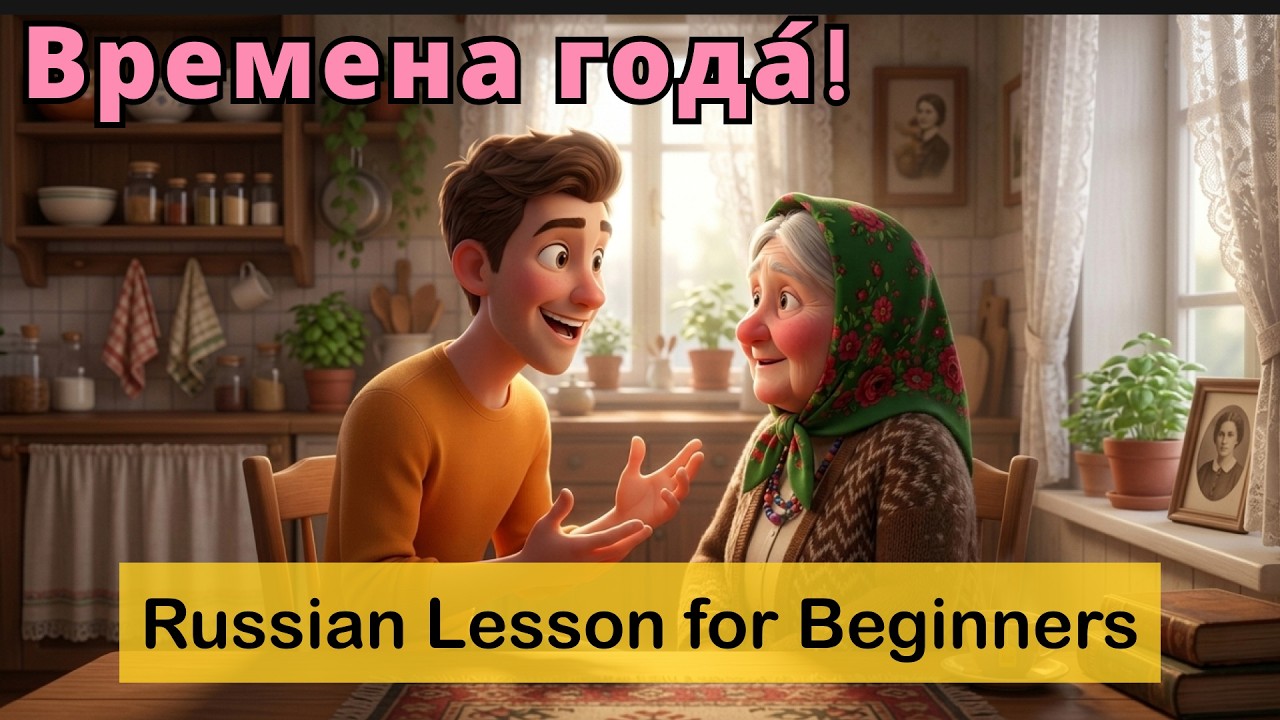
Иван: В субботу я был у бабушки. Она сидела в кресле и смотрела телевизор. Я сидел на диване. Мой кот Борис спал на диване тоже. Мне было немного скучно.
(Ivan: On Saturday I was at my grandma’s. She was sitting in an armchair and watching TV. I was sitting on the sofa. My cat Boris was sleeping on the sofa too. I was a little bored.)
Иван: Я взял свой телефон. У меня была идея. Я спросил: «Бабушка, хочешь слушать музыку?»
(Ivan: I took my phone. I had an idea. I asked, “Grandma, do you want to listen to music?”)
Иван: Бабушка посмотрела на меня. «Музыку? В телефоне? Интересно».
(Ivan: Grandma looked at me. “Music? On a phone? Interesting.”)
Иван: Сначала я включил современную, быструю музыку. Бабушка послушала и сказала: «Нет, Иван. Это не музыка. Это просто шум». Я засмеялся.
(Ivan: First I put on modern, fast music. Grandma listened and said: “No, Ivan. This isn’t music. It’s just noise.” I laughed.)
Иван: «Хорошо», – сказал я. «Какая музыка тебе нравится?»
(Ivan: “Okay,” I said. “What kind of music do you like?”)
Иван: Бабушка подумала и сказала название очень старой русской песни. Я нашёл эту песню в телефоне. Я нажал «play».
(Ivan: Grandma thought and said the name of a very old Russian song. I found this song on my phone. I pressed “play.”)
Иван: Заиграла красивая, медленная музыка. Бабушка улыбнулась. «О! Это моя любимая песня! Какое чудо, Иван! Спасибо!»
(Ivan: Beautiful, slow music started to play. Grandma smiled. “Oh! This is my favorite song! What a miracle, Ivan! Thank you!”)
Иван: Мы слушали музыку. Окно было открыто, потому что день был тёплый. Вдруг мы услышали звук на улице. Кто-то был рад. Кто это?
(Ivan: We listened to the music. The window was open because the day was warm. Suddenly we heard a sound outside. Someone was happy. Who was it?)
Иван: Я посмотрел в окно. И бабушка тоже посмотрела. Это был наш друг, медведь Миша! Он стоял в саду и слушал музыку. Он улыбался.
(Ivan: I looked out the window. And grandma looked too. It was our friend, Misha the bear! He was standing in the garden and listening to the music. He was smiling.)
Иван: И потом случилось что-то невероятное. Миша начал танцевать! Он двигался медленно и смешно. Он был очень хороший танцор. Наверное, он помнил цирк.
(Ivan: And then something incredible happened. Misha started to dance! He moved slowly and funny. He was a very good dancer. He probably remembered the circus.)
Иван: Мы с бабушкой засмеялись. Это было так мило и так весело. Бабушка сказала: «Смотри, Иван! Наш Миша – настоящий артист!»
(Ivan: Grandma and I laughed. It was so sweet and so fun. Grandma said: “Look, Ivan! Our Misha is a real artist!”)
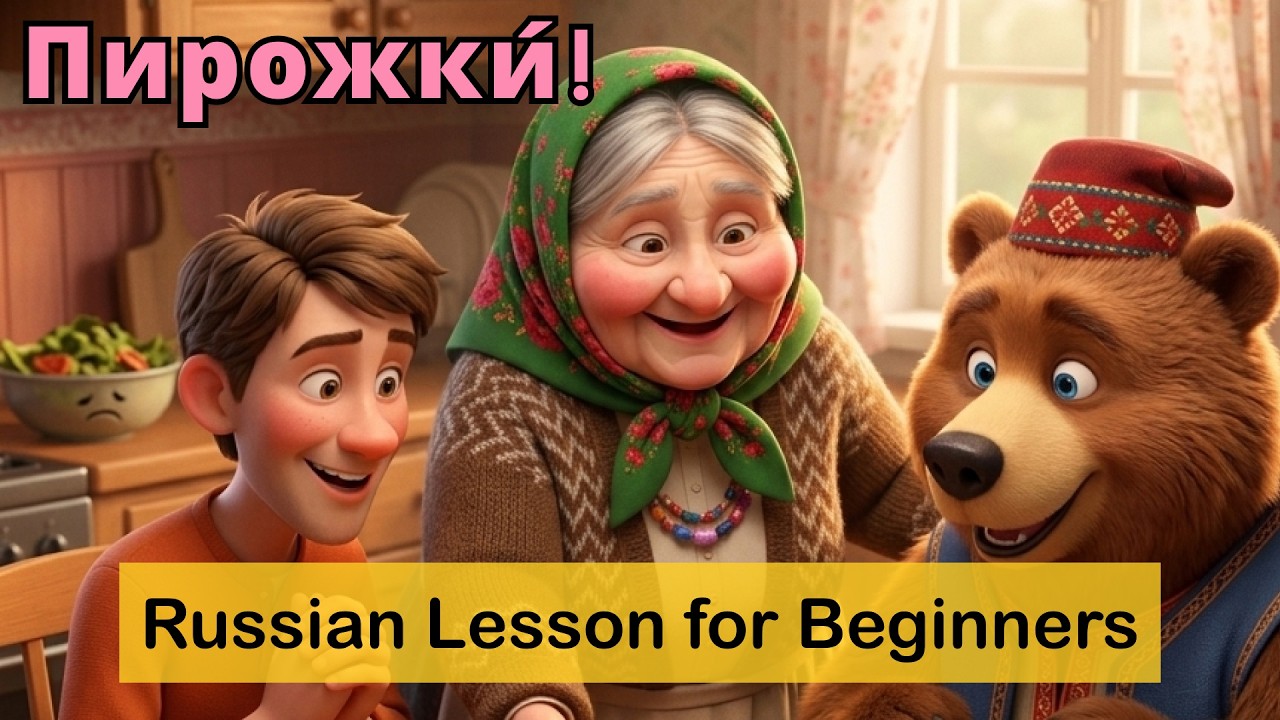
Иван: Она пошла на кухню, взяла тёплый пирожок и дала его Мише через окно. Миша взял пирожок, съел его и сделал поклон. Как в цирке!
(Ivan: She went to the kitchen, took a warm pirozhok, and gave it to Misha through the window. Misha took the pirozhok, ate it, and took a bow. Just like in the circus!)
Иван: Я понял, что старая музыка – это тоже очень хорошо. Она может сделать бабушку счастливой. И она может заставить медведя танцевать.
(Ivan: I understood that old music is also very good. It can make a grandmother happy. And it can make a bear dance.)
📝 Essential Vocabulary
Here are some important words from the story. Listen to the pronunciation and practice saying them yourself.
| Target Language | English Translation | Pronunciation |
|---|---|---|
| Бабушка | Grandmother | |
| Скучно | Boring / bored | |
| Музыка | Music | |
| Песня | Song | |
| Медведь | Bear | |
| Танцевать | To dance | |
| Невероятное | Incredible | |
| Пирожок | A small pie / pastry |
🔍 Grammar Focus
This story is perfect for practicing two key concepts in Russian: the past tense and expressing possession.
1. The Russian Past Tense
In Russian, forming the past tense is quite simple. For most verbs, you drop the infinitive ending (like -ть) and add a suffix that agrees with the gender and number of the subject.
- Masculine: -л
- Feminine: -ла
- Neuter: -ло
- Plural: -ли
You can see this pattern all throughout the story:
- Я был у бабушки. (I was at grandma’s.) - Ivan is male, so he uses -л.
- Она сидела… (She was sitting…) -
Она(she) is feminine, so the verb ends in -ла. - Что-то невероятное случилось. (Something incredible happened.) -
Что-то(something) is neuter, so the verb ends in -ло. - Мы слушали музыку. (We were listening to music.) -
Мы(we) is plural, so the verb ends in -ли.
2. Expressing Possession with “У + Genitive”
To say you have something in Russian, you don’t use a verb like “to have”. Instead, you use the preposition У (by/at) followed by the owner in the genitive case.
The basic structure is: У + [owner in genitive] + есть + [the thing you have].
In the past tense, есть is replaced by the past tense of быть (to be), which must agree with the thing being possessed.
Notice Ivan’s line from the script:
- У меня была идея. (I had an idea.)
Let’s break it down:
- У меня (literally “by me”) -
меняis the genitive form ofя(I). - была - The past tense verb agrees with
идея(idea), which is a feminine noun. - идея - The thing that is possessed.
🌍 Cultural Tip
🃏 Flip & Learn
Practice the new vocabulary from the story with these flashcards.
Grandmother
Бабушка
A favorite song
Любимая песня
To dance
Танцевать
It was boring
Было скучно
Incredible
Невероятное
💡 Key Takeaways
Here are the most important points to remember from this lesson:
- The Russian past tense changes based on gender and number: -л (m.), -ла (f.), -ло (n.), and -ли (pl.).
- To say “I have” or “I had”, use the structure У меня есть… or У меня был/была/было….
- Common vocabulary for a family visit includes бабушка (grandmother), диван (sofa), and кот (cat).
- Music vocabulary is useful: музыка (music), песня (song), and слушать (to listen).
- Cultural touchstones like old Russian songs and пирожки (small savory or sweet pies) are a warm part of Russian culture.
🎯 Practice Quiz
Test your understanding of the story and its vocabulary.
Question
Question
Question
✍️ Fill in the Blanks
Let’s test your spelling and memory! Fill in the missing words below. Use correct spelling.
Fill in the blank
Fill in the blank
Support Us
Did you find this lesson helpful? Your support is what makes it possible for us to keep creating free, high-quality educational content.