Talking About Books in Portuguese: Bookstore Dialogue & Making Plans 📚
Follow João and Sofia on a relaxing trip to the bookstore and learn basic Portuguese vocabulary for books, hobbies, and making plans in this slow dialogue for beginners.
Join João and Sofia for a relaxing afternoon adventure at a local bookstore. This slow and clear Portuguese dialogue is perfect for beginners to practice listening and learn essential vocabulary for talking about books, expressing preferences, and making plans.
💬 Video Transcript
João: Olá, Sofia. O que vamos fazer hoje?
(João: Hello, Sofia. What are we going to do today?)
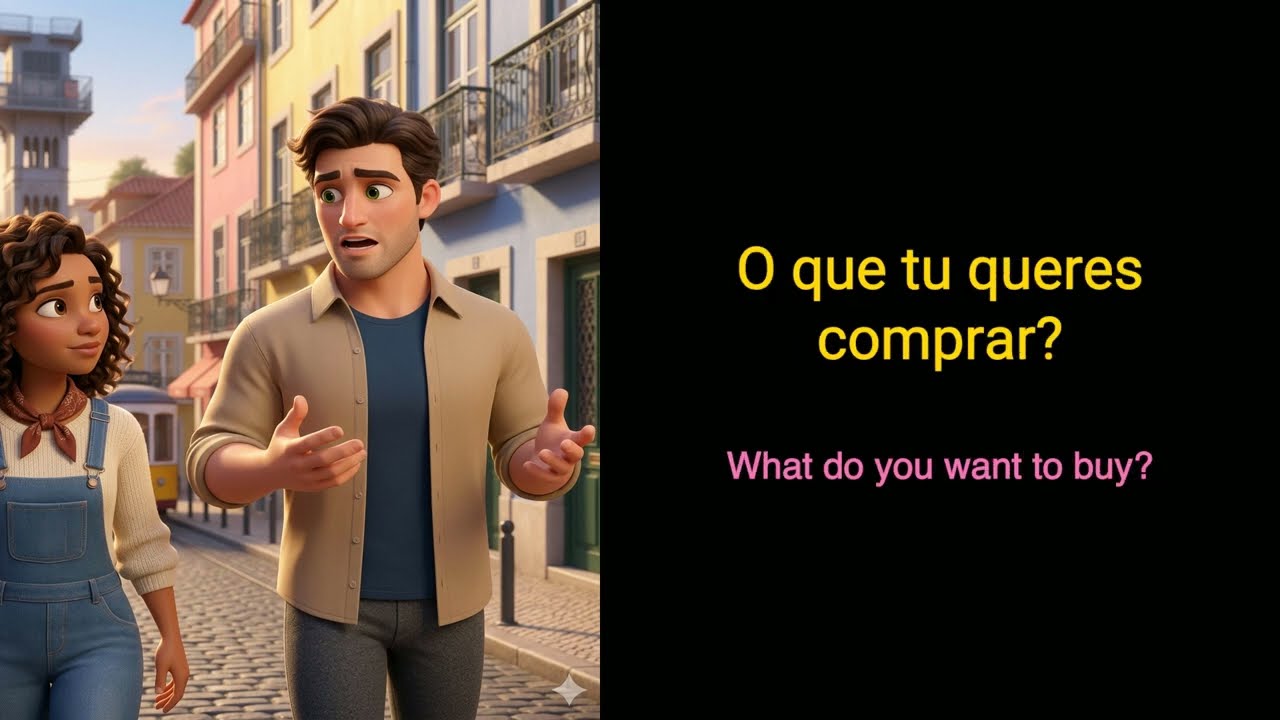
Sofia: Olá, João. Não sei. O que tu queres fazer?
(Sofia: Hello, João. I don’t know. What do you want to do?)
João: Hum… Eu quero fazer uma coisa calma. Uma coisa relaxante.
(João: Hmm… I want to do something calm. Something relaxing.)
Sofia: Uma coisa calma… Sim, eu também quero uma coisa calma hoje.
(Sofia: Something calm… Yes, I also want something calm today.)
João: Eu tenho uma ideia. Vamos a uma livraria?
(João: I have an idea. Shall we go to a bookstore?)
Sofia: A uma livraria? Sim! Que boa ideia, João! Eu adoro livrarias.
(Sofia: To a bookstore? Yes! What a good idea, João! I love bookstores.)
João: Eu também gosto muito de livrarias. Têm um cheiro bom. O cheiro dos livros.
(João: I also really like bookstores. They have a good smell. The smell of books.)
Sofia: É verdade! E têm muitos livros para ver. Vamos agora?
(Sofia: It’s true! And they have many books to see. Shall we go now?)
João: Sim, vamos agora!
(João: Yes, let’s go now!)
Sofia: Uau, João! Esta livraria é muito grande.
(Sofia: Wow, João! This bookstore is very big.)
João: É verdade. É muito grande. E tem muitos, muitos livros.
(João: It’s true. It’s very big. And it has many, many books.)
Sofia: Eu adoro ver os livros. Gosto das capas. As capas são bonitas e coloridas.
(Sofia: I love to see the books. I like the covers. The covers are beautiful and colorful.)
João: Eu também. Que tipo de livros tu gostas, Sofia?
(João: Me too. What kind of books do you like, Sofia?)
Sofia: Eu gosto de livros de arte. E também gosto de livros de fotografia. E tu?
(Sofia: I like art books. And I also like photography books. And you?)
João: Eu gosto de livros de aventura. E também de livros sobre cidades, como Lisboa.
(João: I like adventure books. And also books about cities, like Lisbon.)
Sofia: Vamos procurar livros. Eu vou para a secção de arte.
(Sofia: Let’s look for books. I’m going to the art section.)
João: Boa ideia. E eu vou para a secção de viagens, procurar livros sobre cidades.
(João: Good idea. And I’m going to the travel section, to look for books about cities.)
Sofia: Está bem, João. Vemo-nos depois.
(Sofia: Okay, João. See you later.)
João: Sim, até já!
(João: Yes, see you in a bit!)
Sofia: João! João! Olha o que eu encontrei!
(Sofia: João! João! Look what I found!)
João: O que foi, Sofia? Encontraste um livro bom?
(João: What is it, Sofia? Did you find a good book?)
Sofia: Sim! Encontrei um livro de arte fantástico. Olha!
(Sofia: Yes! I found a fantastic art book. Look!)
João: Uau! É um livro grande. A capa é muito bonita.
(João: Wow! It’s a big book. The cover is very beautiful.)
Sofia: Sim, é muito bonita. Tem uma pintura famosa na capa. Eu gosto muito.
(Sofia: Yes, it’s very beautiful. It has a famous painting on the cover. I like it a lot.)
João: E dentro? O livro é bom por dentro?
(João: And inside? Is the book good on the inside?)
Sofia: Sim, tem muitas imagens. Imagens de pinturas muito famosas. Eu quero este livro.
(Sofia: Yes, it has many images. Images of very famous paintings. I want this book.)
João: Parece um livro perfeito para ti. Eu também encontrei um livro.
(João: It seems like a perfect book for you. I also found a book.)
Sofia: A sério? Mostra-me o teu livro.
(Sofia: Really? Show me your book.)
João: É este. É um livro sobre Lisboa. Tem muitas fotografias.
(João: It’s this one. It’s a book about Lisbon. It has many photographs.)
Sofia: Ah, que lindo! A capa é azul. E tem uma fotografia do Castelo de São Jorge.
(Sofia: Oh, how lovely! The cover is blue. And it has a photograph of São Jorge Castle.)
João: Sim. Eu adoro Lisboa. Eu quero aprender mais sobre a minha cidade.
(João: Yes. I love Lisbon. I want to learn more about my city.)
Sofia: É um livro muito interessante. Vais comprar este livro?
(Sofia: It’s a very interesting book. Are you going to buy this book?)
João: Sim, eu vou comprar. Estou decidido.
(João: Yes, I’m going to buy it. I’m decided.)
Sofia: Então, eu compro o meu livro de arte e tu compras o teu livro de Lisboa.
(Sofia: So, I’ll buy my art book and you’ll buy your Lisbon book.)
João: Exato. Vamos pagar?
(João: Exactly. Shall we pay?)
Sofia: Sim, vamos pagar.
(Sofia: Yes, let’s pay.)
João: Estou muito feliz com o meu livro novo.
(João: I am very happy with my new book.)
Sofia: Eu também estou muito feliz com o meu livro. Foi uma tarde muito boa.
(Sofia: I am also very happy with my book. It was a very good afternoon.)
João: Sim, foi uma tarde excelente. O que vamos fazer agora?
(João: Yes, it was an excellent afternoon. What are we going to do now?)
Sofia: Agora? Hum… Vamos para casa ler os nossos livros novos?
(Sofia: Now? Hmm… Shall we go home to read our new books?)
João: Sim! É uma ideia perfeita. E… talvez… enquanto lemos…
(João: Yes! It’s a perfect idea. And… maybe… while we read…)
Sofia: Sim, João? Enquanto lemos…?
(Sofia: Yes, João? While we read… ?)
João: Podemos comer um pastel de nata?
(João: Can we eat a pastel de nata?)
Sofia: Haha! Claro que sim, João. Ler um livro e comer um pastel de nata.
(Sofia: Haha! Of course, João. To read a book and eat a pastel de nata.)
João: É a combinação perfeita!
(João: It’s the perfect combination!)
Sofia: Sim, é perfeita. Vamos para casa.
(Sofia: Yes, it’s perfect. Let’s go home.)
📝 Essential Vocabulary
Here are some key words and phrases from João and Sofia’s conversation. Listen to the pronunciation and practice them.
| Target Language | English Translation | Pronunciation |
|---|---|---|
| Livraria | Bookstore | |
| Calma / Calmo | Calm / Relaxing | |
| Uma boa ideia | A good idea | |
| As capas | The covers (of books) | |
| Procurar | To look for / To search | |
| Encontrei | I found | |
| Decidido | Decided | |
| Vamos pagar | Let’s pay | |
| Feliz | Happy | |
| A combinação perfeita | The perfect combination |
🔍 Grammar Focus
Let’s look at two important grammar points from the dialogue.
1. Expressing Likes and Dislikes with Gostar de
In Portuguese, to say you “like” something, you use the verb gostar followed by the preposition de. This is a very common and useful structure.
Gostar de+ noun (to like something)Gostar de+ verb (to like doing something)
Notice how João and Sofia use it in the dialogue:
- Sofia: Eu gosto de livros de arte. (I like art books.)
- João: Eu também gosto muito de livrarias. (I also really like bookstores.)
- João: Que tipo de livros tu gostas? (What kind of books do you like?)
Remember that de often combines with articles (o, a, os, as). For example, Sofia says, “Gosto das capas” (de + as = das), meaning “I like the covers.”
2. Making Suggestions and Stating Intentions with Ir
The verb ir (to go) is essential for talking about future plans, making suggestions, and stating where you are going. It can be used in two main ways:
A. Ir a / Ir para + a place (Going to a place)
Ir ais used for temporary visits.Ir parais used for more permanent moves or a clear direction of movement.
Examples from the script:
- João: Vamos a uma livraria? (Shall we go to a bookstore?)
- Sofia: Eu vou para a secção de arte. (I’m going to the art section.)
- Sofia: Vamos para casa. (Let’s go home.)
B. Ir + verb in the infinitive (Going to do something)
This structure, often called the informal future, is very common for expressing future intentions.
Examples from the script:
- João: O que vamos fazer hoje? (What are we going to do today?)
- João: Sim, eu vou comprar. (Yes, I am going to buy [it].)
🌍 Cultural Tip
🃏 Flip & Learn
Practice the key vocabulary from our trip to the bookstore.
Bookstore
Livraria
What do you want to do?
O que tu queres fazer?
What a good idea!
Que boa ideia!
I found a fantastic book.
Encontrei um livro fantástico.
Let's pay.
Vamos pagar.
💡 Key Takeaways
Here are the most important points to remember from this lesson:
- To say you like something in Portuguese, use the structure
gostar de+ [noun/verb]. - The verb
ir(to go) is used to make suggestions (“Vamos a uma livraria?”), state where you’re going (“Vou para a secção de arte”), and talk about future plans (“Vou comprar este livro”). - You can describe things using the verb
ser(to be) and an adjective, like “A capa é muito bonita” or “Esta livraria é muito grande.” - Useful phrases for shopping include “Vais comprar este livro?” (Are you going to buy this book?) and “Vamos pagar?” (Shall we pay?).
🎯 Practice Quiz
Test your understanding of the dialogue and vocabulary.
Question
Question
Question
✍️ Fill in the Blanks
Let’s test your spelling and memory! Fill in the missing words below. Use correct spelling.
Fill in the blank
Fill in the blank
Support Us
Did you find this lesson helpful? Your support is what makes it possible for us to keep creating free, high-quality educational content.