Making Home Improvements in Portuguese: A Slow Dialogue for Beginners 🎨
Learn essential Portuguese vocabulary for home improvement and making decisions with this slow, easy-to-follow dialogue. Practice talking about colors, tools, and plans in European Portuguese.
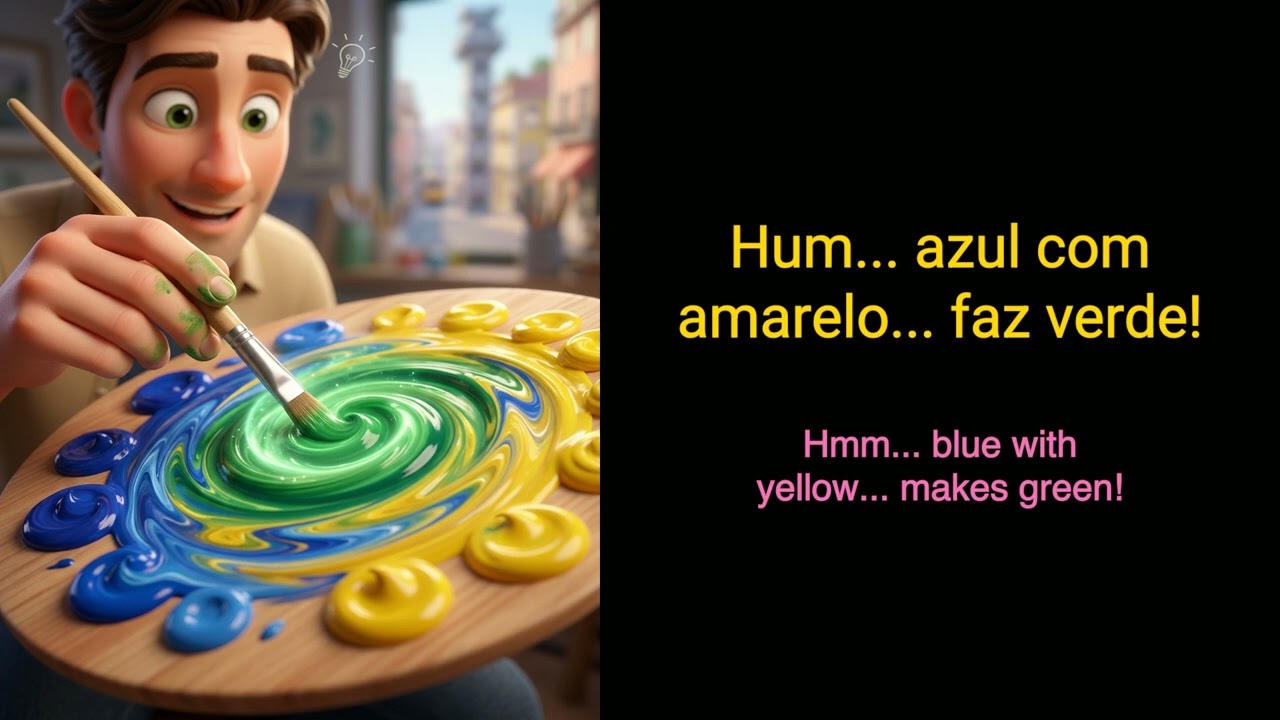
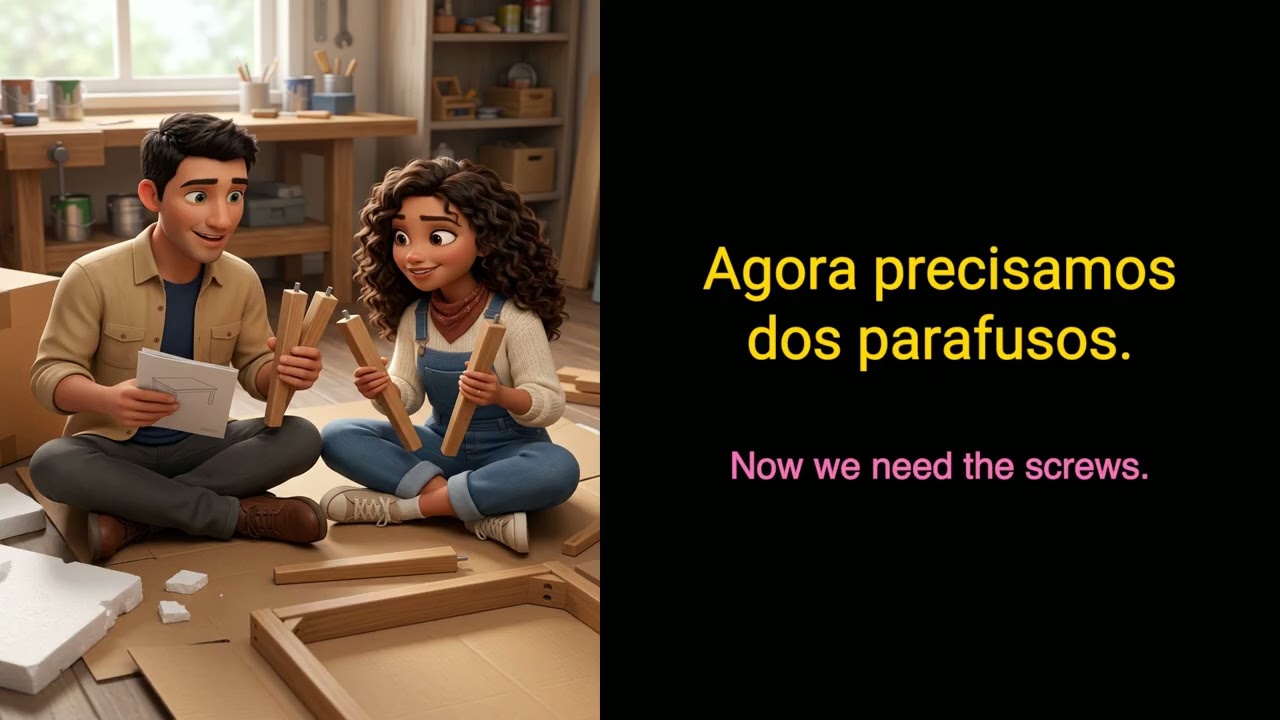
In this lesson, you’ll join João and Sofia as they decide to give their living room a fresh coat of paint. This slow-paced dialogue is perfect for beginners, helping you practice vocabulary for colors, painting supplies, and making plans together in European Portuguese.
💬 Video Transcript
João: Olá, Sofia. Olha para a nossa sala.
(João: Hello, Sofia. Look at our living room.)
Sofia: Olá, João. Sim, eu vejo a nossa sala.
(Sofia: Hello, João. Yes, I see our living room.)
João: A parede é branca. Muito branca.
(João: The wall is white. Very white.)
Sofia: Sim, a parede é branca. É uma cor… simples.
(Sofia: Yes, the wall is white. It’s a… simple color.)
João: Eu quero uma cor nova para a parede.
(João: I want a new color for the wall.)
Sofia: Uma cor nova? Que boa ideia, João!
(Sofia: A new color? What a good idea, João!)
João: Sim! Uma cor diferente. O que achas?
(João: Yes! A different color. What do you think?)
Sofia: Eu acho uma ideia excelente. Que cor tu queres?
(Sofia: I think it’s an excellent idea. What color do you want?)
João: Hum… eu não sei. E tu? Que cor tu gostas?
(João: Hmm… I don’t know. And you? What color do you like?)
Sofia: Eu gosto de azul. Azul é uma cor muito bonita. É calma.
(Sofia: I like blue. Blue is a very beautiful color. It’s calm.)
João: Azul! Eu também gosto muito de azul. Azul é a minha cor favorita.
(João: Blue! I also really like blue. Blue is my favorite color.)
Sofia: A sério? A minha cor favorita também é azul!
(Sofia: Really? My favorite color is also blue!)
João: Perfeito! Então, nós pintamos a parede de azul?
(João: Perfect! So, shall we paint the wall blue?)
Sofia: Sim! Vamos pintar a sala de azul. Vai ficar linda.
(Sofia: Yes! Let’s paint the room blue. It will be beautiful.)
João: Ótimo. Nós precisamos de tinta e de pincéis.
(João: Great. We need paint and paintbrushes.)
Sofia: Sim. Tu tens tinta azul?
(Sofia: Yes. Do you have blue paint?)
João: Eu tenho. Eu tenho uma lata de tinta azul. Está aqui.
(João: I do. I have a can of blue paint. It’s here.)
Sofia: Excelente! E os pincéis? Onde estão os pincéis?
(Sofia: Excellent! And the paintbrushes? Where are the paintbrushes?)
João: Os pincéis estão aqui também. Eu tenho um pincel grande e um pincel pequeno.
(João: The paintbrushes are here too. I have a big paintbrush and a small paintbrush.)
Sofia: Perfeito. Um pincel para ti e um pincel para mim.
(Sofia: Perfect. One paintbrush for you and one paintbrush for me.)
João: Exato. Eu uso o pincel grande. Tu usas o pincel pequeno.
(João: Exactly. I’ll use the big paintbrush. You use the small paintbrush.)
Sofia: Combinado. Vamos começar?
(Sofia: Deal. Shall we start?)
João: Vamos! Eu estou pronto. Eu vou pintar esta parede.
(João: Let’s go! I’m ready. I’m going to paint this wall.)
Sofia: E eu vou pintar esta outra parede. Vamos, João!
(Sofia: And I’m going to paint this other wall. Let’s go, João!)
João: Eu pinto a parede com o pincel grande. A tinta é azul.
(João: I’m painting the wall with the big paintbrush. The paint is blue.)
Sofia: Eu pinto a parede com o pincel pequeno. A cor azul é muito bonita.
(Sofia: I’m painting the wall with the small paintbrush. The color blue is very beautiful.)
João: Olha, Sofia! A parede agora é azul!
(João: Look, Sofia! The wall is blue now!)
Sofia: Sim! E esta parede também é azul! A nossa sala está a ficar diferente.
(Sofia: Yes! And this wall is blue too! Our living room is getting different.)
João: Está a ficar muito bonita. Eu gosto muito desta cor.
(João: It’s becoming very beautiful. I really like this color.)
Sofia: Eu também gosto muito. É a nossa sala azul.
(Sofia: I also like it a lot. It’s our blue living room.)
João: Nós pintamos bem. Nós somos uma boa equipa.
(João: We paint well. We are a good team.)
Sofia: Sim, nós somos uma ótima equipa, João.
(Sofia: Yes, we are a great team, João.)
João: O trabalho está quase pronto. Só mais um pouco.
(João: The work is almost done. Just a little more.)
Sofia: Sim, só mais um pouco. Estou um pouco cansada.
(Sofia: Yes, just a little more. I’m a little tired.)
João: Eu também estou cansado. E estou com fome.
(João: I’m tired too. And I’m hungry.)
Sofia: Fome? Eu também. Pintar dá fome.
(Sofia: Hungry? Me too. Painting makes you hungry.)
João: O que nós podemos comer depois?
(João: What can we eat after?)
Sofia: Hum… eu sei! Uma coisa deliciosa.
(Sofia: Hmm… I know! Something delicious.)
João: O quê? Diz-me, Sofia.
(João: What? Tell me, Sofia.)
Sofia: Um pastel de nata! E um café.
(Sofia: A pastel de nata! And a coffee.)
João: Sim! Que ideia perfeita! Depois de pintar, vamos comer um pastel de nata.
(João: Yes! What a perfect idea! After painting, we’ll eat a pastel de nata.)
Sofia: E beber um café. Vai ser uma boa recompensa.
(Sofia: And drink a coffee. It will be a good reward.)
João: Concordo. Agora, vamos terminar de pintar a nossa sala azul.
(João: I agree. Now, let’s finish painting our blue living room.)
📝 Essential Vocabulary
| Portuguese | English Translation | Pronunciation |
|---|---|---|
| a sala | the living room | |
| a parede | the wall | |
| a cor | the color | |
| azul | blue | |
| pintar | to paint | |
| a tinta | the paint | |
| o pincel | the paintbrush | |
| uma equipa | a team | |
| cansado/a | tired | |
| fome | hunger |
🔍 Grammar Focus
1. How to Use “Gostar de” (To Like)
A common point of confusion for English speakers is the verb gostar (to like). In Portuguese, it is always followed by the preposition de when you specify what you like. Think of it as “to be fond of something”.
- Structure:
gostar+de+ noun/infinitive verb
Notice how João and Sofia use it in the dialogue:
Eu **gosto de** azul.(I like blue.)Que cor tu **gostas**?(What color do you like?) - Even in a question, the structure is implied. The full answer would beEu gosto **de**...
Remember, you never say Eu gosto azul. Always include the de!
2. Painting something a certain color: “Pintar de”
When you want to say you are painting something a specific color, you use the verb pintar (to paint) followed by the object, the preposition de, and then the color.
- Structure:
pintar+ [the object] +de+ [the color]
Let’s see it in action in the script:
Então, nós **pintamos a parede de azul**?(So, shall we paint the wall blue?)Vamos **pintar a sala de azul**.(Let’s paint the room blue.)
This structure is simple and very useful for talking about any kind of decorating or coloring.
🌍 Cultural Tip
🃏 Flip & Learn
The wall
A parede
To paint
Pintar
The paintbrush
O pincel
We are a great team.
Nós somos uma ótima equipa.
I'm tired and hungry.
Estou cansado e com fome.
💡 Key Takeaways
Here are the most important points to remember from this lesson:
- Suggesting an Idea: Use phrases like
Que boa ideia!(What a good idea!) andO que achas?(What do you think?). - Expressing Likes: Always use
gostar deto say you like something, for example,Eu gosto de azul. - Essential Painting Vocabulary: Remember
a parede(wall),a cor(color),a tinta(paint),o pincel(paintbrush), and the verbpintar(to paint). - Describing Feelings: To say you are tired, use
Estou cansado(m) orEstou cansada(f). To say you are hungry, useEstou com fome. - A Perfect Reward: A
pastel de nataand acaféare a classic Portuguese treat.
🎯 Practice Quiz
Question
Question
Question
✍️ Fill in the Blanks
Let’s test your spelling and memory! Fill in the missing words below. Use correct spelling.
Fill in the blank
Fill in the blank
Support Us
Did you find this lesson helpful? Your support is what makes it possible for us to keep creating free, high-quality educational content.