Assembling Furniture in Portuguese: DIY Dialogue & Vocabulary 🛠️
Learn practical Portuguese vocabulary for DIY and assembling furniture through a beginner-friendly dialogue.
Mastering practical, everyday vocabulary is crucial for navigating life in a Portuguese-speaking environment. In this lesson, you will learn essential terms for assembling furniture, using basic tools, and working as a team through a lively dialogue between João and Sofia. By following their step-by-step process of building a new table, you will pick up key verbs and nouns that you can immediately apply in real-world DIY situations.
💬 Video Transcript
João: Oi, Sofia! Vê o que eu tenho aqui.
(João: Hi, Sofia! Look at what I have here.)
Sofia: Olá, João! O que é isso? É uma caixa muito grande.
(Sofia: Hello, João! What is that? It’s a very big box.)
João: É uma mesa nova! Uma mesa pequena para a nossa sala.
(João: It’s a new table! A small table for our living room.)
Sofia: Uma mesa nova! Que boa ideia, João! Eu gosto muito.
(Sofia: A new table! What a good idea, João! I like it a lot.)
João: Eu também gosto. Queres montar a mesa agora? Juntos?
(João: I like it too. Do you want to assemble the table now? Together?)
Sofia: Sim, claro! Eu ajudo. Montar juntos é mais divertido.
(Sofia: Yes, of course! I’ll help. Assembling together is more fun.)
João: Ótimo! Então, vamos abrir a caixa. A mesa está aqui dentro.
(João: Great! So, let’s open the box. The table is inside here.)
Sofia: Sim, vamos abrir. Eu gosto de abrir caixas novas. Cuidado.
(Sofia: Yes, let’s open it. I like opening new boxes. Careful.)
João: Uau! Olha, Sofia. Tem muitas peças aqui dentro.
(João: Wow! Look, Sofia. There are many pieces inside here.)
Sofia: Sim, tem muitas peças de madeira. E muitos parafusos.
(Sofia: Yes, there are many wooden pieces. And many screws.)
João: É verdade. E aqui está o manual de instruções. Vamos ler o manual.
(João: It’s true. And here is the instruction manual. Let’s read the manual.)
Sofia: Sim, é importante ler o manual primeiro. Deixa-me ver.
(Sofia: Yes, it’s important to read the manual first. Let me see.)
João: O que diz o manual? É fácil montar a mesa?
(João: What does the manual say? Is it easy to assemble the table?)
Sofia: Hmm, o manual tem muitos desenhos. Parece um pouco difícil.
(Sofia: Hmm, the manual has a lot of drawings. It seems a bit difficult.)
João: Um pouco difícil? Mas nós conseguimos. Juntos, é mais fácil.
(João: A bit difficult? But we can do it. Together, it’s easier.)
Sofia: Tens razão. Juntos, nós conseguimos. Então, o que precisamos primeiro?
(Sofia: You’re right. Together, we can do it. So, what do we need first?)
João: O manual diz que primeiro precisamos das quatro pernas da mesa.
(João: The manual says that first we need the four table legs.)
Sofia: Ok. Aqui está uma perna. E aqui está outra perna.
(Sofia: Ok. Here is one leg. And here is another leg.)
João: E eu tenho as outras duas. Então, temos quatro pernas.
(João: And I have the other two. So, we have four legs.)
Sofia: Certo. Quatro pernas. E agora, o que precisamos?
(Sofia: Right. Four legs. And now, what do we need?)
João: Agora precisamos dos parafusos. Onde está o saco com os parafusos?
(João: Now we need the screws. Where is the bag with the screws?)
Sofia: Está aqui. Eu tenho o saco. Tem muitos parafusos pequenos.
(Sofia: It’s here. I have the bag. It has many small screws.)
João: Perfeito. Agora, eu pego numa perna e tu pões o parafuso.
(João: Perfect. Now, I’ll take a leg and you put the screw.)
Sofia: Sim. Eu ponho o parafuso aqui, como no desenho do manual.
(Sofia: Yes. I’ll put the screw here, like in the drawing in the manual.)
João: Isso. Eu ajudo a segurar. Assim. Muito bem! Uma perna está pronta.
(João: That’s it. I’ll help hold it. Like this. Very good! One leg is ready.)
Sofia: Que bom! Uma perna pronta. Faltam três pernas. É fácil.
(Sofia: How great! One leg ready. Three legs left. It’s easy.)
João: Sim, é fácil. Vamos fazer a segunda perna. É igual.
(João: Yes, it’s easy. Let’s do the second leg. It’s the same.)
Sofia: Sim. Eu pego na perna e nos parafusos. Tu ajudas a segurar.
(Sofia: Yes. I’ll grab the leg and the screws. You help hold it.)
João: Claro. Estou a segurar. Pronto. A segunda perna está pronta.
(João: Of course. I’m holding it. Done. The second leg is ready.)
Sofia: Ótimo! Duas pernas prontas. Agora a terceira.
(Sofia: Great! Two legs ready. Now the third.)
João: A terceira perna. Eu pego na perna. Tu pões os parafusos.
(João: The third leg. I’ll take the leg. You put the screws.)
Sofia: Sim. Já está. A terceira perna está pronta! Só falta uma perna.
(Sofia: Yes. It’s done. The third leg is ready! Only one leg left.)
João: A última perna! Estamos quase a acabar esta parte.
(João: The last leg! We are almost finished with this part.)
Sofia: Pronto! As quatro pernas estão montadas. Foi rápido.
(Sofia: Done! The four legs are assembled. It was fast.)
João: Sim, foi rápido porque trabalhamos juntos. E agora?
(João: Yes, it was fast because we work together. And now?)
Sofia: Agora, a parte mais importante. O tampo da mesa. É esta parte grande.
(Sofia: Now, the most important part. The tabletop. It’s this big part.)
João: Certo. O tampo da mesa. É um pouco pesado.
(João: Right. The tabletop. It’s a bit heavy.)
Sofia: Eu ajudo a levantar. Nós levantamos juntos.
(Sofia: I’ll help lift it. We’ll lift it together.)
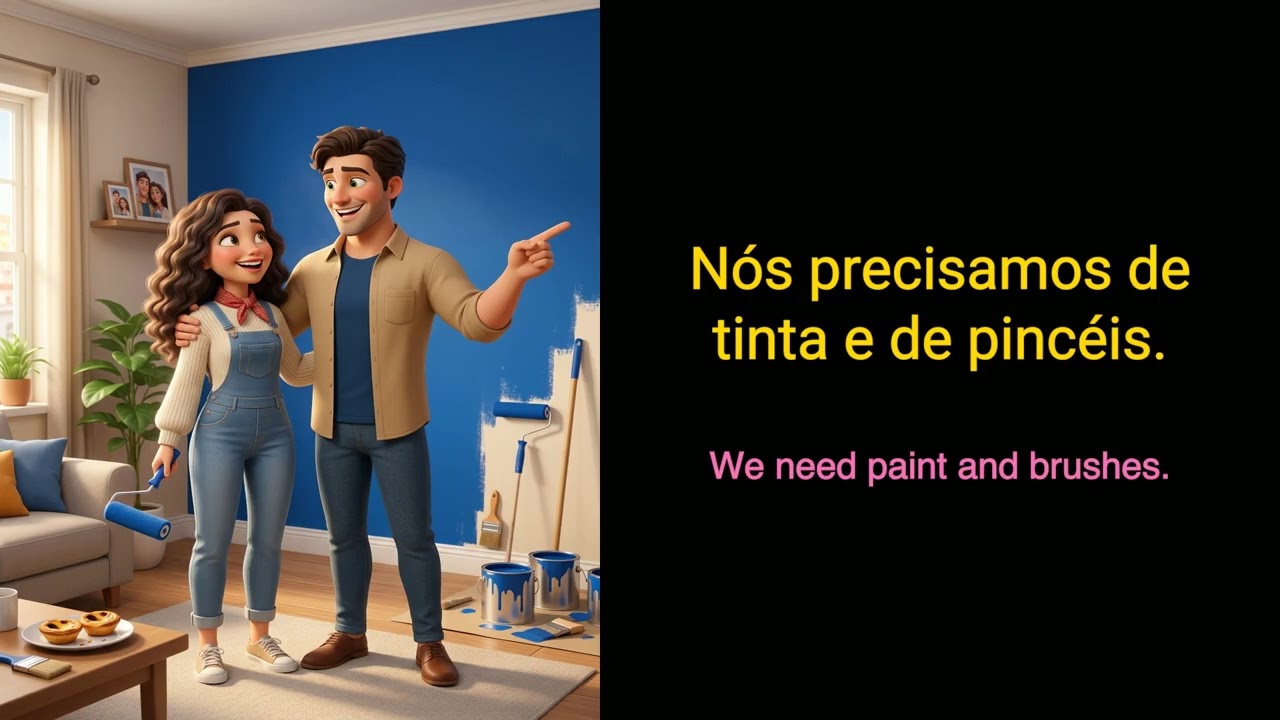
João: Ok. Agora, pomos as pernas no tampo. Precisamos de mais parafusos.
(João: Ok. Now, we put the legs on the tabletop. We need more screws.)
Sofia: Sim, parafusos grandes. Estão aqui. Vamos pôr a primeira perna.
(Sofia: Yes, big screws. They are here. Let’s put the first leg.)
João: Hmm. Esta parte é um pouco mais difícil. O parafuso não entra.
(João: Hmm. This part is a bit more difficult. The screw isn’t going in.)
Sofia: Deixa-me tentar. É verdade, é difícil. Espera, vamos ver o manual outra vez.
(Sofia: Let me try. It’s true, it’s difficult. Wait, let’s look at the manual again.)
João: Boa ideia. Ah, eu entendo agora! O manual mostra um truque.
(João: Good idea. Ah, I understand now! The manual shows a trick.)
Sofia: Ah, sim! É assim! Agora é fácil. Eu consigo!
(Sofia: Ah, yes! It’s like this! Now it’s easy. I can do it!)
João: Muito bem! Uma perna está no sítio. Agora as outras.
(João: Very good! One leg is in place. Now the others.)
Sofia: A segunda perna… pronto! A terceira perna… pronto!
(Sofia: The second leg… done! The third leg… done!)
João: E a última perna… pronto! Acabámos, Sofia!
(João: And the last leg… done! We finished, Sofia!)
Sofia: Acabámos! Nós montámos a mesa! A mesa está pronta!
(Sofia: We finished! We assembled the table! The table is ready!)
João: E ficou muito bonita! Eu gosto muito da nossa mesa nova.
(João: And it turned out very beautiful! I really like our new table.)
Sofia: Eu também gosto muito. É uma mesa perfeita para a sala.
(Sofia: I like it a lot too. It’s a perfect table for the living room.)
João: Fizemos um bom trabalho. Estou contente.
(João: We did a good job. I’m happy.)
Sofia: Eu também estou muito contente. Agora, vamos celebrar.
(Sofia: I’m very happy too. Now, let’s celebrate.)
João: Celebrar? É uma boa ideia! O que fazemos?
(João: Celebrate? It’s a good idea! What do we do?)
Sofia: Vamos ao café. Bebemos um café e comemos um pastel de nata.
(Sofia: Let’s go to the café. We’ll drink a coffee and eat a pastel de nata.)
João: Um pastel de nata para celebrar a mesa nova! Perfeito!
(João: A pastel de nata to celebrate the new table! Perfect!)
Sofia: Sim! Um para ti e um para mim. Vamos.
(Sofia: Yes! One for you and one for me. Let’s go.)
João: Vamos, Sofia!
(João: Let’s go, Sofia!)
📝 Essential Vocabulary
| Target Language | English Translation | Pronunciation |
|---|---|---|
| montar | to assemble | |
| caixa | box | |
| peças | pieces | |
| parafusos | screws | |
| manual de instruções | instruction manual | |
| pernas | legs | |
| tampo da mesa | tabletop | |
| pesado | heavy | |
| segurar | to hold | |
| celebrar | to celebrate |
🔍 Grammar Focus
Expressing Needs with “Precisar de”
In Portuguese, the verb precisar (to need) is almost always followed by the preposition de. When the thing you need has a definite article (o, a, os, as), the preposition de contracts with the article.
- de + o = do
- de + a = da
- de + os = dos
- de + as = das
Look at how João and Sofia use this in the dialogue:
- “O manual diz que primeiro precisamos das quatro pernas da mesa.” (We need the four legs…
de + as = das) - “Agora precisamos dos parafusos.” (We need the screws…
de + os = dos)
Connecting Nouns with “de” to Show Type or Composition
Unlike English, which often places nouns side by side to describe something (e.g., “instruction manual”), Portuguese connects them using the preposition de. The second noun acts as a descriptor, telling you what the first noun is made of or what it is for.
- “tem muitas peças de madeira.” (wooden pieces / pieces of wood)
- “aqui está o manual de instruções.” (instruction manual / manual of instructions)
- “comemos um pastel de nata.” (custard tart / pastry of cream)
🌍 Cultural Tip
🃏 Flip & Learn
to assemble
montar
screws
parafusos
instruction manual
manual de instruções
tabletop
tampo da mesa
pieces of wood
peças de madeira
💡 Key Takeaways
- Vocabulary for DIY: You now know essential terms like parafusos (screws), pernas (legs), and manual de instruções (instruction manual).
- The Verb Montar: Use the verb montar when talking about assembling furniture, toys, or machinery.
- Using Precisar: Remember to always pair the verb precisar with the preposition de when saying you need a noun (e.g., precisamos dos parafusos).
- Descriptive Nouns: Use de to link two nouns together when describing composition or purpose, as seen in peças de madeira.
🎯 Practice Quiz
Question
Question
Question
✍️ Fill in the Blanks
Let’s test your spelling and memory! Fill in the missing words below. Use correct spelling.
Fill in the blank
Fill in the blank
Support Us
Did you find this lesson helpful? Your support is what makes it possible for us to keep creating free, high-quality educational content.