Talking About Books in Portuguese: Bookstore Dialogue & Essential Vocabulary 📚
Join João and Sofia for a fun conversation in a Lisbon bookstore! This A1-A2 Portuguese lesson will help you practice vocabulary for books, places, and making plans.
Join João and Sofia on a relaxing trip to a beautiful bookstore in Lisbon. This simple Portuguese conversation for beginners is perfect for practicing vocabulary related to books, hobbies, and making plans with a friend. You’ll learn how to express what you like, what you want, and how to talk about famous Lisbon landmarks.
💬 Video Transcript
João: Olá, Sofia! Gosto desta livraria.
(João: Hello, Sofia! I like this bookstore.)
Sofia: Olá, João! Sim, eu também gosto. É uma livraria muito bonita.
(Sofia: Hello, João! Yes, I like it too. It’s a very beautiful bookstore.)
João: Tem muitos livros. Muitos, muitos livros.
(João: It has many books. Many, many books.)
Sofia: Sim, muitos livros. Eu gosto de livros.
(Sofia: Yes, many books. I like books.)
João: Eu também gosto muito de ler. O que vamos ver primeiro?
(João: I also really like to read. What are we going to see first?)
Sofia: Vamos ver os livros de fotografia. Eu gosto de fotografia.
(Sofia: Let’s see the photography books. I like photography.)
João: Boa ideia. Os livros de fotografia estão aqui.
(João: Good idea. The photography books are here.)
Sofia: Olha este livro, João. É um livro sobre animais.
(Sofia: Look at this book, João. It’s a book about animals.)
João: Uau! Que fotografias bonitas. O leão é grande.
(João: Wow! What beautiful photographs. The lion is big.)
Sofia: Sim, o leão é muito grande. E as cores são bonitas.
(Sofia: Yes, the lion is very big. And the colors are beautiful.)
João: É um livro muito interessante. Mas eu quero ver outra coisa.
(João: It’s a very interesting book. But I want to see something else.)
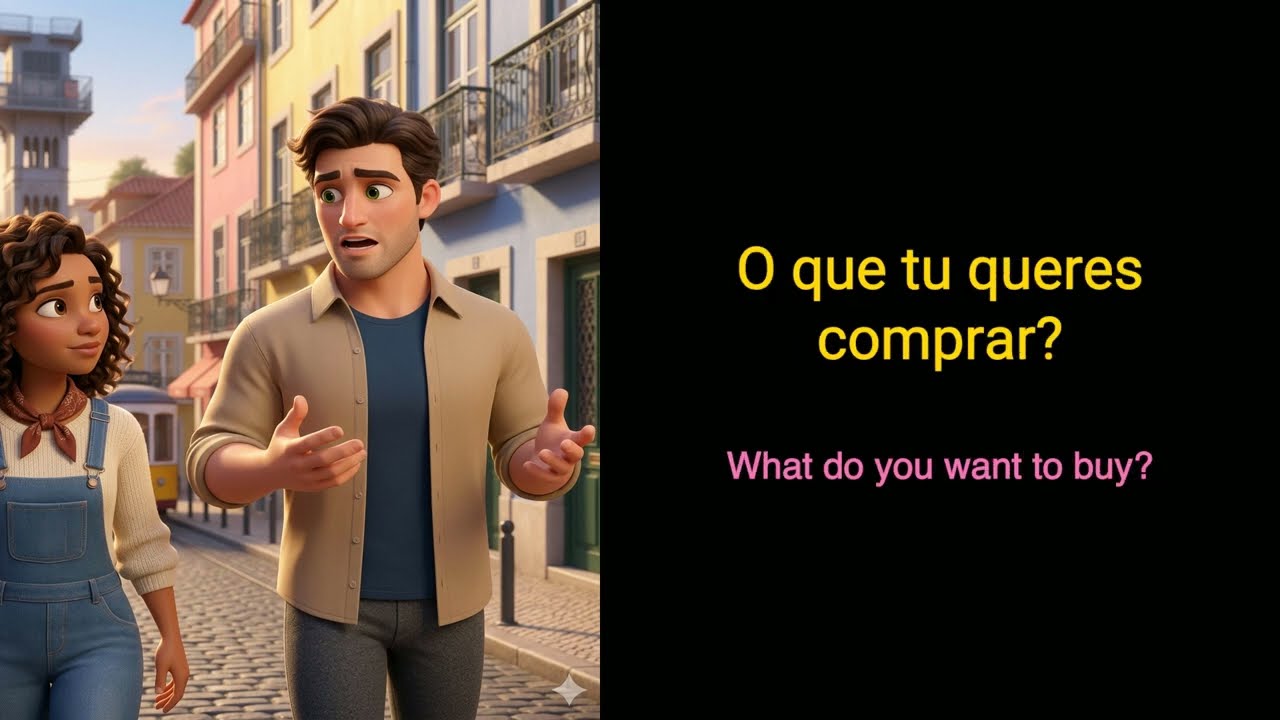
Sofia: O que queres ver, João?
(Sofia: What do you want to see, João?)
João: Eu quero ver livros sobre Lisboa. Eu amo Lisboa.
(João: I want to see books about Lisbon. I love Lisbon.)
Sofia: Eu também amo Lisboa. Onde estão os livros sobre Lisboa?
(Sofia: I love Lisbon too. Where are the books about Lisbon?)
João: Acho que estão ali. Vamos ver.
(João: I think they are over there. Let’s see.)
Sofia: Sim, vamos.
(Sofia: Yes, let’s go.)
João: Aqui está! Olha, Sofia. Um livro sobre Lisboa.
(João: Here it is! Look, Sofia. A book about Lisbon.)
Sofia: Que livro grande! É muito bonito.
(Sofia: What a big book! It’s very beautiful.)
João: Sim, é grande e azul. Eu gosto da cor azul.
(João: Yes, it’s big and blue. I like the color blue.)
Sofia: Abre o livro, João.
(Sofia: Open the book, João.)
João: Sim. Olha! É uma fotografia do elétrico 28.
(João: Yes. Look! It’s a photograph of the 28 tram.)
Sofia: Ah, o nosso elétrico! Gosto muito do elétrico 28.
(Sofia: Ah, our tram! I really like the 28 tram.)
João: E aqui, uma fotografia do Castelo de São Jorge.
(João: And here, a photograph of Saint George’s Castle.)
Sofia: É uma fotografia linda. Lisboa é uma cidade muito bonita.
(Sofia: It’s a beautiful photograph. Lisbon is a very beautiful city.)
João: É verdade. Eu quero este livro, Sofia.
(João: It’s true. I want this book, Sofia.)
Sofia: Tu queres comprar este livro?
(Sofia: You want to buy this book?)
João: Sim, eu quero comprar o livro. Podemos ler juntos.
(João: Yes, I want to buy the book. We can read it together.)
Sofia: Que boa ideia, João! Ler um livro sobre Lisboa, juntos.
(Sofia: What a good idea, João! To read a book about Lisbon, together.)
João: Então, vamos comprar.
(João: So, let’s buy it.)
Sofia: Sim, vamos. E depois?
(Sofia: Yes, let’s go. And after?)
João: Depois, vamos a um café.
(João: Afterwards, let’s go to a café.)
Sofia: A um café? Para quê?
(Sofia: To a café? For what?)
João: Para ler o nosso livro novo. E para comer um pastel de nata.
(João: To read our new book. And to eat a pastel de nata.)
Sofia: Ah, sim! Um livro novo e um pastel de nata. Perfeito!
(Sofia: Ah, yes! A new book and a pastel de nata. Perfect!)
João: É um plano perfeito. Estou muito feliz.
(João: It’s a perfect plan. I am very happy.)
Sofia: Eu também estou muito feliz. Gosto de ir à livraria contigo, João.
(Sofia: I am also very happy. I like going to the bookstore with you, João.)
João: E eu gosto de ir à livraria contigo, Sofia. Vamos pagar.
(João: And I like going to the bookstore with you, Sofia. Let’s pay.)
📝 Essential Vocabulary
Here are some key words and phrases from João and Sofia’s conversation that you can use when visiting a bookstore or talking about your interests.
| Target Language | English Translation | Pronunciation |
|---|---|---|
| A livraria | The bookstore | |
| Os livros | The books | |
| Gostar de | To like | |
| Ler | To read | |
| Bonita | Beautiful | |
| Comprar | To buy | |
| Juntos | Together | |
| Um pastel de nata | A custard tart |
🔍 Grammar Focus
Let’s break down two important verbs used frequently in this dialogue: gostar de (to like) and querer (to want).
1. Expressing Likes with “Gostar de”
In Portuguese, when you want to say you like something, you use the verb gostar followed by the preposition de. This is a crucial rule to remember! It’s different from English where we just say “I like books.”
Gostar de + Noun: Use this structure to say you like a thing.
- Example from the script: “Eu gosto de livros.” (I like books.)
- Example from the script: “Eu gosto de fotografia.” (I like photography.)
Gostar de + Verb (infinitive): Use this to say you like doing an activity.
- Example from the script: “Eu também gosto muito de ler.” (I also really like to read.)
Notice how Sofia also says, “Gosto desta livraria” (I like this bookstore). Here, desta is a contraction of de + esta (of + this).
2. Expressing Wants with “Querer”
The verb querer means “to want.” It’s a straightforward way to express your desires. In the dialogue, you see two common forms: quero (I want) and queres (you want, informal).
Querer + Noun: Use this to say you want a specific object.
- Example from the script: “Eu quero este livro, Sofia.” (I want this book, Sofia.)
Querer + Verb (infinitive): Use this to say you want to do something.
- Example from the script: “Mas eu quero ver outra coisa.” (But I want to see something else.)
- Example from the script: “Eu quero comprar o livro.” (I want to buy the book.)
Look at the question Sofia asks: “O que queres ver, João?” (What do you want to see, João?). This is a very common and useful question pattern.
🌍 Cultural Tip
🃏 Flip & Learn
Practice the key phrases from the dialogue with these flashcards.
I like this bookstore.
Gosto desta livraria.
Let's see the photography books.
Vamos ver os livros de fotografia.
I want to buy the book.
Eu quero comprar o livro.
A new book and a pastel de nata.
Um livro novo e um pastel de nata.
It's a perfect plan.
É um plano perfeito.
💡 Key Takeaways
Here are the most important points to remember from this lesson:
- To say you like something in Portuguese, always use the structure
gostar de+ noun or infinitive verb (e.g.,gosto de livros,gosto de ler). - The verb
querer(to want) is used to express desires, as ineu quero um livro(I want a book) oreu quero ver(I want to see). - Use
Vamos...to make suggestions, just like “Let’s…” in English. For example,Vamos ver(Let’s see) andVamos comprar(Let’s buy). - This dialogue is full of vocabulary for a bookstore (
livraria,livros,ler,comprar) and for Lisbon (elétrico 28,Castelo de São Jorge,pastel de nata).
🎯 Practice Quiz
Test your understanding of the dialogue and vocabulary with this short quiz.
Question
Question
Question
✍️ Fill in the Blanks
Let’s test your spelling and memory! Fill in the missing words below. Use correct spelling.
Fill in the blank
Fill in the blank
Support Us
Did you find this lesson helpful? Your support is what makes it possible for us to keep creating free, high-quality educational content.