Visiting a Museum in Portuguese: Art Vocabulary & Cafe Dialogue 🎨
Learn basic Portuguese vocabulary for visiting a museum, describing art with colors and sizes, and ordering a delicious pastel de nata at a café.
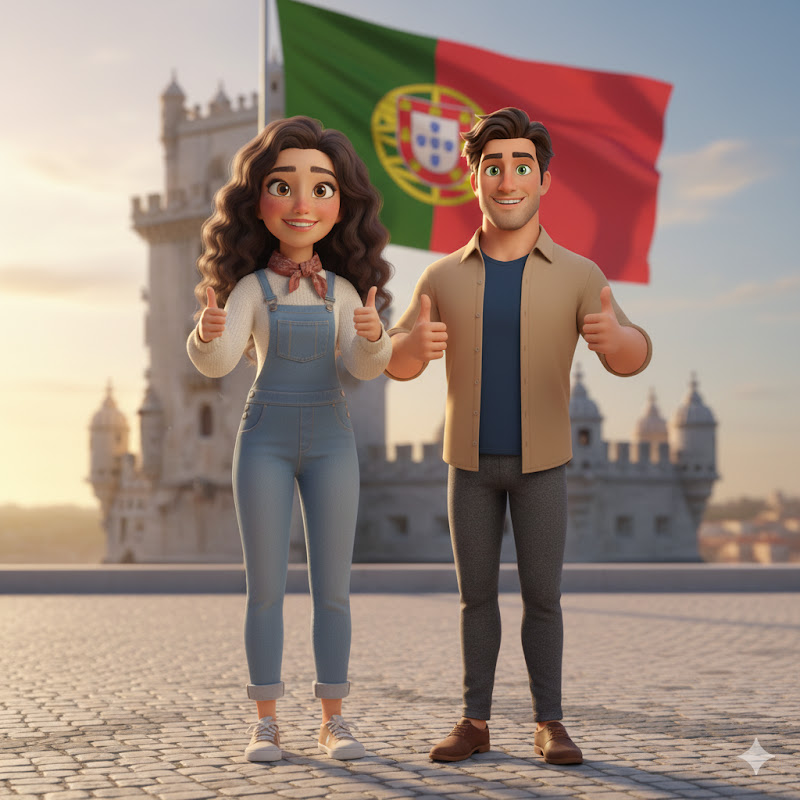
Join João and Sofia on a lovely day out in the city! In this lesson, you’ll learn essential Portuguese phrases for making plans, visiting a museum, and describing what you see using basic adjectives for size and color. To top it off, you’ll see how to suggest getting a coffee and a famous Portuguese sweet treat, the pastel de nata.
💬 Video Transcript
João: Olá, Sofia! O que fazemos hoje?
(João: Hello, Sofia! What are we doing today?)
Sofia: Olá, João. Não sei. O dia está bonito, mas não quero ir ao parque hoje.
(Sofia: Hello, João. I don’t know. The day is beautiful, but I don’t want to go to the park today.)
João: Eu também não. Já fomos ao parque. O que podemos fazer?
(João: Me neither. We’ve already been to the park. What can we do?)
Sofia: Hum… Podemos ir ao museu? Eu gosto de museus.
(Sofia: Hmm… Can we go to the museum? I like museums.)
João: Ao museu? É uma boa ideia! Eu também gosto de museus. Gosto de ver a arte.
(João: To the museum? That’s a good idea! I also like museums. I like to see art.)
Sofia: Ótimo! Então, vamos ao museu.
(Sofia: Great! So, let’s go to the museum.)
João: Vamos!
(João: Let’s go!)
Sofia: Uau, João! O museu é muito grande.
(Sofia: Wow, João! The museum is very big.)
João: Sim, é muito grande e silencioso. Olha, vamos ver aquela pintura.
(João: Yes, it’s very big and quiet. Look, let’s go see that painting.)
Sofia: Sim, vamos. Que pintura grande!
(Sofia: Yes, let’s go. What a big painting!)
João: É verdade. É uma pintura muito, muito grande. O que vês na pintura, Sofia?
(João: It’s true. It’s a very, very big painting. What do you see in the painting, Sofia?)
Sofia: Eu vejo o mar. O mar é azul. Muito azul.
(Sofia: I see the sea. The sea is blue. Very blue.)
João: Sim, eu também vejo o mar. E vejo um barco. O barco é branco.
(João: Yes, I also see the sea. And I see a boat. The boat is white.)
Sofia: Um barco branco no mar azul. É muito bonito.
(Sofia: A white boat in the blue sea. It’s very beautiful.)
João: É muito bonito. Eu gosto desta pintura.
(João: It’s very beautiful. I like this painting.)
Sofia: Eu também gosto. Vamos ver outra pintura?
(Sofia: I like it too. Shall we see another painting?)
João: Sim, vamos. Olha esta aqui.
(João: Yes, let’s go. Look at this one here.)
Sofia: Ah, esta pintura é pequena. Não é grande.
(Sofia: Ah, this painting is small. It’s not big.)
João: Não, é pequena. O que vês nesta pintura?
(João: No, it’s small. What do you see in this painting?)
Sofia: Eu vejo uma mulher. A mulher tem um chapéu.
(Sofia: I see a woman. The woman has a hat.)
João: Sim, um chapéu. De que cor é o chapéu?
(João: Yes, a hat. What color is the hat?)
Sofia: O chapéu é amarelo. Um grande chapéu amarelo.
(Sofia: The hat is yellow. A big yellow hat.)
João: E o vestido da mulher? De que cor é o vestido?
(João: And the woman’s dress? What color is the dress?)
Sofia: O vestido é verde. É um vestido verde e longo.
(Sofia: The dress is green. It’s a green and long dress.)
João: Uma mulher com um chapéu amarelo e um vestido verde. É interessante.
(João: A woman with a yellow hat and a green dress. It’s interesting.)
Sofia: Sim, é muito interessante. Gosto das cores.
(Sofia: Yes, it’s very interesting. I like the colors.)
João: Eu também gosto. O amarelo é uma cor feliz.
(João: I like them too. Yellow is a happy color.)
Sofia: É verdade. O museu tem muitas pinturas bonitas.
(Sofia: It’s true. The museum has many beautiful paintings.)
João: Sim, muitas. Mas agora… estou um pouco cansado.
(João: Yes, many. But now… I’m a bit tired.)
Sofia: Eu também estou um pouco cansada. E tenho um pouco de fome.
(Sofia: I’m also a bit tired. And I’m a little hungry.)
João: Fome? Eu também! Tenho uma ideia.
(João: Hungry? Me too! I have an idea.)
Sofia: Qual é a tua ideia, João?
(Sofia: What’s your idea, João?)
João: Depois do museu, vamos a um café?
(João: After the museum, shall we go to a café?)
Sofia: Sim! E o que comemos no café?
(Sofia: Yes! And what do we eat at the café?)
João: Vamos comer um pastel de nata!
(João: We’re going to eat a pastel de nata!)
Sofia: Sim! Que ideia perfeita! Eu adoro pastéis de nata.
(Sofia: Yes! What a perfect idea! I love pastéis de nata.)
João: Eu sei! Vamos. Um pastel de nata é perfeito agora.
(João: I know! Let’s go. A pastel de nata is perfect right now.)
Sofia: Sim, é perfeito! Vamos, João.
(Sofia: Yes, it’s perfect! Let’s go, João.)
📝 Essential Vocabulary
Here are some key words and phrases from João and Sofia’s conversation that will help you talk about art and food.
| Target Language | English Translation | Pronunciation |
|---|---|---|
| o museu | the museum | |
| a pintura | the painting | |
| grande | big | |
| pequeno / pequena | small | |
| as cores | the colors | |
| azul | blue | |
| amarelo | yellow | |
| verde | green | |
| Tenho fome. | I’m hungry. | |
| um pastel de nata | a custard tart |
🔍 Grammar Focus
Let’s look at a key grammar point from the conversation: adjective agreement.
Adjective Agreement (Gender)
In Portuguese, adjectives must “agree” with the noun they describe. This means they often change their ending to match the gender (masculine or feminine) of the noun.
Nouns ending in -o are typically masculine, and nouns ending in -a are typically feminine. Adjectives often follow this pattern.
Notice in the dialogue how the adjectives branco (white) and pequena (small) change their endings to match the nouns they describe.
Masculine noun + masculine adjective:
- Um barco branco. (A white boat.)
- Um vestido verde. (A green dress.) Note: Adjectives ending in -e don’t change for gender.
Feminine noun + feminine adjective:
- Esta pintura é pequena. (This painting is small.)
Look at the dialogue again to find more examples, like “um grande chapéu amarelo” (a big yellow hat) and “o mar azul” (the blue sea).
🌍 Cultural Tip
🃏 Flip & Learn
Practice the new vocabulary from the lesson with these flashcards.
The museum
O museu
The painting
A pintura
What color is it?
De que cor é?
I'm a little hungry.
Tenho um pouco de fome.
What a perfect idea!
Que ideia perfeita!
💡 Key Takeaways
Here are the most important points to remember from this lesson:
- Making Suggestions: To suggest an activity, you can use the phrase “Podemos ir a…?” (Can we go to…?), like Sofia did: “Podemos ir ao museu?”
- Describing with Adjectives: Portuguese adjectives usually come after the noun they describe (e.g., “um barco branco,” “um vestido verde”).
- Adjective Agreement is Key: Remember to change the ending of many adjectives to match the gender of the noun. For example,
barc<strong>o</strong> branc<strong>o</strong>(masculine) vs.pintur<strong>a</strong> pequen<strong>a</strong>(feminine). - Expressing Hunger: A common way to say you’re hungry is “Tenho fome” (literally “I have hunger”).
- Cultural Treat: The pastel de nata is a famous and delicious Portuguese egg custard tart, a must-try when visiting Portugal or a Portuguese café!
🎯 Practice Quiz
Test your knowledge of the vocabulary and grammar from the video.
Question
Question
Question
✍️ Fill in the Blanks
Let’s test your spelling and memory! Fill in the missing words below. Use correct spelling.
Fill in the blank
Fill in the blank
Support Us
Did you find this lesson helpful? Your support is what makes it possible for us to keep creating free, high-quality educational content.