Talking about Art in Portuguese: Museum Dialogue & Adjective Agreement 🖼️
Practice describing art in Portuguese with this slow conversation at a museum. Learn vocabulary for colors, sizes, and art forms, and join the characters for a coffee and pastel de nata.
Join João and Sofia on a cultural outing to a museum. In this slow Portuguese dialogue, you’ll learn essential vocabulary for describing art, comparing sizes (grande/pequeno), and expressing opinions, all before taking a well-deserved break for a classic Portuguese treat: a pastel de nata!
💬 Video Transcript
João: Olá, Sofia! Chegamos ao museu.
(João: Hello, Sofia! We’ve arrived at the museum.)
Sofia: Olá, João! Que bom! O museu é muito grande.
(Sofia: Hello, João! Great! The museum is very big.)
João: Sim, é um museu muito grande e bonito. Estás pronta?
(João: Yes, it’s a very big and beautiful museum. Are you ready?)
Sofia: Sim, estou pronta! Eu adoro arte.
(Sofia: Yes, I’m ready! I love art.)
João: Eu também gosto muito de arte. Vamos entrar.
(João: I also like art a lot. Let’s go in.)
Sofia: Sim, vamos! Uau! Olha para este quadro, João.
(Sofia: Yes, let’s go! Wow! Look at this painting, João.)
João: É um quadro enorme! É muito, muito grande.
(João: It’s a huge painting! It’s very, very big.)
Sofia: É verdade. É um quadro grande. E tem cores muito bonitas.
(Sofia: That’s true. It’s a big painting. And it has very beautiful colors.)
João: Eu vejo a cor azul. Gosto muito de azul.
(João: I see the color blue. I really like blue.)
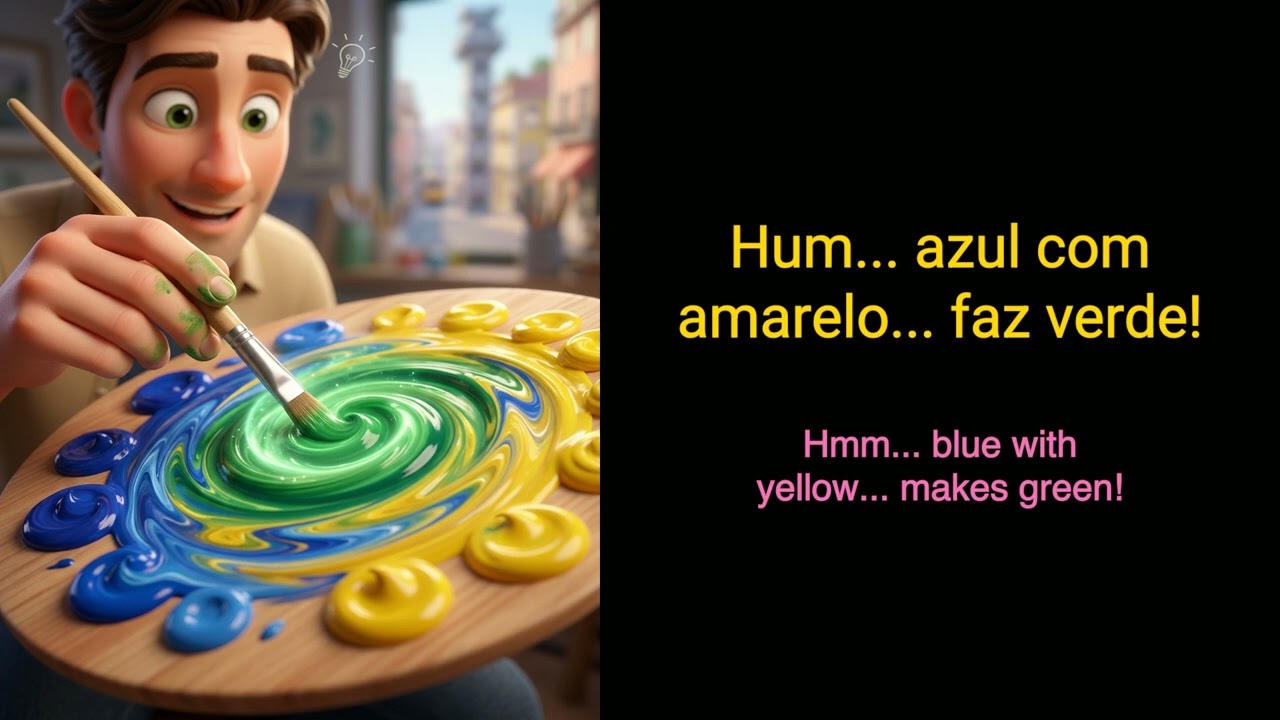
Sofia: Sim, tem muito azul. E também tem amarelo. O azul e o amarelo são bonitos juntos.
(Sofia: Yes, it has a lot of blue. And it also has yellow. Blue and yellow are beautiful together.)
João: Sim, eu concordo. É um quadro muito feliz.
(João: Yes, I agree. It’s a very happy painting.)
Sofia: Sim, é um quadro feliz. Eu gosto deste quadro. E tu?
(Sofia: Yes, it’s a happy painting. I like this painting. And you?)
João: Eu também gosto muito. É a minha pintura favorita até agora.
(João: I also like it a lot. It’s my favorite painting so far.)
Sofia: Vamos ver outra pintura. Olha aquela ali.
(Sofia: Let’s see another painting. Look at that one over there.)
João: Aquela pintura é diferente. É muito pequena.
(João: That painting is different. It’s very small.)
Sofia: Sim, esta é pequena. A outra é grande, esta é pequena.
(Sofia: Yes, this one is small. The other one is big, this one is small.)
João: Que cores tem esta pintura?
(João: What colors does this painting have?)
Sofia: Tem vermelho e preto. Apenas vermelho e preto.
(Sofia: It has red and black. Only red and black.)
João: Gosto de vermelho. É uma cor forte.
(João: I like red. It’s a strong color.)
Sofia: Sim, é forte. Não é uma pintura feliz como a outra.
(Sofia: Yes, it’s strong. It’s not a happy painting like the other one.)
João: Não, não é feliz. Mas é muito interessante.
(João: No, it’s not happy. But it’s very interesting.)
Sofia: Sim, é muito, muito interessante. Adoro o contraste.
(Sofia: Yes, it’s very, very interesting. I love the contrast.)
João: O que queres ver agora?
(João: What do you want to see now?)
Sofia: Hum… ali! O que é aquilo?
(Sofia: Hmm… over there! What is that?)
João: Aquilo é uma escultura. Vamos ver.
(João: That is a sculpture. Let’s see.)
Sofia: É uma escultura de metal. É muito moderna.
(Sofia: It’s a metal sculpture. It’s very modern.)
João: Sim, é muito moderna. É um pouco estranha.
(João: Yes, it’s very modern. It’s a little strange.)
Sofia: Eu gosto de coisas estranhas! É arte diferente.
(Sofia: I like strange things! It’s different art.)
João: Sim, é diferente. Gosto de ver coisas novas. E tu?
(João: Yes, it’s different. I like to see new things. And you?)
Sofia: Eu também! Adoro ver coisas novas. Obrigada por me trazeres ao museu, João.
(Sofia: Me too! I love seeing new things. Thanks for bringing me to the museum, João.)
João: De nada, Sofia. Gosto muito de estar aqui contigo.
(João: You’re welcome, Sofia. I really like being here with you.)
Sofia: Eu também gosto muito de estar aqui. Mas agora… estou um pouco cansada.
(Sofia: I also really like being here. But now… I’m a little tired.)
João: Sim, andar no museu cansa. Queres fazer uma pausa?
(João: Yes, walking in the museum is tiring. Do you want to take a break?)
Sofia: Sim, por favor. Quero beber alguma coisa.
(Sofia: Yes, please. I want to drink something.)
João: Queres um café?
(João: Do you want a coffee?)
Sofia: Sim, um café é uma boa ideia. O museu tem um café?
(Sofia: Yes, a coffee is a good idea. Does the museum have a café?)
João: Sim, tem um café muito bom. E sabes o que eles têm?
(João: Yes, it has a very good café. And you know what they have?)
Sofia: O quê?
(Sofia: What?)
João: Eles têm pastéis de nata.
(João: They have pastéis de nata.)
Sofia: A sério? Pastéis de nata? Que maravilha!
(Sofia: Really? Pastéis de nata? How wonderful!)
João: Sim! Então, vamos beber um café e comer um pastel de nata?
(João: Yes! So, shall we have a coffee and eat a pastel de nata?)
Sofia: Sim, vamos! É a ideia perfeita!
(Sofia: Yes, let’s go! It’s the perfect idea!)
João: Ótimo. Depois do café, podemos ver mais arte.
(João: Great. After the coffee, we can see more art.)
Sofia: Perfeito! Vamos para o café agora.
(Sofia: Perfect! Let’s go to the café now.)
📝 Essential Vocabulary
Here are some key words and phrases from João and Sofia’s conversation that will help you talk about art and order a snack in Portuguese.
| Target Language | English Translation | Pronunciation |
|---|---|---|
| O museu | The museum | |
| Um quadro | A painting | |
| Grande / Pequeno(a) | Big / Small | |
| As cores | The colors | |
| Uma escultura | A sculpture | |
| Moderno(a) | Modern | |
| Interessante | Interesting | |
| Pastéis de nata | Custard tarts |
🔍 Grammar Focus
Let’s break down two key grammar points from João and Sofia’s conversation.
1. Adjective Agreement
In Portuguese, adjectives must “agree” with the nouns they describe. This means they change their ending to match the noun’s gender (masculine or feminine) and number (singular or plural). Notice how Sofia and João use different forms of adjectives.
Masculine Singular: Nouns ending in -o are often masculine. Adjectives describing them will also end in -o.
- Example: “É um museu muito grande e bonito.” (It’s a very big and beautiful museum.)
- Example: “É um quadro muito feliz.” (It’s a very happy painting.)
Feminine Singular: Nouns ending in -a are often feminine. Adjectives describing them will end in -a.
- Example: “Aquela pintura é diferente. É muito pequena.” (That painting is different. It’s very small.)
- Example: “É uma escultura de metal. É muito moderna.” (It’s a metal sculpture. It’s very modern.)
Feminine Plural: When a feminine noun is plural (often ending in -as), the adjective also becomes plural (ending in -as).
- Example: “…tem cores muito bonitas.” (…it has very beautiful colors.)
2. Using “Gostar de” (To Like)
In English, we say “I like art.” In Portuguese, you must use the preposition de after the verb gostar. The structure is always gostar de + [noun or verb]. It’s a common mistake for learners to forget the de, but it’s essential!
- João says: “Eu também gosto muito
dearte.” (I also like art a lot.) - He also says: “Gosto
devermelho.” (I like red.) - And: “Gosto
dever coisas novas.” (I like to see new things.)
Remember this simple rule: when you like something in Portuguese, you always gostar de it!
🌍 Cultural Tip
🃏 Flip & Learn
Use these flashcards to test your memory of key phrases from the video.
A very big museum
Um museu muito grande
The painting is small
A pintura é pequena
I like strange things
Eu gosto de coisas estranhas
Do you want a coffee?
Queres um café?
It's the perfect idea!
É a ideia perfeita!
💡 Key Takeaways
Here are the most important points to remember from this lesson:
- Adjective Agreement is Key: Always match the ending of your adjectives to the gender and number of the noun (e.g.,
o quadro bonito,a pintura bonita). - Don’t Forget
dewithgostar: To say you like something, always use the structuregostar de. For example, “Eu gostodepastéis de nata.” - Comparing Opposites: Practice using contrasting adjectives like
grande(big) andpequeno(small) to describe things. - Expressing Opinions: You can use simple phrases like “Eu gosto” (I like), “Eu adoro” (I love), and “É muito interessante” (It’s very interesting) to share your thoughts.
🎯 Practice Quiz
Test your knowledge with a few questions about the dialogue.
Question
Question
Question
✍️ Fill in the Blanks
Let’s test your spelling and memory! Fill in the missing words below. Use correct spelling.
Fill in the blank
Fill in the blank
Support Us
Did you find this lesson helpful? Your support is what makes it possible for us to keep creating free, high-quality educational content.