Baking Cookies in Korean: Past Tense Verbs & Baking Story 🍪
Learn beginner Korean vocabulary and past tense verbs with a heartwarming story about baking cookies. Follow along as Minjun and Seoyeon turn a boring afternoon into a delicious one!
Join Minjun and his friend Seoyeon as they bake delicious chocolate cookies! This lesson will help you practice common Korean past tense verbs and learn essential vocabulary for cooking and daily life, all through a simple, engaging story.
💬 Video Transcript
민준 (Minjun): 저는 집에 있었어요. 심심했어요. 그리고 조금 배고팠어요.
(Minjun: I was at home. I was bored. And I was a little hungry.)
민준 (Minjun): 과자를 먹고 싶었어요. 하지만 집에 과자가 없었어요.
(Minjun: I wanted to eat a snack. But there were no snacks at home.)
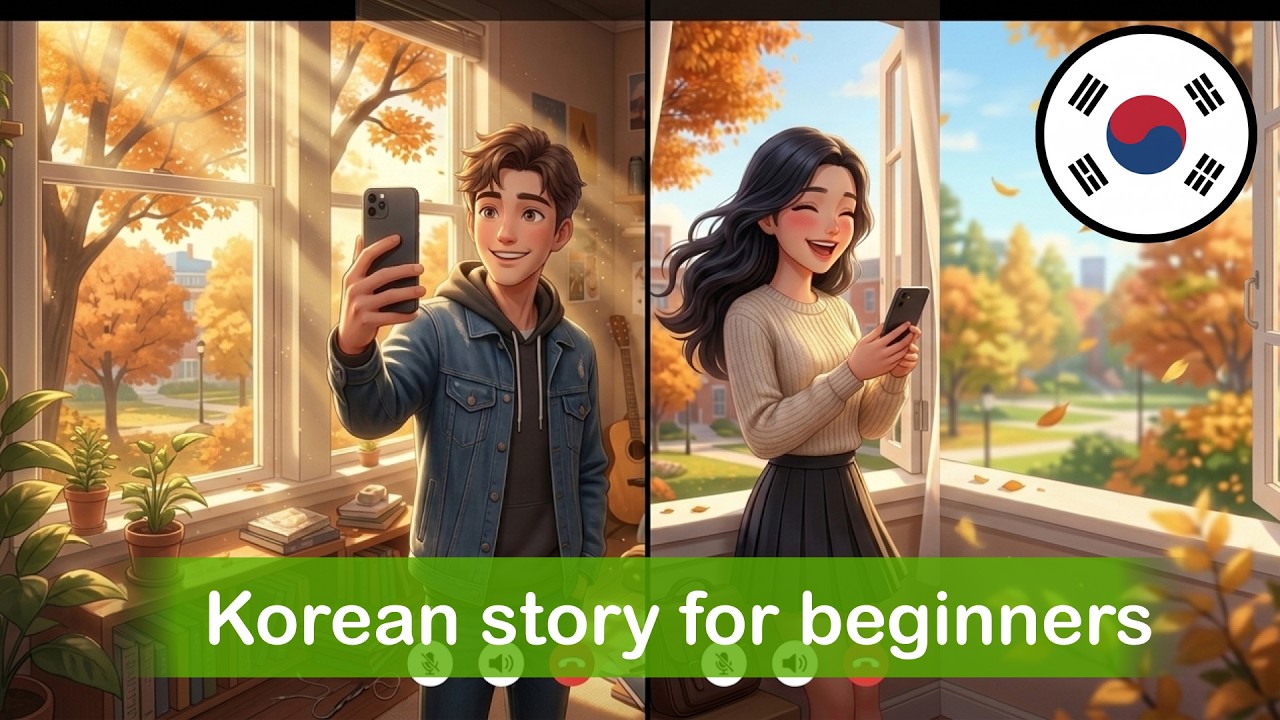
민준 (Minjun): 저는 친구 서연에게 전화했어요. “서연아, 나 심심해. 그리고 배고파.”
(Minjun: I called my friend Seoyeon. “Seoyeon, I’m bored. And I’m hungry.”)
서연 (Seoyeon): “민준아, 너는 항상 배고프구나.”
(Seoyeon: “Minjun, you’re always hungry.”)
민준 (Minjun): 그리고 서연이가 물었어요.
(Minjun: And then Seoyeon asked.)
서연 (Seoyeon): “나랑 쿠키 만들래?”
(Seoyeon: “Do you want to make cookies with me?”)
민준 (Minjun): 저는 대답했어요. “쿠키? 나는 만들 줄 몰라.”
(Minjun: I answered. “Cookies? I don’t know how to make them.”)
서연 (Seoyeon): “괜찮아, 쉬워! 내가 가르쳐 줄게. 너희 집으로 갈게.”
(Seoyeon: “It’s okay, it’s easy! I’ll teach you. I’ll go to your house.”)
민준 (Minjun): 잠시 후, 서연이가 우리 집에 왔어요. 서연이는 밀가루, 설탕, 그리고 초콜릿을 가져왔어요.
(Minjun: A little later, Seoyeon came to my house. Seoyeon brought flour, sugar, and chocolate.)
민준 (Minjun): 할머니가 부엌에 계셨어요. 할머니는 서연이를 보고 기뻐하셨어요.
(Minjun: My grandmother was in the kitchen. Grandmother was happy to see Seoyeon.)
할머니 (Grandmother): “어서 와, 서연아. 뭐 하니?”
(Grandmother: “Welcome, Seoyeon. What are you two doing?”)
서연 (Seoyeon): “안녕하세요, 할머니. 저희 쿠키 만들 거예요!”
(Seoyeon: “Hello, Grandmother. We’re going to make cookies!”)
할머니 (Grandmother): “재미있겠네.”
(Grandmother: “That sounds fun.”)
민준 (Minjun): 서연이는 좋은 선생님이었어요.
(Minjun: Seoyeon was a good teacher.)
서연 (Seoyeon): “먼저, 큰 그릇에 밀가루를 넣어.”
(Seoyeon: “First, put the flour in a big bowl.”)
민준 (Minjun): 저는 그릇에 밀가루를 넣었어요. 그런데 밀가루가 식탁 위로 조금 떨어졌어요. 제 얼굴에도 조금 묻었어요. 서연이가 저를 보고 많이 웃었어요.
(Minjun: I put the flour in the bowl. But some of the flour fell on the table. Some got on my face, too. Seoyeon saw me and laughed a lot.)
서연 (Seoyeon): “이제 설탕을 넣자.”
(Seoyeon: “Now, let’s add the sugar.”)
민준 (Minjun): 우리는 설탕을 넣고 모든 것을 함께 섞었어요. 정말 재미있었어요.
(Minjun: We added the sugar and mixed everything together. It was really fun.)
민준 (Minjun): 우리는 반죽으로 작은 공 모양을 만들었어요. 그리고 쟁반 위에 놓았어요. 우리는 오븐에 쿠키를 넣었어요.
(Minjun: We made small balls with the dough. And we placed them on a tray. We put the cookies in the oven.)
민준 (Minjun): 곧 집에서 아주 좋은 냄새가 났어요. 제 고양이 치즈가 잠에서 깼어요. 치즈도 부엌으로 왔어요. 치즈도 맛있는 쿠키 냄새를 맡았어요.
(Minjun: Soon, a very good smell filled the house. My cat, Cheese, woke up from his nap. Cheese also came to the kitchen. Cheese also smelled the delicious cookies.)
민준 (Minjun): 15분 후에 쿠키가 완성되었어요. 쿠키는 예쁜 갈색이었어요.
(Minjun: After 15 minutes, the cookies were done. The cookies were a pretty brown color.)
민준 (Minjun): 서연이와 할머니, 그리고 저는 쿠키를 먹었어요. 쿠키는 따뜻하고 정말 맛있었어요. 초콜릿이 부드럽게 녹아 있었어요.
(Minjun: Seoyeon, Grandmother, and I ate the cookies. The cookies were warm and really delicious. The chocolate had melted softly.)
민준 (Minjun): “와, 이거 진짜 맛있다!” 제가 말했어요.
(Minjun: “Wow, this is so delicious!” I said.)
할머니 (Grandmother): “민준이, 이제 쿠키도 잘 굽는구나.”
(Grandmother: “Minjun, you’re good at baking cookies now.”)
민준 (Minjun): 저는 서연이를 보고 웃었어요. “서연이가 좋은 선생님이에요.”
(Minjun: I looked at Seoyeon and smiled. “Seoyeon is a good teacher.”)
민준 (Minjun): 우리는 모두 아주 행복했어요. 정말 즐거운 오후였어요.
(Minjun: We were all very happy. It was a really enjoyable afternoon.)
📝 Essential Vocabulary
Here are some key words and phrases from the video. Listen carefully and practice your pronunciation!
| Korean | English Translation | Pronunciation |
|---|---|---|
| 심심했어요 | I was bored | |
| 배고팠어요 | I was hungry | |
| 과자 | Snack / Cookie | |
| 만들다 | To make | |
| 밀가루 | Flour | |
| 설탕 | Sugar | |
| 섞다 | To mix | |
| 냄새 | Smell / Scent | |
| 맛있었어요 | It was delicious |
🔍 Grammar Focus
This story is perfect for practicing the simple past tense in Korean. Let’s look at the most common pattern you’ll find in the script.
The Past Tense: -았/었/했어요 (-ass/eoss/haesseoyo)
In Korean, you change the ending of a verb or adjective to show that something happened in the past. The entire story is told in the past tense. The ending you use depends on the last vowel of the verb stem.
Rule 1: If the last vowel of the stem is ㅏ (a) or ㅗ (o), you add -았어요.
- 오다 (to come) → 오 + 았어요 → 왔어요 (came)
- Example: 서연이가 우리 집에 왔어요. (Seoyeon came to our house.)
- 보다 (to see) → 보 + 았어요 → 봤어요 (saw)
- Example: 할머니는 서연이를 보고 기뻐하셨어요. (Grandmother was happy to see Seoyeon.) Note: The -고 form here connects two actions.
Rule 2: If the last vowel of the stem is NOT ㅏ or ㅗ, you add -었어요.
- 있다 (to be/exist) → 있 + 었어요 → 있었어요 (was)
- Example: 저는 집에 있었어요. (I was at home.)
- 먹다 (to eat) → 먹 + 었어요 → 먹었어요 (ate)
- Example: 저는 쿠키를 먹었어요. (I ate the cookies.)
- 웃다 (to laugh) → 웃 + 었어요 → 웃었어요 (laughed)
- Example: 서연이가 저를 보고 많이 웃었어요. (Seoyeon saw me and laughed a lot.)
Rule 3: For verbs ending in 하다 (hada), you change it to -했어요 (haesseoyo).
- 전화하다 (to call) → 전화했어요 (called)
- Example: 저는 친구 서연에게 전화했어요. (I called my friend Seoyeon.)
- 심심하다 (to be bored) → 심심했어요 (was bored)
- Example: 심심했어요. (I was bored.)
Notice how almost every sentence in the story uses one of these endings!
🌍 Cultural Tip
🃏 Flip & Learn
Use these flashcards to test your memory of key phrases from the story.
Do you want to make cookies with me?
나랑 쿠키 만들래?
I don't know how to make it.
나는 만들 줄 몰라.
It was really delicious.
정말 맛있었어요.
It was a very enjoyable afternoon.
정말 즐거운 오후였어요.
💡 Key Takeaways
Here are the most important points to remember from this lesson:
- Expressing Feelings in the Past: You can describe how you felt using the past tense, like
심심했어요(I was bored) and배고팠어요(I was hungry). - Forming the Simple Past Tense: The key to the past tense is adding
-았어요,-었어요, or-했어요to the verb/adjective stem based on its final vowel. - Baking Vocabulary: You learned essential words for baking, including
밀가루(flour),설탕(sugar),반죽(dough), and오븐(oven). - Suggesting an Activity: Seoyeon uses the friendly suggestion pattern
~ㄹ/을래?when she asks,나랑 쿠키 만들래?(Do you want to make cookies with me?).
🎯 Practice Quiz
Check your understanding with a few quick questions!
Question
Question
Question
✍️ Fill in the Blanks
Let’s test your spelling and memory! Fill in the missing words below. Use correct spelling.
Fill in the blank
Fill in the blank
Support Us
Did you find this lesson helpful? Your support is what makes it possible for us to keep creating free, high-quality educational content.