Talking About Hobbies and Cute Items in Korean: Character Story & Appearance Grammar 🧸
Learn beginner Korean vocabulary and grammar by following a fun story about a friend's new obsession with a cute character keychain called Labubu.
In this lesson, follow a simple and fun Korean conversation between two friends, Seoyeon and Minjun. You’ll learn essential vocabulary for describing things, expressing feelings, and talking about hobbies, all centered around Minjun’s adorable new obsession!
💬 Video Transcript
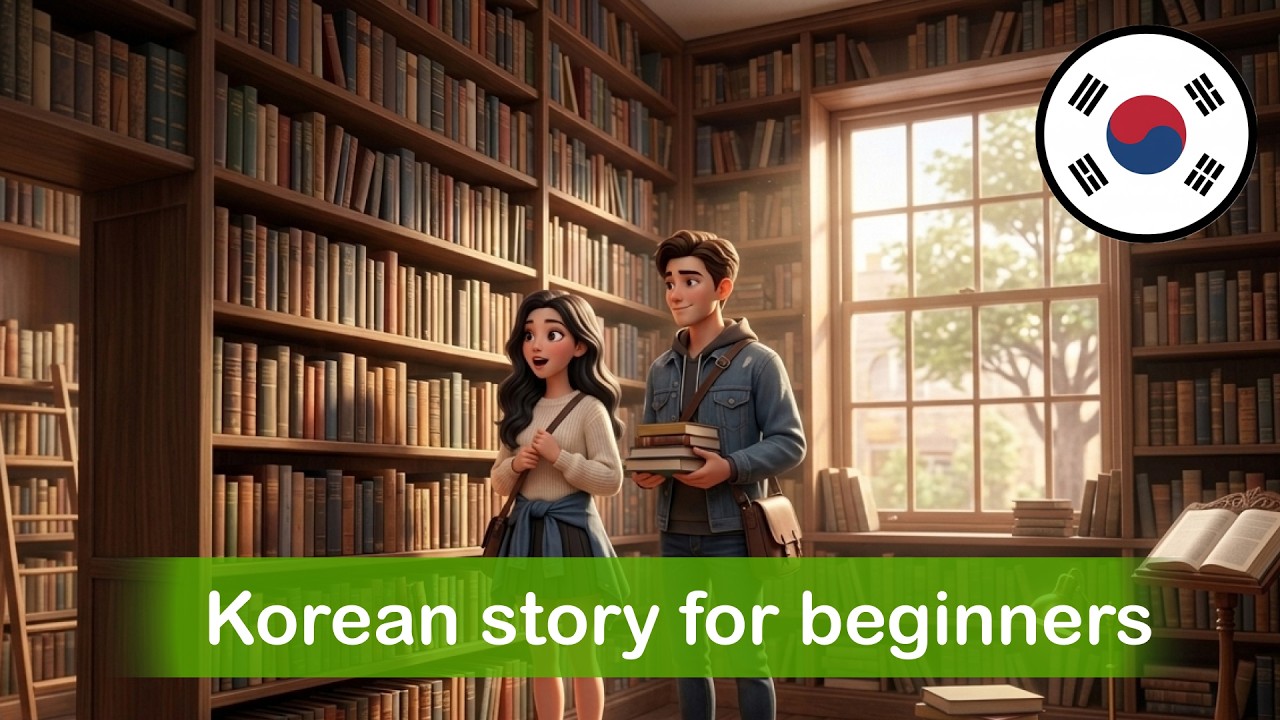
서연: 오늘 저는 친구 민준이를 만났어요.
(Seoyeon: Today, I met my friend Minjun.)
서연: 민준이 기분이 아주 좋아 보였어요.
(Seoyeon: Minjun looked like he was in a very good mood.)
서연: 제가 물었어요. “민준아, 좋은 일 있어?”
(Seoyeon: I asked. “Minjun, did something good happen?”)
서연: 민준이가 활짝 웃으면서 핸드폰을 보여줬어요.
(Seoyeon: Minjun smiled brightly and showed me his phone.)
서연: 핸드폰 화면에 귀여운 캐릭터가 있었어요.
(Seoyeon: There was a cute character on the phone screen.)
서연: 눈이 아주 크고, 귀가 길었어요.
(Seoyeon: It had very big eyes and long ears.)
민준: 이거 라부부야. 정말 귀엽지 않아?
(Minjun: This is Labubu. Isn’t it really cute?)
서연: 저는 사진을 봤어요. 인형이었어요.
(Seoyeon: I looked at the picture. It was a doll.)
서연: 민준이가 인형을 좋아해서 조금 신기했어요.
(Seoyeon: I was a little surprised because Minjun likes dolls.)
서연: 저는 그냥 “응, 귀엽다.” 라고 대답했어요.
(Seoyeon: I just answered, “Yeah, it’s cute.”)
민준: 나 새로운 라부부 키링 샀어! 보여줄게!
(Minjun: I bought a new Labubu keychain! I’ll show you!)
서연: 민준이는 가방에서 작은 상자를 꺼냈어요.
(Seoyeon: Minjun took a small box out of his bag.)
서연: 상자를 열자, 보라색 라부부 키링이 나왔어요.
(Seoyeon: When he opened the box, a purple Labubu keychain came out.)
서연: 정말 작고 귀여웠어요.
(Seoyeon: It was really small and cute.)
서연: 민준이는 키링을 자기 가방에 달았어요.
(Seoyeon: Minjun attached the keychain to his bag.)
민준: 이제 라부부랑 매일 같이 다닐 거야!
(Minjun: Now I’m going to be with Labubu every day!)
서연: 그 모습이 너무 재미있어서 저는 웃었어요.
(Seoyeon: That was so funny that I laughed.)
민준: 서연아, 너는 안 갖고 싶어?
(Minjun: Seoyeon, don’t you want one?)
서연: 저는 고개를 저었어요. “귀엽지만, 나는 괜찮아.”
(Seoyeon: I shook my head. “It’s cute, but I’m okay.”)
민준: 알겠어. 그래도 다음에 예쁜 거 보면 꼭 나한테 말해 줘!
(Minjun: Okay. But if you see a pretty one next time, be sure to tell me!)
서연: 우리는 같이 길을 걸었어요.
(Seoyeon: We walked down the street together.)
서연: 저는 민준이 가방에 달린 작은 보라색 인형을 봤어요.
(Seoyeon: I saw the small purple doll attached to Minjun’s bag.)
서연: 친구가 행복한 모습을 보니 저도 기분이 좋아졌어요.
(Seoyeon: Seeing my friend looking so happy made me feel good too.)
서연: 이제 민준이의 새로운 취미를 조금 알 것 같아요.
(Seoyeon: Now I think I understand Minjun’s new hobby a little.)
📝 Essential Vocabulary
Here are some key words from the story that will help you understand the dialogue and use them in your own conversations.
| Target Language | English Translation | Pronunciation |
|---|---|---|
| 친구 | Friend | |
| 기분이 좋다 | To be in a good mood | |
| 귀엽다 | To be cute | |
| 보여주다 | To show | |
| 신기하다 | To be surprising/fascinating | |
| 키링 | Keychain (keyring) | |
| 새로운 | New | |
| 취미 | Hobby | |
| 행복하다 | To be happy |
🔍 Grammar Focus
Let’s break down two useful grammar patterns that appeared in the story.
1. Describing Appearances: -아/어 보이다
The pattern -아/어 보이다 is attached to adjective stems to mean “to look like,” “to seem,” or “to appear.” It’s used to express an impression or judgment based on observation.
You choose between -아 보이다 and -어 보이다 based on the last vowel of the adjective stem:
- If the last vowel is ㅏ or ㅗ, you use -아 보이다.
- For all other vowels, you use -어 보이다.
- For adjectives ending in 하다, it becomes -해 보이다.
From the script:
- 좋다 (to be good) → 좋 + 아 보이다 → 좋아 보이다 (to look good)
- “민준이 기분이 아주 좋아 보였어요.”
- (Minjun looked like he was in a very good mood.)
Here’s another example:
- 피곤하다 (to be tired) → 피곤해 보이다 (to look tired)
- “친구가 피곤해 보여요.” (My friend looks tired.)
2. Asking for Agreement: -지 않아(요)?
This pattern is a negative question tag, similar to “…, isn’t it?” or “…, don’t you think?” in English. You attach -지 않다 to a verb or adjective stem to form a question that seeks the listener’s agreement. The informal version is -지 않아? and the standard polite version is -지 않아요?.
From the script:
- 귀엽다 (to be cute) → 귀엽 + 지 않아? → 귀엽지 않아? (Isn’t it cute?)
- “정말 귀엽지 않아?”
- (Isn’t it really cute?)
You can use this to share your opinion and invite others to agree with you:
- 재미있다 (to be interesting) → 재미있지 않아요? (Isn’t it interesting?)
- 맛있다 (to be delicious) → 맛있지 않아요? (Isn’t it delicious?)
🌍 Cultural Tip
키링), is a popular hobby among people of all ages, not just children. These items are often a form of self-expression, with people decorating their bags, phones, and diaries to show off their personality and favorite characters. This trend reflects a broader appreciation for cute aesthetics (귀여움) in modern Korean culture.🃏 Flip & Learn
Practice the key vocabulary from our story with these flashcards.
To be in a good mood
기분이 좋다
Keychain
키링
To be cute
귀엽다
New hobby
새로운 취미
💡 Key Takeaways
Here are the main points to remember from this lesson:
- Expressing Observations: Use the grammar pattern
-아/어 보이다to say how someone or something looks (e.g.,좋아 보였어요- looked good). - Describing Appearance: You can describe features simply using nouns and adjectives like
눈이 아주 크고(eyes are very big) and귀가 길었어요(ears were long). - Asking for Agreement: The ending
-지 않아(요)?is a friendly way to ask “Isn’t it…?” and share your opinion, as in정말 귀엽지 않아?(Isn’t it really cute?). - Talking About Hobbies: Learn key vocabulary like
취미(hobby),인형(doll), and키링(keychain) to talk about your interests. - Expressing Happiness: Simple phrases like
기분이 좋아졌어요(I started to feel good) and행복한 모습(a happy appearance) are great for talking about feelings.
🎯 Practice Quiz
Test your understanding of the story and vocabulary with this short quiz!
Question
Question
Question
✍️ Fill in the Blanks
Let’s test your spelling and memory! Fill in the missing words below. Use correct spelling.
Fill in the blank
Fill in the blank
Support Us
Did you find this lesson helpful? Your support is what makes it possible for us to keep creating free, high-quality educational content.