Taking the Subway in Korean: Travel Dialogue & Vocabulary 🚇
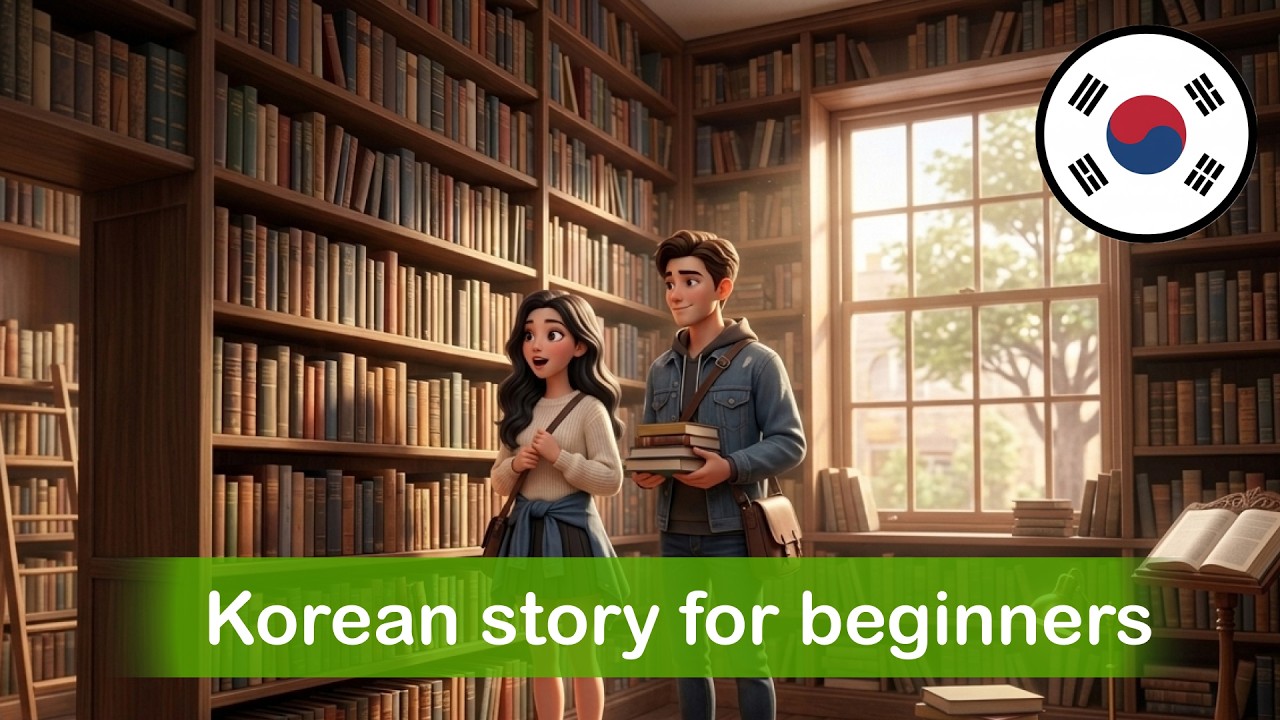
Join Minjun and Seoyeon on a trip to a downtown bookstore in this easy Korean story. Learn essential vocabulary for transportation, places, and making plans, perfect for A1-A2 beginners.
Follow along with this simple Korean story about two friends, Minjun and Seoyeon, who decide to take the subway to a bookstore in the city. This lesson is perfect for beginners to practice listening to natural dialogue, learn essential vocabulary about transportation and places, and see the past tense and suggestion forms in a real-world context.
💬 Video Transcript
Narrator: 오늘은 날씨가 아주 좋았어요.
(Narrator: The weather was very good today.)
Narrator: 저는 친구 서연이를 만났어요.
(Narrator: I met my friend Seoyeon.)
Narrator: 우리는 공원에서 산책했어요.
(Narrator: We took a walk in the park.)
Narrator: 그러다가 서연이가 말했어요.
(Narrator: Then, Seoyeon said.)
Seoyeon: 민준아, 우리 시내에 갈까? 거기에 아주 크고 좋은 서점이 있어.
(Seoyeon: Minjun, shall we go downtown? There’s a really big and nice bookstore there.)
Narrator: 저는 책을 좋아해요. 그래서 바로 ‘좋아!‘라고 대답했어요.
(Narrator: I like books. So I immediately answered, ‘Okay!’)
Narrator: ‘그런데 시내는 여기서 멀어. 우리 어떻게 갈까?’ 제가 물었어요.
(Narrator: ‘But downtown is far from here. How should we go?’ I asked.)
Seoyeon: 음, 버스는 느려. 지하철을 타자! 지하철은 아주 빨라.
(Seoyeon: Hmm, the bus is slow. Let’s take the subway! The subway is very fast.)
Narrator: 좋은 생각이었어요. 우리는 같이 지하철역으로 걸어갔어요.
(Narrator: It was a good idea. We walked to the subway station together.)
Narrator: 지하철역은 지하에 있었어요. 계단이 아주 길었어요.
(Narrator: The subway station was underground. The stairs were very long.)
Narrator: 역 안에는 사람들이 정말 많았어요. 우리는 표를 사고 지하철을 기다렸어요.
(Narrator: There were a lot of people inside the station. We bought tickets and waited for the subway.)
Narrator: 곧 지하철이 도착했어요. 문이 열리고 우리는 안에 탔어요.
(Narrator: Soon the subway arrived. The doors opened and we got inside.)
Narrator: 다행히 빈자리가 두 개 있었어요. 우리는 나란히 앉았어요.
(Narrator: Luckily, there were two empty seats. We sat side by side.)
Narrator: 지하철이 출발했어요. 창밖으로 다른 지하철역들이 지나갔어요.
(Narrator: The subway departed. Other subway stations passed by outside the window.)
Narrator: 서연이와 저는 창밖을 보면서 이야기를 했어요.
(Narrator: Seoyeon and I talked while looking out the window.)
Seoyeon: 와, 저기 봐. 한강이야.
(Seoyeon: Wow, look over there. It’s the Han River.)
Narrator: 서연이가 손가락으로 가리켰어요. 정말 아름다웠어요.
(Narrator: Seoyeon pointed with her finger. It was really beautiful.)
Narrator: 우리는 약 20분 동안 지하철을 탔어요.
(Narrator: We were on the subway for about 20 minutes.)
Narrator: 드디어 우리는 목적지 역에 도착했어요.
(Narrator: We finally arrived at our destination station.)
Narrator: 지하철에서 내리니까 기분이 좋았어요.
(Narrator: I felt good getting off the subway.)
Narrator: 이제 서점에 가서 재미있는 책을 읽을 거예요.
(Narrator: Now we’re going to go to the bookstore and read interesting books.)
📝 Essential Vocabulary
Here are some key words from the story that will help you understand the dialogue and talk about your own travel plans.
| Target Language | English Translation | Pronunciation |
|---|---|---|
| 지하철 | Subway | |
| 서점 | Bookstore | |
| 시내 | Downtown / City center | |
| 역 | Station | |
| 빠르다 | To be fast | |
| 느리다 | To be slow | |
| 표 | Ticket | |
| 자리 | Seat / Spot | |
| 공원 | Park | |
| 도착하다 | To arrive |
🔍 Grammar Focus
This story is full of useful grammar for beginner learners. Let’s look at two key patterns for making plans and talking about the past.
1. Making Suggestions: ~(으)ㄹ까? and ~자
When you want to suggest an activity, you can use these two common forms.
~(으)ㄹ까? (Shall we…?)
This is a gentle way to ask “Shall we…?” or “How about…?”. You attach ~ㄹ까? to verb stems ending in a vowel and ~을까? to verb stems ending in a consonant.
From the script:
- 우리 시내에 갈까? (Uli sinae-e galkka?)
- Shall we go downtown?
- Here,
가다(to go) ends in a vowel, so~ㄹ까is added to the stem가.
~자 (Let’s…)
This is a more direct, informal way to say “Let’s do something.” It’s often used among close friends. You simply attach ~자 to the verb stem.
From the script:
- 지하철을 타자! (Jihacheol-eul taja!)
- Let’s take the subway!
- Here,
~자is added to the stem타from the verb타다(to ride/take).
2. Simple Past Tense: ~았/었어요
To talk about things that have already happened, you use the past tense ending ~았/었어요. The entire story is told in the past tense. The form depends on the last vowel of the verb stem.
- If the last vowel is ㅏ or ㅗ, you add
~았어요. - If the last vowel is anything else (ㅓ, ㅜ, ㅣ, etc.), you add
~었어요. - For verbs ending in
하다, it becomes~했어요.
From the script:
- 날씨가 아주 좋았어요. (nalssiga aju joasseoyo.)
- The weather was very good. (From
좋다)
- The weather was very good. (From
- 저는 친구 서연이를 만났어요. (jeoneun chingu seoyeoni-reul mannasseoyo.)
- I met my friend Seoyeon. (From
만나다)
- I met my friend Seoyeon. (From
- 우리는 공원에서 산책했어요. (urineun gong-won-eseo sanchaekhaesseoyo.)
- We took a walk in the park. (From
산책하다)
- We took a walk in the park. (From
🌍 Cultural Tip
🃏 Flip & Learn
Practice the key vocabulary and phrases from Minjun and Seoyeon’s adventure.
Subway
지하철
Bookstore
서점
Shall we go downtown?
우리 시내에 갈까?
Let's take the subway!
지하철을 타자!
The weather was very good.
날씨가 아주 좋았어요.
💡 Key Takeaways
Here are the most important points to remember from this lesson:
- Making Suggestions: Use
~(으)ㄹ까?to gently ask “Shall we…?” and use the informal~자with friends to say “Let’s…”. - Past Tense: Most actions in the story end in
~았/었어요(e.g., 만났어요, 걸어갔어요, 탔어요) to show they happened in the past. - Transportation Vocabulary: You learned essential words for getting around, like
지하철(subway),버스(bus),역(station), and표(ticket). - Contrasting Words: The story uses
빠르다(to be fast) and느리다(to be slow) to compare the subway and the bus.
🎯 Practice Quiz
Test your understanding of the vocabulary and story details.
Question
Question
Question
✍️ Fill in the Blanks
Let’s test your spelling and memory! Fill in the missing words below. Use correct spelling.
Fill in the blank
Fill in the blank
Support Us
Did you find this lesson helpful? Your support is what makes it possible for us to keep creating free, high-quality educational content.