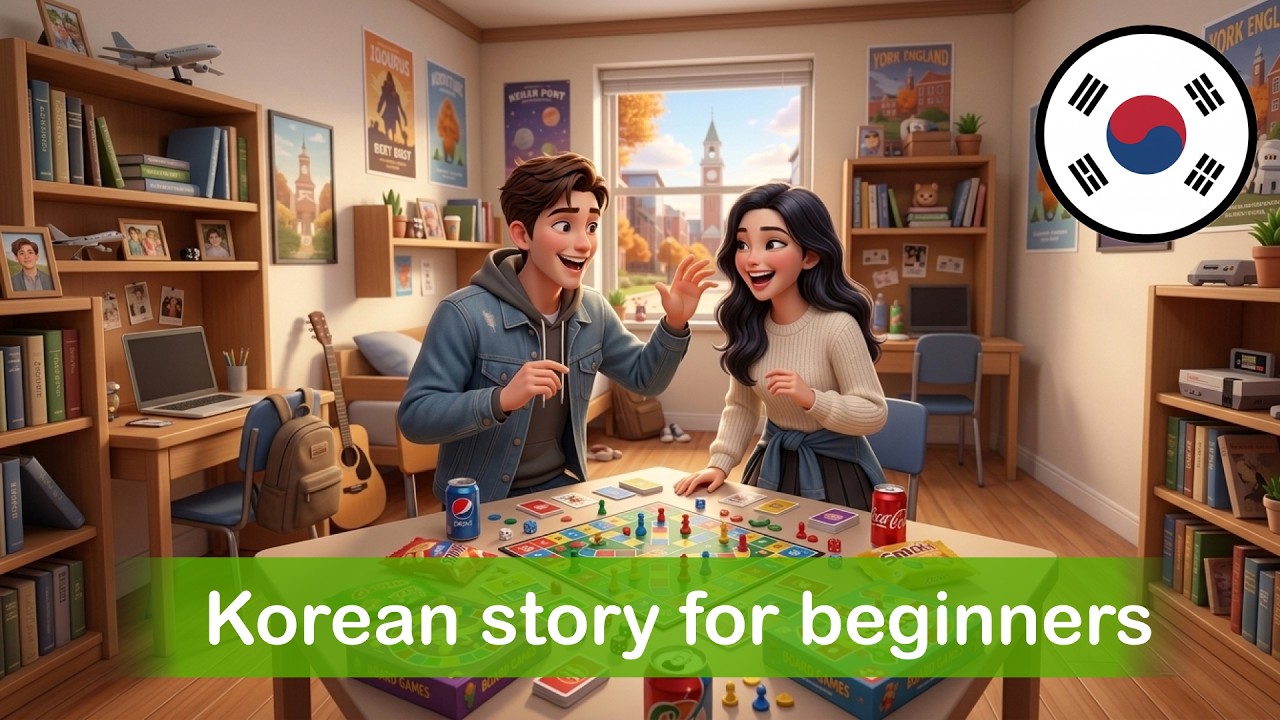
Making Weekend Plans in Korean: Beach Trip Dialogue & Suggestions 🏖️
Learn how to make plans with a friend in Korean! This beginner conversation covers suggesting activities, asking about availability, and deciding on transportation for a fun weekend trip to the beach.
Planning a fun day out with friends is a great way to practice your Korean! In this slow-paced conversation for beginners, you’ll learn how to suggest an activity, ask if someone is free, and make decisions about when and how to meet. Follow along as Minjun and Seoyeon plan a trip to the beach!
💬 Video Transcript
민준: 여보세요? 서연 씨? 저 민준이에요.
(Minjun: Hello? Seoyeon? It’s Minjun.)
서연: 아, 민준 씨! 안녕하세요.
(Seoyeon: Ah, Minjun! Hello.)
민준: 안녕하세요, 서연 씨. 잘 지내요?
(Minjun: Hello, Seoyeon. How are you?)
서연: 네, 잘 지내요. 민준 씨는요?
(Seoyeon: Yes, I’m doing well. And you, Minjun?)
민준: 저도 잘 지내요. 서연 씨, 이번 주말에 시간 있어요?
(Minjun: I’m doing well, too. Seoyeon, do you have time this weekend?)
서연: 이번 주말이요? 네, 시간 있어요. 왜요?
(Seoyeon: This weekend? Yes, I have time. Why?)
민준: 다행이다! 우리 주말에 같이 놀아요.
(Minjun: That’s a relief! Let’s hang out together this weekend.)
서연: 좋아요! 같이 놀아요. 뭐 할까요?
(Seoyeon: Sounds good! Let’s hang out. What shall we do?)
민준: 음… 뭐 할까요? 좋은 생각 있어요?
(Minjun: Hmm… What shall we do? Do you have any good ideas?)
서연: 저는 좋은 생각 없어요. 민준 씨는요?
(Seoyeon: I don’t have any good ideas. What about you, Minjun?)
민준: 저는 좋은 생각 있어요!
(Minjun: I have a good idea!)
서연: 정말요? 뭐예요?
(Seoyeon: Really? What is it?)
민준: 우리 바다에 가요. 바다 어때요?
(Minjun: Let’s go to the beach. How about the beach?)
서연: 와! 바다요? 정말 좋아요!
(Seoyeon: Wow! The beach? That’s really great!)
민준: 바다 좋아해요?
(Minjun: Do you like the beach?)
서연: 네! 저는 바다를 아주 좋아해요.
(Seoyeon: Yes! I really like the beach.)
민준: 잘 됐다! 그럼 우리 바다에 가요.
(Minjun: That’s great! Then let’s go to the beach.)
서연: 네! 좋아요! 우리 같이 바다에 가요. 정말 신나요.
(Seoyeon: Yes! Sounds good! Let’s go to the beach together. I’m so excited.)
민준: 그럼 언제 갈까요? 토요일 어때요?
(Minjun: Then when shall we go? How about Saturday?)
서연: 토요일이요? 음… 네, 토요일 좋아요.
(Seoyeon: Saturday? Hmm… Yes, Saturday is good.)
민준: 일요일은 어때요?
(Minjun: How about Sunday?)
서연: 일요일도 좋아요. 저는 토요일, 일요일 모두 시간 있어요.
(Seoyeon: Sunday is also good. I have time on both Saturday and Sunday.)
민준: 그럼 우리 토요일에 가요. 토요일이 더 좋아요.
(Minjun: Then let’s go on Saturday. Saturday is better.)
서연: 네, 알겠어요. 그럼 토요일에 가요.
(Seoyeon: Okay, I understand. Then let’s go on Saturday.)
민준: 좋아요! 토요일에 바다에 가요.
(Minjun: Great! Let’s go to the beach on Saturday.)
서연: 그런데 우리 어떻게 갈까요?
(Seoyeon: But how shall we get there?)
민준: 어떻게 갈까요? 음… 버스를 탈까요?
(Minjun: How shall we go? Hmm… Shall we take the bus?)
서연: 버스도 좋아요. 기차는 어때요?
(Seoyeon: The bus is also good. How about the train?)
민준: 아! 기차! 기차 좋아요. 우리 기차를 타요.
(Minjun: Ah! The train! The train is good. Let’s take the train.)
서연: 네! 저도 기차를 좋아해요. 기차가 더 빨라요.
(Seoyeon: Yes! I like the train, too. The train is faster.)
민준: 맞아요. 기차가 더 빨라요. 그럼 기차를 타요.
(Minjun: That’s right. The train is faster. Then let’s take the train.)
서연: 좋아요. 토요일에 기차를 타고 바다에 가요.
(Seoyeon: Sounds good. Let’s go to the beach by train on Saturday.)
민준: 생각만 해도 정말 신나요!
(Minjun: Just thinking about it is so exciting!)
서연: 저도요! 정말 기대돼요.
(Seoyeon: Me too! I’m really looking forward to it.)
민준: 바다에서 맛있는 것도 먹어요.
(Minjun: Let’s eat something delicious at the beach, too.)
서연: 와, 좋아요! 맛있는 거 뭐 먹을까요?
(Seoyeon: Wow, sounds great! What delicious thing shall we eat?)
민준: 그건 우리 토요일에 생각해요.
(Minjun: Let’s think about that on Saturday.)
서연: 네, 알겠어요. 그럼 토요일에 만나요!
(Seoyeon: Okay, I understand. Then see you on Saturday!)
민준: 네, 서연 씨. 토요일에 만나요. 전화할게요.
(Minjun: Yes, Seoyeon. See you on Saturday. I’ll call you.)
서연: 네, 전화 기다릴게요. 안녕히 계세요.
(Seoyeon: Okay, I’ll wait for your call. Goodbye.)
민준: 네, 안녕히 계세요.
(Minjun: Yes, goodbye.)
📝 Essential Vocabulary
Here are some key words and phrases from the video that you’ll need to make your own plans in Korean.
| Korean | English Translation | Pronunciation |
|---|---|---|
| 이번 주말 | this weekend | |
| 시간 있어요? | Do you have time? | |
| 같이 놀아요 | let’s hang out together | |
| 뭐 할까요? | What shall we do? | |
| 좋은 생각 | good idea | |
| 바다 | sea, beach | |
| 어때요? | How about…? | |
| 기차 | train | |
| 신나요 | it’s exciting | |
| 기대돼요 | I’m looking forward to it |
🔍 Grammar Focus
This conversation is full of useful grammar for making suggestions and plans. Let’s look at two key patterns.
1. Making Suggestions: -(으)ㄹ까요? (Shall we…?)
The ending -(으)ㄹ까요? is used to make a suggestion or ask for someone’s opinion. It’s equivalent to saying “Shall we…?” or “What/When/How should we…?” in English.
- If the verb stem ends in a vowel or ㄹ, you add
-ㄹ까요?. - If the verb stem ends in a consonant (other than ㄹ), you add
-을까요?.
Examples from the script:
- 뭐 할까요? (What shall we do?)
- The verb stem is
하-(from 하다, to do), which ends in a vowel. So, you addㄹ까요?to get할까요?.
- The verb stem is
- 언제 갈까요? (When shall we go?)
- The verb stem is
가-(from 가다, to go), which ends in a vowel. So, you addㄹ까요?to get갈까요?.
- The verb stem is
- 버스를 탈까요? (Shall we take the bus?)
- The verb stem is
타-(from 타다, to ride), which ends in a vowel. So, you addㄹ까요?to get탈까요?.
- The verb stem is
- 뭐 먹을까요? (What shall we eat?)
- The verb stem is
먹-(from 먹다, to eat), which ends in a consonant. So, you add을까요?to get먹을까요?.
- The verb stem is
2. Proposing an Action: -아요/어요 (Let’s…)
When you’ve made a decision or want to propose a course of action more directly, you can use the -아요/어요 ending. While this is the standard present tense form, in this context, it functions as a propositive, meaning “Let’s…”.
Examples from the script:
- 우리 주말에 같이 놀아요. (Let’s hang out together this weekend.)
놀다(to play/hang out) becomes놀아요.
- 우리 바다에 가요. (Let’s go to the beach.)
가다(to go) becomes가요.
- 우리 기차를 타요. (Let’s take the train.)
타다(to ride) becomes타요.
- 바다에서 맛있는 것도 먹어요. (Let’s eat something delicious at the beach.)
먹다(to eat) becomes먹어요.
Notice how the conversation flows from -(으)ㄹ까요? (asking for ideas) to -아요/어요 (stating the plan).
🌍 Cultural Tip
🃏 Flip & Learn
Use these flashcards to test your memory of key phrases for making plans.
Do you have time this weekend?
이번 주말에 시간 있어요?
How about the beach?
바다 어때요?
Let's take the train.
우리 기차를 타요.
I'm really looking forward to it.
정말 기대돼요.
💡 Key Takeaways
Here are the most important points to remember from this lesson:
- Checking Availability: Start your plan by asking
시간 있어요?(Do you have time?). - Asking for Suggestions: Use
뭐 할까요?(What shall we do?) to brainstorm ideas with a friend. - Making Suggestions: Propose an idea using a noun followed by
어때요?(How about…?), like바다 어때요?(How about the beach?). - Comparing Options: When deciding between choices, you can use
-도 좋아요(is also good) and-이/가 더 좋아요(is better). For example,일요일도 좋아요and토요일이 더 좋아요. - Confirming Plans: Use the
-아요/어요form like우리 토요일에 가요(Let’s go on Saturday) to confirm a decision.
🎯 Practice Quiz
Check your understanding of the dialogue and vocabulary with this short quiz.
Question
Question
Question
✍️ Fill in the Blanks
Let’s test your spelling and memory! Fill in the missing words below. Use correct spelling.
Fill in the blank
Fill in the blank
Support Us
Did you find this lesson helpful? Your support is what makes it possible for us to keep creating free, high-quality educational content.