Talking About Body Parts in Korean: Simon Says Game & Vocabulary 🙆
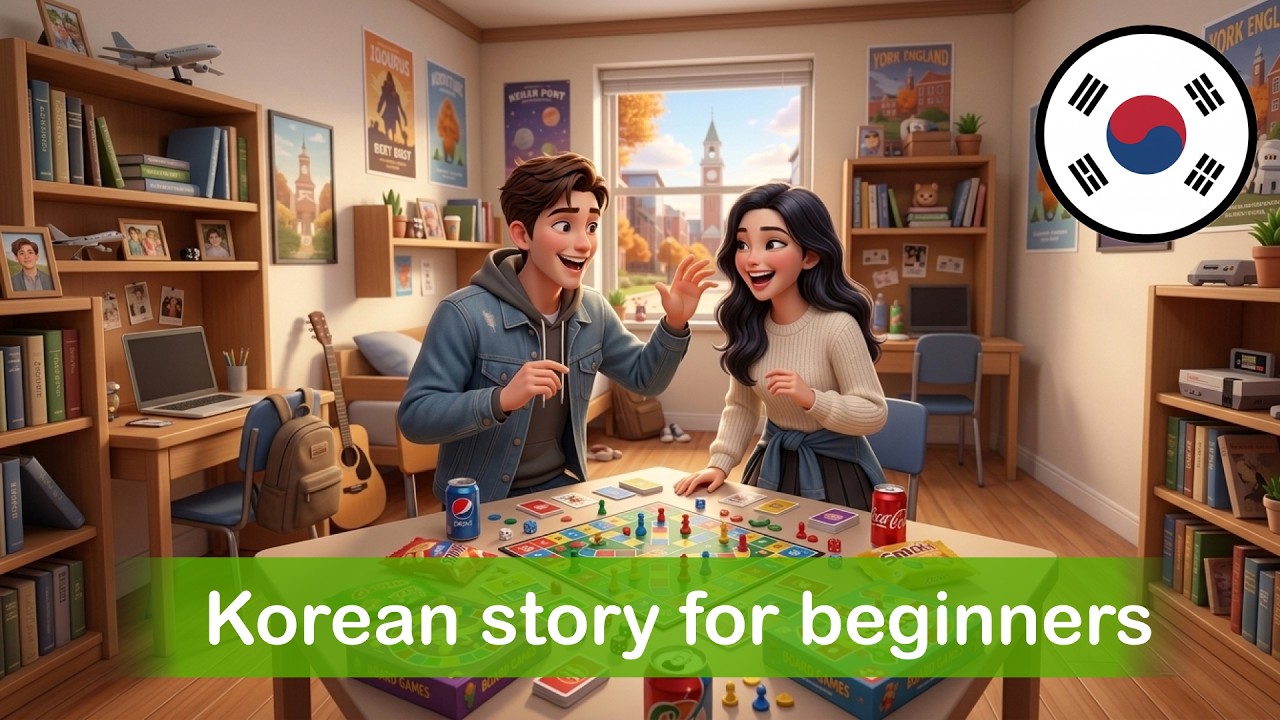
Ready to learn Korean body parts in a fun, interactive way? Join Minjun and Seoyeon as they play 'Simon Says' (민준이가 말해요!) and master essential vocabulary like head, shoulders, eyes, and ears.
Learning new vocabulary can be a challenge, but turning it into a game makes it fun and memorable. In this lesson, join Minjun and Seoyeon as they play the Korean version of “Simon Says,” called “민준이가 말해요” (Minjun Says). You’ll learn nine essential Korean words for body parts while seeing how a simple command sentence is formed.
💬 Video Transcript
민준: 서연아, 안녕하세요.
(Minjun: Seoyeon, hello.)
서연: 민준아, 안녕하세요.
(Seoyeon: Minjun, hello.)
민준: 서연아, 지금 뭐 해요?
(Minjun: Seoyeon, what are you doing now?)
서연: 음… 아무것도 안 해요. 심심해요.
(Seoyeon: Umm… I’m not doing anything. I’m bored.)
민준: 저도 심심해요. 우리 같이 놀아요.
(Minjun: I’m bored too. Let’s play together.)
서연: 좋아요! 뭐 하고 놀아요?
(Seoyeon: Okay! What should we play?)
민준: 우리 재미있는 게임 해요.
(Minjun: Let’s play a fun game.)
서연: 무슨 게임이에요? 재미있어요?
(Seoyeon: What game is it? Is it fun?)
민준: 네, 아주 재미있어요. 제가 가르쳐 줄게요.
(Minjun: Yes, it’s very fun. I’ll teach you.)
서연: 좋아요. 어떻게 하는 게임이에요?
(Seoyeon: Okay. How do you play it?)
민준: 제가 ‘민준이가 말해요’ 라고 말하면, 따라 해요.
(Minjun: If I say ‘Minjun says’, you follow the command.)
서연: 아, 알겠어요. ‘민준이가 말해요’.
(Seoyeon: Ah, I see. ‘Minjun says’.)
민준: 네. 예를 들어, ‘민준이가 말해요. 머리 만져요.’
(Minjun: Yes. For example, ‘Minjun says, touch your head.’)
서연: 그러면 제가 머리를 만져요. 맞아요?
(Seoyeon: Then I touch my head. Is that right?)
민준: 네, 맞아요! 아주 쉬워요. 준비됐어요?
(Minjun: Yes, that’s right! It’s very easy. Are you ready?)
서연: 네, 준비됐어요! 시작해요!
(Seoyeon: Yes, I’m ready! Let’s start!)
민준: 좋아요. 민준이가 말해요. 머리 만져요.
(Minjun: Okay. Minjun says, touch your head.)
서연: 머리! 이렇게요?
(Seoyeon: Head! Like this?)
민준: 네! 잘했어요. 다음은, 민준이가 말해요. 어깨 만져요.
(Minjun: Yes! Good job. Next, Minjun says, touch your shoulders.)
서연: 어깨! 재미있어요.
(Seoyeon: Shoulders! This is fun.)
민준: 민준이가 말해요. 눈 만져요.
(Minjun: Minjun says, touch your eyes.)
서연: 눈! 여기 있어요.
(Seoyeon: Eyes! Here they are.)
민준: 민준이가 말해요. 코 만져요.
(Minjun: Minjun says, touch your nose.)
서연: 코! 여기 있어요.
(Seoyeon: Nose! Here it is.)
민준: 좋아요. 이제 조금 빨리 할게요. 입 만져요.
(Minjun: Okay. Now I’ll do it a little faster. Touch your mouth.)
서연: 입! 아!
(Seoyeon: Mouth! Ah!)
민준: 하하하! 서연아, 틀렸어요.
(Minjun: Hahaha! Seoyeon, you’re wrong.)
서연: 왜요? 입을 만졌어요.
(Seoyeon: Why? I touched my mouth.)
민준: 제가 ‘민준이가 말해요’ 라고 안 했어요.
(Minjun: I didn’t say ‘Minjun says’.)
서연: 아! 맞다! 정말 재미있네요. 다시 해요.
(Seoyeon: Ah! That’s right! This is really fun. Let’s play again.)
민준: 좋아요. 민준이가 말해요. 귀 만져요.
(Minjun: Okay. Minjun says, touch your ears.)
서연: 귀. 이번에는 맞았어요.
(Seoyeon: Ears. I got it right this time.)
민준: 민준이가 말해요. 손 만져요.
(Minjun: Minjun says, touch your hands.)
서연: 손!
(Seoyeon: Hands!)
민준: 발 만져요.
(Minjun: Touch your feet.)
서연: (가만히 있는다) 안 만져요. ‘민준이가 말해요’ 라고 안 했어요.
(Seoyeon: (Stays still) I’m not touching them. You didn’t say ‘Minjun says’.)
민준: 와! 서연아, 정말 잘해요!
(Minjun: Wow! Seoyeon, you’re really good!)
서연: 이제 제가 할래요. ‘서연이가 말해요’ 게임이에요.
(Seoyeon: Now I’ll do it. It’s the ‘Seoyeon says’ game.)
민준: 좋아요! 저도 준비됐어요.
(Minjun: Okay! I’m ready too.)
서연: 서연이가 말해요. 머리 만져요.
(Seoyeon: Seoyeon says, touch your head.)
민준: 머리!
(Minjun: Head!)
서연: 서연이가 말해요. 무릎 만져요.
(Seoyeon: Seoyeon says, touch your knees.)
민준: 무릎!
(Minjun: Knees!)
서연: 서연이가 말해요. 어깨 만져요.
(Seoyeon: Seoyeon says, touch your shoulders.)
민준: 어깨!
(Minjun: Shoulders!)
서연: 눈 만져요.
(Seoyeon: Touch your eyes.)
민준: 눈! 아! 또 틀렸어요.
(Minjun: Eyes! Ah! I was wrong again.)
서연: 하하하. 민준아, 제가 이겼어요.
(Seoyeon: Hahaha. Minjun, I won.)
민준: 네, 서연이가 이겼어요. 이 게임 정말 재미있어요.
(Minjun: Yes, Seoyeon won. This game is really fun.)
서연: 네, 맞아요. 우리 이제 머리, 어깨, 무릎, 발, 눈, 코, 입, 귀, 손 다 알아요.
(Seoyeon: Yes, that’s right. We now know head, shoulders, knees, feet, eyes, nose, mouth, ears, and hands.)
민준: 좋아요. 심심할 때 또 해요.
(Minjun: Great. Let’s play again when we’re bored.)
서연: 네! 다음에 또 같이 놀아요.
(Seoyeon: Yes! Let’s play together again next time.)
📝 Essential Vocabulary
Here are the key body parts and phrases you’ll learn in this video. Listen to the pronunciation and get ready to play along!
| Korean | English Translation | Pronunciation |
|---|---|---|
| 머리 | Head | |
| 어깨 | Shoulder | |
| 무릎 | Knee | |
| 발 | Foot | |
| 눈 | Eye | |
| 코 | Nose | |
| 입 | Mouth | |
| 귀 | Ear | |
| 손 | Hand | |
| 만져요 | Touch |
🔍 Grammar Focus
Two key grammar points in this dialogue make the game work: the polite command form and the subject marking particle.
1. The Polite Command Form: -아요 / -어요 (~ayo / ~eoyo)
Throughout the game, Minjun gives commands like “머리 만져요” (Touch your head). The ~요 ending makes the sentence polite but still functions as a command or suggestion in this context. This is one of the most common verb endings in Korean.
To create this form, you attach -아요 or -어요 to the verb stem.
- If the last vowel of the verb stem is ㅏ or ㅗ, you add -아요.
- For all other vowels, you add -어요.
The verb “to touch” is 만지다 (manjida). The stem is 만지 (manji). Since the last vowel is ㅣ (not ㅏ or ㅗ), we add -어요. The ㅣ and ㅓ combine to form ㅕ, resulting in:
- 만지 + 어요 → 만져요 (manjyeoyo)
Another example is 하다 (hada), which means “to do” or “to play”. It’s an exception and always becomes 해요 (haeyo).
- Example from script: 우리 재미있는 게임 해요. (Let’s play a fun game.)
2. The Subject Particle: -이 / -가 (~i / ~ga)
The name of the game is crucial: “민준이가 말해요” (Minjun says). The particle ~이 attached to 민준 marks him as the subject of the verb “말해요” (says). This particle tells you who is performing the action.
The rule is simple:
- If the noun ends in a consonant, you add -이. (e.g., 민준 → 민준이)
- If the noun ends in a vowel, you add -가. (e.g., 서연 → 서연가)
In the script, you see this in action:
- 민준이가 말해요. (Minjun-i malhaeyo.) - Minjun ends in a consonant, so -이 is used.
- 제가 이겼어요. (Je-ga igyeosseoyo.) - 저 (I) ends in a vowel, so -가 is used.
This is different from the particle -아/야 used to call someone’s name, as in “서연아, 안녕하세요” (Seoyeon, hello).
🌍 Cultural Tip
🃏 Flip & Learn
Use these flashcards to test your memory of the new vocabulary.
Head
머리
Shoulder
어깨
To touch
만지다
Nose
코
Ear
귀
💡 Key Takeaways
Here are the most important points to remember from this lesson:
- Nine Essential Body Parts: You learned the Korean words for head (머리), shoulders (어깨), knees (무릎), feet (발), eyes (눈), nose (코), mouth (입), ears (귀), and hands (손).
- How to Play “Simon Says” in Korean: The key phrase is “(Name)이가/가 말해요”. You only obey the command if you hear this phrase first.
- Forming Polite Commands: You can give a simple, polite command by adding
-아요/어요to a verb stem, as seen in만져요(touch). - Marking the Subject: The particles
-이/가are attached to nouns to show who is performing the action in a sentence.
🎯 Practice Quiz
Test your knowledge with a few questions based on the video.
Question
Question
Question
✍️ Fill in the Blanks
Let’s test your spelling and memory! Fill in the missing words below. Use correct spelling.
Fill in the blank
Fill in the blank
Support Us
Did you find this lesson helpful? Your support is what makes it possible for us to keep creating free, high-quality educational content.