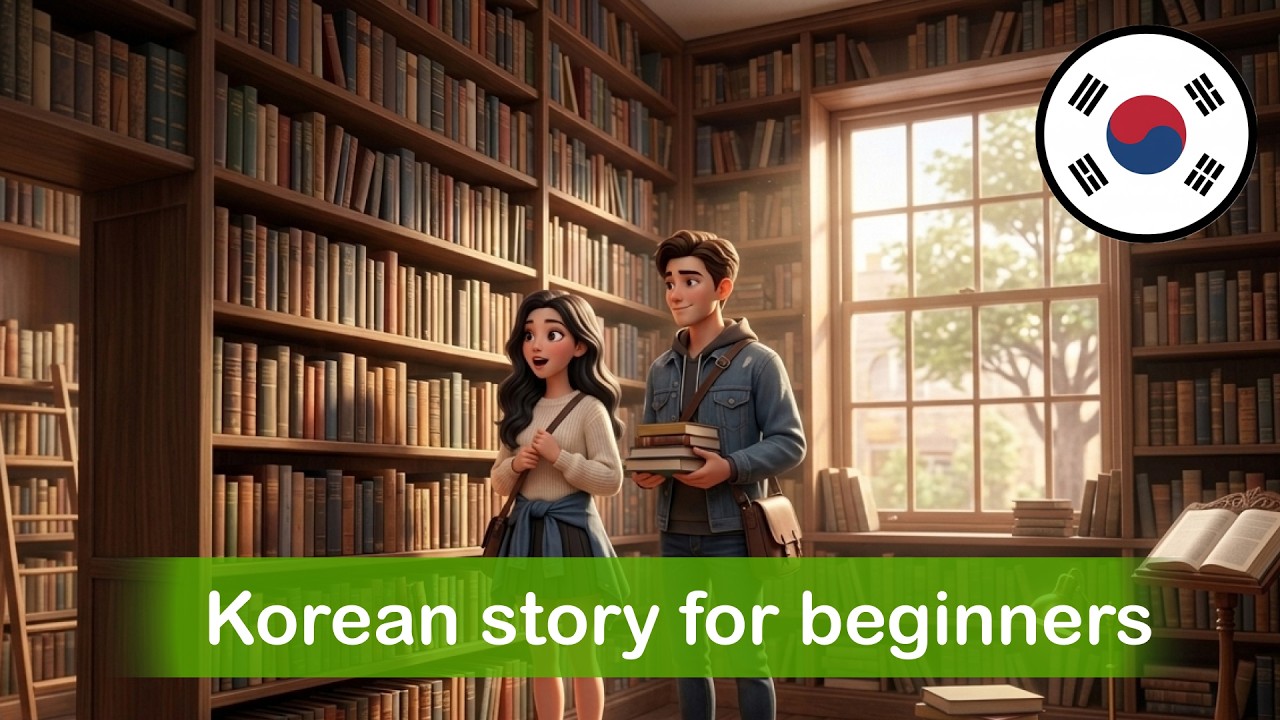
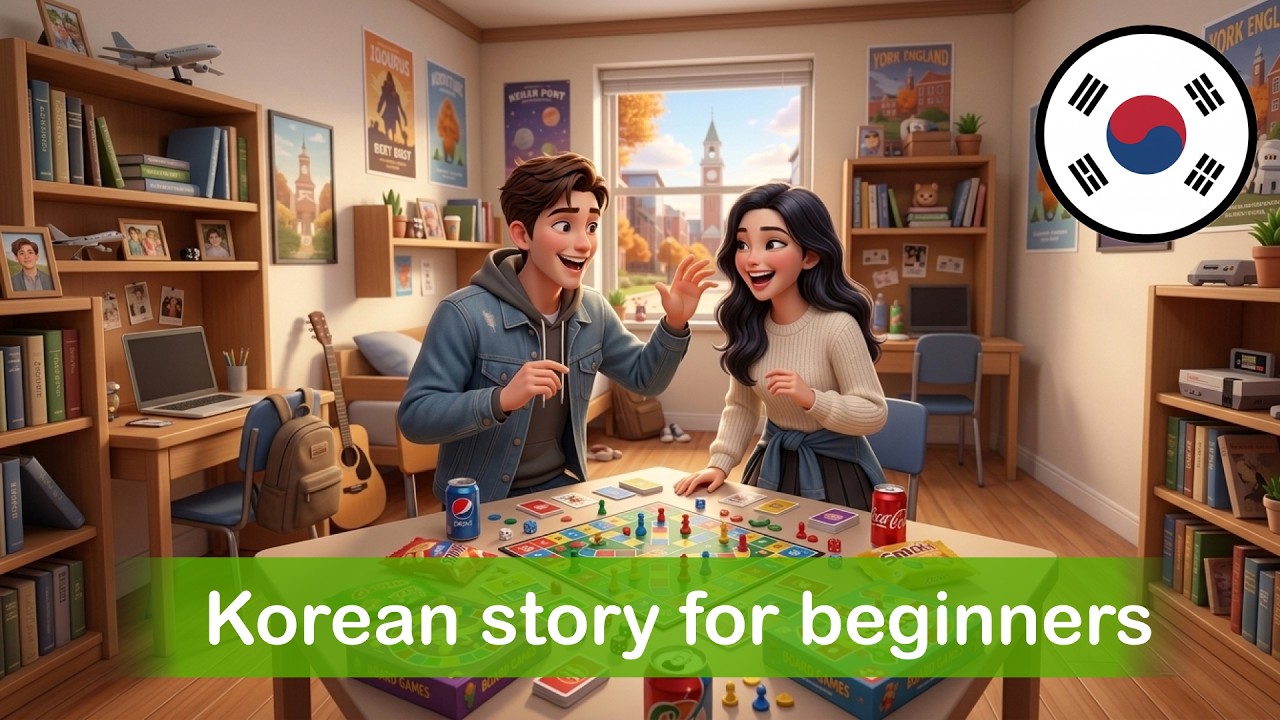
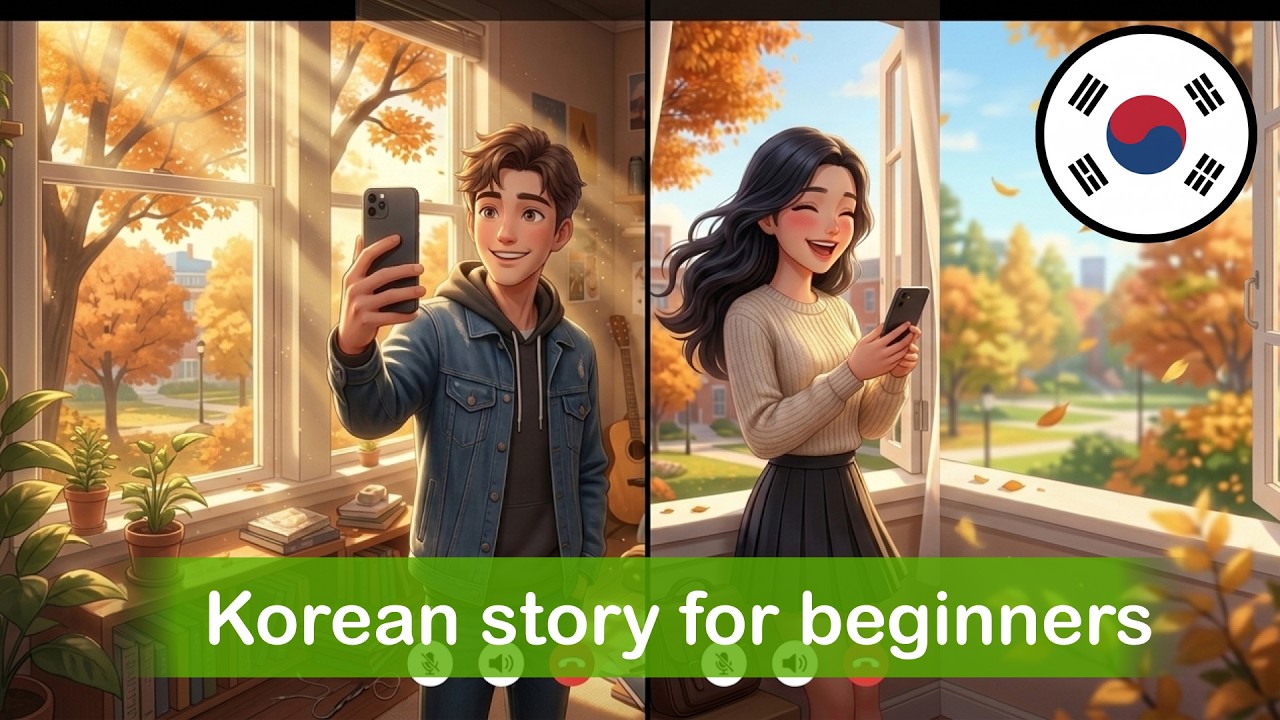
Talking About Colors in Korean: Bracelet Making Dialogue 🎨
Learn basic Korean vocabulary for colors, crafts, and expressing likes with this simple story about two friends making bracelets together.
Join Minjun and Seoyeon in this charming story for beginners as they make colorful bracelets for each other. You’ll learn essential Korean vocabulary for colors and craft supplies, and master simple phrases for making suggestions and expressing what you like. This lesson is perfect for practicing your listening and reading skills in a fun, natural context.
💬 Video Transcript
민준: 서연아, 이리 와 봐. 재미있는 거 있어.
(Minjun: Seoyeon, come here. I have something fun.)
서연: 민준아, 안녕! 이게 뭐야?
(Seoyeon: Hi, Minjun! What is this?)
민준: 이거 구슬이야. 그리고 이건 실이야. 봐 봐.
(Minjun: These are beads. And this is thread. Look.)
서연: 우와! 구슬이 정말 많다. 알록달록 예쁘다.
(Seoyeon: Wow! There are so many beads. They’re colorfully pretty.)
민준: 응. 여기 파란색 구슬이 있어. 그리고 노란색 구슬도 있어.
(Minjun: Yep. There are blue beads here. And there are yellow beads, too.)
서연: 파란색도 예쁘고, 노란색도 예뻐. 나는 노란색이 좋아.
(Seoyeon: The blue ones are pretty, and the yellow ones are pretty too. I like the yellow ones.)
민준: 나는 파란색이 좋아. 이걸로 우리 팔찌 만들까?
(Minjun: I like the blue ones. Shall we make bracelets with these?)
서연: 팔찌? 정말? 좋아! 우리 같이 팔찌 만들자!
(Seoyeon: Bracelets? Really? Okay! Let’s make bracelets together!)
민준: 좋아! 만드는 거 아주 쉬워. 실에 구슬을 넣으면 돼.
(Minjun: Great! It’s very easy to make. You just have to put the beads on the thread.)
서연: 알겠어. 실에 구슬을 넣자. 나는 노란색 구슬을 넣을래.
(Seoyeon: Got it. Let’s put the beads on the thread. I’ll put yellow beads on.)
민준: 나는 파란색 구슬을 넣을 거야. 자, 시작!
(Minjun: I’m going to put blue beads on. Okay, start!)
서연: 재미있다. 노란색 구슬, 또 노란색 구슬. 계속 넣어.
(Seoyeon: This is fun. A yellow bead, and another yellow bead. I keep putting them on.)
민준: 나도 재미있어. 파란색 구슬을 실에 넣어. 정말 재미있어.
(Minjun: I’m having fun too. I’m putting blue beads on the thread. It’s really fun.)
서연: 같이 만드니까 더 재미있다. 그렇지?
(Seoyeon: It’s more fun because we’re making them together. Right?)
민준: 응, 맞아. 같이 하니까 정말 좋아. 이야기가 재미있어.
(Minjun: Yeah, you’re right. It’s really nice doing it together. The conversation is fun.)
서연: 다 만들었어! 민준아, 내 팔찌 봐봐. 노란색 팔찌야.
(Seoyeon: I’m finished! Minjun, look at my bracelet. It’s a yellow bracelet.)
민준: 우와, 서연아! 정말 예쁘다. 노란색이 아주 예뻐.
(Minjun: Wow, Seoyeon! It’s really pretty. The yellow is very pretty.)
서연: 고마워. 민준이 팔찌는 어때? 다 만들었어?
(Seoyeon: Thanks. How’s your bracelet, Minjun? Are you done?)
민준: 응, 나도 다 만들었어. 짜잔! 내 파란색 팔찌야.
(Minjun: Yep, I’m done too. Ta-da! It’s my blue bracelet.)
서연: 와! 민준이 팔찌도 진짜 예쁘다. 파란색이 시원해 보여.
(Seoyeon: Wow! Your bracelet is really pretty too, Minjun. The blue looks cool.)
민준: 고마워. 서연아, 이 파란색 팔찌, 너한테 줄게. 선물이야.
(Minjun: Thanks. Seoyeon, I’ll give this blue bracelet to you. It’s a gift.)
서연: 정말? 나한테 주는 거야? 고마워!
(Seoyeon: Really? You’re giving it to me? Thank you!)
민준: 응. 너한테 주는 선물이야.
(Minjun: Yes. It’s a gift for you.)
서연: 그럼 내 노란색 팔찌는 너한테 줄게. 이것도 선물이야.
(Seoyeon: Then I’ll give my yellow bracelet to you. This is a gift, too.)
민준: 정말? 와! 고마워, 서연아. 우리 이제 팔찌가 있어.
(Minjun: Really? Wow! Thanks, Seoyeon. We have bracelets now.)
서연: 우리 같이 팔찌를 차자. 나는 파란색 팔찌.
(Seoyeon: Let’s wear the bracelets together. I’ll wear the blue bracelet.)
민준: 나는 노란색 팔찌. 와, 정말 마음에 들어.
(Minjun: I’ll wear the yellow bracelet. Wow, I really like it.)
서연: 나도 정말 마음에 들어. 오늘 정말 재미있었어.
(Seoyeon: I really like it too. Today was really fun.)
민준: 응, 나도. 우리 다음에 또 같이 만들자.
(Minjun: Me too. Let’s make something together again next time.)
서연: 좋아! 다음에 또 같이 재미있는 거 만들자.
(Seoyeon: Okay! Let’s make something fun together again next time.)
📝 Essential Vocabulary
Here are some key words from the story that will help you understand the dialogue. Listen to the pronunciation and practice saying them out loud.
| Korean | English Translation | Pronunciation |
|---|---|---|
| 구슬 | Bead | |
| 실 | Thread | |
| 팔찌 | Bracelet | |
| 만들다 | To make | |
| 예쁘다 | Pretty | |
| 파란색 | Blue (color) | |
| 노란색 | Yellow (color) | |
| 선물 | Gift / Present | |
| 같이 | Together | |
| 마음에 들어 | I like it / It’s to my liking |
🔍 Grammar Focus
Let’s break down two simple but very useful grammar patterns from the story.
1. Expressing Likes: Noun + -이/가 좋아
In Korean, a common way to say you like something is by using the pattern Noun + -이/가 좋아. 좋아 means “is good” or “to be likable.” The particles -이/가 are subject markers.
- Use -이 when the noun ends in a consonant.
- Use -가 when the noun ends in a vowel.
In the story, both Seoyeon and Minjun express their color preferences this way:
- 서연: 나는 노란색이 좋아. (I like the yellow ones.)
- The word 색 (saek) ends in a consonant (ㄱ), so we add -이.
- 민준: 나는 파란색이 좋아. (I like the blue ones.)
- Again, 색 (saek) ends in a consonant, so we use -이.
This pattern focuses on the noun as the subject of “being good,” which is a very natural way to express a preference in Korean.
2. Making Suggestions: -(으)ㄹ까? and -자
When you want to do an activity with someone, you can use these two endings.
A. Asking “Shall we…?”: Verb Stem + -(으)ㄹ까? This is a gentle way to suggest an activity by asking a question.
- Use -ㄹ까? if the verb stem ends in a vowel.
- Use -을까? if the verb stem ends in a consonant.
Minjun uses this when he first suggests making bracelets:
- 민준: 이걸로 우리 팔찌 만들까? (Shall we make bracelets with these?)
- The verb stem is 만들- (mandeul-), which ends in the consonant ㄹ. When a stem ends in ㄹ, you drop the 으 and just add -ㄹ까?, which combines with the existing ㄹ to become 만들까?.
B. Saying “Let’s…”: Verb Stem + -자 This is a more direct, but still friendly, way to suggest an activity. It’s like saying “Let’s do it!” in English.
Seoyeon excitedly agrees to Minjun’s idea using this form:
- 서연: 우리 같이 팔찌 만들자! (Let’s make bracelets together!)
- The verb stem is 만들- (mandeul-). You simply add -자 to the stem.
You’ll see them use this pattern again at the end of the story to plan for the future.
🌍 Cultural Tip
🃏 Flip & Learn
Review the key phrases and vocabulary from the lesson with these flashcards.
What is this?
이게 뭐야?
Bracelet
팔찌
Let's make it together!
같이 만들자!
It's a gift.
선물이야.
I really like it.
정말 마음에 들어.
💡 Key Takeaways
Here are the most important points to remember from this lesson:
- Colors: Korean colors are often formed by the color name +
색(saek), which means “color.” For example,파란색(blue) and노란색(yellow). - Expressing Likes: To say you like something, you can use the pattern
[Noun] + -이/가 좋아. For example,나는 노란색이 좋아(I like yellow). - Making Suggestions: Use the
-(으)ㄹ까?ending to ask “Shall we…?” (e.g.,만들까?) and the-자ending to say “Let’s…!” (e.g.,만들자!). - Working Together: The word
같이(gachi) means “together” and is great for emphasizing that you are doing an activity with someone else.
🎯 Practice Quiz
Test your understanding of the vocabulary and grammar from the story.
Question
Question
Question
✍️ Fill in the Blanks
Let’s test your spelling and memory! Fill in the missing words below. Use correct spelling.
Fill in the blank
Fill in the blank
Support Us
Did you find this lesson helpful? Your support is what makes it possible for us to keep creating free, high-quality educational content.