Talking About Family in Korean: Family Photos & Personality Adjectives 👨👩👧👦
Learn essential Korean vocabulary for family members and how to describe them. This A1 beginner lesson features a natural dialogue about parents, siblings, and their personalities.
In this A1 Korean lesson, you’ll join a conversation between Minjun and Seoyeon as they look at family photos. You will learn essential vocabulary for family members and common adjectives to describe their personalities, all within the context of a natural, easy-to-follow dialogue.
💬 Video Transcript
민준: 서연아, 안녕!
(Minjun: Seoyeon, hi!)
서연: 어, 민준아! 안녕! 여기에서 뭐 해?
(Seoyeon: Oh, Minjun! Hi! What are you doing here?)
민준: 그냥 앉아 있었어. 서연아, 이거 볼래?
(Minjun: I was just sitting. Seoyeon, want to see this?)
서연: 응? 그게 뭐야? 휴대폰?
(Seoyeon: Huh? What’s that? Your phone?)
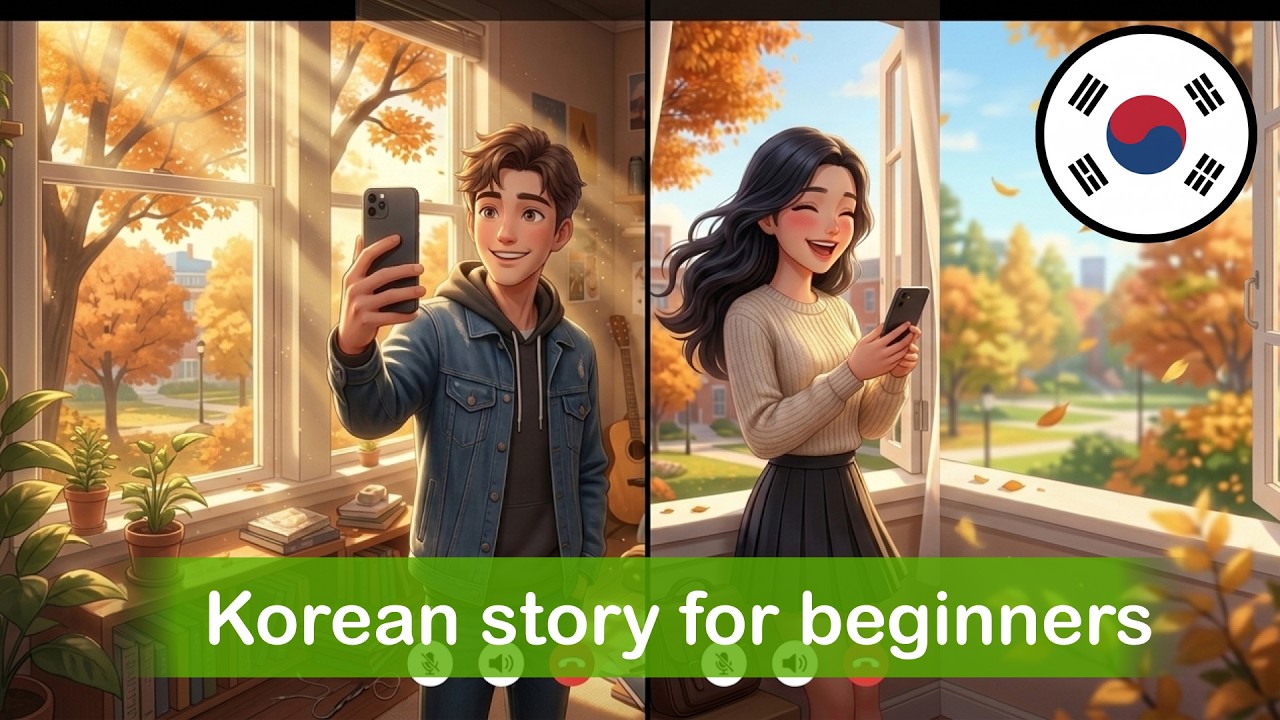
민준: 응. 내 휴대폰 봐. 여기 사진이 있어.
(Minjun: Yep. Look at my phone. There’s a picture here.)
서연: 우와, 사진이네. 무슨 사진이야?
(Seoyeon: Wow, it’s a photo. What kind of photo is it?)
민준: 우리 가족 사진이야. 작년에 찍었어.
(Minjun: It’s our family photo. We took it last year.)
서연: 와, 정말 좋다. 가족이 많네.
(Seoyeon: Wow, it’s really nice. You have a big family.)
민준: 응. 봐봐. 이 사람이 우리 아버지야.
(Minjun: Yeah. Look. This person is my father.)
서연: 아, 아버지. 정말 키가 크시다.
(Seoyeon: Ah, your father. He’s really tall.)
민준: 맞아. 우리 아버지는 키가 커. 그리고 정말 착해.
(Minjun: That’s right. My father is tall. And he’s really kind.)
서연: 좋겠다. 그럼 옆에 이 사람은 누구야?
(Seoyeon: That’s nice. Then who is this person next to him?)
민준: 이 사람은 우리 어머니야.
(Minjun: This person is my mother.)
서연: 어머니는 정말 예쁘시다. 미인이시네.
(Seoyeon: Your mother is really pretty. She’s a beauty.)
민준: 고마워. 우리 어머니는 요리를 아주 잘해.
(Minjun: Thanks. My mother cooks very well.)
서연: 와! 맛있는 음식을 많이 먹겠다.
(Seoyeon: Wow! You must eat a lot of delicious food.)
민준: 응, 맞아. 그리고 이 사람은 내 누나야.
(Minjun: Yes, that’s right. And this person is my older sister.)
서연: 누나가 있었어? 처음 알았어. 누나는 학생이야?
(Seoyeon: You have an older sister? I didn’t know that. Is your sister a student?)
민준: 응. 대학생이야. 공부를 아주 잘해. 아주 똑똑해.
(Minjun: Yes. She’s a university student. She studies very well. She’s very smart.)
서연: 그렇구나. 민준이 가족은 모두 정말 좋아 보여.
(Seoyeon: I see. Minjun, your family all seem really nice.)
민준: 고마워. 서연이 가족은 어때?
(Minjun: Thanks. How about your family, Seoyeon?)
서연: 우리 가족? 우리 가족도 좋아.
(Seoyeon: My family? My family is great, too.)
민준: 서연이는 가족이 어떻게 돼?
(Minjun: Who is in your family?)
서연: 우리 가족은 아버지, 어머니, 그리고 나. 그리고 남동생이 한 명 있어.
(Seoyeon: My family is my father, mother, and me. And I have one younger brother.)
민준: 우와, 남동생이 있어? 나는 남동생 없어.
(Minjun: Wow, you have a younger brother? I don’t have a younger brother.)
서연: 응. 내 남동생은 아주 귀여워. 지금은 학생이야.
(Seoyeon: Yep. My younger brother is very cute. He’s a student now.)
민준: 정말? 귀엽겠다. 서연이 아버지는 어떤 분이야?
(Minjun: Really? He must be cute. What is your father like, Seoyeon?)
서연: 우리 아버지는 아주 재미있어. 항상 우리를 웃게 만들어.
(Seoyeon: My father is very funny. He always makes us laugh.)
민준: 정말 좋은 아버지다. 그럼 어머니는?
(Minjun: He sounds like a really great father. What about your mother?)
서연: 우리 어머니는 정말 친절해. 그리고 목소리가 아주 좋아.
(Seoyeon: My mother is really kind. And she has a very nice voice.)
민준: 와, 그렇구나. 서연이 가족 이야기도 정말 재미있다.
(Minjun: Wow, I see. Your family’s story is really interesting too.)
서연: 고마워. 다음에 우리 가족 사진도 보여줄게.
(Seoyeon: Thanks. I’ll show you my family photo next time.)
민준: 좋아! 정말 기대된다. 이제 집에 가야겠다.
(Minjun: Okay! I’m really looking forward to it. I should go home now.)
서연: 그래. 나도 이제 가볼게. 다음에 또 봐!
(Seoyeon: Okay. I’ll get going too. See you next time!)
민준: 응, 서연아! 잘 가!
(Minjun: Yep, Seoyeon! Bye!)
📝 Essential Vocabulary
Here are some of the key words and phrases you’ll hear in the video. Listen and repeat to practice your pronunciation.
| Target Language | English Translation | Pronunciation |
|---|---|---|
| 가족 (gajok) | Family | |
| 사진 (sajin) | Photo | |
| 아버지 (abeoji) | Father | |
| 어머니 (eomeoni) | Mother | |
| 누나 (nuna) | Older sister (for a male speaker) | |
| 남동생 (namdongsaeng) | Younger brother | |
| 착하다 (chakhada) | To be kind, good-natured | |
| 재미있다 (jaemi-itda) | To be fun, interesting | |
| 친절하다 (chinjeolhada) | To be kind, friendly | |
| 똑똑하다 (ttokttokhada) | To be smart |
🔍 Grammar Focus
Let’s break down two key grammar patterns from the conversation.
1. Describing People: Noun + 은/는 + Adjective
A fundamental pattern for describing someone or something is to use a topic particle (은/는) followed by a descriptive verb (adjective). You see this structure repeatedly in the dialogue.
- 우리 아버지는 키가 커. (My father is tall.)
- 내 남동생은 아주 귀여워. (My younger brother is very cute.)
- 우리 아버지는 아주 재미있어. (My father is very funny.)
- 우리 어머니는 정말 친절해. (My mother is really kind.)
The particle 는 is used after a noun ending in a vowel (like 아버지), and 은 is used after a noun ending in a consonant.
2. The Polite Suffix -(으)시다
When Seoyeon first reacts to seeing Minjun’s parents in the photo, she uses a more polite form of the adjectives. This honorific suffix, -(으)시다, is attached to verb stems to show respect for the person being talked about, such as elders or parents.
- 정말 키가 크시다. (He is really tall.) - Polite form of 크다.
- 어머니는 정말 예쁘시다. (Your mother is really pretty.) - Polite form of 예쁘다.
Notice that Minjun, when talking about his own parents, uses the standard, plain form (키가 커). It’s common to use polite forms when referring to someone else’s family members as a sign of respect.
🌍 Cultural Tip
🃏 Flip & Learn
Use these flashcards to test your memory of the key vocabulary and phrases from the lesson.
Family
가족 (gajok)
My older sister (male speaker)
내 누나 (nae nuna)
My father is very funny.
우리 아버지는 아주 재미있어.
My mother is really kind.
우리 어머니는 정말 친절해.
She's very smart.
아주 똑똑해.
💡 Key Takeaways
Here are the most important points to remember from this lesson:
- Family Vocabulary is Key: Mastering words like
아버지(father),어머니(mother),누나(older sister), and남동생(younger brother) is the first step to talking about your family. - Use
우리for “My Family”: In Korean, it’s natural to say우리 가족(our family) or우리 아버지(our father) instead of내 가족(my family). - How to Ask About Family: You learned two common questions:
가족은 어때?(How is your family?) and가족이 어떻게 돼?(Who is in your family?). - Describe with Adjectives: You can describe people’s personalities and appearances using simple patterns like
[Person]은/는 [Adjective], for example,우리 어머니는 친절해.(My mother is kind). - Politeness Matters: Remember to use the
-(으)시다suffix when speaking respectfully about someone else’s elders, like their parents.
🎯 Practice Quiz
Test your understanding of the dialogue and vocabulary with these questions.
Question
Question
Question
재미있어 (funny) in her family?✍️ Fill in the Blanks
Let’s test your spelling and memory! Fill in the missing words below. Use correct spelling.
Fill in the blank
Fill in the blank
Support Us
Did you find this lesson helpful? Your support is what makes it possible for us to keep creating free, high-quality educational content.