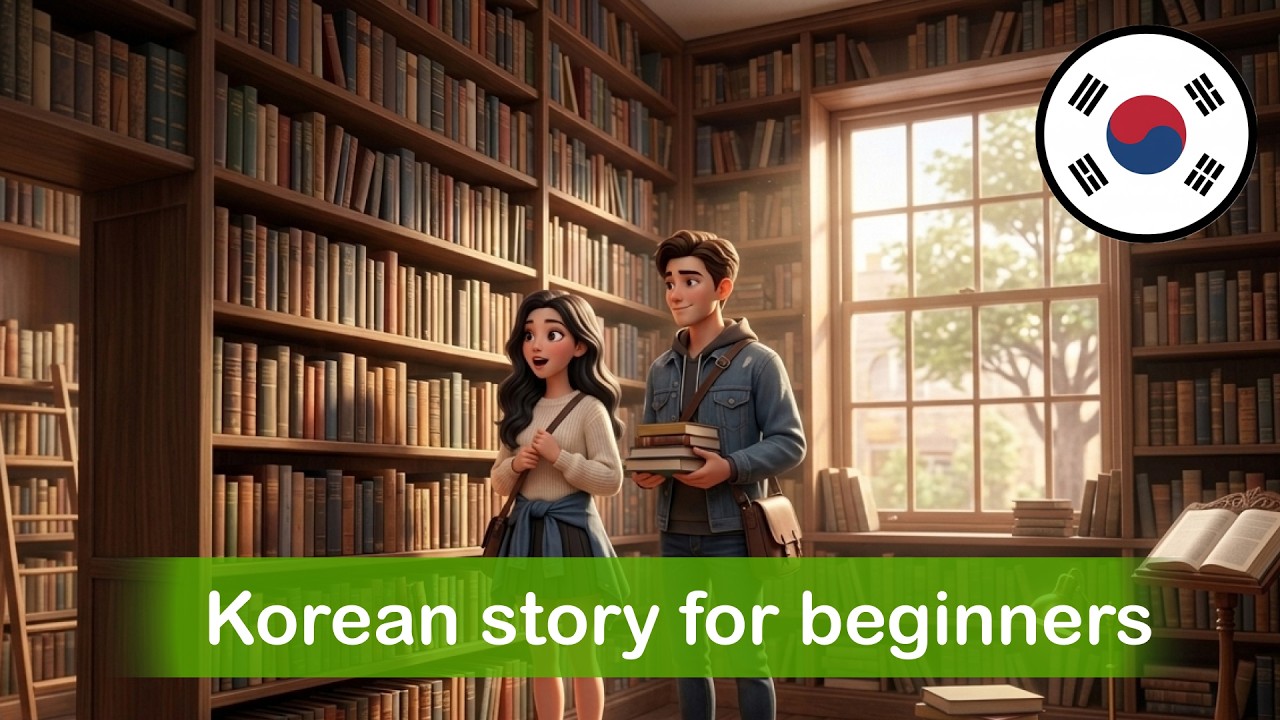
Talking About Weather and Making Plans in Korean: Rainy Day Story & Invitations ☔
Learn essential Korean phrases for a rainy day with our cozy story! Practice vocabulary for weather, making plans, and visiting a friend's house.
What do you do when it’s raining and you can’t go outside? In this simple Korean story for beginners, you’ll follow Seoyeon as she turns a boring, rainy day into a cozy, happy one. You’ll learn essential vocabulary for talking about the weather, making phone calls, and inviting friends over.
💬 Video Transcript
Narrator: 오늘은 날씨가 안 좋아요. 아침부터 비가 와요.
(Narrator: Today the weather isn’t good. It’s been raining since this morning.)
Narrator: 저는 창밖을 봐요. 비가 계속 와요.
(Narrator: I look outside the window. It keeps raining.)
Narrator: 공원에 가고 싶지만, 갈 수 없어요.
(Narrator: I want to go to the park, but I can’t.)
Narrator: 그래서 집에서 책을 읽어요. 하지만 조금 심심해요.
(Narrator: So I’m reading a book at home. But I’m a little bored.)
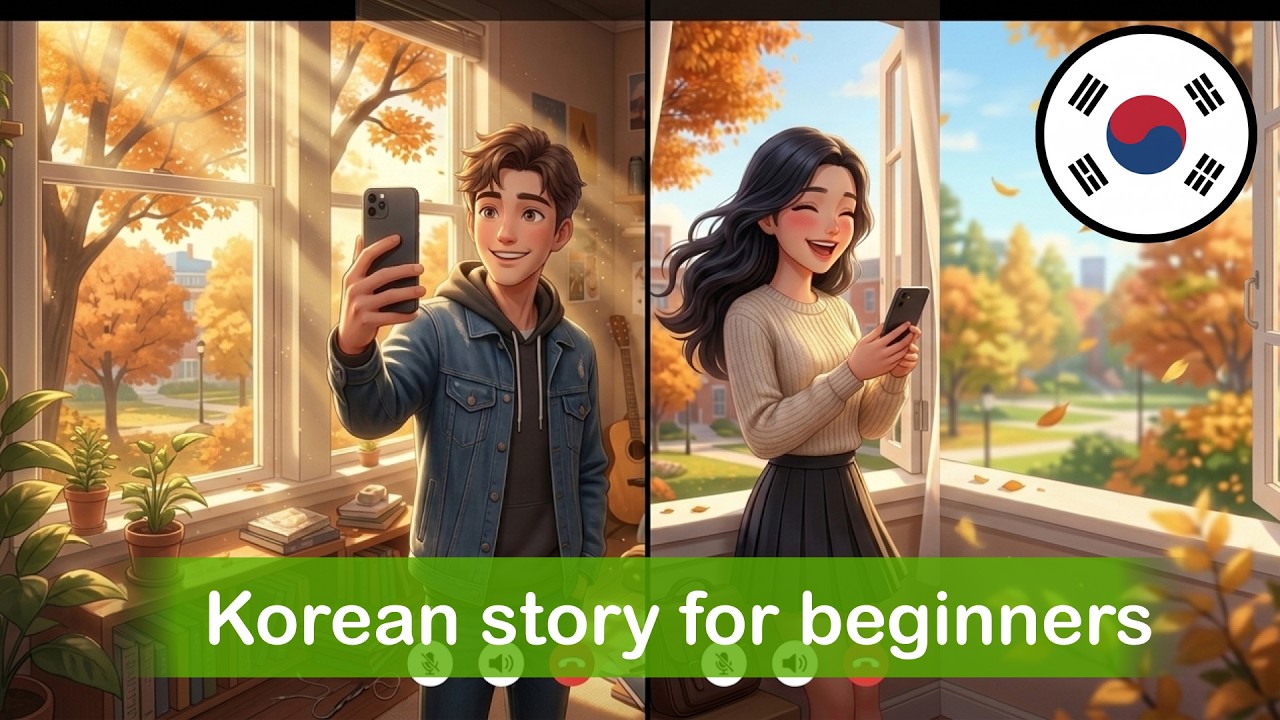
Narrator: 그때, 좋은 생각이 났어요. 저는 민준 씨에게 전화해요.
(Narrator: Then, I had a good idea. I call Minjun.)
Narrator: ‘따르릉’. 민준 씨가 전화를 받아요.
(Narrator: ‘Ring ring’. Minjun answers the phone.)
민준: 여보세요?
(Minjun: Hello?)
서연: 민준 씨, 저 서연이에요. 지금 뭐 해요?
(Seoyeon: Minjun, it’s Seoyeon. What are you doing now?)
민준: 아, 서연 씨! 저는 집에서 할머니하고 텔레비전을 보고 있어요. 밖에는 비가 많이 오네요.
(Minjun: Ah, Seoyeon! I’m at home watching TV with my grandmother. It’s raining a lot outside.)
서연: 네, 맞아요. 그래서 저는 조금 심심해요.
(Seoyeon: Yes, that’s right. So I’m a little bored.)
민준: 정말요? 그럼 우리 집에 놀러 올래요? 할머니가 맛있는 옥수수차를 만들었어요. 같이 마셔요.
(Minjun: Really? Then do you want to come hang out at my house? My grandmother made delicious corn tea. Let’s drink it together.)
서연: 와, 정말요? 좋아요! 지금 바로 갈게요.
(Seoyeon: Wow, really? Sounds great! I’ll go right now.)
Narrator: 저는 너무 기뻤어요. 저는 노란색 우산을 써요. 그리고 민준 씨의 집으로 가요.
(Narrator: I was so happy. I use my yellow umbrella. And I go to Minjun’s house.)
Narrator: 민준 씨의 집에 도착했어요. 할머니가 저를 반갑게 맞이해 주세요.
(Narrator: I arrived at Minjun’s house. Grandmother greets me warmly.)
할머니: 서연아, 어서 와. 비 오는데 고생했네.
(Grandmother: Seoyeon, welcome. You must have had a hard time in the rain.)
서연: 안녕하세요, 할머니!
(Seoyeon: Hello, Grandmother!)
Narrator: 민준 씨의 고양이 치즈는 소파에서 자고 있어요. 정말 귀여워요.
(Narrator: Minjun’s cat, Cheese, is sleeping on the sofa. It’s so cute.)
Narrator: 우리는 식탁에 앉아요. 할머니가 우리에게 따뜻한 옥수수차를 주세요.
(Narrator: We sit at the table. Grandmother gives us warm corn tea.)
Narrator: 차가 아주 고소하고 맛있어요.
(Narrator: The tea is very savory and delicious.)
Narrator: 우리는 차를 마시면서 창밖을 봐요. 밖에는 비가 오지만, 집 안은 아주 따뜻하고 좋아요.
(Narrator: We look out the window while drinking tea. It’s raining outside, but inside the house it’s very warm and nice.)
Narrator: 우리는 재미있는 이야기를 많이 해요.
(Narrator: We talk about many interesting things.)
Narrator: 비 오는 날도 친구, 할머니와 함께 있으니 정말 행복해요.
(Narrator: Even on a rainy day, being with my friend and his grandmother makes me really happy.)
📝 Essential Vocabulary
Here are some key words and phrases from the story. Listen to the pronunciation to improve your listening and speaking skills.
| Target Language | English Translation | Pronunciation |
|---|---|---|
| 비가 와요 | It’s raining | |
| 날씨가 안 좋아요 | The weather is not good | |
| 심심해요 | I’m bored | |
| 전화해요 | I make a phone call | |
| 놀러 올래요? | Do you want to come over and hang out? | |
| 우산 | Umbrella | |
| 따뜻한 옥수수차 | Warm corn tea | |
| 맛있어요 | It’s delicious | |
| 행복해요 | I’m happy |
🔍 Grammar Focus
Let’s break down two important grammar patterns you heard in the story.
Expressing Desire: Verb Stem + -고 싶어요
When you want to say “I want to do (something),” you use the -고 싶어요 (-go sipeoyo) pattern. You simply take the verb stem (the part of the verb before 다) and add -고 싶어요.
In the story, Seoyeon is feeling cooped up and says:
- 공원에 가고 싶지만, 갈 수 없어요. (I want to go to the park, but I can’t.)
Here, the verb is 가다 (to go). The stem is 가. You attach -고 싶다 to get 가고 싶다.
Let’s look at another example:
- 책을 읽다 (to read a book) -> 책을 읽고 싶어요. (I want to read a book.)
- 옥수수차를 마시다 (to drink corn tea) -> 옥수수차를 마시고 싶어요. (I want to drink corn tea.)
Making Suggestions: Verb Stem + -(으)ㄹ래요?
When you want to make a friendly suggestion like “Do you want to…?” or “Shall we…?”, the -(으)ㄹ래요? ending is very common and natural in conversation.
- If the verb stem ends in a vowel or the consonant ㄹ, you add
-ㄹ래요? - If the verb stem ends in a consonant (except ㄹ), you add
-을래요?
In the story, Minjun invites Seoyeon over by asking:
- 그럼 우리 집에 놀러 올래요? (Then do you want to come hang out at my house?)
The verb here is 오다 (to come). The stem 오 ends in a vowel, so you add -ㄹ래요? to form 올래요?.
Here’s another example:
- 같이 영화를 보다 (to watch a movie together) -> 같이 영화를 볼래요? (Do you want to watch a movie together?)
- 저녁을 먹다 (to eat dinner) -> 저녁을 먹을래요? (Do you want to eat dinner?)
🌍 Cultural Tip
🃏 Flip & Learn
Review the key phrases from our story with these flashcards.
It's raining.
비가 와요.
I'm a little bored.
조금 심심해요.
Do you want to come over and hang out?
놀러 올래요?
It's delicious.
맛있어요.
I'm happy.
행복해요.
💡 Key Takeaways
Here are the most important points to remember from this lesson:
- Describing the weather: Use
비가 와요to say “it’s raining” and날씨가 안 좋아요for “the weather is not good.” - Expressing desire: To say you want to do something, attach the ending
-고 싶어요to a verb stem, like in공원에 가고 싶어요(I want to go to the park). - Making invitations: A friendly and natural way to invite a friend is to use the
-(으)ㄹ래요?pattern, as Minjun did with놀러 올래요?(Do you want to come hang out?). - Expressing feelings: You learned how to say you’re bored (
심심해요) and happy (행복해요). These are essential for daily conversation.
🎯 Practice Quiz
Test your understanding of the vocabulary and grammar from the story.
Question
Question
Question
✍️ Fill in the Blanks
Let’s test your spelling and memory! Fill in the missing words below. Use correct spelling.
Fill in the blank
Fill in the blank
Support Us
Did you find this lesson helpful? Your support is what makes it possible for us to keep creating free, high-quality educational content.