Talking About Cooking in Italian: Kitchen Vocabulary & Cacio e Pepe Dialogue 🍝
Learn beginner Italian vocabulary for cooking and problem-solving with this fun story about Matteo's cacio e pepe dinner disaster in Rome.
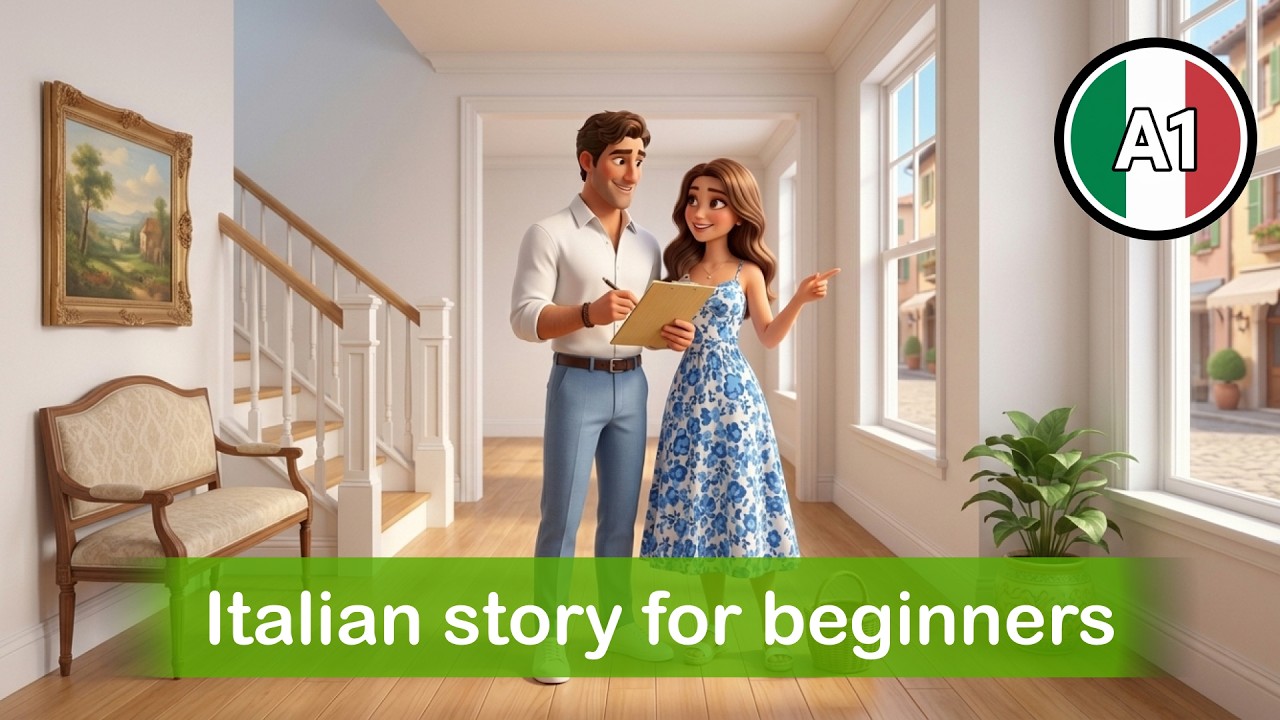
Join Matteo in his Roman kitchen as he plans a perfect dinner for his girlfriend, Giulia. This simple and entertaining story will help you practice essential A1-A2 Italian vocabulary related to food, items in the home, and asking for help when things go wrong.
💬 Video Transcript
Follow along with the video’s dialogue. The Italian text is provided with the English translation just below it.
Matteo: Ciao, io sono Matteo. Abito a Roma, la mia città.
(Matteo: Hello, I’m Matteo. I live in Rome, my city.)
Matteo: Oggi sono molto, molto felice. Perché? Perché stasera la mia fidanzata, Giulia, viene a cena da me.
(Matteo: Today I am very, very happy. Why? Because tonight my girlfriend, Giulia, is coming to my place for dinner.)
Matteo: Voglio preparare una cena speciale, una cena perfetta.
(Matteo: I want to prepare a special dinner, a perfect dinner.)
Matteo: Penso a cosa cucinare. Giulia è di Milano, ma ama la cucina di Roma.
(Matteo: I’m thinking about what to cook. Giulia is from Milan, but she loves Roman cuisine.)
Matteo: Ho un’idea! Preparo la pasta cacio e pepe. È un piatto semplice, ma delizioso. È la pasta preferita di Giulia.
(Matteo: I have an idea! I’ll prepare cacio e pepe pasta. It’s a simple dish, but delicious. It’s Giulia’s favorite pasta.)
Matteo: Vado in cucina. Sono pronto. Apro la dispensa. Prendo la pasta. Bene, la pasta c’è.
(Matteo: I go to the kitchen. I’m ready. I open the pantry. I take the pasta. Good, the pasta is there.)
Matteo: Prendo il pepe nero. Ottimo, anche il pepe c’è.
(Matteo: I take the black pepper. Excellent, the pepper is there too.)
Matteo: Adesso, il formaggio. Il pecorino. Apro il frigo. Guardo a destra. Guardo a sinistra. Guardo sopra. Guardo sotto.
(Matteo: Now, the cheese. The pecorino. I open the fridge. I look right. I look left. I look up. I look down.)
Matteo: Oh no! Non c’è il formaggio pecorino. E senza pecorino, non posso fare la cacio e pepe.
(Matteo: Oh no! There is no pecorino cheese. And without pecorino, I can’t make cacio e pepe.)
Matteo: Che problema! Cosa faccio adesso? Penso, penso… Ecco! Ho un’idea geniale.
(Matteo: What a problem! What do I do now? I think, I think… There! I have a brilliant idea.)
Matteo: Chiamo Nonna Sofia. Mia nonna sa tutto sulla cucina. Lei ha sempre la soluzione.
(Matteo: I’ll call Grandma Sofia. My grandma knows everything about cooking. She always has the solution.)
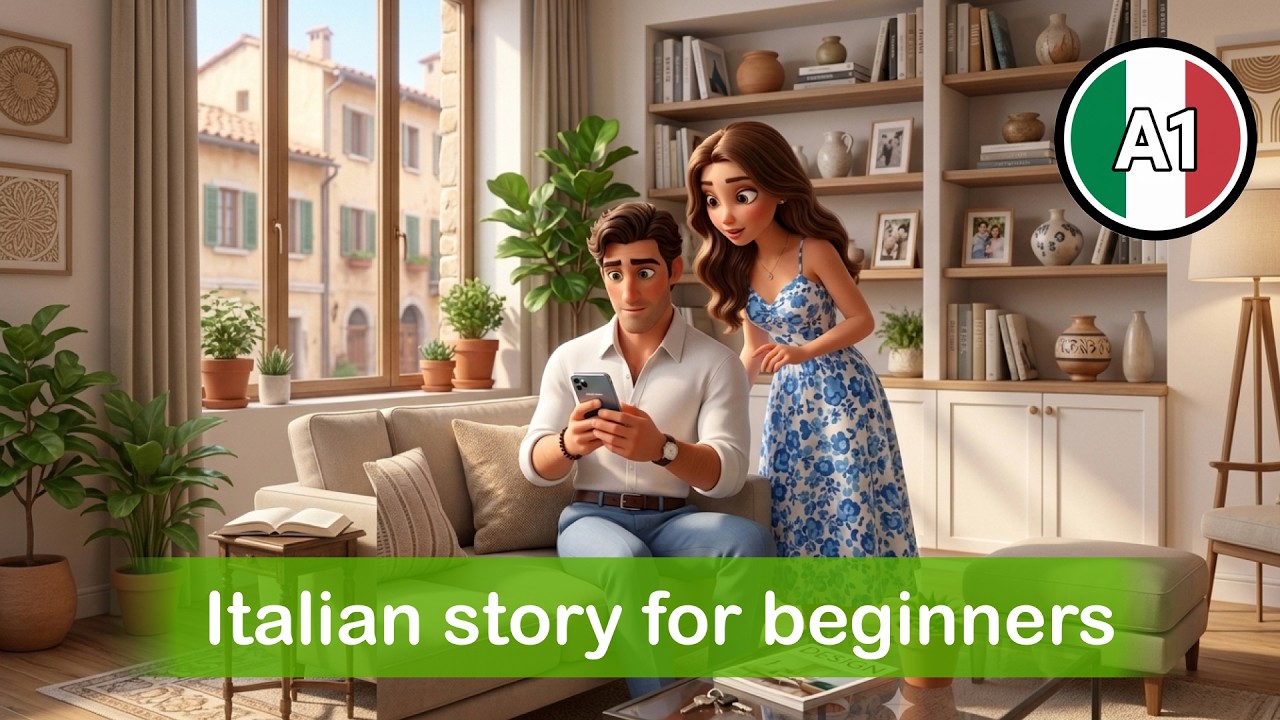
Matteo: Prendo il mio telefono e chiamo la nonna. Il telefono suona.
(Matteo: I take my phone and call grandma. The phone rings.)
Nonna: ‘Pronto?’ dice una voce gentile. È la nonna.
(Nonna: ‘Hello?’ says a kind voice. It’s grandma.)
Matteo: ‘Ciao Nonna! Sono io, Matteo.’
(Matteo: ‘Hi Grandma! It’s me, Matteo.’)
Nonna: ‘Matteo! Tesoro mio! Come stai?’
(Nonna: ‘Matteo! My darling! How are you?’)
Matteo: ‘Sto bene, Nonna, grazie. Ma… ho un piccolo problema.’
(Matteo: ‘I’m fine, Grandma, thanks. But… I have a little problem.’)
Nonna: ‘Un problema? Racconta alla nonna.’
(Nonna: ‘A problem? Tell grandma.’)
Matteo: ‘Allora, stasera Giulia viene a cena. E io voglio cucinare la pasta cacio e pepe. Ho la pasta, ho il pepe, ma non ho il formaggio pecorino.’
(Matteo: ‘So, tonight Giulia is coming for dinner. And I want to cook cacio e pepe pasta. I have the pasta, I have the pepper, but I don’t have the pecorino cheese.’)
Nonna: Dall’altra parte del telefono sento la risata di mia nonna. ‘Ah, Matteo, Matteo. Non è un problema grande. La soluzione è molto facile.’
(Nonna: On the other end of the phone, I hear my grandma’s laugh. ‘Ah, Matteo, Matteo. It’s not a big problem. The solution is very easy.’)
Matteo: ‘Facile? E qual è?’ chiedo io.
(Matteo: ‘Easy? And what is it?’ I ask.)
Nonna: ‘Matteo, per una buona pasta servono due cose: tanto amore e un buon formaggio! Vai al piccolo negozio di alimentari vicino a casa tua. Il signor Rossi ha il pecorino migliore di Roma.’
(Nonna: ‘Matteo, for a good pasta you need two things: a lot of love and good cheese! Go to the little grocery store near your house. Mr. Rossi has the best pecorino in Rome.’)
Matteo: Certo! Il piccolo negozio! Non ci ho pensato. ‘Grazie, Nonna! Sei la migliore! Davvero!’
(Matteo: Of course! The little store! I didn’t think of that. ‘Thanks, Grandma! You’re the best! Really!’)
Nonna: ‘Di niente, tesoro. Ora vai! E buona cena con la tua Giulia.’
(Nonna: ‘You’re welcome, darling. Now go! And have a good dinner with your Giulia.’)
Matteo: Saluto la nonna e chiudo la telefonata. Adesso sono tranquillo. So cosa fare.
(Matteo: I say goodbye to grandma and hang up the phone. Now I’m calm. I know what to do.)
Matteo: Prendo le chiavi di casa e una borsa. Esco. Vado al negozio e compro il pecorino perfetto. Torno a casa.
(Matteo: I take the house keys and a bag. I go out. I go to the store and buy the perfect pecorino. I come back home.)
Matteo: Adesso ho tutti gli ingredienti. Sono pronto per cucinare la cena migliore per Giulia. Sono sicuro che sarà una serata bellissima.
(Matteo: Now I have all the ingredients. I’m ready to cook the best dinner for Giulia. I’m sure it will be a beautiful evening.)
📝 Essential Vocabulary
Here are some key words and phrases from Matteo’s story. Listen to the pronunciation to improve your listening and speaking skills.
| Target Language | English Translation | Pronunciation |
|---|---|---|
| La fidanzata | The girlfriend / fiancée | |
| Una cena speciale | A special dinner | |
| Cacio e pepe | Cheese and pepper (a pasta dish) | |
| La dispensa | The pantry / cupboard | |
| Il frigo | The fridge | |
| Non c’è | There isn’t / There is no | |
| Un problema | A problem | |
| La soluzione | The solution | |
| Il negozio di alimentari | The grocery store |
🔍 Grammar Focus
Let’s look at two simple but very useful grammar points from Matteo’s story.
1. Expressing Existence with C'è and Non c'è
In Italian, to say “there is” or “there are,” you use c'è (for singular nouns) and ci sono (for plural nouns). In the story, Matteo checks for his ingredients and only deals with singular items.
Notice how he confirms what he has:
- Bene, la pasta c’è. (Good, the pasta is there.)
- Ottimo, anche il pepe c’è. (Excellent, the pepper is there too.)
When he discovers an ingredient is missing, he uses the negative form, non c'è, which means “there is not” or “there isn’t.”
- Oh no! Non c’è il formaggio pecorino. (Oh no! There is no pecorino cheese.)
This is a fundamental structure for talking about what is and isn’t present in a location.
2. Using Possessive Adjectives
Possessive adjectives like “my” (mio/mia) and “your” (tuo/tua) are essential for talking about relationships and belongings. In Italian, they must agree in gender with the noun they describe.
- La mia città (my city):
Cittàis feminine, so Matteo usesmia. - La mia fidanzata (my girlfriend):
Fidanzatais feminine, so he usesmia. - Tesoro mio (my darling):
Tesorois masculine, so Nonna usesmio. - Casa tua (your house):
Casais feminine, so Nonna usestua. - La tua Giulia (your Giulia):
Giuliais a female name, so Nonna usestua.
Notice that with close family members like nonna (grandmother), the article (la, il) is often dropped: Mia nonna sa tutto...
🌍 Cultural Tip
🃏 Flip & Learn
Review the key vocabulary from the story with these flashcards.
The girlfriend
La fidanzata
There is no cheese.
Non c'è il formaggio.
What a problem!
Che problema!
The solution is very easy.
La soluzione è molto facile.
The grocery store
Il negozio di alimentari
💡 Key Takeaways
Here are the most important points to remember from this lesson:
- Essential Food Vocabulary: You learned the names of key ingredients for a classic Roman dish:
la pasta,il pepe(pepper), andil formaggio pecorino(pecorino cheese). - Checking Your Pantry: Use
c'èto say “there is” when confirming you have an item, andnon c'èto say “there isn’t” when something is missing. - Possessive Adjectives: Remember that words like
mia(my) andtua(your) must match the gender of the noun they describe (e.g.,la mia fidanzata,tesoro mio). - Problem Solving: When you have a problem (
un problema), you can look for the solution (la soluzione). And in Italy, callingla nonna(grandma) is always a good idea!
🎯 Practice Quiz
Test your understanding of the story and vocabulary with these questions.
Question
Question
Question
✍️ Fill in the Blanks
Let’s test your spelling and memory! Fill in the missing words below. Use correct spelling.
Fill in the blank
Fill in the blank
Support Us
Did you find this lesson helpful? Your support is what makes it possible for us to keep creating free, high-quality educational content.