Talking About Colors in Italian: A Real-Life Home Decor Dialogue 🎨
Learn essential Italian color vocabulary and how to express opinions in a real-world context. This slow Italian dialogue for beginners covers everything you need to talk about decorating your home.
In this lesson, you’ll join Matteo and Giulia as they decide how to decorate their living room. Through their slow and clear conversation, you will learn essential Italian vocabulary for colors, common adjectives to describe them, and useful phrases for sharing ideas and making decisions together.
💬 Video Transcript
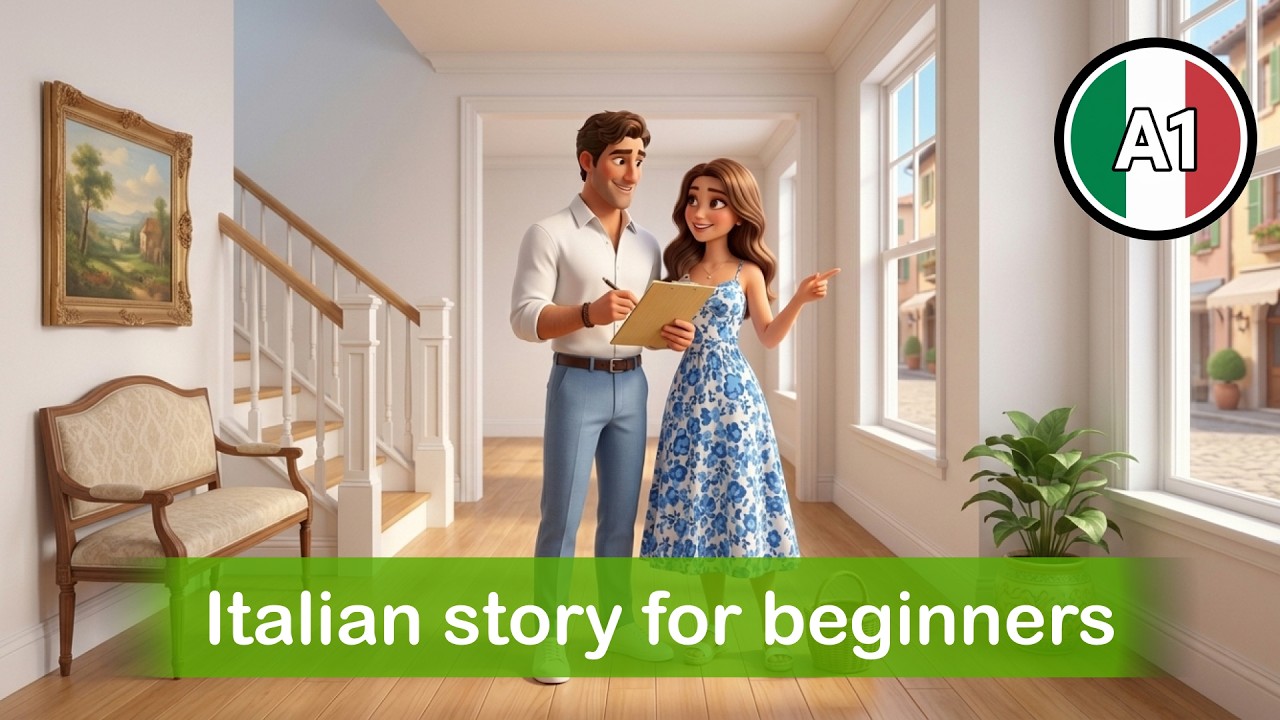
Matteo: Ciao Giulia. Guarda questa parete nel salotto.
(Matteo: Hi Giulia. Look at this wall in the living room.)
Giulia: Ciao Matteo. Sì, vedo. È una parete molto grande.
(Giulia: Hi Matteo. Yes, I see. It’s a very big wall.)
Matteo: Sì, è grande. Ed è bianca.
(Matteo: Yes, it’s big. And it’s white.)
Giulia: È molto bianca. Forse è un po’ noiosa.
(Giulia: It’s very white. Maybe it’s a bit boring.)
Matteo: Sì, sono d’accordo. È una parete noiosa. Ho un’idea.
(Matteo: Yes, I agree. It’s a boring wall. I have an idea.)
Giulia: Un’idea? Che idea hai, Matteo?
(Giulia: An idea? What idea do you have, Matteo?)
Matteo: Possiamo cambiare il colore della parete.
(Matteo: We can change the color of the wall.)
Giulia: Cambiare colore? È un’idea fantastica!
(Giulia: Change the color? That’s a fantastic idea!)
Matteo: Sì! Un colore nuovo per il salotto. Ma… quale colore?
(Matteo: Yes! A new color for the living room. But… which color?)
Giulia: Mmm… bella domanda. Forse il giallo?
(Giulia: Mmm… good question. Maybe yellow?)
Matteo: Il giallo? Il giallo è un colore allegro. Come il sole.
(Matteo: Yellow? Yellow is a cheerful color. Like the sun.)
Giulia: Sì, è vero. Mi piace il giallo. È un colore felice.
(Giulia: Yes, it’s true. I like yellow. It’s a happy color.)
Matteo: Anche a me piace. Ma forse è un colore troppo forte per il salotto.
(Matteo: I like it too. But maybe it’s too strong a color for the living room.)
Giulia: Troppo forte? Forse hai ragione. Allora, pensiamo a un altro colore.
(Giulia: Too strong? Maybe you’re right. Okay, let’s think of another color.)
Matteo: Che ne dici del blu?
(Matteo: What about blue?)
Giulia: Il blu! Ah, il blu è il mio colore preferito!
(Giulia: Blue! Ah, blue is my favorite color!)
Matteo: Davvero? Anche a me piace molto il blu. È un colore calmo.
(Matteo: Really? I also really like blue. It’s a calm color.)
Giulia: Sì, molto calmo. Come il cielo e come il mare.
(Giulia: Yes, very calm. Like the sky and like the sea.)
Matteo: Una parete blu è un’ottima idea. Molto rilassante.
(Matteo: A blue wall is an excellent idea. Very relaxing.)
Giulia: Aspetta! E il verde? Anche il verde è un bel colore.
(Giulia: Wait! And green? Green is also a beautiful color.)
Matteo: Il verde? Sì, il verde è bello. È il colore della natura, delle piante.
(Matteo: Green? Yes, green is beautiful. It’s the color of nature, of plants.)
Giulia: È un colore molto fresco. Mi piace anche il verde.
(Giulia: It’s a very fresh color. I also like green.)
Matteo: Ok, allora la scelta è difficile. Blu o verde?
(Matteo: Ok, so the choice is difficult. Blue or green?)
Giulia: Mmm… il blu è molto elegante. Il verde è molto naturale.
(Giulia: Mmm… blue is very elegant. Green is very natural.)
Matteo: Il nostro salotto… è più elegante o più naturale?
(Matteo: Our living room… is it more elegant or more natural?)
Giulia: Credo sia più elegante. Scelgo il blu.
(Giulia: I think it’s more elegant. I choose blue.)
Matteo: Sei sicura? Blu?
(Matteo: Are you sure? Blue?)
Giulia: Sì, sono sicura. Una bella parete blu scuro.
(Giulia: Yes, I’m sure. A beautiful dark blue wall.)
Matteo: Perfetto! Sono d’accordo. Il blu è il colore perfetto.
(Matteo: Perfect! I agree. Blue is the perfect color.)
Giulia: Che bello! Sono molto contenta. Avremo una parete blu.
(Giulia: How wonderful! I’m very happy. We will have a blue wall.)
Matteo: Anch’io sono contento. Sarà molto, molto bella.
(Matteo: I’m happy too. It will be very, very beautiful.)
Giulia: Allora, cosa facciamo adesso?
(Giulia: So, what do we do now?)
Matteo: Adesso, facciamo un piano. Domani andiamo al negozio.
(Matteo: Now, we make a plan. Tomorrow we’ll go to the store.)
Giulia: Sì, andiamo al negozio e compriamo la pittura.
(Giulia: Yes, let’s go to the store and buy the paint.)
Matteo: Compriamo la pittura blu. E anche i pennelli.
(Matteo: We’ll buy the blue paint. And the brushes too.)
Giulia: Ottimo. Un pennello per me e un pennello per te.
(Giulia: Excellent. A brush for me and a brush for you.)
Matteo: Esatto. E poi, torniamo a casa e iniziamo!
(Matteo: Exactly. And then, we’ll come home and start!)
Giulia: Non vedo l’ora! Sarà divertente.
(Giulia: I can’t wait! It will be fun.)
Matteo: Sì. La nostra nuova parete blu. Che bella idea!
(Matteo: Yes. Our new blue wall. What a great idea!)
📝 Essential Vocabulary
Here are some key words and phrases from the conversation about colors and decorating.
| Italian | English Translation | Pronunciation |
|---|---|---|
| La parete | The wall | |
| Il salotto | The living room | |
| Noiosa / Noioso | Boring | |
| Il colore | The color | |
| Allegro | Cheerful | |
| Calmo | Calm | |
| La pittura | The paint | |
| I pennelli | The brushes | |
| Sono d’accordo | I agree | |
| Che ne dici di…? | What about…? / What do you say about…? | |
| Non vedo l’ora | I can’t wait |
🔍 Grammar Focus
Let’s look at a couple of important grammar points from Matteo and Giulia’s conversation.
1. Adjective Agreement with Nouns
In Italian, adjectives must agree in gender (masculine/feminine) and number (singular/plural) with the nouns they describe. You can see this clearly with the colors and descriptive words in the dialogue.
Feminine Singular:
la parete(the wall)È una parete molto grand<strong>e</strong>.(It’s a very big wall.)È una parete noios<strong>a</strong>.(It’s a boring wall.)Una bella parete blu scur<strong>o</strong>.(A beautiful dark blue wall.) Note:bluis an invariable adjective, butscurochanges to agree.
Masculine Singular:
il colore(the color)Il giallo è un colore allegr<strong>o</strong>.(Yellow is a cheerful color.)È un colore tropp<strong>o</strong> fort<strong>e</strong>.(It’s too strong a color.)Il blu è il colore perfett<strong>o</strong>.(Blue is the perfect color.)
Notice how the ending of the adjective changes from -o for masculine to -a for feminine. Adjectives ending in -e (like grande or forte) are often the same for both genders in the singular form.
2. Expressing Likes: Mi piace and Anche a me
When you want to say “I like…” something, you use the phrase Mi piace.
- Giulia:
Mi piace il giallo.(I like yellow.) - Giulia:
Mi piace anche il verde.(I also like green.)
If someone says they like something and you want to agree, you can say Anche a me piace, which means “I like it too.”
- Giulia:
Mi piace il giallo. - Matteo:
Anche a me piace.(I like it too.)
This is a very natural and common way to agree with someone’s preference in Italian.
🌍 Cultural Tip
🃏 Flip & Learn
Test your memory with these key phrases from the dialogue.
What about blue?
Che ne dici del blu?
I agree.
Sono d'accordo.
It's a fantastic idea!
È un'idea fantastica!
I can't wait!
Non vedo l'ora!
My favorite color
Il mio colore preferito
💡 Key Takeaways
Here are the most important points to remember from this lesson:
- Colors are Adjectives: In Italian, colors function as adjectives and must agree with the gender and number of the noun they describe (e.g.,
una parete bianca,un colore allegro). - Expressing Opinions: Use phrases like
Forse è un po'...(Maybe it’s a bit…),Sono d'accordo(I agree), andHai ragione(You’re right) to share your thoughts. - Making Suggestions: The phrase
Che ne dici di...?(What about…?) is a perfect way to propose an idea. - Vocabulary for Decorating: You learned key terms like
parete(wall),salotto(living room),pittura(paint), andpennelli(brushes). - Agreeing with Likes: To say “I like it too,” use the phrase
Anche a me piace.
🎯 Practice Quiz
Check your understanding of the vocabulary and grammar from the lesson.
Question
Question
Question
✍️ Fill in the Blanks
Let’s test your spelling and memory! Fill in the missing words below. Use correct spelling.
Fill in the blank
Fill in the blank
Support Us
Did you find this lesson helpful? Your support is what makes it possible for us to keep creating free, high-quality educational content.