Talking About Vacation Memories in Italian: Beach Dialogue & Imperfetto 🏖️
Learn how to talk about past memories and vacation photos in Italian! This slow dialogue covers vocabulary for the beach, colors, food, and expressing happiness.
In this lesson, you’ll join Matteo and Giulia as they look through photos from their recent beach vacation. You will learn essential vocabulary for describing memories, scenery, and food, all while practicing the Italian imperfetto past tense in a natural, slow-paced conversation.
💬 Video Transcript
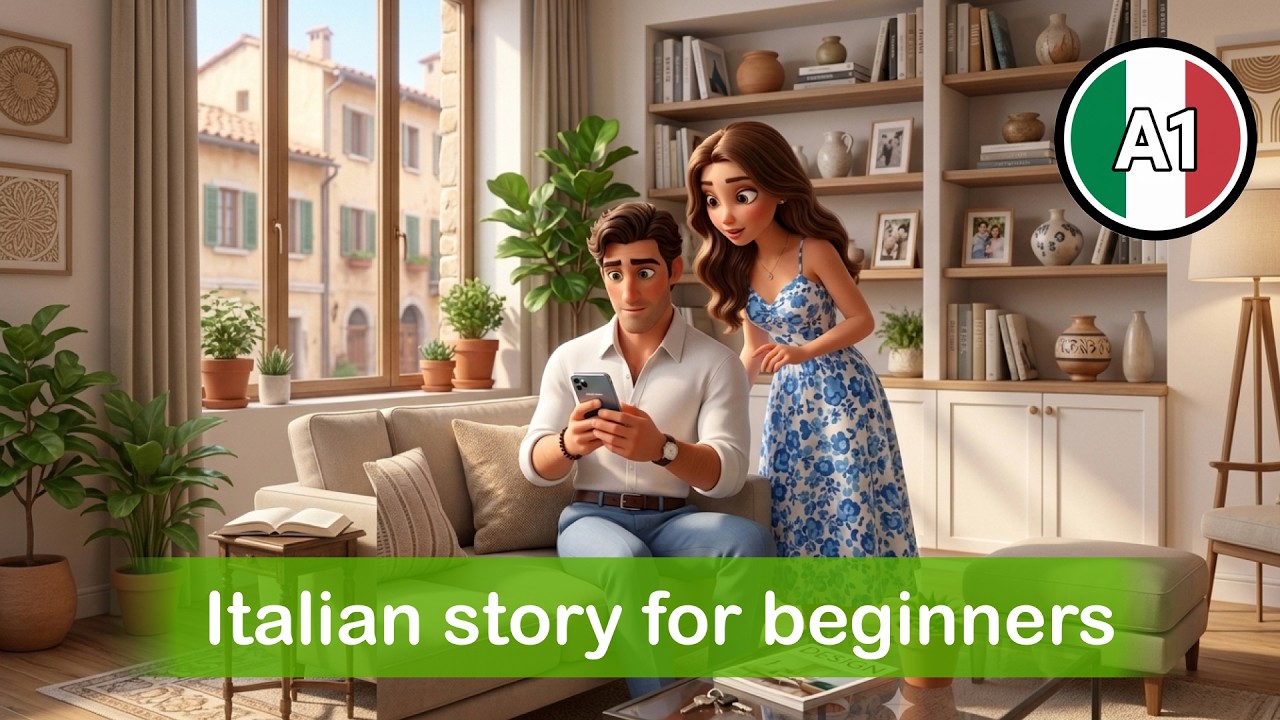
Matteo: Ciao Giulia! Vieni qui sul divano.
(Matteo: Hi Giulia! Come here on the couch.)
Giulia: Ciao Matteo! Arrivo. Cosa c’è?
(Giulia: Hi Matteo! I’m coming. What is it?)
Matteo: Guarda. Ho le foto della nostra vacanza.
(Matteo: Look. I have the photos from our vacation.)
Giulia: Oh, che bello! Le foto della nostra vacanza al mare!
(Giulia: Oh, how lovely! The photos from our beach vacation!)
Matteo: Sì, sono qui, sul mio telefono. Vuoi vedere le foto con me?
(Matteo: Yes, they’re here, on my phone. Do you want to see the photos with me?)
Giulia: Certo! Sì, voglio vedere tutte le foto.
(Giulia: Of course! Yes, I want to see all the photos.)
Matteo: Bene. Guarda questa prima foto.
(Matteo: Good. Look at this first photo.)
Giulia: Che bella! Questo è il mare. Il mare è blu.
(Giulia: How beautiful! This is the sea. The sea is blue.)
Matteo: Sì. Molto blu. E guarda il cielo. Anche il cielo è blu.
(Matteo: Yes. Very blue. And look at the sky. The sky is blue too.)
Giulia: C’è un grande sole giallo. Che bella giornata.
(Giulia: There’s a big yellow sun. What a beautiful day.)
Matteo: Ti ricordi questo giorno?
(Matteo: Do you remember this day?)
Giulia: Sì, mi ricordo bene. Era una giornata calda. Molto calda.
(Giulia: Yes, I remember it well. It was a hot day. Very hot.)
Matteo: Eravamo in spiaggia. Eravamo molto felici. Adesso, guarda questa altra foto.
(Matteo: We were at the beach. We were very happy. Now, look at this other photo.)
Giulia: Oh! Questa è una foto di noi! Siamo noi due!
(Giulia: Oh! This is a photo of us! It’s the two of us!)
Matteo: Sì, siamo noi. Tu hai un grande sorriso.
(Matteo: Yes, it’s us. You have a big smile.)
Giulia: Anche tu hai un grande sorriso. Sembriamo molto contenti.
(Giulia: You have a big smile too. We look very happy.)
Matteo: Sì, è vero. Questa è la mia foto preferita.
(Matteo: Yes, it’s true. This is my favorite photo.)
Giulia: È anche la mia foto preferita. Che bei ricordi.
(Giulia: It’s my favorite photo too. What beautiful memories.)
Matteo: E questa? Ti piace questa foto?
(Matteo: And this one? Do you like this photo?)
Giulia: Moltissimo! Questo è il tramonto sul mare.
(Giulia: Very much! This is the sunset over the sea.)
Matteo: Che bei colori. Il cielo è rosso, arancione e rosa.
(Matteo: What beautiful colors. The sky is red, orange, and pink.)
Giulia: È molto, molto romantico, Matteo.
(Giulia: It’s very, very romantic, Matteo.)
Matteo: Sì, il tramonto al mare è sempre speciale.
(Matteo: Yes, the sunset at the sea is always special.)
Giulia: È vero. È un momento magico.
(Giulia: It’s true. It’s a magical moment.)
Matteo: Aspetta. Ho un’ultima foto. Guarda qui.
(Matteo: Wait. I have one last photo. Look here.)
Giulia: Ah! La nostra cena! La pasta con il pesce!
(Giulia: Ah! Our dinner! The pasta with fish!)
Matteo: Ti ricordi com’era buona?
(Matteo: Do you remember how good it was?)
Giulia: Sì, mi ricordo! Era deliziosa. Forse la migliore pasta del mondo!
(Giulia: Yes, I remember! It was delicious. Maybe the best pasta in the world!)
Matteo: Quel giorno, io avevo molta fame.
(Matteo: That day, I was very hungry.)
Giulia: Anch’io! Dopo una giornata in spiaggia, ho sempre fame.
(Giulia: Me too! After a day at the beach, I’m always hungry.)
Matteo: È stata una vacanza meravigliosa.
(Matteo: It was a wonderful vacation.)
Giulia: Sì, una vacanza perfetta. Sono molto felice.
(Giulia: Yes, a perfect vacation. I am very happy.)
Matteo: Anch’io sono molto felice. Senti, ho un’idea.
(Matteo: I am very happy too. Listen, I have an idea.)
Giulia: Che idea?
(Giulia: What idea?)
Matteo: Dobbiamo stampare queste foto.
(Matteo: We have to print these photos.)
Giulia: Sì! È una buona idea. Stampiamo la nostra foto preferita. Quella di noi due.
(Giulia: Yes! That’s a good idea. Let’s print our favorite photo. The one of the two of us.)
Matteo: Perfetto. E compriamo una bella cornice per la foto.
(Matteo: Perfect. And let’s buy a beautiful frame for the photo.)
Giulia: Ottima idea, Matteo! Così abbiamo i nostri ricordi sempre con noi.
(Giulia: Excellent idea, Matteo! That way we always have our memories with us.)
📝 Essential Vocabulary
Here are some key words and phrases from the video. Listen to the pronunciation and practice them yourself.
| Italian | English Translation | Pronunciation |
|---|---|---|
| La vacanza | The vacation | |
| Il mare | The sea | |
| La spiaggia | The beach | |
| Il cielo | The sky | |
| Il tramonto | The sunset | |
| I ricordi | The memories | |
| Felice / Felici | Happy (singular / plural) | |
| Deliziosa | Delicious | |
| La mia foto preferita | My favorite photo |
🔍 Grammar Focus
Describing the Past with the Imperfetto
In the dialogue, you’ll notice Matteo and Giulia use a specific past tense to describe how things were. This is the imperfetto (imperfect). It’s used to describe ongoing states, conditions, feelings, or repeated actions in the past. It sets the scene.
Think of it as the difference between “we were at the beach” (a state) and “we went to the beach” (a completed action). The imperfetto is for the first case.
Look at these examples from the script:
- Descibing weather and conditions:
Era una giornata calda.- (It was a hot day.)Ti ricordi com'era buona?- (Do you remember how good it was?)
- Describing feelings or physical states:
Eravamo molto felici.- (We were very happy.)Quel giorno, io avevo molta fame.- (That day, I was very hungry.)
- Describing location or setting a scene:
Eravamo in spiaggia.- (We were at the beach.)
When you want to paint a picture of the past—describing the background, people’s feelings, or the weather—the imperfetto is the tense you need.
🌍 Cultural Tip
🃏 Flip & Learn
Practice the key phrases from this lesson to solidify your memory.
It was a wonderful vacation.
È stata una vacanza meravigliosa.
My favorite photo
La mia foto preferita
The sunset over the sea
Il tramonto sul mare
What beautiful memories!
Che bei ricordi!
💡 Key Takeaways
Here are the most important points to remember from this lesson:
- Vocabulary for Nostalgia: Learn words like
la vacanza(vacation),le foto(photos), andi ricordi(memories) to talk about the past. - Describing Scenery: Use simple adjectives like
blu,giallo,bello/bella, andcaldo/caldato describe places likeil mare(the sea) andla spiaggia(the beach). - Expressing Feelings: You can express happiness with phrases like
eravamo molto felici(we were very happy) andsembriamo molto contenti(we look very happy). - Using the Imperfetto: The imperfetto tense (
era,eravamo,avevo) is crucial for setting a scene in the past by describing how things were, what the weather was like, or how someone felt.
🎯 Practice Quiz
Test your understanding of the vocabulary and grammar from the dialogue.
Question
Question
Question
✍️ Fill in the Blanks
Let’s test your spelling and memory! Fill in the missing words below. Use correct spelling.
Fill in the blank
Fill in the blank
Support Us
Did you find this lesson helpful? Your support is what makes it possible for us to keep creating free, high-quality educational content.