Making the Perfect Coffee in Italian: Café Dialogue & Possessive Adjectives ☕
Learn essential beginner Italian vocabulary and grammar through a heartwarming story about Matteo, who seeks the secret to making the perfect coffee for his girlfriend, Giulia.
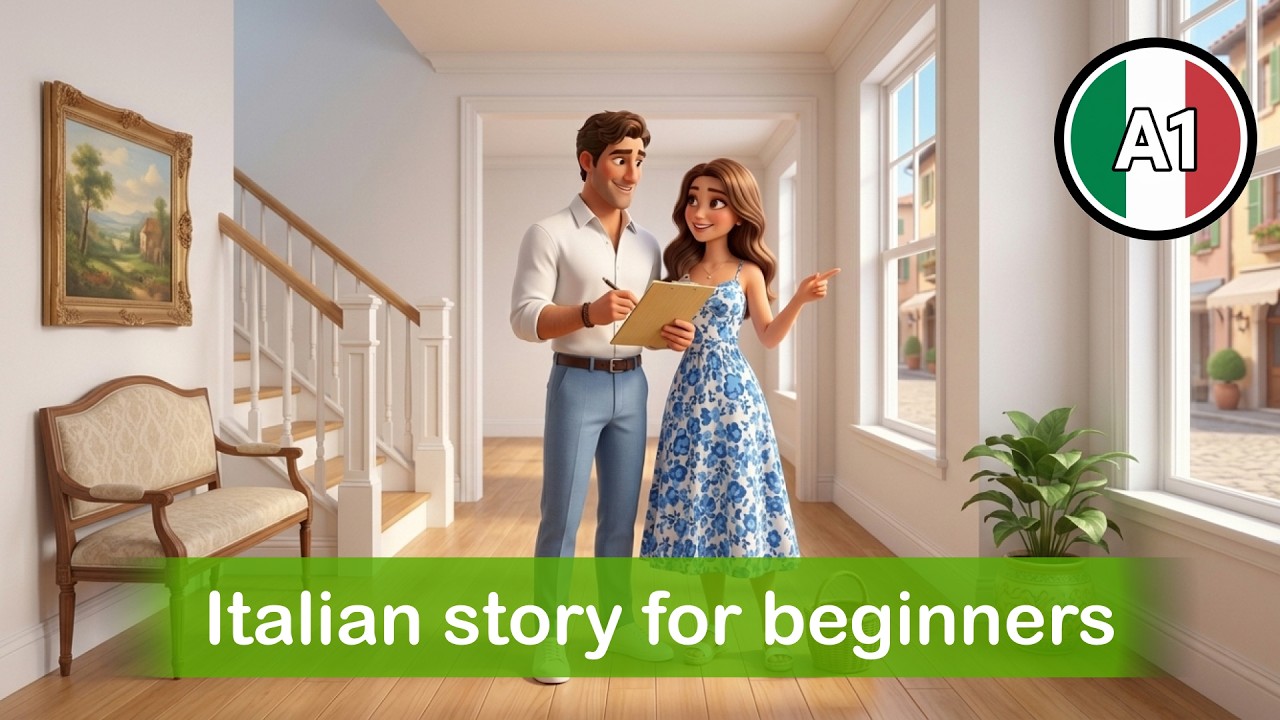
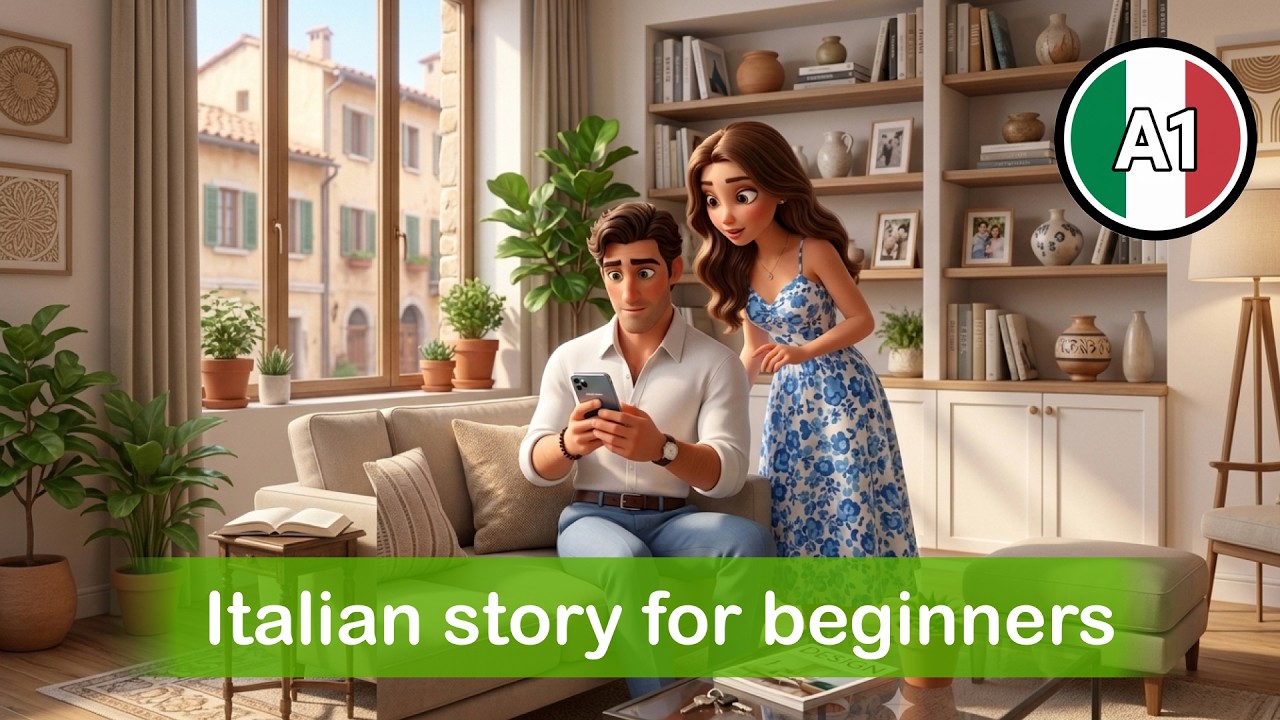
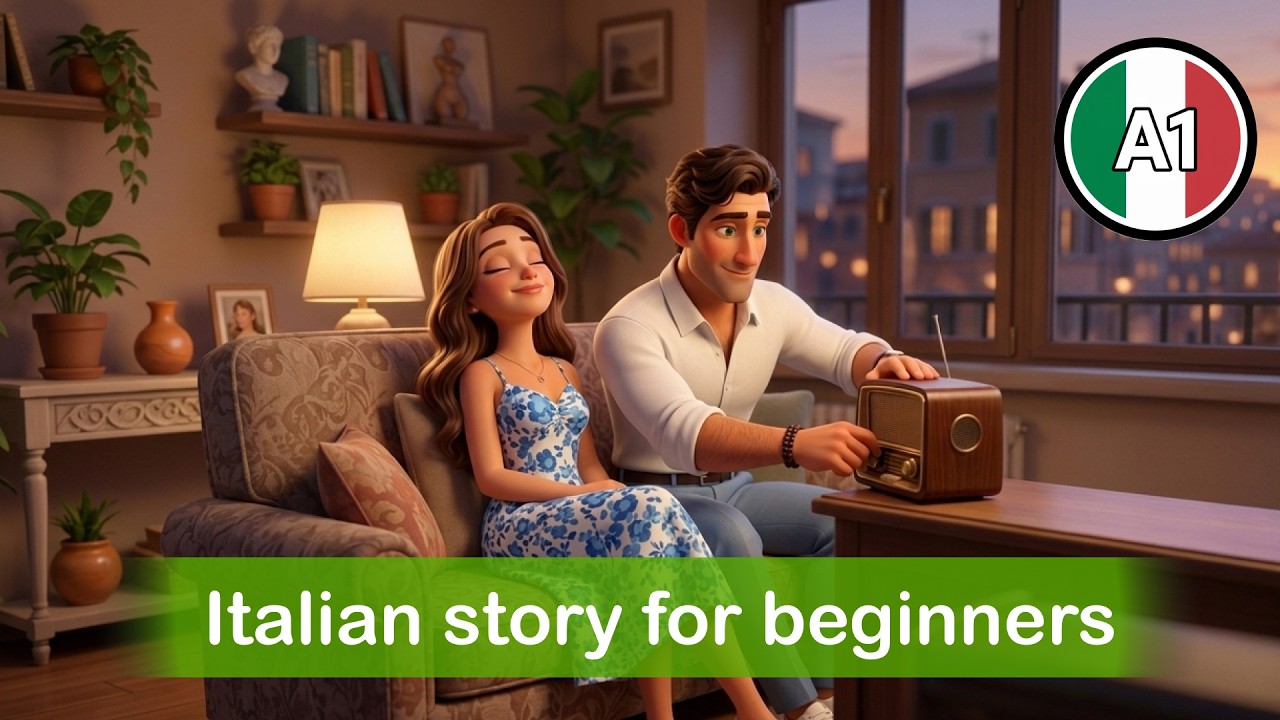
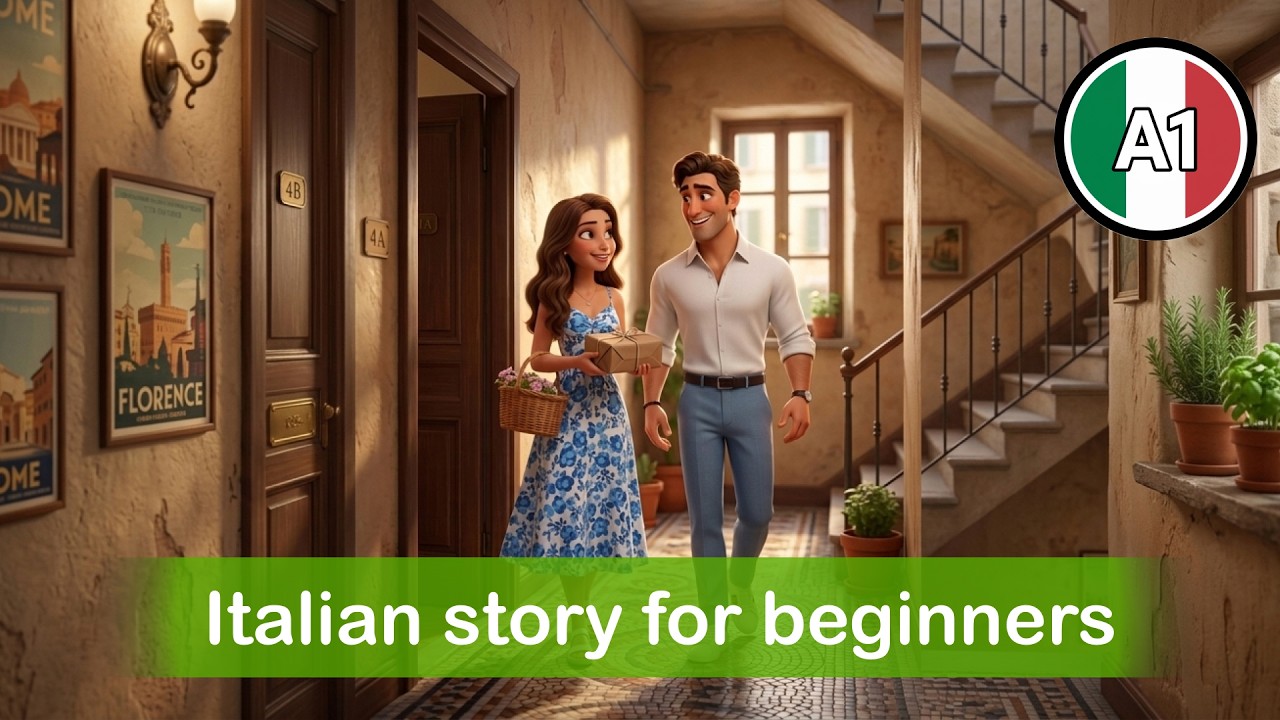
Join Matteo in Rome as he tries to prepare a wonderful surprise for his girlfriend, Giulia: the perfect cup of Italian coffee. In this lesson, you’ll learn key vocabulary for daily life, descriptions, and ordering in a café, all while enjoying a sweet love story.
💬 Video Transcript
Matteo: Ciao, sono Matteo. Abito a Roma. La mia città è bellissima.
(Matteo: Hi, I’m Matteo. I live in Rome. My city is beautiful.)
Matteo: Oggi è una giornata di sole. La mia ragazza, Giulia, viene a casa mia stasera.
(Matteo: Today is a sunny day. My girlfriend, Giulia, is coming to my place tonight.)
Matteo: Giulia è di Milano, ma ama Roma. E ama il caffè.
(Matteo: Giulia is from Milan, but she loves Rome. And she loves coffee.)
Matteo: Io voglio preparare una sorpresa per lei: un caffè speciale, un caffè perfetto.
(Matteo: I want to prepare a surprise for her: a special coffee, a perfect coffee.)
Matteo: C’è un problema. Io non sono molto bravo a fare il caffè. A volte è troppo forte, a volte è troppo debole. Non è mai perfetto.
(Matteo: There’s a problem. I’m not very good at making coffee. Sometimes it’s too strong, sometimes it’s too weak. It’s never perfect.)
Matteo: Ma ho un’idea. Vado al bar del mio quartiere. Il proprietario è Signor Franco. Lui è un esperto di caffè.
(Matteo: But I have an idea. I’m going to the café in my neighborhood. The owner is Mr. Franco. He is a coffee expert.)
Matteo: Esco di casa e cammino per la strada. Il bar è piccolo e molto tradizionale. Entro.
(Matteo: I leave the house and walk down the street. The café is small and very traditional. I go in.)
Matteo: ‘Buongiorno, Signor Franco!’ dico io.
(Matteo: ‘Good morning, Mr. Franco!’ I say.)
Matteo: Signor Franco è dietro il bancone. Ha i suoi grandi baffi e un’espressione seria.
(Matteo: Mr. Franco is behind the counter. He has his big mustache and a serious expression.)
Signor Franco: ‘Buongiorno, Matteo. Vuoi il solito caffè?’, chiede. La sua voce è un po’ roca.
(Signor Franco: ‘Good morning, Matteo. Do you want the usual coffee?’, he asks. His voice is a bit hoarse.)
Matteo: ‘No, oggi no. Oggi ho bisogno di un consiglio’, rispondo.
(Matteo: ‘No, not today. Today I need a piece of advice’, I reply.)
Signor Franco: ‘Un consiglio?’.
(Signor Franco: ‘A piece of advice?’)
Matteo: ‘Sì. Voglio preparare un caffè perfetto per Giulia. Ma non sono capace’.
(Matteo: ‘Yes. I want to prepare a perfect coffee for Giulia. But I’m not able to.’)
Matteo: Signor Franco non sorride, ma i suoi occhi sono gentili. Pensa per un momento.
(Matteo: Mr. Franco doesn’t smile, but his eyes are kind. He thinks for a moment.)
Signor Franco: ‘Matteo, per un caffè perfetto servono tre cose: acqua buona, caffè fresco e amore’.
(Signor Franco: ‘Matteo, for a perfect coffee you need three things: good water, fresh coffee, and love.’)
Matteo: ‘Amore?’, chiedo io, un po’ confuso.
(Matteo: ‘Love?’, I ask, a bit confused.)
Signor Franco: ‘Sì. Devi fare il caffè con calma, con attenzione. Pensa alla persona che berrà il caffè’.
(Signor Franco: ‘Yes. You have to make the coffee calmly, with attention. Think about the person who will drink the coffee.’)
Matteo: Poi prende un piccolo sacchetto di carta. Mette dentro del caffè macinato.
(Matteo: Then he takes a small paper bag. He puts some ground coffee inside.)
Signor Franco: ‘Questo è per te. È una miscela speciale’.
(Signor Franco: ‘This is for you. It’s a special blend.’)
Matteo: Io sono molto felice. ‘Grazie mille, Signor Franco! Quanto le devo?’.
(Matteo: I am very happy. ‘Thank you very much, Mr. Franco! How much do I owe you?’)
Signor Franco: Lui fa un gesto con la mano. ‘Niente. È un regalo per Giulia’.
(Signor Franco: He makes a gesture with his hand. ‘Nothing. It’s a gift for Giulia.’)
Matteo: Torno a casa con il mio sacchetto speciale. Aspetto Giulia. Quando arriva, io vado in cucina.
(Matteo: I return home with my special bag. I wait for Giulia. When she arrives, I go to the kitchen.)
Matteo: Preparo la moka con calma. Uso l’acqua buona. Uso il caffè fresco di Signor Franco. E penso a Giulia.
(Matteo: I prepare the moka pot calmly. I use the good water. I use the fresh coffee from Mr. Franco. And I think about Giulia.)
Matteo: L’odore del caffè riempie la casa. Porto la tazzina a Giulia. Lei la prende e la odora.
(Matteo: The smell of coffee fills the house. I bring the small cup to Giulia. She takes it and smells it.)
Giulia: ‘Mmm, che profumo fantastico!’, dice.
(Giulia: ‘Mmm, what a fantastic aroma!’, she says.)
Matteo: Poi beve un sorso. I suoi occhi si illuminano.
(Matteo: Then she takes a sip. Her eyes light up.)
Giulia: ‘Matteo! Questo caffè è incredibile! È perfetto!’.
(Giulia: ‘Matteo! This coffee is incredible! It’s perfect!’)
Matteo: Io sorrido. Sono molto contento. Il segreto non è solo il caffè, è l’amore. Grazie, Signor Franco.
(Matteo: I smile. I am very happy. The secret isn’t just the coffee, it’s love. Thank you, Mr. Franco.)
📝 Essential Vocabulary
Here are some important words and phrases from Matteo’s story. Listen to the pronunciation to improve your accent!
| Target Language | English Translation | Pronunciation |
|---|---|---|
| Una sorpresa | A surprise | |
| Il quartiere | The neighborhood | |
| Un consiglio | A piece of advice | |
| Forte / Debole | Strong / Weak | / |
| I baffi | The mustache | |
| Una miscela speciale | A special blend | |
| Un regalo | A gift | |
| La tazzina | The small cup (for espresso) |
🔍 Grammar Focus
In this story, Matteo uses possessive adjectives to talk about things and people belonging to him or others. Let’s take a closer look!
Possessive Adjectives (Aggettivi Possessivi)
In Italian, possessive adjectives like “my,” “your,” and “his/her” must agree in gender (masculine/feminine) and number (singular/plural) with the noun they describe, not with the owner.
Notice how Matteo changes the form of mio (my) to match the noun:
- La mia città (My city) -
cittàis feminine singular, so he usesmia. - La mia ragazza (My girlfriend) -
ragazzais feminine singular, so he usesmia. - Il mio quartiere (My neighborhood) -
quartiereis masculine singular, so he usesmio.
The same rule applies to suo (his/her). The form depends on the noun that follows:
- La sua voce (His voice) -
voceis feminine singular, so the adjective issua. - I suoi grandi baffi (His big mustache) -
baffiis masculine plural, so the adjective becomessuoi.
Remember to always place the definite article (il, la, i, le, etc.) before the possessive adjective.
🌍 Cultural Tip
🃏 Flip & Learn
Practice the key vocabulary from the lesson with these flashcards.
The neighborhood
Il quartiere
A piece of advice
Un consiglio
I want to prepare a surprise
Voglio preparare una sorpresa
The secret is love
Il segreto è l'amore
💡 Key Takeaways
Here are the most important points to remember from this lesson:
- The cultural secret to great coffee: According to Signor Franco, the three ingredients for a perfect coffee are
acqua buona(good water),caffè fresco(fresh coffee), andamore(love). - Possessive Adjectives Agree with the Noun: In Italian, words like
mio(my) andsuo(his/her) must match the gender and number of the noun they describe (e.g.,la mia città,il mio quartiere). - Expressing Needs: To say you need something, you can use the phrase
ho bisogno di...as Matteo did when he said,Ho bisogno di un consiglio(I need a piece of advice). - Describing things: You can use simple adjectives after the noun to describe things, like
un caffè speciale(a special coffee) oracqua buona(good water).
🎯 Practice Quiz
Test your understanding of the story and its vocabulary.
Question
Question
Question
✍️ Fill in the Blanks
Let’s test your spelling and memory! Fill in the missing words below. Use correct spelling.
Fill in the blank
Fill in the blank
Support Us
Did you find this lesson helpful? Your support is what makes it possible for us to keep creating free, high-quality educational content.