Celebrating a Birthday in Italian: Surprise Dialogue & Vocabulary 🎂
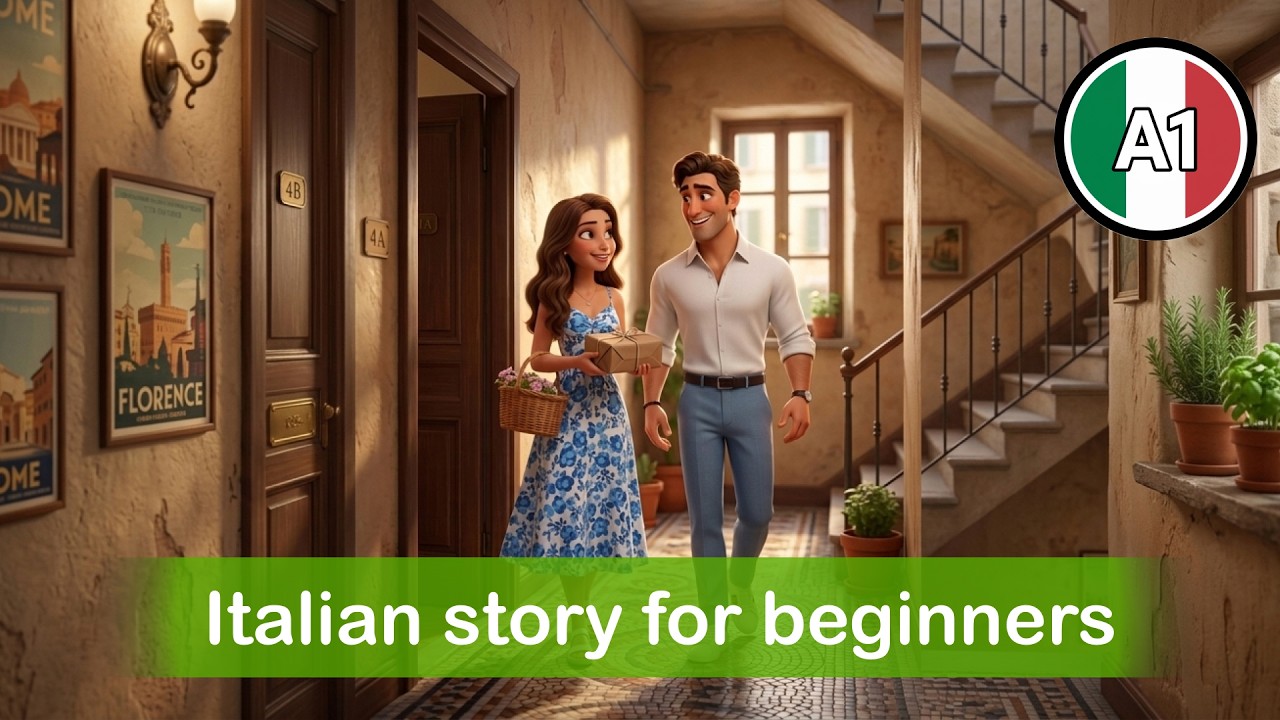
Learn essential Italian birthday vocabulary and simple phrases with this A1-A2 dialogue. Follow along as Giulia surprises Matteo with a cake and a gift!
Join Giulia and Matteo for a heartwarming birthday celebration! This simple Italian dialogue will teach you how to wish someone a happy birthday, talk about gifts, and express happiness and surprise, all using beginner-friendly A1-A2 level vocabulary.
💬 Video Transcript
Matteo: Ciao amore! Sono a casa!
(Matteo: Hi love! I’m home!)
Giulia: Ciao Matteo! Vieni in sala da pranzo. Ho una cosa per te.
(Giulia: Hi Matteo! Come into the dining room. I have something for you.)
Matteo: Una cosa per me? Che cosa?
(Matteo: Something for me? What is it?)
Giulia: Vieni! Ma prima… chiudi gli occhi. Non guardare.
(Giulia: Come! But first… close your eyes. Don’t look.)
Matteo: Va bene. Chiudo gli occhi. Ma sono curioso!
(Matteo: Okay. I’m closing my eyes. But I’m curious!)
Giulia: Perfetto. Adesso, cammina piano… ecco, bravo. Adesso, apri gli occhi!
(Giulia: Perfect. Now, walk slowly… there, good boy. Now, open your eyes!)
Matteo: Apro gli occhi… Oh! Giulia! Che bella sorpresa!
(Matteo: I’m opening my eyes… Oh! Giulia! What a nice surprise!)
Giulia: Sorpresa! Buon compleanno, Matteo!
(Giulia: Surprise! Happy birthday, Matteo!)
Matteo: Grazie mille! Tu hai una memoria fantastica! Io sono molto felice.
(Matteo: Thank you so much! You have a fantastic memory! I am very happy.)
Giulia: Sul tavolo c’è una torta per te. È una torta al cioccolato.
(Giulia: On the table there is a cake for you. It’s a chocolate cake.)
Matteo: Mmm, che buona! La torta al cioccolato è la mia preferita. Grazie!
(Matteo: Mmm, how delicious! Chocolate cake is my favorite. Thank you!)
Giulia: Prego! E sul tavolo c’è anche un regalo per te.
(Giulia: You’re welcome! And on the table there is also a gift for you.)
Matteo: Un altro regalo? Sei molto gentile, Giulia.
(Matteo: Another gift? You are very kind, Giulia.)
Giulia: Questo è un piccolo regalo. Apri il pacco.
(Giulia: This is a small gift. Open the package.)
Matteo: Va bene, apro il pacco. Vediamo… cosa c’è dentro?
(Matteo: Okay, I’m opening the package. Let’s see… what’s inside?)
Giulia: È una sorpresa anche questa.
(Giulia: This is a surprise too.)
Matteo: È un libro! Un libro nuovo! Che bello!
(Matteo: It’s a book! A new book! How nice!)
Giulia: Sì, è un libro di avventura. Tu ami le avventure.
(Giulia: Yes, it’s an adventure book. You love adventures.)
Matteo: È vero! Io amo le avventure. Questo regalo è perfetto. Grazie, amore mio.
(Matteo: It’s true! I love adventures. This gift is perfect. Thank you, my love.)
Giulia: Sono felice che ti piace il libro. E la torta?
(Giulia: I’m happy you like the book. And the cake?)
Matteo: La torta è bellissima. Ha una candela. Una candela rossa.
(Matteo: The cake is beautiful. It has a candle. A red candle.)
Giulia: Sì, una per te. Adesso, mangiamo la torta di compleanno?
(Giulia: Yes, one for you. Now, shall we eat the birthday cake?)
Matteo: Sì! Mangiamo la torta. Sono molto contento. Questo è un compleanno speciale.
(Matteo: Yes! Let’s eat the cake. I am very happy. This is a special birthday.)
Giulia: Anche per me è speciale. Tanti auguri, Matteo!
(Giulia: It’s special for me too. Best wishes, Matteo!)
Matteo: Grazie, Giulia! Grazie per la bella sorpresa.
(Matteo: Thank you, Giulia! Thanks for the wonderful surprise.)
📝 Essential Vocabulary
Here are some key words and phrases from the video that are perfect for celebrating a special occasion in Italian.
| Target Language | English Translation | Pronunciation |
|---|---|---|
| La sorpresa | The surprise | |
| Buon compleanno | Happy birthday | |
| Un regalo | A gift/present | |
| La torta | The cake | |
| Una candela | A candle | |
| Felice | Happy | |
| Curioso | Curious | |
| Grazie mille | Thanks a lot |
🔍 Grammar Focus
Let’s break down two important grammar concepts you can learn from this dialogue.
1. Using the Verb Essere (To Be)
The verb essere is one of the most fundamental verbs in Italian. It’s used to describe states of being, identity, and characteristics. In the dialogue, Matteo uses it to express his feelings. Notice how the form changes based on who is speaking.
Io sono (I am)
Sono a casa!(I am home!)Ma sono curioso!(But I am curious!)Io sono molto felice.(I am very happy.)
Tu sei (You are)
Sei molto gentile, Giulia.(You are very kind, Giulia.)
Lui/Lei/Esso è (He/She/It is)
È una torta al cioccolato.(It is a chocolate cake.)Questo regalo è perfetto.(This gift is perfect.)
2. Masculine & Feminine Adjective Agreement
In Italian, nouns have a gender (masculine or feminine), and the adjectives that describe them must “agree” with that gender. You can see this pattern clearly in the dialogue. Masculine nouns often end in -o, and their adjectives also end in -o. Feminine nouns often end in -a, and their adjectives end in -a.
Masculine Noun + Adjective:
un libr<strong>o</strong> nuov<strong>o</strong>(a new book)un compleann<strong>o</strong> special<strong>e</strong>(a special birthday - Note: adjectives ending in -e can be both masculine and feminine)
Feminine Noun + Adjective:
Che bell<strong>a</strong> sorpres<strong>a</strong>!(What a nice surprise!)una memori<strong>a</strong> fantastic<strong>a</strong>(a fantastic memory)una candel<strong>a</strong> ross<strong>a</strong>(a red candle)
Paying attention to these endings is a key step to sounding more natural in Italian!
🌍 Cultural Tip
il compleanno) are often celebrated with family and close friends. It’s common to hear people say ‘Tanti auguri!’ which means ‘Best wishes!’ in addition to ‘Buon compleanno!’. A beautiful cake, often shared with loved ones, is a central part of the celebration.🃏 Flip & Learn
Review the key phrases from the lesson with these interactive flashcards.
Happy birthday!
Buon compleanno!
What a nice surprise!
Che bella sorpresa!
I am very happy.
Sono molto felice.
The chocolate cake is my favorite.
La torta al cioccolato è la mia preferita.
This gift is perfect.
Questo regalo è perfetto.
💡 Key Takeaways
Here are the most important points to remember from this lesson:
- There are two common ways to wish someone a happy birthday:
Buon compleanno!(Happy birthday!) andTanti auguri!(Best wishes!). - Use the verb
essereto talk about your feelings:Sono felice(I am happy) orSono curioso(I am curious). - Essential vocabulary for celebrations includes
la torta(the cake),il regalo(the gift), andla candela(the candle). - To say “thank you very much,” you can use
Grazie mille!. The common reply isPrego!(You’re welcome!). - Remember that Italian adjectives must match the gender of the noun they describe, like in
un libr<strong>o</strong> nuov<strong>o</strong>(masculine) anduna candel<strong>a</strong> ross<strong>a</strong>(feminine).
🎯 Practice Quiz
Test your knowledge of the vocabulary and phrases from the dialogue.
Question
Question
Question
✍️ Fill in the Blanks
Let’s test your spelling and memory! Fill in the missing words below. Use correct spelling.
Fill in the blank
Fill in the blank
Support Us
Did you find this lesson helpful? Your support is what makes it possible for us to keep creating free, high-quality educational content.