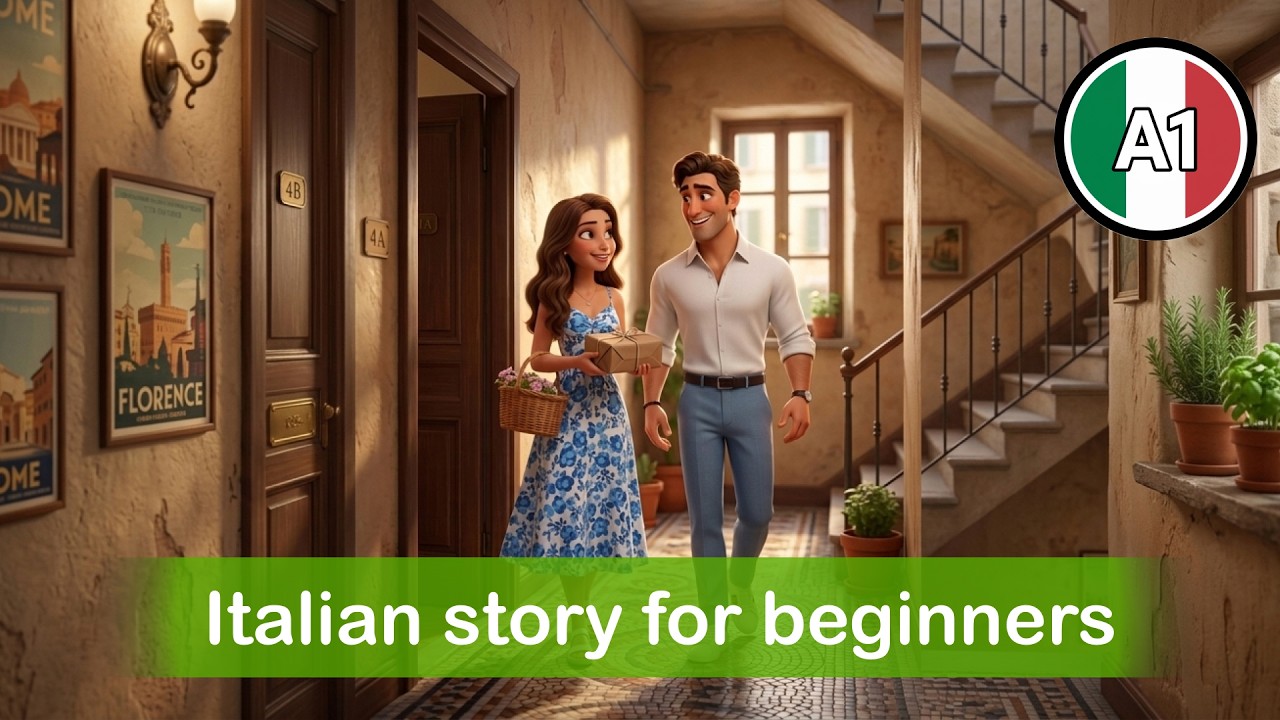
Shopping at a Local Market in Italian: Food Vocabulary & Shopping Dialogue 🌻
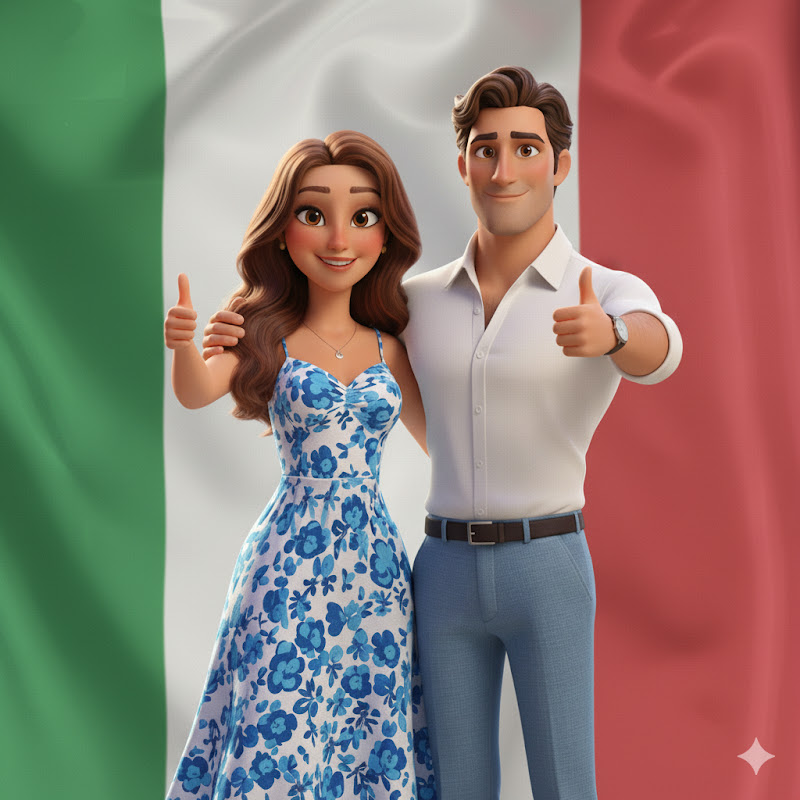
Join Matteo and Giulia on a beautiful morning trip to a local Roman market. Learn essential A1-A2 Italian vocabulary for food, shopping, and describing things you see.
Immerse yourself in a typical Roman morning with Matteo and Giulia! This lesson takes you to a bustling neighborhood market, a cornerstone of Italian daily life. You’ll learn essential vocabulary for describing fresh food, flowers, and the vibrant atmosphere, all while practicing key A1-A2 grammar points in a real-world context.
💬 Video Transcript
Follow along with the dialogue from the video. The entire story is narrated from Matteo’s point of view.
Matteo: Questa mattina c’è un sole bellissimo a Roma. Incontro la mia ragazza, Giulia, vicino a casa mia. Di solito, prendiamo un caffè, ma oggi lei ha un’idea diversa.
(Matteo: This morning there is a beautiful sun in Rome. I’m meeting my girlfriend, Giulia, near my house. Usually, we get a coffee, but today she has a different idea.)
Giulia: Matteo, perché non andiamo al mercato di quartiere?
(Giulia: Matteo, why don’t we go to the neighborhood market?)
Matteo: È un’ottima idea! Io amo l’atmosfera del mercato. Arriviamo e sento subito i profumi. C’è il profumo del pane fresco e della frutta. Vediamo tanti banchi pieni di colori. I pomodori sono rossi e brillanti, i limoni sono gialli e grandi. A me viene subito fame. Penso a un buon piatto di pasta.
(Matteo: It’s a great idea! I love the atmosphere of the market. We arrive and I immediately smell the aromas. There’s the smell of fresh bread and fruit. We see many stalls full of colors. The tomatoes are red and shiny, the lemons are yellow and big. I get hungry right away. I’m thinking of a good pasta dish.)
Matteo: Giulia, invece, è affascinata dai fiori. Lei è un’artista e ama i colori. Si ferma a un banco e dice:
(Matteo: Giulia, on the other hand, is fascinated by the flowers. She is an artist and loves colors. She stops at a stall and says:)
Giulia: Guarda che belli questi girasoli!
(Giulia: Look how beautiful these sunflowers are!)
Matteo: Sono alti e di un giallo intenso. Parla con la signora del banco per qualche minuto. Giulia è sempre così gentile con tutti. Io continuo a camminare e trovo un banco che vende formaggi. C’è un pezzo di parmigiano che sembra delizioso. Chiedo al signore:
(Matteo: They are tall and a deep yellow. She talks with the lady at the stall for a few minutes. Giulia is always so kind to everyone. I continue walking and find a stall that sells cheese. There is a piece of parmesan that looks delicious. I ask the man:)
Matteo: È buono questo formaggio?
(Matteo: Is this cheese good?)
Matteo: Lui sorride e mi fa assaggiare un piccolo pezzo. È saporito e perfetto. Decido di comprarne un po’. Giulia mi raggiunge con un grande mazzo di girasoli in mano. Ha un sorriso enorme.
(Matteo: He smiles and has me taste a small piece. It is flavorful and perfect. I decide to buy some. Giulia joins me with a large bouquet of sunflowers in her hand. She has a huge smile.)
Giulia: Sono per il salotto, daranno un po’ di colore alla casa!
(Giulia: They’re for the living room, they’ll give a bit of color to the house!)
Matteo: Io le mostro il formaggio.
(Matteo: I show her the cheese.)
Giulia: Perfetto per la pasta di stasera!
(Giulia: Perfect for tonight’s pasta!)
Matteo: Compriamo anche del pane fresco e due pesche dolci per dopo. Torniamo verso casa a piedi, con la borsa della spesa e i fiori. È stata una mattinata semplice, ma perfetta. Il sole, i colori del mercato e la buona compagnia. A volte, le cose più semplici sono le più belle.
(Matteo: We also buy some fresh bread and two sweet peaches for later. We walk back home, with the shopping bag and the flowers. It was a simple, but perfect morning. The sun, the colors of the market, and the good company. Sometimes, the simplest things are the most beautiful.)
📝 Essential Vocabulary
Here are some key words and phrases from Matteo and Giulia’s market trip. Listen to the pronunciation and practice saying them yourself.
| Target Language | English Translation | Pronunciation |
|---|---|---|
| Il mercato di quartiere | The neighborhood market | |
| I profumi | The scents / The smells | |
| I banchi | The stalls | |
| I girasoli | The sunflowers | |
| Assaggiare | To taste / to try | |
| Saporito | Tasty / Flavorful | |
| La borsa della spesa | The shopping bag | |
| Le cose più semplici | The simplest things |
🔍 Grammar Focus
Let’s break down two important grammar points from the dialogue.
Adjective Agreement
In Italian, adjectives must agree in gender (masculine/feminine) and number (singular/plural) with the noun they describe. Notice how the endings change throughout the story.
- Masculine Singular (-o): un sole bellissimo, pane fresco, un buon piatto
- Feminine Singular (-a): un’idea diversa, un’ottima idea
- Masculine Plural (-i): pomodori rossi e brillanti, limoni gialli e grandi
- Feminine Plural (-e): pesche dolci
Look at the examples from the script:
- “Questa mattina c’è un sole bellissimo a Roma.” (The masculine noun
solegets the masculine adjective ending-o). - “I pomodori sono rossi e brillanti.” (The masculine plural noun
pomodorigets the masculine plural adjective endings-i).
Using C'è and Ci sono
C'è and ci sono are the Italian equivalents of “there is” and “there are”. You use them to state the existence of something.
- C’è (from
ci+è) is used for singular nouns. - Ci sono is used for plural nouns.
In the script, Matteo uses c'è several times because he is talking about one thing:
- “C’è un sole bellissimo…” (There is a beautiful sun…)
- “C’è il profumo del pane fresco…” (There is the smell of fresh bread…)
- “C’è un pezzo di parmigiano…” (There is a piece of parmesan…)
If he wanted to talk about the many stalls, he would use ci sono:
- “Al mercato, ci sono tanti banchi.” (At the market, there are many stalls.)
🌍 Cultural Tip
mercato di quartiere is more than just a place to shop; it’s a vital social hub. Locals build relationships with vendors (venditori), trusting their recommendations for the freshest seasonal produce. This daily or weekly ritual is a cornerstone of community life and the Italian emphasis on fresh, high-quality ingredients.🃏 Flip & Learn
Review the key vocabulary from the lesson with these flashcards.
The neighborhood market
Il mercato di quartiere
It's a great idea!
È un'ottima idea!
Sunflowers
I girasoli
Tasty / Flavorful
Saporito
The simplest things are the most beautiful.
Le cose più semplici sono le più belle.
💡 Key Takeaways
Here are the most important points to remember from this lesson:
- Adjective Agreement is Key: Always match the ending of your adjective to the gender and number of the noun (e.g.,
pomodori ross**i**,idea divers**a**). - Use
C'èfor Singular,Ci sonofor Plural: Remember to usec'èwhen talking about one thing (“there is”) andci sonowhen talking about multiple things (“there are”). - Market Vocabulary: You’ve learned essential words for a trip to an Italian market, like
banchi(stalls),formaggio(cheese),frutta(fruit), andfiori(flowers). - A Cultural Insight: The
mercato di quartiereis a vibrant and central part of daily Italian life, a place to buy fresh, local products and connect with the community.
🎯 Practice Quiz
Test your knowledge of the vocabulary and grammar from the video.
Question
Question
Question
✍️ Fill in the Blanks
Let’s test your spelling and memory! Fill in the missing words below. Use correct spelling.
Fill in the blank
Fill in the blank
Support Us
Did you find this lesson helpful? Your support is what makes it possible for us to keep creating free, high-quality educational content.