Troubleshooting a Broken Phone in Italian: Tech Vocabulary & Dialogue 📱
Learn essential Italian vocabulary for troubleshooting common tech problems. Follow a slow dialogue about a dead phone and learn how to ask for help and offer solutions.
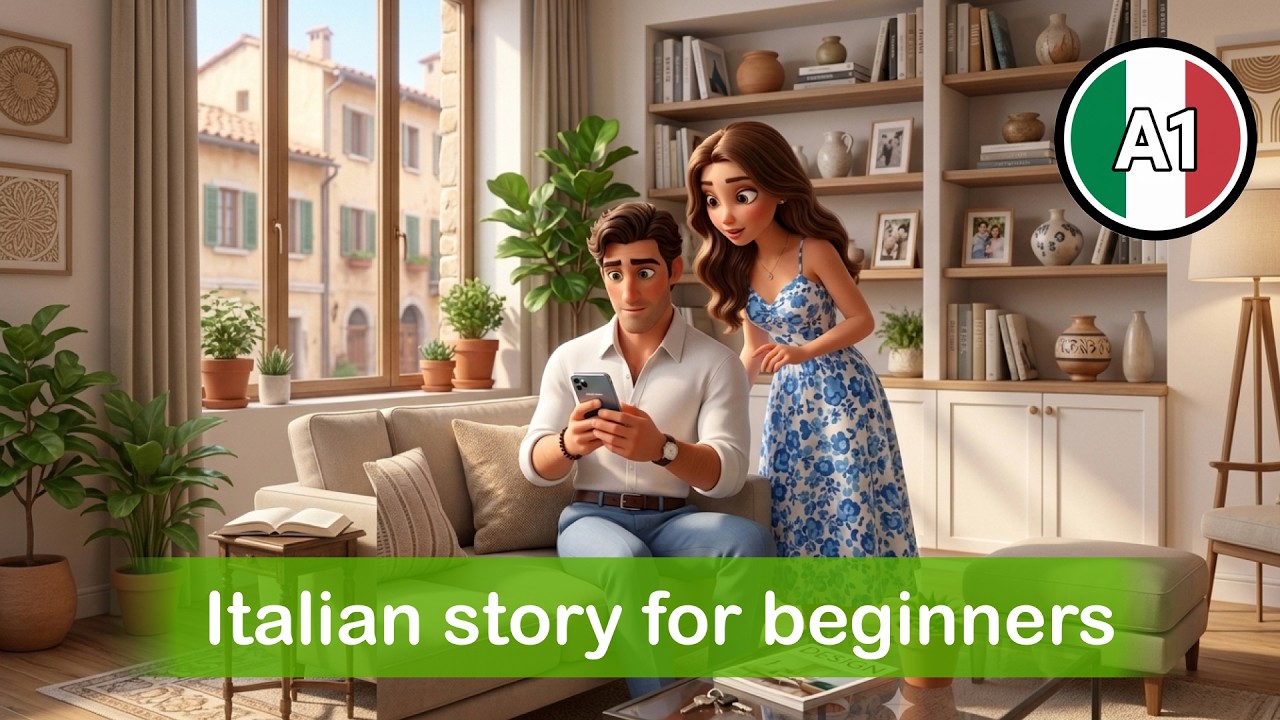
We’ve all felt that moment of panic: your phone screen is black and it won’t turn on! In this lesson, you’ll learn practical Italian for describing and solving this very common problem. Follow along as Matteo worries his new phone is broken and Giulia helps him find a simple solution.
💬 Video Transcript
Matteo: Giulia, aiuto! C’è un problema, un grande problema!
(Matteo: Giulia, help! There’s a problem, a big problem!)
Giulia: Che succede, Matteo? Sei preoccupato. Qual è il problema?
(Giulia: What’s happening, Matteo? You’re worried. What is the problem?)
Matteo: Il mio telefono. Guarda il mio telefono. Non funziona.
(Matteo: My phone. Look at my phone. It doesn’t work.)
Giulia: Non funziona? Fammi vedere. Oh, è vero. Lo schermo è nero.
(Giulia: It doesn’t work? Let me see. Oh, it’s true. The screen is black.)
Matteo: Sì, è tutto nero. Premo il pulsante, ma non succede niente. Niente.
(Matteo: Yes, it’s all black. I press the button, but nothing happens. Nothing.)
Giulia: Strano. Forse il telefono è rotto?
(Giulia: Strange. Maybe the phone is broken?)
Matteo: Rotto? Oh no! Spero di no. È un telefono nuovo.
(Matteo: Broken? Oh no! I hope not. It’s a new phone.)
Giulia: Aspetta, aspetta. Forse non è rotto. Forse il problema è un altro.
(Giulia: Wait, wait. Maybe it’s not broken. Maybe the problem is something else.)
Matteo: Quale problema? Io vedo solo uno schermo nero.
(Matteo: What problem? I only see a black screen.)
Giulia: Forse… la batteria è scarica.
(Giulia: Maybe… the battery is dead.)
Matteo: La batteria? Pensi che la batteria sia scarica?
(Matteo: The battery? You think the battery is dead?)
Giulia: Sì, è possibile. È una cosa molto comune.
(Giulia: Yes, it’s possible. It’s a very common thing.)
Matteo: Non lo so… Forse hai ragione. Non ricordo quando ho caricato il telefono.
(Matteo: I don’t know… Maybe you’re right. I don’t remember when I charged the phone.)
Giulia: Allora è quasi sicuro. La batteria è completamente scarica. Per questo lo schermo è nero.
(Giulia: Then it’s almost certain. The battery is completely dead. That’s why the screen is black.)
Matteo: Ok. E adesso? Cosa facciamo?
(Matteo: Ok. And now? What do we do?)
Giulia: È facile. Troviamo il caricabatterie e carichiamo il telefono.
(Giulia: It’s easy. We find the charger and charge the phone.)
Matteo: Il caricabatterie! Certo! Ma… dov’è il mio caricabatterie?
(Matteo: The charger! Of course! But… where is my charger?)
Giulia: Buona domanda. Cerchiamo insieme. Tu guardi qui, sul tavolo.
(Giulia: Good question. Let’s look together. You look here, on the table.)
Matteo: Va bene. Sul tavolo non c’è. Guardo vicino alla televisione.
(Matteo: Okay. It’s not on the table. I’ll look near the television.)
Giulia: Io guardo vicino al divano. Ah! Eccolo! È qui!
(Giulia: I’ll look near the sofa. Ah! Here it is! It’s here!)
Matteo: Fantastico! Hai trovato il caricabatterie! Grazie!
(Matteo: Fantastic! You found the charger! Thanks!)
Giulia: Prego. Ora mettiamo il telefono in carica. Ecco la presa.
(Giulia: You’re welcome. Now let’s put the phone on to charge. Here’s the outlet.)
Matteo: Ok, collego il cavo al telefono. Fatto.
(Matteo: Ok, I’m connecting the cable to the phone. Done.)
Giulia: Perfetto. Adesso aspettiamo un momento. Solo un momento.
(Giulia: Perfect. Now we wait a moment. Just a moment.)
Matteo: Aspettiamo… Guardo lo schermo…
(Matteo: We wait… I’m looking at the screen…)
Giulia: Vedi qualcosa?
(Giulia: Do you see anything?)
Matteo: Sì! Giulia, guarda! C’è il simbolo della batteria! Si sta caricando!
(Matteo: Yes! Giulia, look! There’s the battery symbol! It’s charging!)
Giulia: Benissimo! Vedi? Il telefono non è rotto. Funziona!
(Giulia: Great! See? The phone isn’t broken. It’s working!)
Matteo: Sì, funziona! Che sollievo! Era solo la batteria scarica.
(Matteo: Yes, it’s working! What a relief! It was just the dead battery.)
Giulia: Esatto. Un problema piccolo e una soluzione semplice.
(Giulia: Exactly. A small problem and a simple solution.)
Matteo: Grazie, Giulia. Sei molto intelligente!
(Matteo: Thanks, Giulia. You’re very smart!)
Giulia: Prego, Matteo. Ora il tuo telefono è felice.
(Giulia: You’re welcome, Matteo. Now your phone is happy.)
📝 Essential Vocabulary
Here are some key words and phrases from the dialogue that you’ll need to talk about tech troubles in Italian.
| Italian | English Translation | Pronunciation |
|---|---|---|
| Il problema | The problem | |
| Non funziona | It doesn’t work | |
| Lo schermo | The screen | |
| Rotto | Broken | |
| La batteria è scarica | The battery is dead/empty | |
| Il caricabatterie | The charger | |
| La presa | The outlet / socket | |
| Che sollievo! | What a relief! |
🔍 Grammar Focus
This dialogue is full of useful grammar for beginners. Let’s look at two key points.
1. Using Essere (To Be) to Describe States and Conditions
The verb essere (to be) is essential for describing how things are. In the dialogue, Matteo and Giulia use it constantly to describe the phone and their feelings. Notice how the adjective ending changes to match the noun (masculine or feminine).
- Lo schermo è nero. (The screen is black.)
- Forse il telefono è rotto? (Maybe the phone is broken?)
- La batteria è scarica. (The battery is dead.)
- Sei preoccupato. (You are worried.)
Here are the present tense forms of essere:
- (io) sono - I am
- (tu) sei - you are
- (lui/lei) è - he/she/it is
- (noi) siamo - we are
- (voi) siete - you (plural) are
- (loro) sono - they are
2. Possessive Adjectives: Mio (My)
When Matteo talks about his things, he uses the possessive adjective mio. In Italian, possessive adjectives must agree in gender and number with the noun they describe, and they usually come after the article (like il, lo, la).
- Il mio telefono: “My phone.”
Telefonois a masculine singular noun, so we useil mio. - Dov’è il mio caricabatterie?: “Where is my charger?”
Caricabatterieis also masculine singular, so again we useil mio.
If the noun were feminine, like macchina (car), you would say la mia macchina.
🌍 Cultural Tip
🃏 Flip & Learn
Practice the key phrases from this lesson to master them.
It doesn't work.
Non funziona.
The screen is black.
Lo schermo è nero.
Maybe the phone is broken?
Forse il telefono è rotto?
The battery is dead.
La batteria è scarica.
Where is the charger?
Dov'è il caricabatterie?
💡 Key Takeaways
Here are the most important points to remember from this lesson:
- To say something isn’t working, you can use the simple and versatile phrase “Non funziona.”
- To describe a dead battery, the phrase is “La batteria è scarica.”
- Key vocabulary for troubleshooting a phone includes: il telefono (phone), lo schermo (screen), la batteria (battery), and il caricabatterie (charger).
- The verb essere (to be) is fundamental for describing the state of an object (e.g., è rotto, è nero).
- Remember to use the correct possessive adjective, like il mio, to talk about your belongings.
🎯 Practice Quiz
Test your understanding of the dialogue and vocabulary with these questions.
Question
Question
Question
✍️ Fill in the Blanks
Let’s test your spelling and memory! Fill in the missing words below. Use correct spelling.
Fill in the blank
Fill in the blank
Support Us
Did you find this lesson helpful? Your support is what makes it possible for us to keep creating free, high-quality educational content.