Talking About Colors in Italian: Rome Story & Vocabulary 🎨
Learn essential Italian color vocabulary and simple present tense verbs with this easy story about an artist finding inspiration on the streets of Rome.
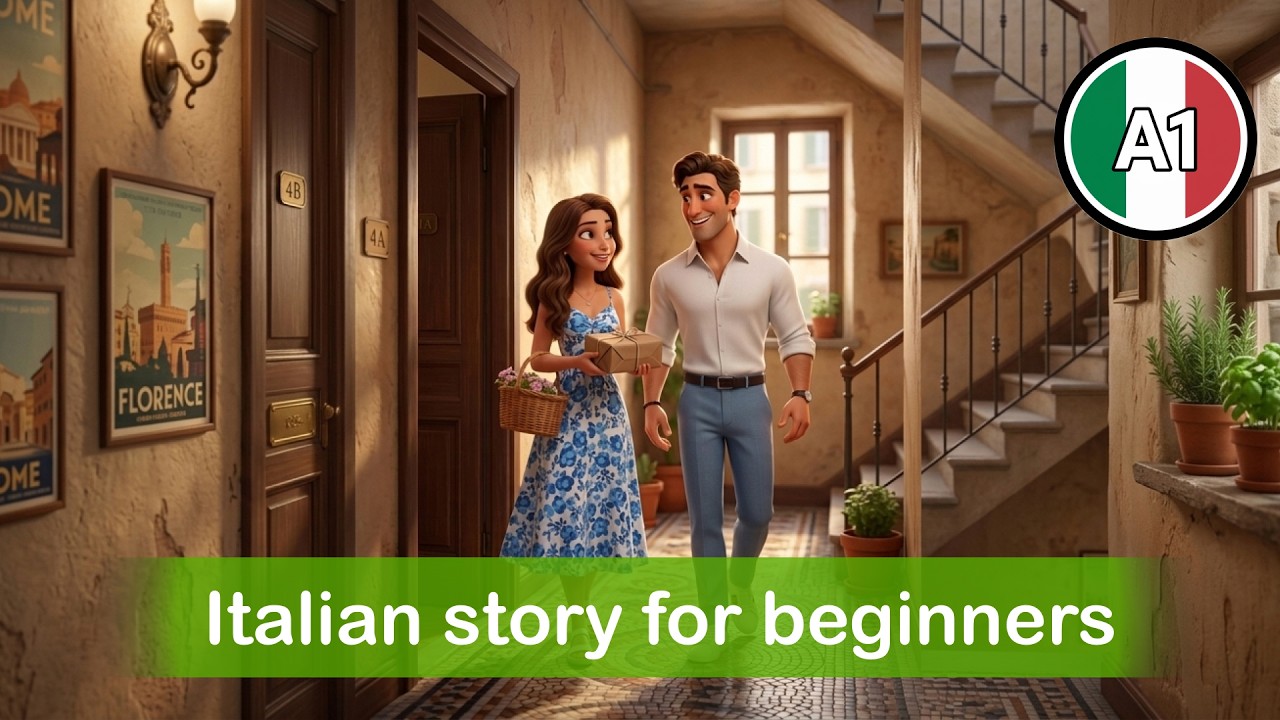
Join Matteo and his girlfriend Giulia, an artist, on an inspiring walk through Rome. In this simple and engaging story for A1-A2 learners, you’ll discover the city’s vibrant palette and learn essential Italian vocabulary for colors, all while practicing the present tense.
💬 Video Transcript
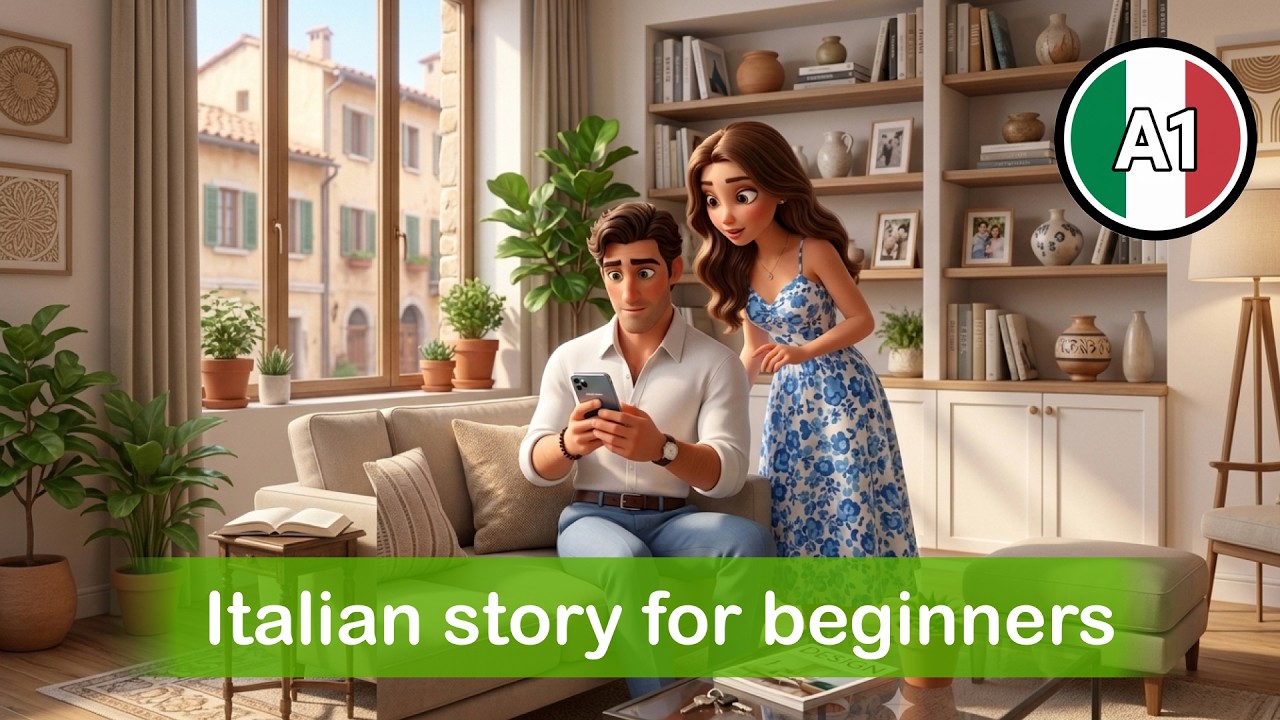
Matteo: Ciao, sono Matteo. Oggi è una bella giornata a Roma. Il sole splende e il cielo è sereno. Entro in salotto e trovo la mia ragazza, Giulia. Lei è un’artista. Davanti a lei, c’è una tela bianca. Giulia guarda la tela, ma non dipinge. Sembra pensierosa.
(Matteo: Hi, I’m Matteo. Today is a beautiful day in Rome. The sun is shining and the sky is clear. I enter the living room and find my girlfriend, Giulia. She is an artist. In front of her, there is a white canvas. Giulia looks at the canvas, but she doesn’t paint. She seems thoughtful.)
Matteo: “Ciao, amore. Tutto bene?”, chiedo.
(Matteo: “Hi, love. Is everything okay?”, I ask.)
Giulia: “Ciao, Matteo. Sì, tutto bene. Ma ho un problema. Voglio dipingere un quadro su Roma, ma non so quali colori usare.”
(Giulia: “Hi, Matteo. Yes, everything’s fine. But I have a problem. I want to paint a picture of Rome, but I don’t know what colors to use.”)
Matteo: Capisco. I colori di Roma sono unici. Allora ho un’idea. “Vieni, usciamo. Facciamo una passeggiata per la città. Cerchiamo i colori di Roma insieme.”
(Matteo: I understand. The colors of Rome are unique. Then I have an idea. “Come on, let’s go out. Let’s take a walk through the city. Let’s look for the colors of Rome together.”)
Giulia: “È un’idea fantastica!”
(Giulia: “That’s a fantastic idea!”)
Matteo: Usciamo di casa. Per prima cosa, guardiamo in alto. “Guarda il cielo”, dico. “È di un colore azzurro speciale.”
(Matteo: We leave the house. First, we look up. “Look at the sky,” I say. “It’s a special light blue color.”)
Matteo: Poi, camminiamo in una piccola via. Vediamo una vecchia automobile parcheggiata.
(Matteo: Then, we walk down a small street. We see an old car parked.)
Giulia: “Questa macchina è gialla”, dice Giulia. “Un giallo molto allegro.”
(Giulia: “This car is yellow,” says Giulia. “A very cheerful yellow.”)
Matteo: Continuiamo la nostra passeggiata e passiamo vicino a un parco. Gli alberi sono alti. Le loro foglie sono di un colore verde brillante. Vediamo anche una vespa che passa veloce. La vespa è rossa.
(Matteo: We continue our walk and pass by a park. The trees are tall. Their leaves are a bright green color. We also see a scooter that passes by quickly. The scooter is red.)
Matteo: Il sole inizia a tramontare. La luce diventa calda. I palazzi antichi cambiano colore. “Guarda”, dico a Giulia. “Quel palazzo è arancione. E quello vicino è rosa.”
(Matteo: The sun begins to set. The light becomes warm. The old buildings change color. “Look,” I say to Giulia. “That building is orange. And the one next to it is pink.”)
Matteo: Decidiamo di bere qualcosa. Ci fermiamo al bar del Signor Franco per un caffè. Il caffè è scuro. “Il colore del caffè è marrone”, dico. “Intenso e forte.”
(Matteo: We decide to have a drink. We stop at Signor Franco’s bar for a coffee. The coffee is dark. “The color of coffee is brown,” I say. “Intense and strong.”)
Matteo: Torniamo a casa. Giulia adesso è molto felice. Prende i suoi pennelli e i suoi colori.
(Matteo: We return home. Giulia is very happy now. She takes her brushes and her colors.)
Giulia: “Grazie, Matteo. Ora ho l’ispirazione. Ho i colori di Roma: l’azzurro del cielo, il giallo della macchina, il verde degli alberi e l’arancione dei palazzi al tramonto.”
(Giulia: “Thank you, Matteo. Now I have inspiration. I have the colors of Rome: the light blue of the sky, the yellow of the car, the green of the trees, and the orange of the buildings at sunset.”)
Matteo: Sono contento. Guardo Giulia, pronta a dipingere il suo quadro. A volte, la migliore ispirazione è proprio fuori dalla porta di casa.
(Matteo: I’m happy. I watch Giulia, ready to paint her picture. Sometimes, the best inspiration is right outside your front door.)
📝 Essential Vocabulary
Here are some key words and phrases from the story. Listen to the pronunciation to improve your speaking.
| Italian | English Translation | Pronunciation |
|---|---|---|
| Un quadro | A painting | |
| Una tela bianca | A white canvas | |
| Pensierosa | Thoughtful / Pensive | |
| I colori | The colors | |
| Il cielo | The sky | |
| Azzurro | Light blue | |
| Giallo | Yellow | |
| Verde | Green | |
| Rosso | Red | |
| Arancione | Orange | |
| Marrone | Brown |
🔍 Grammar Focus
This story is full of useful grammar for beginners. Let’s look at how Italian adjectives work, especially with colors.
Adjective Agreement with Colors
In Italian, adjectives must “agree” with the noun they describe. This means their ending changes based on the noun’s gender (masculine/feminine) and number (singular/plural). Most colors follow this rule.
Notice how the ending of the color changes to match the noun:
una tela bianc**a(a white canvas) - tela is feminine singular, so the adjective ends in -a.il cielo azzurr**o(the light blue sky) - cielo is masculine singular, so the adjective ends in -o.questa macchina è giall**a(this car is yellow) - macchina is feminine singular, ending in -a.la vespa è ross**a(the scooter is red) - vespa is feminine singular, ending in -a.
Some colors, like verde and arancione, have the same ending for both masculine and feminine singular nouns.
un colore verd**e** brillante(a bright green color) - colore is masculine.quel palazzo è arancion**e**(that building is orange) - palazzo is masculine.
🌍 Cultural Tip
arancione (orange) and giallo (yellow), are characteristic of Rome’s historic center. Many buildings are painted in shades of ochre and terracotta, giving the city its unique and ancient glow, especially during sunset (tramonto). This distinct color palette has inspired artists for centuries.🃏 Flip & Learn
Practice the new vocabulary from the story with these flashcards.
The colors of Rome
I colori di Roma
A fantastic idea!
È un'idea fantastica!
The sky is a special light blue color.
Il cielo è di un colore azzurro speciale.
The scooter is red.
La vespa è rossa.
Now I have inspiration.
Ora ho l'ispirazione.
💡 Key Takeaways
Here are the most important points to remember from this lesson:
- Italian Colors: You learned several essential colors:
azzurro(light blue),giallo(yellow),verde(green),rosso(red),arancione(orange), andmarrone(brown). - Adjective Agreement: Remember that descriptive words, including colors, must change their endings to match the gender of the noun they describe (e.g.,
la macchin**a** giall**avs. `il cielo azzurro). - Finding Inspiration: The story shows how simple observation can be a great source of creativity. The best ideas are often right outside your door (
fuori dalla porta di casa). - Simple Conversation: You saw useful phrases for everyday conversation like
Tutto bene?(Is everything okay?),Ho un problema(I have a problem), andHo un'idea(I have an idea).
🎯 Practice Quiz
Test your knowledge of the story and its vocabulary.
Question
Question
Question
✍️ Fill in the Blanks
Let’s test your spelling and memory! Fill in the missing words below. Use correct spelling.
Fill in the blank
Fill in the blank
Support Us
Did you find this lesson helpful? Your support is what makes it possible for us to keep creating free, high-quality educational content.