Talking About Your Home in Italian: Plant Vocabulary & Shopping Dialogue 🪴
Learn Italian vocabulary for home and shopping through a slow, simple dialogue. Follow Matteo and Giulia as they decide to buy the perfect plant for their house.
In this slow Italian conversation, you’ll join Matteo and Giulia as they notice their home is missing a little something. Listen in as they come up with the perfect idea to add some color and life to their space by choosing a new plant. This lesson is perfect for beginners to practice vocabulary related to the home, colors, and making decisions.
💬 Video Transcript
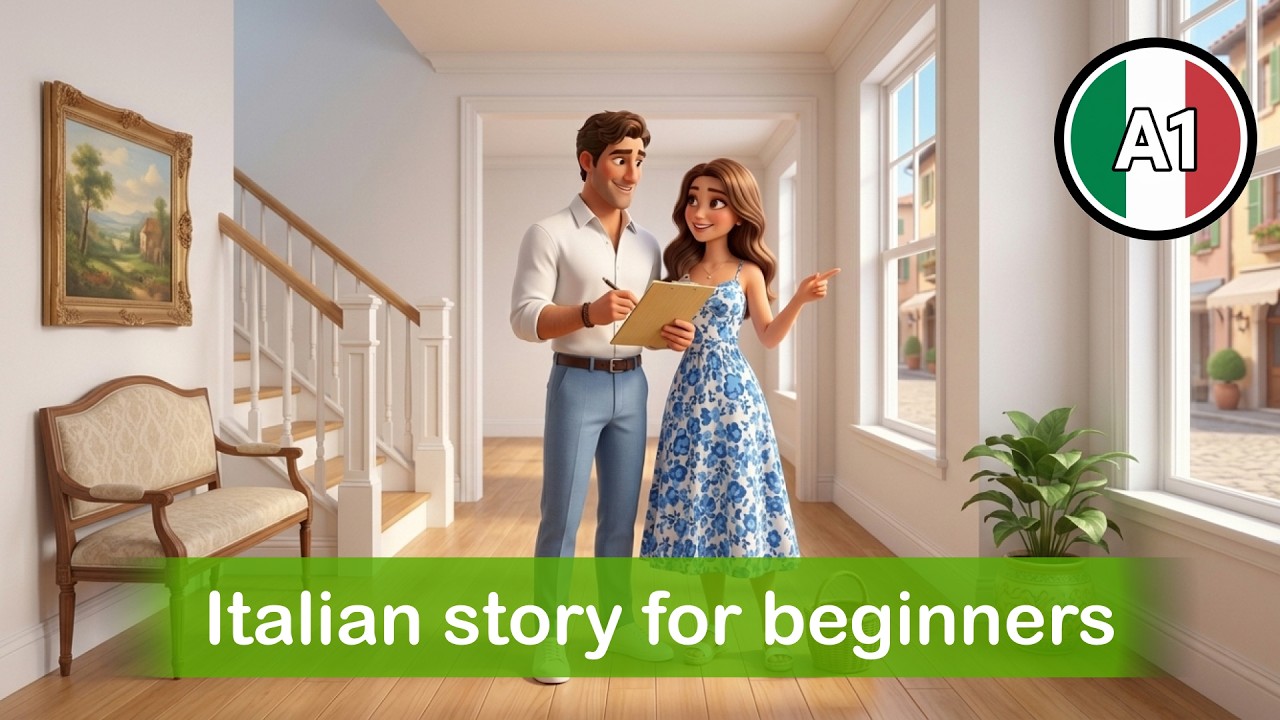
Matteo: Ciao Giulia. Guarda la nostra casa.
(Matteo: Hi Giulia. Look at our house.)
Giulia: Ciao Matteo. Sì, guardo. La nostra casa è bella.
(Giulia: Hi Matteo. Yes, I’m looking. Our house is beautiful.)
Matteo: Sì, è molto bella. Ma…
(Matteo: Yes, it’s very beautiful. But…)
Giulia: Ma cosa, Matteo?
(Giulia: But what, Matteo?)
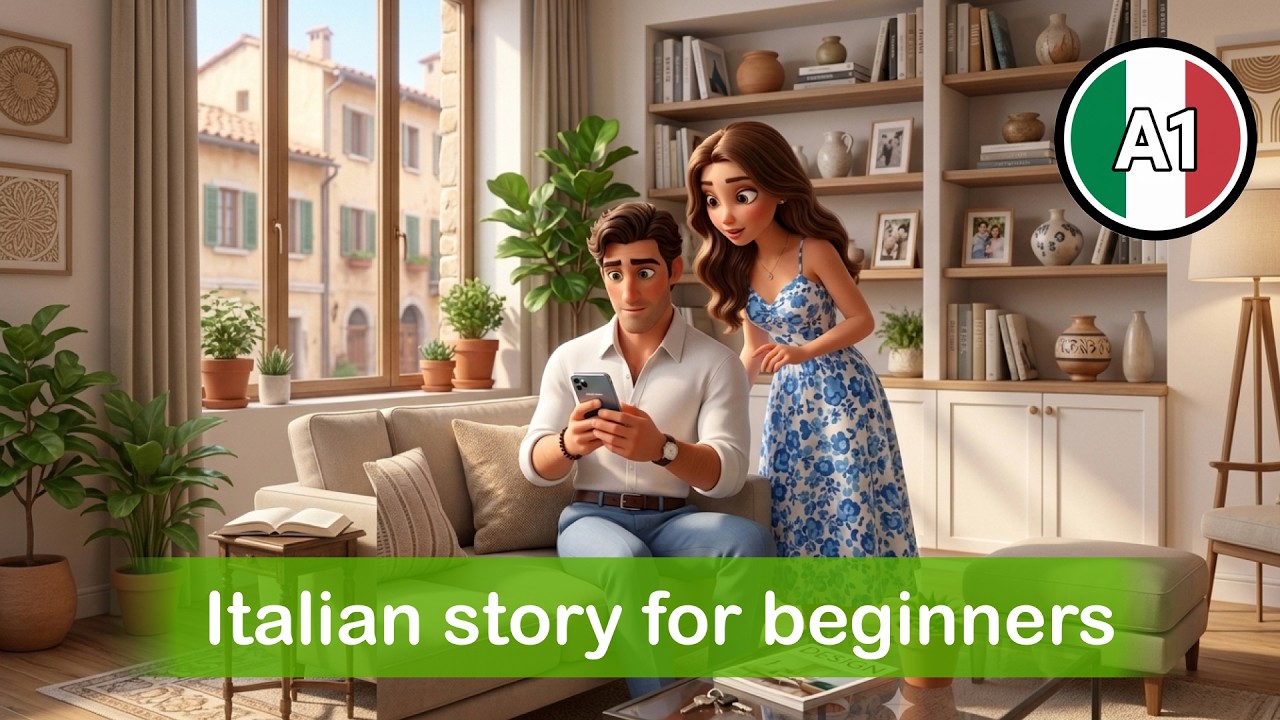
Matteo: Non so. Forse manca qualcosa.
(Matteo: I don’t know. Maybe something is missing.)
Giulia: Manca qualcosa? Cosa manca?
(Giulia: Something is missing? What’s missing?)
Matteo: Manca un po’ di colore. Un po’ di verde.
(Matteo: A bit of color is missing. A bit of green.)
Giulia: Hai ragione! Ho un’idea! Una bellissima idea.
(Giulia: You’re right! I have an idea! A beautiful idea.)
Matteo: Un’idea? Quale idea?
(Matteo: An idea? What idea?)
Giulia: Compriamo una pianta! Una pianta per la casa.
(Giulia: Let’s buy a plant! A plant for the house.)
Matteo: Una pianta! Che bella idea, Giulia! Sì! Una pianta è perfetta.
(Matteo: A plant! What a great idea, Giulia! Yes! A plant is perfect.)
Giulia: Allora, andiamo al negozio di fiori?
(Giulia: So, shall we go to the flower shop?)
Matteo: Certo! Andiamo subito. Che pianta compriamo?
(Matteo: Of course! Let’s go right away. What plant should we buy?)
Giulia: Voglio una pianta grande.
(Giulia: I want a big plant.)
Matteo: Una pianta grande? Sei sicura? La nostra casa non è molto grande.
(Matteo: A big plant? Are you sure? Our house isn’t very big.)
Giulia: Sì, sono sicura. Una bella pianta grande e verde.
(Giulia: Yes, I’m sure. A beautiful big green plant.)
Matteo: Ok. Una pianta grande e verde. Mi piace. Senza fiori?
(Matteo: Ok. A big green plant. I like it. Without flowers?)
Giulia: Hmm, forse con i fiori è meglio. I fiori sono belli.
(Giulia: Hmm, maybe with flowers is better. Flowers are beautiful.)
Matteo: Sì, i fiori sono molto belli. Che colore?
(Matteo: Yes, flowers are very beautiful. What color?)
Giulia: Voglio dei fiori gialli. Il giallo è un colore felice.
(Giulia: I want yellow flowers. Yellow is a happy color.)
Matteo: Sì, il giallo è il colore del sole. È un colore molto felice. Ottima scelta.
(Matteo: Yes, yellow is the color of the sun. It’s a very happy color. Excellent choice.)
Giulia: Allora è deciso. Compriamo una pianta grande con i fiori gialli.
(Giulia: Then it’s decided. We’ll buy a big plant with yellow flowers.)
Matteo: Perfetto. Sarà bellissima nel salotto.
(Matteo: Perfect. It will be beautiful in the living room.)
Giulia: Sì, vicino alla finestra. La pianta ha bisogno di luce.
(Giulia: Yes, near the window. The plant needs light.)
Matteo: Giusto. Molta luce. Sei pronta per andare?
(Matteo: Right. Lots of light. Are you ready to go?)
Giulia: Sono prontissima. Prendo la borsa.
(Giulia: I’m very ready. I’ll get my bag.)
Matteo: Io prendo le chiavi. Non dimentico le chiavi oggi.
(Matteo: I’ll get the keys. I’m not forgetting the keys today.)
Giulia: Molto bene, Matteo. Andiamo.
(Giulia: Very good, Matteo. Let’s go.)
Matteo: Andiamo a comprare la nostra pianta.
(Matteo: Let’s go buy our plant.)
Giulia: La nostra casa sarà ancora più bella con una pianta nuova.
(Giulia: Our house will be even more beautiful with a new plant.)
Matteo: Sì, molto più bella. Sono contento.
(Matteo: Yes, much more beautiful. I’m happy.)
📝 Essential Vocabulary
Here are some key words and phrases from the dialogue that will help you describe your home and make plans in Italian.
| Target Language | English Translation | Pronunciation |
|---|---|---|
| la casa | the house | |
| manca qualcosa | something is missing | |
| una pianta | a plant | |
| un’idea | an idea | |
| negozio di fiori | flower shop | |
| i fiori | the flowers | |
| il colore | the color | |
| luce | light | |
| le chiavi | the keys | |
| andiamo | let’s go |
🔍 Grammar Focus
Let’s look at two important grammar points that appear in the dialogue between Matteo and Giulia.
1. Adjective Agreement (Gender and Number)
In Italian, adjectives must change their endings to “agree” with the gender (masculine/feminine) and number (singular/plural) of the noun they describe.
Notice how the adjective bello (beautiful) changes:
- La nostra casa è bella. (The house,
casa, is feminine singular, so the adjective ends in-a.) - I fiori sono belli. (The flowers,
fiori, are masculine plural, so the adjective ends in-i.)
Some adjectives, like grande (big) and verde (green), have the same form for both masculine and feminine in the singular, ending in -e.
- Una pianta grande e verde. (
piantais feminine, but the adjective ends in-e.)
Look at how the adjective for color, giallo (yellow), changes for the plural noun fiori:
- Voglio dei fiori gialli. (I want some yellow flowers.)
2. Using the Verb Mancare (To Be Missing)
The verb mancare is used to say that something is missing. It works a bit like the verb piacere (to like). The thing that is missing is the subject of the sentence.
When Matteo says the house is missing something, he says:
- Manca qualcosa. (Something is missing.)
- Manca un po’ di colore. (A bit of color is missing.)
In these examples, “something” (qualcosa) and “a bit of color” (un po' di colore) are the subjects, so the verb mancare is in the third-person singular form (manca). If multiple things were missing, you would use the plural form, mancano.
🌍 Cultural Tip
🃏 Flip & Learn
Use these flashcards to test your memory of key phrases from the conversation.
Something is missing
Manca qualcosa
Let's buy a plant!
Compriamo una pianta!
A big green plant
Una pianta grande e verde
Yellow flowers
Fiori gialli
The plant needs light
La pianta ha bisogno di luce
💡 Key Takeaways
Here are the most important points to remember from this lesson:
- Making Suggestions: You can suggest an activity by using the
noi(we) form of a verb. For example, Giulia saysCompriamo una pianta!which means “Let’s buy a plant!” - Adjective Agreement is Key: Always remember to match the ending of your adjectives to the noun’s gender and number (e.g.,
casa bella,fiori belli). - Describing in Italian: You learned vocabulary to describe objects with size (
grande), color (verde,giallo), and quality (bello). - Expressing “Missing”: The verb
mancareis the most common way to say something is missing or lacking.Manca un po' di colore.(A bit of color is missing.) - Essential Home Vocabulary: This dialogue introduced important words for your home, like
casa(house),pianta(plant),fiori(flowers), andfinestra(window).
🎯 Practice Quiz
Check your understanding with a few questions about the dialogue.
Question
Question
Question
✍️ Fill in the Blanks
Let’s test your spelling and memory! Fill in the missing words below. Use correct spelling.
Fill in the blank
Fill in the blank
Support Us
Did you find this lesson helpful? Your support is what makes it possible for us to keep creating free, high-quality educational content.