Talking About Home Decor in Italian: Furniture & Colors 🛋️
Learn essential Italian for beginners by listening to a real conversation about choosing a bookshelf. Practice vocabulary for furniture, colors, and making decisions together.
In this lesson, you’ll join Giulia and Matteo as they solve a common household problem: too many books and not enough space! You will learn essential vocabulary for furniture and home decor, how to describe objects using adjectives, and how to express your preferences and come to an agreement in natural, everyday Italian.
💬 Video Transcript
Matteo: Ciao Giulia.
(Matteo: Hi Giulia.)
Giulia: Ciao Matteo. Come stai?
(Giulia: Hi Matteo. How are you?)
Matteo: Sto bene, grazie. E tu?
(Matteo: I’m well, thanks. And you?)
Giulia: Sto bene. Ma… sei un po’ pensieroso.
(Giulia: I’m well. But… you’re a bit thoughtful.)
Matteo: Sì, un po’. Guarda qui, Giulia.
(Matteo: Yes, a little. Look here, Giulia.)
Giulia: Cosa? Cosa devo guardare?
(Giulia: What? What should I look at?)
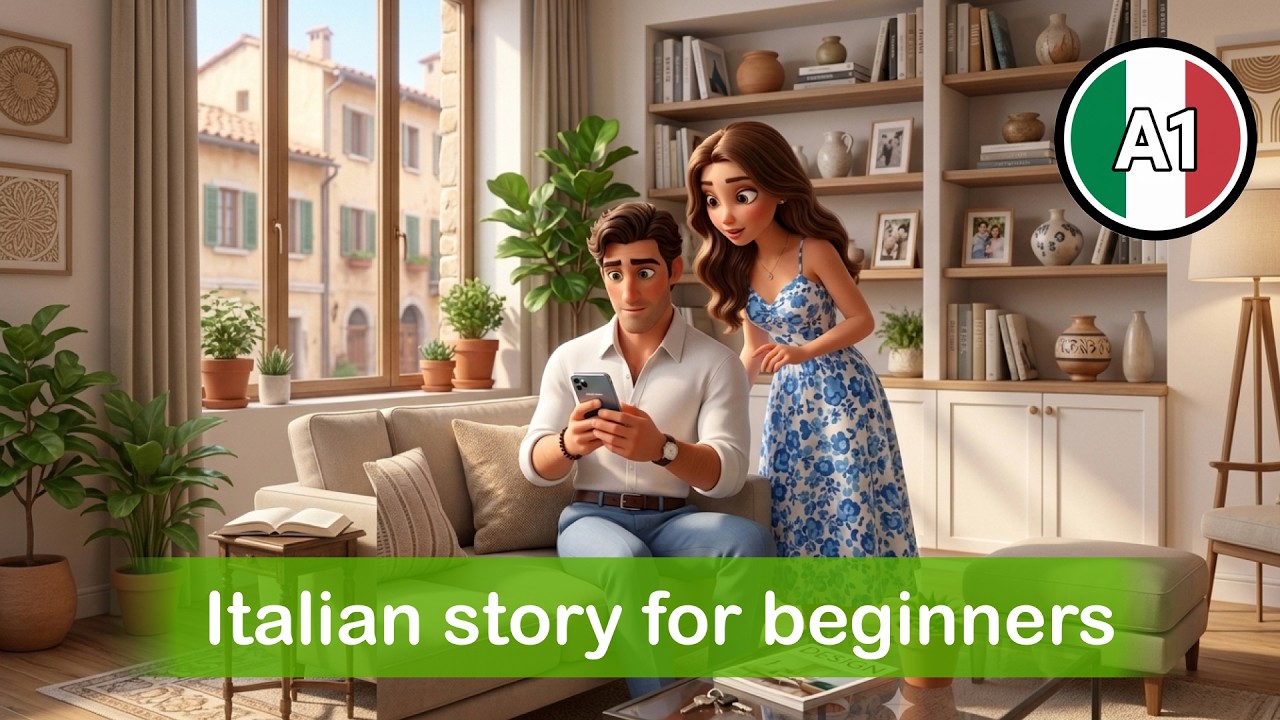
Matteo: Guarda i libri. I nostri libri.
(Matteo: Look at the books. Our books.)
Giulia: Ah, i libri! Sono tanti. Mi piacciono molto.
(Giulia: Ah, the books! There are so many. I like them a lot.)
Matteo: Sì, sono tanti libri. Tanti libri belli. Ma c’è un problema.
(Matteo: Yes, there are many books. Many beautiful books. But there is a problem.)
Giulia: Un problema? Quale problema?
(Giulia: A problem? What problem?)
Matteo: I libri sono per terra. Non abbiamo spazio.
(Matteo: The books are on the floor. We don’t have space.)
Giulia: Oh, è vero. Non c’è molto spazio per i libri.
(Giulia: Oh, it’s true. There isn’t much space for the books.)
Matteo: Abbiamo bisogno di una libreria. Una nuova libreria.
(Matteo: We need a bookshelf. A new bookshelf.)
Giulia: Una libreria? Sì! È una buona idea, Matteo. Un’ottima idea.
(Giulia: A bookshelf? Yes! It’s a good idea, Matteo. An excellent idea.)
Matteo: Sì. Una libreria per i nostri libri. Ma come la vuoi?
(Matteo: Yes. A bookshelf for our books. But how do you want it?)
Giulia: Come deve essere la libreria? Grande o piccola?
(Giulia: What should the bookshelf be like? Big or small?)
Matteo: Abbiamo tanti libri. Abbiamo bisogno di una libreria grande. Molto grande.
(Matteo: We have many books. We need a big bookshelf. Very big.)
Giulia: Sì, sono d’accordo. Una libreria grande. E il colore?
(Giulia: Yes, I agree. A big bookshelf. And the color?)
Matteo: Il colore… Che colore ti piace?
(Matteo: The color… What color do you like?)
Giulia: Non so. A te che colore piace?
(Giulia: I don’t know. What color do you like?)
Matteo: A me piace il marrone. Il colore del legno. Una libreria marrone è calda, accogliente.
(Matteo: I like brown. The color of wood. A brown bookshelf is warm, cozy.)
Giulia: Marrone? Hmm… non sono sicura. A me piace il bianco.
(Giulia: Brown? Hmm… I’m not sure. I like white.)
Matteo: Bianco? Perché bianco?
(Matteo: White? Why white?)
Giulia: Il bianco è moderno. È luminoso. Il nostro salotto è moderno.
(Giulia: White is modern. It’s bright. Our living room is modern.)
Matteo: È vero. Il salotto è moderno. Ma il marrone è bello.
(Matteo: It’s true. The living room is modern. But brown is beautiful.)
Giulia: Sì, ma una libreria bianca è molto elegante. Una libreria bianca e grande. È perfetta.
(Giulia: Yes, but a white bookshelf is very elegant. A white and big bookshelf. It’s perfect.)
Matteo: Ok, pensiamo. Dove mettiamo la libreria?
(Matteo: Ok, let’s think. Where do we put the bookshelf?)
Giulia: La mettiamo nel salotto. Lì, vicino al divano.
(Giulia: We’ll put it in the living room. There, near the sofa.)
Matteo: Vicino al divano? C’è molto spazio lì. È un buon posto.
(Matteo: Near the sofa? There is a lot of space there. It’s a good spot.)
Giulia: Sì. Allora, una libreria grande, bianca, vicino al divano. Ti piace l’idea?
(Giulia: Yes. So, a big, white bookshelf, near the sofa. Do you like the idea?)
Matteo: Una libreria grande… Sì. Vicino al divano… Sì. Bianca…
(Matteo: A big bookshelf… Yes. Near the sofa… Yes. White…)
Giulia: Sì, bianca! È perfetta per il nostro salotto. Immagina!
(Giulia: Yes, white! It’s perfect for our living room. Imagine!)
Matteo: Ok. Va bene. Hai ragione tu. Una libreria bianca è meglio. È più moderna ed elegante.
(Matteo: Ok. Alright. You are right. A white bookshelf is better. It’s more modern and elegant.)
Giulia: Fantastico! Allora siamo d’accordo. Una libreria grande e bianca.
(Giulia: Fantastic! So we agree. A big and white bookshelf.)
Matteo: Sì. Sono contento. Così risolviamo il problema dei libri per terra.
(Matteo: Yes. I’m happy. This way we solve the problem of the books on the floor.)
Giulia: Benissimo. Allora, domani andiamo a comprare la libreria?
(Giulia: Great. So, tomorrow do we go to buy the bookshelf?)
Matteo: Sì! Domani andiamo insieme. Sono felice.
(Matteo: Yes! Tomorrow we’ll go together. I’m happy.)
Giulia: Anch’io sono felice. La nostra casa è sempre più bella.
(Giulia: I’m happy too. Our home is getting more and more beautiful.)
📝 Essential Vocabulary
Here are some key words and phrases from the video. Listen and practice the pronunciation.
| Italian | English Translation | Pronunciation |
|---|---|---|
| i libri | the books | |
| un problema | a problem | |
| una libreria | a bookshelf | |
| abbiamo bisogno di | we need | |
| grande | big / large | |
| il colore | the color | |
| marrone | brown | |
| bianco | white | |
| il salotto | the living room | |
| vicino al | near the |
🔍 Grammar Focus
Let’s look at two important grammar points from Matteo and Giulia’s conversation.
1. Adjective Agreement (Gender & Number)
In Italian, adjectives must “agree” with the noun they describe. This means their ending changes to match the noun’s gender (masculine/feminine) and number (singular/plural).
Notice how the adjectives change in the dialogue:
- Una libreria grande:
libreriais a singular feminine noun. Adjectives ending in -e, likegrande, have the same form for both masculine and feminine singular. - Tanti libri belli:
libriis a plural masculine noun, so the adjectivebellobecomesbelli. - Una libreria bianca:
libreriais feminine singular, so the adjectivebiancochanges tobianca. - Il salotto è moderno:
salottois a masculine singular noun, so the adjectivemodernoends in -o.
2. Expressing Likes with “Piacere”
The verb piacere (to be pleasing to) is used to say you like something. Its structure is a bit different from English.
Mi piaccionoi libri: I like the books. Usepiacciono(plural) when the thing you like is plural (i libri). Literally, this means “The books are pleasing to me.”Ti piaceil colore?: Do you like the color? Usepiace(singular) when the thing you like is singular (il colore).A me piaceil marrone: I like brown.A meis used for emphasis. The structure is the same:piaceis used becauseil marroneis singular.
🌍 Cultural Tip
🃏 Flip & Learn
Practice the key phrases from this lesson.
We need a bookshelf.
Abbiamo bisogno di una libreria.
What color do you like?
Che colore ti piace?
I agree.
Sono d'accordo.
The living room is modern.
Il salotto è moderno.
The books are on the floor.
I libri sono per terra.
💡 Key Takeaways
Here are the most important points to remember from this lesson:
- Adjectives must agree: Always match the ending of your adjective to the gender and number of the noun (e.g.,
libreria bianca,salotto moderno). - Expressing needs: To say you need something, use the phrase
avere bisogno di, like in Matteo’s line, “Abbiamo bisogno di una libreria.” - Using
piacerefor likes: Remember to usepiacefor singular things (mi piace il bianco) andpiaccionofor plural things (mi piacciono i libri). - Negotiating and Agreeing: You learned phrases like
Sono d'accordo(I agree),È una buona idea(It’s a good idea), andHai ragione tu(You are right) to discuss and agree on a plan.
🎯 Practice Quiz
Test your understanding of the conversation.
Question
Question
Question
✍️ Fill in the Blanks
Let’s test your spelling and memory! Fill in the missing words below. Use correct spelling.
Fill in the blank
Fill in the blank
Support Us
Did you find this lesson helpful? Your support is what makes it possible for us to keep creating free, high-quality educational content.