Buying Furniture in Italian: House Vocabulary & Dialogue 🛋️
Learn how to talk about buying furniture and naming household items in Italian. Master essential A1 vocabulary for the living room, bedroom, and study.
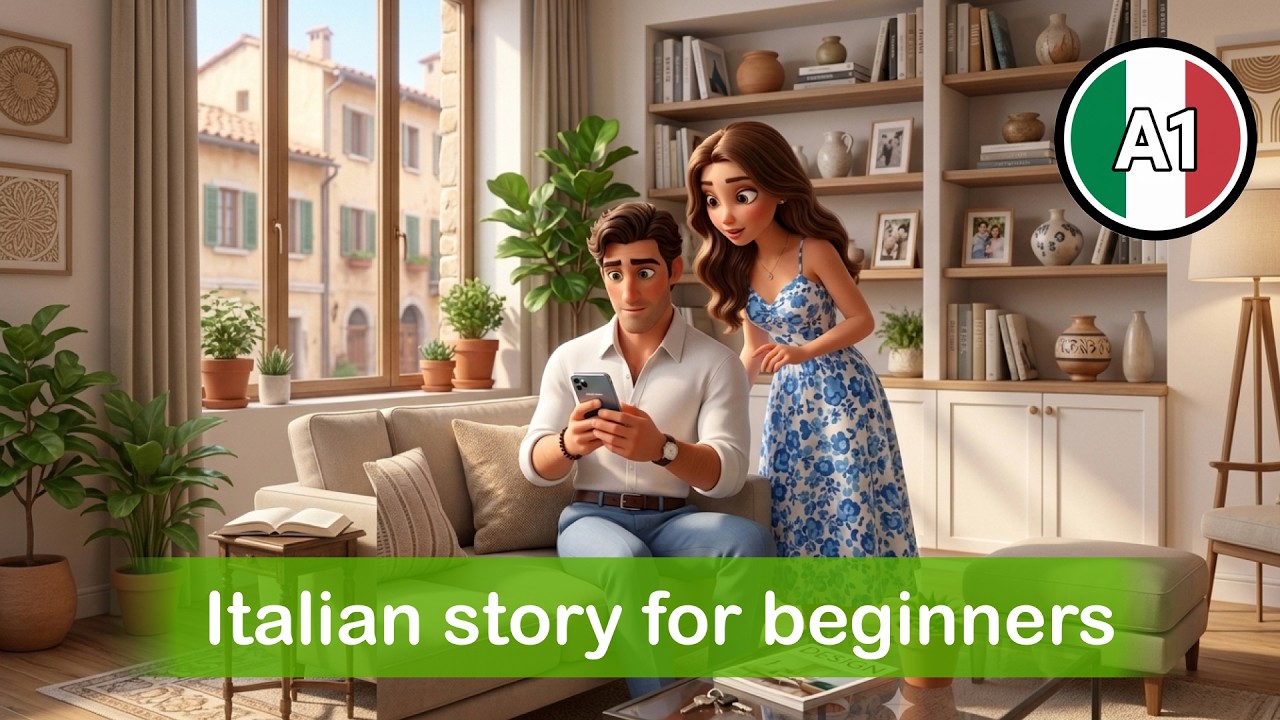
Moving into a new home is exciting, but trying to furnish it in a new language can be a challenge! In this lesson, you will join Matteo and Giulia as they plan out the furniture they need for their new, empty house. You will learn essential A1 Italian vocabulary for different rooms and discover how to clearly express what you need to buy.
💬 Video Transcript
Matteo: Ciao, Giulia! La nostra nuova casa è bella, ma è molto vuota.
(Matteo: Hi, Giulia! Our new house is beautiful, but it’s very empty.)
Giulia: Ciao, Matteo! È vero. La casa è vuota. Non ci sono mobili.
(Giulia: Hi, Matteo! It’s true. The house is empty. There is no furniture.)
Matteo: Dobbiamo comprare i mobili nuovi per la casa. Facciamo una lista?
(Matteo: We have to buy new furniture for the house. Shall we make a list?)
Giulia: Ottima idea, Matteo! Facciamo una lista. Cominciamo dal soggiorno.
(Giulia: Excellent idea, Matteo! Let’s make a list. Let’s start with the living room.)
Matteo: Bene, il soggiorno. Prima di tutto, ci serve un divano. Un divano grande e comodo.
(Matteo: Good, the living room. First of all, we need a sofa. A big and comfortable sofa.)
Giulia: Sì, un divano. E vicino al divano, voglio una poltrona. Una poltrona comoda per leggere.
(Giulia: Yes, a sofa. And near the sofa, I want an armchair. A comfortable armchair for reading.)
Matteo: Perfetto. Un divano e una poltrona. Poi, ci serve un tavolo per mangiare.
(Matteo: Perfect. A sofa and an armchair. Then, we need a table to eat.)
Giulia: Un tavolo grande. E con il tavolo, ci servono le sedie. Almeno sei sedie.
(Giulia: A big table. And with the table, we need chairs. At least six chairs.)
Matteo: Certo. Un tavolo e le sedie. Cosa manca in soggiorno?
(Matteo: Sure. A table and the chairs. What is missing in the living room?)
Giulia: Manca una libreria! Una libreria alta per tutti i nostri libri.
(Giulia: A bookcase is missing! A tall bookcase for all our books.)
Matteo: Giusto. Una libreria. E al centro del soggiorno, mettiamo un tavolino. Un piccolo tavolino per il caffè.
(Matteo: Right. A bookcase. And in the center of the living room, we’ll put a small table. A small coffee table.)
Giulia: Che bella idea! E sotto il tavolino, mettiamo un grande tappeto. Un tappeto morbido e caldo.
(Giulia: What a nice idea! And under the small table, we’ll put a large rug. A soft and warm rug.)
Matteo: Ottimo. Ripetiamo i mobili del soggiorno: divano, poltrona, tavolo, sedia, libreria, tavolino e tappeto.
(Matteo: Excellent. Let’s repeat the living room furniture: sofa, armchair, table, chair, bookcase, small table, and rug.)
Giulia: Sono sette mobili per il soggiorno! Ora, pensiamo alla camera da letto.
(Giulia: That’s seven pieces of furniture for the living room! Now, let’s think about the bedroom.)
Matteo: Il mobile più importante per la camera è il letto! Un letto matrimoniale.
(Matteo: The most important piece of furniture for the bedroom is the bed! A double bed.)
Giulia: Ovviamente, un letto. E vicino al letto, ci serve un comodino per te e un comodino per me.
(Giulia: Obviously, a bed. And near the bed, we need a nightstand for you and a nightstand for me.)
Matteo: Va bene, due comodini. E per mettere i vestiti?
(Matteo: All right, two nightstands. And to put the clothes?)
Giulia: Abbiamo bisogno di un armadio. Un armadio molto grande.
(Giulia: We need a wardrobe. A very large wardrobe.)
Matteo: Sì, un armadio per i vestiti lunghi. E per i vestiti piccoli, ci serve una cassettiera.
(Matteo: Yes, a wardrobe for long clothes. And for small clothes, we need a chest of drawers.)
Giulia: Una cassettiera è molto utile. Hai ragione.
(Giulia: A chest of drawers is very useful. You are right.)
Matteo: Manca ancora una cosa in camera da letto. Uno specchio!
(Matteo: One more thing is missing in the bedroom. A mirror!)
Giulia: Giusto, uno specchio grande per guardarsi la mattina.
(Giulia: Right, a large mirror to look at oneself in the morning.)
Matteo: Ripetiamo i mobili per la camera: letto, comodino, armadio, cassettiera e specchio. Sono cinque mobili.
(Matteo: Let’s repeat the bedroom furniture: bed, nightstand, wardrobe, chest of drawers, and mirror. That’s five pieces of furniture.)
Giulia: Sette mobili in soggiorno più cinque mobili in camera… sono dodici mobili! Manca la stanza dello studio.
(Giulia: Seven pieces of furniture in the living room plus five in the bedroom… that’s twelve pieces of furniture! The study room is missing.)
Matteo: Nello studio ci serve una scrivania per lavorare al computer.
(Matteo: In the study, we need a desk to work at the computer.)
Giulia: Una bella scrivania di legno. E sopra la scrivania, serve una lampada. Una lampada per leggere la sera.
(Giulia: A beautiful wooden desk. And on the desk, a lamp is needed. A lamp to read in the evening.)
Matteo: Esatto, una lampada. E per sedersi alla scrivania? Prendiamo un’altra sedia?
(Matteo: Exactly, a lamp. And to sit at the desk? Shall we get another chair?)
Giulia: No, per la scrivania voglio uno sgabello. Uno sgabello alto e moderno.
(Giulia: No, for the desk I want a stool. A tall, modern stool.)
Matteo: Uno sgabello? Va bene, mi piace l’idea dello sgabello!
(Matteo: A stool? All right, I like the idea of the stool!)
Giulia: Ripetiamo i mobili dello studio: scrivania, lampada, sgabello. Tre mobili.
(Giulia: Let’s repeat the study furniture: desk, lamp, stool. Three pieces of furniture.)
Matteo: Dodici mobili più tre mobili… in totale abbiamo quindici mobili sulla lista!
(Matteo: Twelve pieces of furniture plus three pieces of furniture… in total we have fifteen pieces of furniture on the list!)
Giulia: Quindici tipi di mobili. La lista è completa e perfetta.
(Giulia: Fifteen types of furniture. The list is complete and perfect.)
Matteo: Siamo pronti. Andiamo subito al negozio di mobili!
(Matteo: We are ready. Let’s go immediately to the furniture store!)
📝 Essential Vocabulary
| Target Language | English Translation | Pronunciation |
|---|---|---|
| I mobili | Furniture | |
| Il soggiorno | Living room | |
| Il divano | Sofa | |
| La poltrona | Armchair | |
| La libreria | Bookcase | |
| La camera da letto | Bedroom | |
| L’armadio | Wardrobe | |
| Lo specchio | Mirror | |
| La scrivania | Desk | |
| Lo sgabello | Stool |
🔍 Grammar Focus
Expressing Need with “Servire” vs “Avere bisogno di”
When making a shopping list for your home, you will frequently need to express what you are missing or what is required. In Italian, there are two very common ways to say “we need”, both of which appear in our dialogue.
1. Using the verb Servire The verb servire acts similarly to piacere. Instead of saying “I need a sofa,” Italians say “a sofa is necessary to me” (mi serve). For “we need,” you use ci (to us). The verb ending must match the item(s) you need, not the person who needs them!
- If you need a singular item: ci serve un divano (we need a sofa).
- If you need plural items: ci servono le sedie (we need chairs).
2. Using Avere bisogno di This literally translates to “to have need of.” Unlike servire, this verb conjugates normally to match the subject (the person who has the need).
- We need: Abbiamo bisogno di un armadio (We need a wardrobe).
🌍 Cultural Tip
🃏 Flip & Learn
Furniture
I mobili
Armchair
La poltrona
Bookcase
La libreria
Wardrobe
L'armadio
Chest of drawers
La cassettiera
💡 Key Takeaways
- Rooms of the house: Learn to categorize your shopping lists by room, such as il soggiorno (living room), la camera da letto (bedroom), and lo studio (study).
- Expressing needs: Use ci serve (singular) and ci servono (plural) to state what items are required for your household.
- Alternative phrasing: Remember that abbiamo bisogno di is a direct, useful alternative for expressing necessity.
- Adjective placement: Notice how descriptive words follow the noun they modify, such as un tappeto morbido (a soft rug) and uno specchio grande (a large mirror).
🎯 Practice Quiz
Question
Question
Question
✍️ Fill in the Blanks
Let’s test your spelling and memory! Fill in the missing words below. Use correct spelling.
Fill in the blank
Fill in the blank
Support Us
Did you find this lesson helpful? Your support is what makes it possible for us to keep creating free, high-quality educational content.