Talking About Home and Tools in Italian: Household Story & Vocabulary 🔨
Learn essential Italian vocabulary for home and tools with this simple story about a clever problem. Perfect for A1-A2 learners to practice the present tense.
In this lesson, you’ll improve your Italian by following a simple, real-life story. Join Matteo and Giulia as they try to hang a painting and learn key vocabulary for household items, tools, and creative problem-solving. This story is perfect for practicing the Italian present tense in a natural context.
💬 Video Transcript
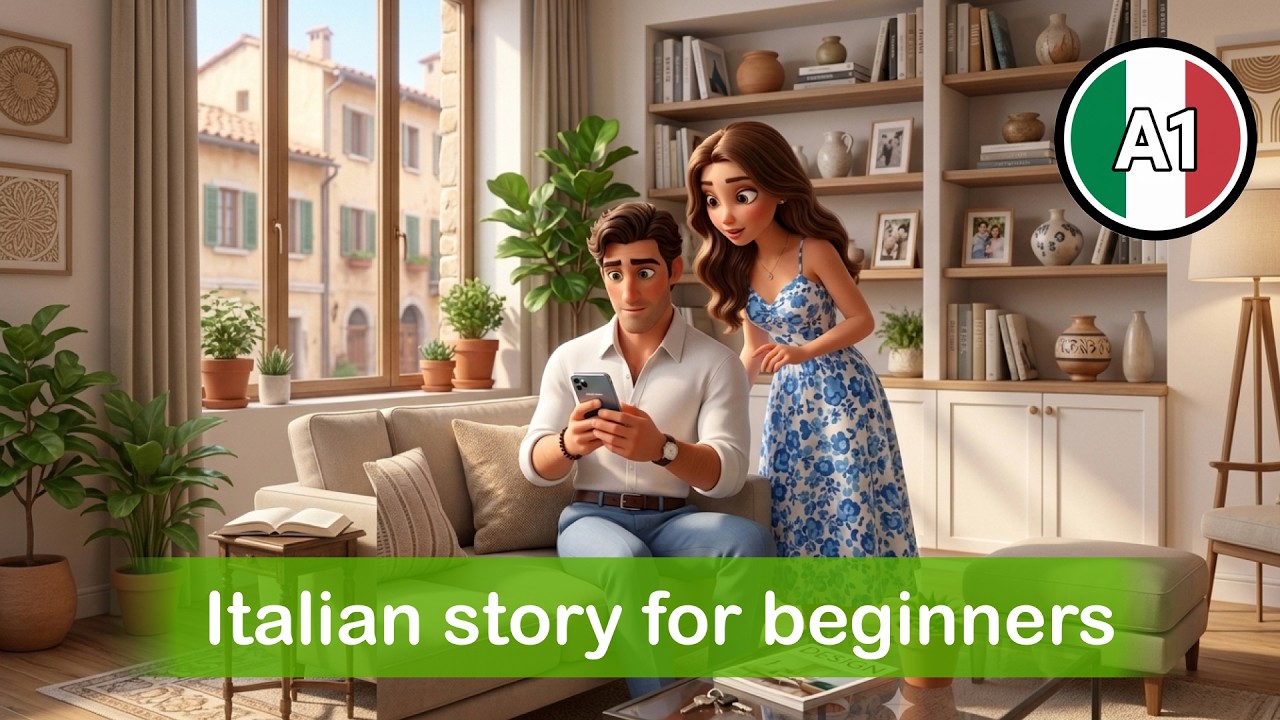
Matteo: Questa mattina, io e Giulia siamo a casa. È una bella giornata di sole a Roma. Giulia ha una sorpresa per me.
(Matteo: This morning, Giulia and I are at home. It’s a beautiful sunny day in Rome. Giulia has a surprise for me.)
Giulia: ‘Matteo, guarda!’, dice. Ha in mano un quadro nuovo. È un quadro bellissimo, con il mare blu e il cielo azzurro.
(Giulia: ‘Matteo, look!’, she says. She has a new painting in her hand. It’s a beautiful painting, with the blue sea and the light blue sky.)
Matteo: ‘È stupendo, amore! Dove lo mettiamo?’, chiedo io.
(Matteo: ‘It’s wonderful, love! Where do we put it?’, I ask.)
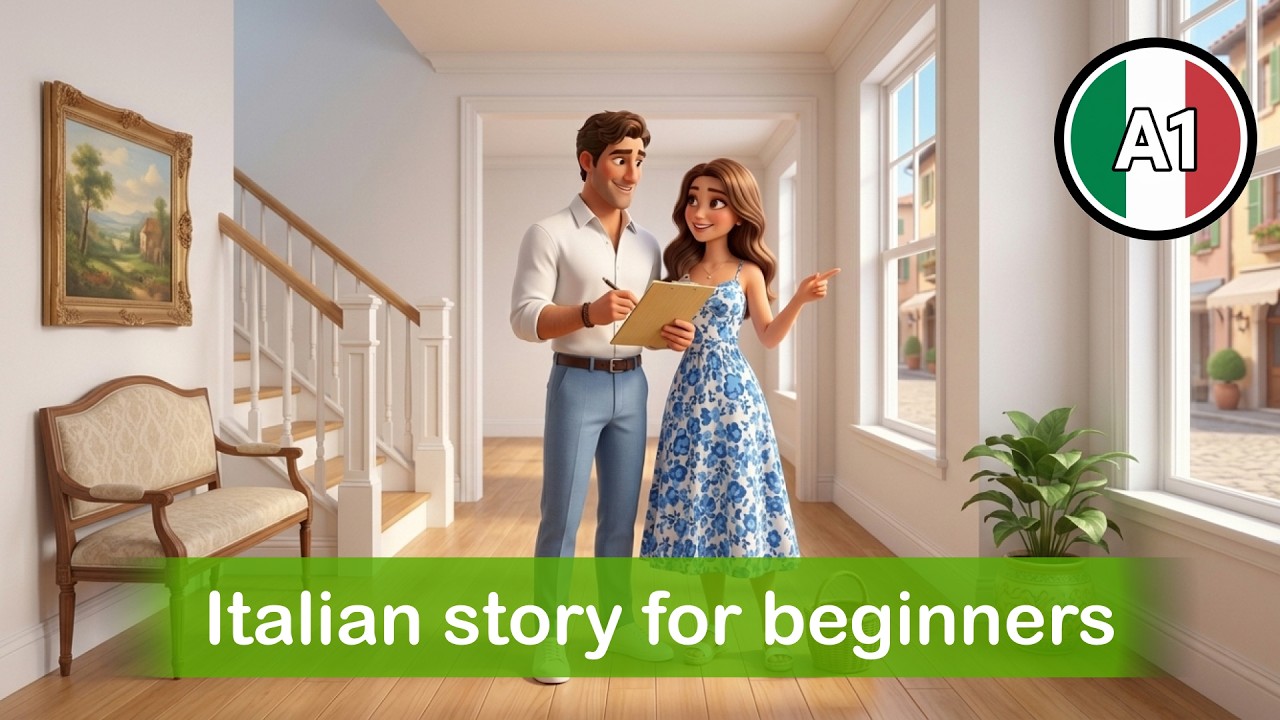
Giulia: Giulia sorride e indica una parete bianca nel salotto. ‘Voglio appenderlo qui. È perfetto.’
(Giulia: Giulia smiles and points to a white wall in the living room. ‘I want to hang it here. It’s perfect.’)
Matteo: ‘Ottima idea!’, dico. ‘Prendo il martello e un chiodo.’
(Matteo: ‘Excellent idea!’, I say. ‘I’ll get the hammer and a nail.’)
Matteo: Vado a cercare nella scatola degli attrezzi. Cerco, cerco… ma non trovo niente. La scatola è quasi vuota.
(Matteo: I go to look in the toolbox. I search, I search… but I don’t find anything. The box is almost empty.)
Matteo: ‘Giulia, abbiamo un problema’, dico. ‘Non abbiamo un martello. E non abbiamo chiodi.’
(Matteo: ‘Giulia, we have a problem’, I say. ‘We don’t have a hammer. And we don’t have any nails.’)
Giulia: Giulia mi guarda. ‘Oh no. E adesso?’
(Giulia: Giulia looks at me. ‘Oh no. And now what?’)
Matteo: Io sono un uomo ottimista. ‘Non ti preoccupare’, dico. ‘Risolvo io.’
(Matteo: I am an optimistic man. ‘Don’t worry’, I say. ‘I’ll solve it.’)
Matteo: Trovo un piccolo chiodo in un cassetto della cucina. Solo uno. ‘Ho il chiodo! Adesso penso al martello.’
(Matteo: I find a small nail in a kitchen drawer. Just one. ‘I have the nail! Now I’ll think about the hammer.’)
Matteo: Provo a spingere il chiodo nel muro con il dito. ‘Ahi!’, che male. Non funziona.
(Matteo: I try to push the nail into the wall with my finger. ‘Ouch!’, that hurts. It doesn’t work.)
Giulia: Giulia ride. ‘Matteo, per favore, non farti male!’
(Giulia: Giulia laughs. ‘Matteo, please, don’t hurt yourself!’)
Matteo: Sono un po’ frustrato. ‘Ok, ho bisogno di una pausa. E di un caffè.’
(Matteo: I’m a little frustrated. ‘Ok, I need a break. And a coffee.’)
Matteo: Esco di casa e vado al bar del Signor Franco. È il mio bar preferito.
(Matteo: I leave the house and go to Signor Franco’s café. It’s my favorite café.)
Matteo: ‘Buongiorno, Signor Franco’, dico.
(Matteo: ‘Good morning, Signor Franco’, I say.)
Signor Franco: ‘Buongiorno, Matteo’, risponde lui, mentre pulisce la macchina del caffè. ‘Il solito?’
(Signor Franco: ‘Good morning, Matteo’, he replies, while cleaning the coffee machine. ‘The usual?’)
Matteo: ‘Sì, grazie. Un cappuccino.’
(Matteo: ‘Yes, thank you. A cappuccino.’)
Matteo: Mentre aspetto, penso al quadro. Ho una faccia un po’ preoccupata.
(Matteo: While I wait, I think about the painting. I have a bit of a worried face.)
Signor Franco: Il Signor Franco mi guarda. Lui capisce sempre tutto. ‘Problemi, ragazzo?’
(Signor Franco: Signor Franco looks at me. He always understands everything. ‘Problems, kid?’)
Matteo: ‘Un problema piccolo, Signor Franco. Devo appendere un quadro per Giulia, ma non ho un martello.’
(Matteo: ‘A small problem, Signor Franco. I have to hang a painting for Giulia, but I don’t have a hammer.’)
Signor Franco: Lui mi osserva in silenzio per un momento. Poi, fa un piccolo sorriso.
(Signor Franco: He observes me in silence for a moment. Then, he gives a little smile.)
Signor Franco: ‘Non sempre serve un martello’, dice con la sua voce calma. Apre un cassetto e prende un chiodo. ‘Ecco un chiodo buono.’
(Signor Franco: ‘You don’t always need a hammer’, he says with his calm voice. He opens a drawer and takes out a nail. ‘Here’s a good nail.’)
Matteo: ‘Grazie, ma… il martello?’, chiedo io.
(Matteo: ‘Thanks, but… the hammer?’, I ask.)
Signor Franco: Signor Franco prende una tazza da caffè, una di quelle vecchie e pesanti. La gira. ‘Usa il fondo di una tazza pesante. È duro. Funziona.’
(Signor Franco: Signor Franco takes a coffee cup, one of those old, heavy ones. He turns it over. ‘Use the bottom of a heavy cup. It’s hard. It works.’)
Matteo: Io lo guardo sorpreso. Che idea semplice e geniale! ‘Grazie mille, Signor Franco! Lei è un genio!’
(Matteo: I look at him, surprised. What a simple and brilliant idea! ‘Thanks a million, Signor Franco! You are a genius!’)
Signor Franco: Lui fa un cenno con la testa e mi dà il mio cappuccino. ‘Adesso vai. Il quadro aspetta.’
(Signor Franco: He nods his head and gives me my cappuccino. ‘Now go. The painting is waiting.’)
Matteo: Torno a casa felice. Spiego l’idea di Signor Franco a Giulia. Lei è curiosa.
(Matteo: I return home happy. I explain Signor Franco’s idea to Giulia. She is curious.)
Matteo: Prendo la nostra tazza più pesante. Metto il chiodo sulla parete. Poi, con attenzione, uso il fondo della tazza. Toc, toc, toc.
(Matteo: I take our heaviest cup. I place the nail on the wall. Then, carefully, I use the bottom of the cup. Tap, tap, tap.)
Matteo: Il chiodo entra nel muro. Perfetto!
(Matteo: The nail goes into the wall. Perfect!)
Matteo: Appendiamo il quadro del mare. È bellissimo sulla nostra parete bianca.
(Matteo: We hang the painting of the sea. It’s beautiful on our white wall.)
Giulia: Giulia mi abbraccia. ‘Bravo, amore mio! Hai risolto il problema.’
(Giulia: Giulia hugs me. ‘Well done, my love! You solved the problem.’)
Matteo: ‘Il merito è del Signor Franco’, dico io. ‘Lui è molto saggio.’
(Matteo: ‘The credit goes to Signor Franco’, I say. ‘He is very wise.’)
Matteo: Guardiamo il quadro insieme. Adesso la nostra casa è ancora più bella, grazie a un cappuccino e a un buon consiglio.
(Matteo: We look at the painting together. Now our home is even more beautiful, thanks to a cappuccino and a good piece of advice.)
📝 Essential Vocabulary
Here are some important words and phrases from the story. Listen to the pronunciation and practice saying them out loud.
| Target Language | English Translation | Pronunciation |
|---|---|---|
| Un quadro | A painting / picture | |
| Appendere | To hang (up) | |
| Il martello | The hammer | |
| Un chiodo | A nail | |
| Risolvo io | I’ll solve it / I’ll handle it | |
| Preoccupato/a | Worried | |
| Un genio | A genius | |
| Saggio | Wise |
🔍 Grammar Focus
Let’s look at a common grammar point you can see throughout this story: possessive adjectives.
Italian Possessive Adjectives (aggettivi possessivi)
In Italian, possessive adjectives (like ‘my’, ‘your’, ‘our’) must agree in gender and number with the noun they describe, not the owner. Notice how they change in the story.
il mio bar preferito - (my favorite bar) Here,
miois masculine singular becausebaris a masculine singular noun.la sua voce calma - (his calm voice) Here,
suais feminine singular becausevoceis a feminine singular noun, even though the owner (Signor Franco) is male.la nostra tazza - (our cup)
Nostrais feminine singular to agree withtazza.la nostra casa - (our home)
Nostrais feminine singular to agree withcasa.
The basic forms are:
- mio / mia / miei / mie (my)
- tuo / tua / tuoi / tue (your)
- suo / sua / suoi / sue (his/her)
- nostro / nostra / nostri / nostre (our)
- vostro / vostra / vostri / vostre (your, plural)
- loro (their - this one doesn’t change!)
🌍 Cultural Tip
🃏 Flip & Learn
Practice the key phrases from the story with these flashcards.
We have a problem.
Abbiamo un problema.
Don't worry.
Non ti preoccupare.
I'll solve it.
Risolvo io.
What a brilliant idea!
Che idea geniale!
You are a genius!
Lei è un genio!
💡 Key Takeaways
Here are the most important points to remember from this lesson:
- Household Vocabulary: You learned essential words for home improvement like
il quadro(painting),appendere(to hang),il martello(hammer), andil chiodo(nail). - Creative Problem-Solving: The story shows how to talk about problems (
abbiamo un problema) and solutions (risolvo io,funziona). - Possessive Adjectives: Remember that Italian possessives like
mio,sua, andnostramust match the gender and number of the object, not the person who owns it. - The Local Bar: In Italy, the local bar (
il bar) is often a central part of the community, where you can get not just coffee, but also good advice from wise owners like Signor Franco.
🎯 Practice Quiz
Test your understanding of the story and vocabulary.
Question
Question
Question
✍️ Fill in the Blanks
Let’s test your spelling and memory! Fill in the missing words below. Use correct spelling.
Fill in the blank
Fill in the blank
Support Us
Did you find this lesson helpful? Your support is what makes it possible for us to keep creating free, high-quality educational content.