Talking About Music & Dancing in Italian: Slow Dialogue & Hobbies Vocabulary 🎶
Practice your Italian listening skills with a slow dialogue about music and dancing. Learn key vocabulary for hobbies and making spontaneous plans with a friend.
Join Matteo and Giulia for a simple, everyday conversation in Italian. In this slow dialogue, perfect for A1-A2 learners, you’ll hear how to talk about listening to music, express enjoyment, and spontaneously decide to dance. This lesson is a great way to improve your listening comprehension and pick up natural, conversational phrases.
💬 Video Transcript
Listen to the full conversation between Giulia and Matteo.
Giulia: Ciao Matteo! Che cosa fai?
(Giulia: Hi Matteo! What are you doing?)
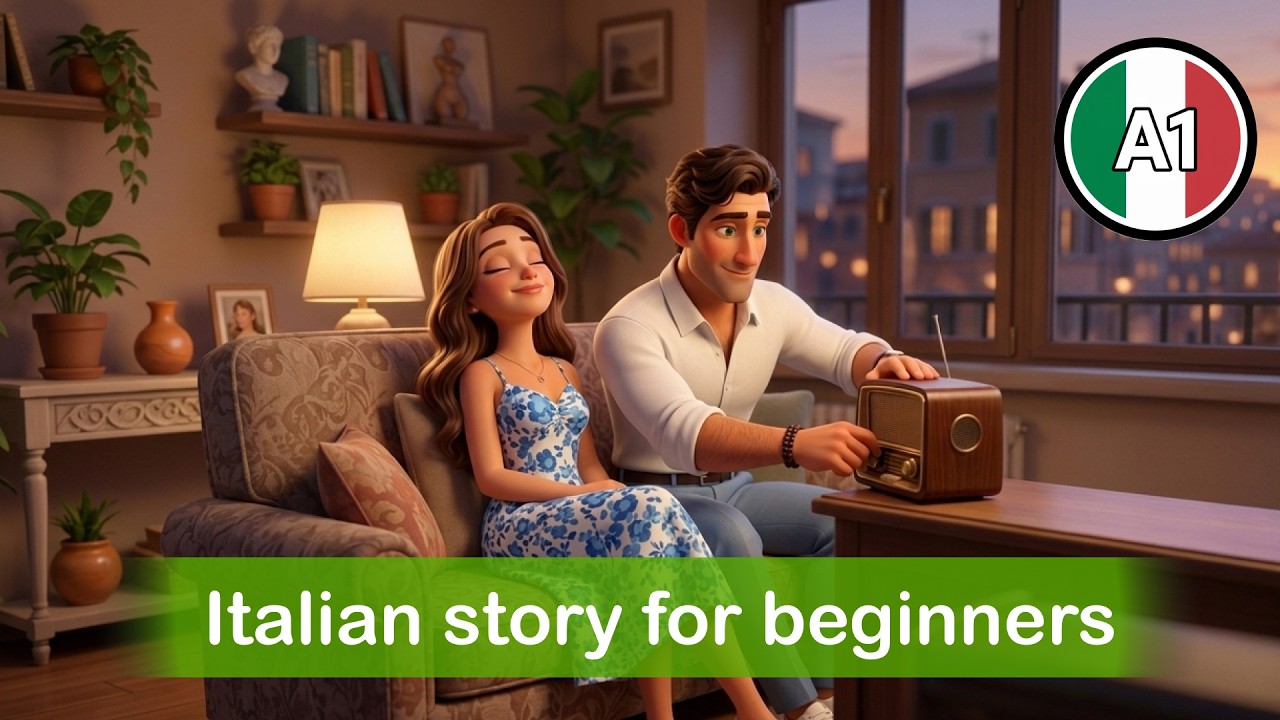
Matteo: Ciao Giulia! Sono qui, in salotto.
(Matteo: Hi Giulia! I’m here, in the living room.)
Giulia: Sento una musica. Che cos’è?
(Giulia: I hear music. What is it?)
Matteo: Sì, ascolto la musica. È una canzone nuova.
(Matteo: Yes, I’m listening to music. It’s a new song.)
Giulia: Ah, capisco. Ascolti la musica. Posso ascoltare con te?
(Giulia: Ah, I see. You’re listening to music. Can I listen with you?)
Matteo: Certo! Vieni, Giulia. Ascoltiamo insieme.
(Matteo: Of course! Come, Giulia. Let’s listen together.)
Giulia: Grazie. Che tipo di musica è?
(Giulia: Thanks. What type of music is it?)
Matteo: È musica italiana. È una canzone molto allegra.
(Matteo: It’s Italian music. It’s a very cheerful song.)
Giulia: Allegra? Sì, è vero. Mi piace. È una bella canzone.
(Giulia: Cheerful? Yes, that’s true. I like it. It’s a beautiful song.)
Matteo: Sono contento che ti piace. Anche a me piace molto.
(Matteo: I’m happy you like it. I like it a lot too.)
Giulia: Il ritmo è bello. Mi viene voglia di muovermi.
(Giulia: The rhythm is nice. It makes me feel like moving.)
Matteo: Davvero? A me viene voglia di ballare.
(Matteo: Really? It makes me feel like dancing.)
Giulia: Ballare? Qui, in salotto?
(Giulia: Dancing? Here, in the living room?)
Matteo: Sì, perché no? È una musica perfetta per ballare un po’.
(Matteo: Yes, why not? It’s perfect music for dancing a bit.)
Giulia: Non so, Matteo… io non sono una brava ballerina.
(Giulia: I don’t know, Matteo… I’m not a good dancer.)
Matteo: Non è importante. È solo per divertirsi. Un ballo semplice.
(Matteo: It’s not important. It’s just to have fun. A simple dance.)
Giulia: Un ballo semplice… va bene. Proviamo.
(Giulia: A simple dance… okay. Let’s try.)
Matteo: Fantastico! Allora, balliamo insieme?
(Matteo: Fantastic! So, shall we dance together?)
Giulia: Sì, va bene. Ma piano, ok?
(Giulia: Yes, okay. But slowly, ok?)
Matteo: Certo, molto piano. Ascoltiamo la musica e balliamo.
(Matteo: Of course, very slowly. Let’s listen to the music and dance.)
Giulia: Ok. È divertente! Questa musica è veramente allegra.
(Giulia: Ok. It’s fun! This music is really cheerful.)
Matteo: Te l’ho detto! Ballare insieme è una bella idea.
(Matteo: I told you! Dancing together is a great idea.)
Giulia: Sì, hai ragione. È un’idea molto bella. Grazie, Matteo.
(Giulia: Yes, you’re right. It’s a very nice idea. Thanks, Matteo.)
Matteo: Prego, Giulia. Che bello passare il pomeriggio così.
(Matteo: You’re welcome, Giulia. How nice to spend the afternoon like this.)
📝 Essential Vocabulary
Here are some key words and phrases from the dialogue. Listen to the pronunciation and practice saying them yourself.
| Target Language | English Translation | Pronunciation |
|---|---|---|
| Ascoltare | To listen | |
| La musica | Music | |
| Una canzone | A song | |
| Allegra | Cheerful / lively | |
| Ballare | To dance | |
| Insieme | Together | |
| Divertirsi | To have fun | |
| Il salotto | The living room |
🔍 Grammar Focus
Let’s look at two useful grammar points from the conversation.
1. Making Suggestions with -iamo
In Italian, a very common and friendly way to make a suggestion like “Let’s…” is to use the noi (we) form of the verb, which ends in -iamo. Matteo uses this multiple times to invite Giulia to join him.
- Ascoltiamo insieme. (Let’s listen together.)
- Balliamo insieme? (Shall we dance together?)
- Proviamo. (Let’s try.)
This is a simple and effective way to turn an action into a group activity or suggestion.
2. Expressing “I like it” with Mi piace
Notice how Giulia and Matteo say they like the song. In Italian, the structure is different from English. Instead of “I like…”, you say Mi piace..., which literally means “To me, it is pleasing…”.
- Giulia: Mi piace. È una bella canzone. (I like it. It’s a beautiful song.)
- Matteo: Sono contento che ti piace. (I’m happy you like it.)
- Matteo: Anche a me piace molto. (I like it a lot too.)
The verb piacere conjugates based on the thing that is liked, not the person who likes it. Since la canzone (the song) is singular, we use piace. If they were talking about multiple songs (le canzoni), they would use Mi piacciono.
🌍 Cultural Tip
godersi il momento). It’s common for music to spark impromptu moments of fun among friends and family.🃏 Flip & Learn
Review the key phrases from this lesson with these flashcards.
What are you doing?
Che cosa fai?
Let's listen together.
Ascoltiamo insieme.
I like it.
Mi piace.
It's not important.
Non è importante.
Let's try.
Proviamo.
💡 Key Takeaways
Here are the most important points to remember from this lesson:
- To suggest an activity with “Let’s…”, use the
noiform of the verb, ending in-iamo(e.g.,Ascoltiamo,Balliamo,Proviamo). - To say you like a singular item in Italian, use the phrase
Mi piace. - Vocabulary related to music and dancing is very common in everyday conversation:
musica,canzone,ballare,ritmo. - Simple phrases like
Perché no?(Why not?) andVa bene(Okay) are perfect for agreeing to spontaneous plans.
🎯 Practice Quiz
Test your knowledge of the vocabulary and grammar from the dialogue.
Question
Question
Question
✍️ Fill in the Blanks
Let’s test your spelling and memory! Fill in the missing words below. Use correct spelling.
Fill in the blank
Fill in the blank
Support Us
Did you find this lesson helpful? Your support is what makes it possible for us to keep creating free, high-quality educational content.