
Sending a Letter in Hindi: Post Office Vocabulary & Dialogue ✉️
Join Aarav and Priya on a trip to the post office in this beginner Hindi lesson. Learn essential vocabulary like 'envelope', 'stamp', and 'letter' to talk about mailing things in Hindi.
- Video 49 of 94 in this unit
- Beginner · A1 — First words, greetings, and basic phrases
- Explore — extra practice and context, on Explore and Immersion
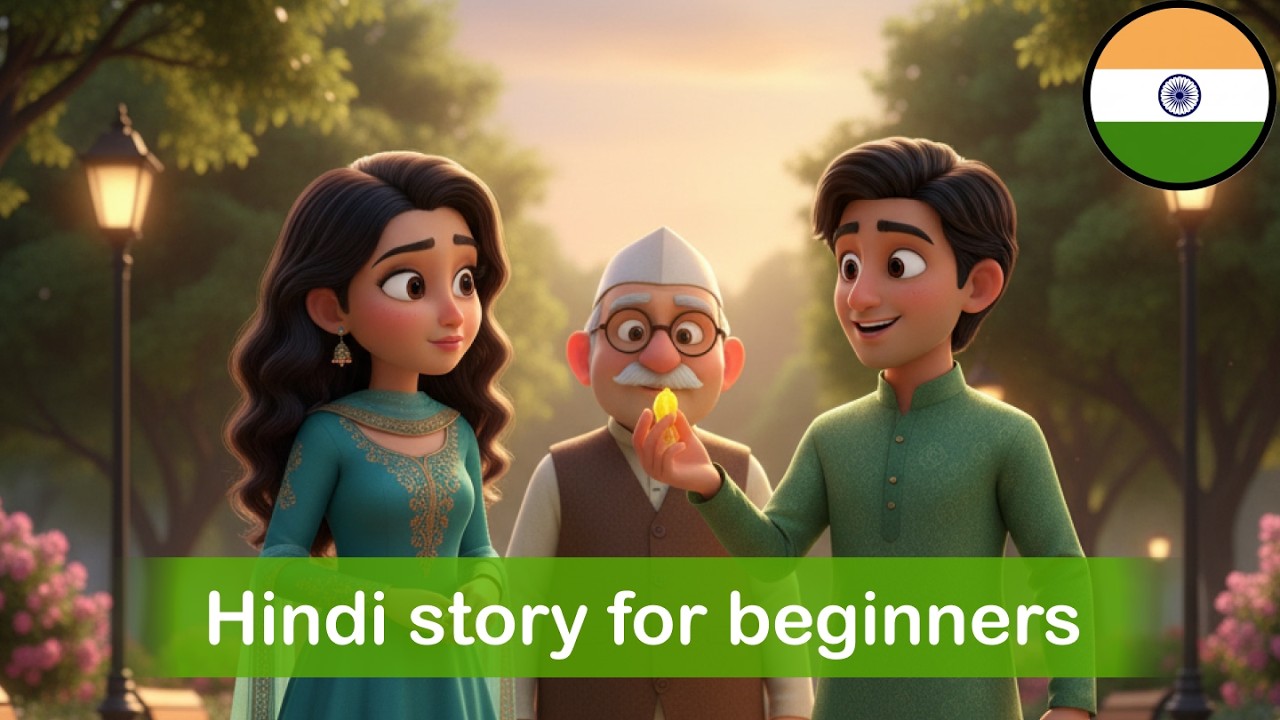
Join Aarav and Priya as they figure out how to mail a letter to Aarav’s grandfather. This simple dialogue is perfect for A1 learners to master essential vocabulary for a trip to the post office, including words like ‘stamp’, ’envelope’, and ’letter’, all while practicing basic conversational Hindi.
💬 Video Transcript
आरव: नमस्ते प्रिया।
(Aarav: Hello Priya.)
प्रिया: नमस्ते आरव। तुम कैसे हो?
(Priya: Hello Aarav. How are you?)
आरव: मैं ठीक हूँ, धन्यवाद। तुम कैसी हो?
(Aarav: I am fine, thank you. How are you?)
प्रिया: मैं भी ठीक हूँ। आरव, तुम्हारे हाथ में क्या है?
(Priya: I am also fine. Aarav, what is in your hand?)
आरव: मेरे हाथ में देखो। यह एक लिफ़ाफ़ा है।
(Aarav: Look in my hand. This is an envelope.)
प्रिया: ओह, यह एक लिफ़ाफ़ा है। यह लिफ़ाफ़ा पीला है।
(Priya: Oh, this is an envelope. This envelope is yellow.)
आरव: हाँ, यह एक पीला लिफ़ाफ़ा है। यह बहुत सुंदर है।
(Aarav: Yes, this is a yellow envelope. It is very beautiful.)
प्रिया: हाँ, यह सुंदर है। इस लिफ़ाफ़े के अंदर क्या है?
(Priya: Yes, it is beautiful. What is inside this envelope?)
आरव: इस लिफ़ाफ़े के अंदर एक चिट्ठी है।
(Aarav: Inside this envelope is a letter.)
प्रिया: एक चिट्ठी! यह चिट्ठी किसके लिए है?
(Priya: A letter! Who is this letter for?)
आरव: यह चिट्ठी मेरे दादाजी के लिए है।
(Aarav: This letter is for my grandfather.)
प्रिया: तुम्हारे दादाजी के लिए? यह तो बहुत अच्छी बात है।
(Priya: For your grandfather? That is a very good thing.)
आरव: हाँ, मैं दादाजी को चिट्ठी लिखता हूँ।
(Aarav: Yes, I write letters to my grandfather.)
प्रिया: दादाजी यह चिट्ठी पढ़कर बहुत खुश होंगे।
(Priya: Grandfather will be very happy after reading this letter.)
आरव: हाँ, वो बहुत खुश होंगे। पर एक समस्या है।
(Aarav: Yes, he will be very happy. But there is a problem.)
प्रिया: समस्या? क्या समस्या है, आरव?
(Priya: A problem? What is the problem, Aarav?)
आरव: देखो। लिफ़ाफ़े पर टिकट नहीं है।
(Aarav: Look. There is no stamp on the envelope.)
प्रिया: ओहो! टिकट नहीं है। चिट्ठी भेजने के लिए टिकट ज़रूरी है।
(Priya: Oh no! There is no stamp. A stamp is necessary to send a letter.)
आरव: हाँ, टिकट बहुत ज़रूरी है। मेरे पास टिकट नहीं है।
(Aarav: Yes, a stamp is very necessary. I don’t have a stamp.)
प्रिया: टिकट कहाँ मिलता है?
(Priya: Where can one get a stamp?)
आरव: टिकट डाकघर में मिलता है।
(Aarav: A stamp is available at the post office.)
प्रिया: हाँ, सही है। टिकट डाकघर में मिलता है।
(Priya: Yes, that’s right. A stamp is available at the post office.)
आरव: मुझे एक टिकट चाहिए। मुझे डाकघर जाना है।
(Aarav: I need a stamp. I have to go to the post office.)
प्रिया: डाकघर कहाँ है? क्या वह दूर है?
(Priya: Where is the post office? Is it far?)
आरव: नहीं, डाकघर दूर नहीं है। डाकघर पास में है।
(Aarav: No, the post office is not far. The post office is nearby.)
प्रिया: यह तो अच्छा है। चलो, हम डाकघर चलते हैं।
(Priya: That’s good. Let’s go to the post office.)
आरव: तुम मेरे साथ चलोगी?
(Aarav: Will you come with me?)
प्रिया: हाँ, मैं तुम्हारे साथ चलती हूँ। हम साथ में डाकघर चलते हैं।
(Priya: Yes, I’ll come with you. We will go to the post office together.)
आरव: धन्यवाद, प्रिया! यह बहुत अच्छा है।
(Aarav: Thank you, Priya! This is very nice.)
प्रिया: हम डाकघर से एक टिकट खरीदते हैं।
(Priya: We buy a stamp from the post office.)
आरव: हाँ, हम एक टिकट खरीदते हैं।
(Aarav: Yes, we buy a stamp.)
प्रिया: फिर तुम टिकट लिफ़ाफ़े पर लगाओ।
(Priya: Then you put the stamp on the envelope.)
आरव: हाँ, मैं टिकट लिफ़ाफ़े पर लगाता हूँ।
(Aarav: Yes, I put the stamp on the envelope.)
प्रिया: और फिर तुम चिट्ठी भेजते हो।
(Priya: And then you send the letter.)
आरव: हाँ, फिर मैं चिट्ठी भेजता हूँ।
(Aarav: Yes, then I send the letter.)
प्रिया: और चिट्ठी तुम्हारे दादाजी के पास जाती है।
(Priya: And the letter goes to your grandfather.)
आरव: हाँ, चिट्ठी मेरे दादाजी के पास जाती है।
(Aarav: Yes, the letter goes to my grandfather.)
प्रिया: यह एक बहुत अच्छा विचार है।
(Priya: This is a very good idea.)
आरव: हाँ। तुम्हारा बहुत-बहुत धन्यवाद, प्रिया।
(Aarav: Yes. Thank you very much, Priya.)
प्रिया: कोई बात नहीं, आरव। हम दोस्त हैं।
(Priya: It’s nothing, Aarav. We are friends.)
आरव: हाँ, हम अच्छे दोस्त हैं।
(Aarav: Yes, we are good friends.)
प्रिया: चलो, अब चलते हैं।
(Priya: Come on, let’s go now.)
आरव: हाँ, चलो! हम डाकघर चलते हैं।
(Aarav: Yes, let’s go! We are going to the post office.)
📝 Essential Vocabulary
Here are some of the key words and phrases you’ll hear in Aarav and Priya’s conversation. Practice them a few times to get comfortable with the pronunciation.
| Hindi | English Translation | Listen |
|---|---|---|
| लिफ़ाफ़ा | Envelope | |
| चिट्ठी | Letter | |
| टिकट | Stamp | |
| डाकघर | Post Office | |
| ज़रूरी | Necessary / Important | |
| दादाजी | Grandfather (paternal) | |
| पास में | Nearby | |
| समस्या | Problem | |
| दोस्त | Friend |
🔍 Grammar Focus
Let’s break down two simple but important grammar patterns from the dialogue.
1. Basic Sentence Structure: Subject-Object-Verb (SOV)
In English, we typically say “I write a letter” (Subject-Verb-Object). In Hindi, the verb usually comes at the end of the sentence, following a Subject-Object-Verb pattern. You can see this clearly in the dialogue.
Example 1:
मैं दादाजी को चिट्ठी लिखता हूँ।(main dādājī ko chiṭṭhī likhtā hū̃.)- Literally: I (Subject) to grandfather a letter (Object) write (Verb).
- English: I write a letter to my grandfather.
Example 2:
हम एक टिकट खरीदते हैं।(ham ek ṭikaṭ kharīdte haĩ.)- Literally: We (Subject) a stamp (Object) buy (Verb).
- English: We buy a stamp.
This SOV structure is one of the fundamental rules of Hindi grammar.
2. Asking “What?” (क्या) and “Where?” (कहाँ)
Priya asks a few key questions to help Aarav. Notice where the question words क्या (kyā - what) and कहाँ (kahā̃ - where) are placed.
Asking “What?”:
क्या(kyā)- Example:
तुम्हारे हाथ मेंक्``य``ाहै? (tumhāre hāth mẽ kyā hai?) - English: What is in your hand?
- Example:
Asking “Where?”:
कहाँ(kahā̃)- Example:
टिकटक``हा``ँमिलता है? (ṭikaṭ kahā̃ miltā hai?) - English: Where is a stamp available?
- Example:
डाकघरक``हा``ँहै? (ḍākghar kahā̃ hai?) - English: Where is the post office?
- Example:
Unlike in English, these question words don’t always come at the very beginning of the sentence. They often appear right before the verb or the part of the sentence they are questioning.
🎙 Say It Out Loud
Let’s practice speaking like Aarav and Priya! Try saying these phrases aloud to check your pronunciation (don’t worry, your voice is only processed locally in your browser and never recorded).
डाकघर Post Office डाकघर कहाँ है? Where is the post office? मुझे एक टिकट चाहिए। I need a stamp. हम एक टिकट खरीदते हैं। We buy a stamp.
चिट्ठी (letter), especially to elders like a दादाजी (grandfather), is still a deeply respected gesture in Indian culture. The Indian postal service, or डाकघर (Post Office), has one of the most widespread networks in the world, connecting even the most remote villages.🃏 Flip & Learn
Use these flashcards to test your memory on the key phrases and vocabulary from the lesson.
💡 Key Takeaways
Here are the most important points to remember from this lesson:
- Post Office Vocabulary: The essential words for mailing a letter are
लिफ़ाफ़ा(envelope),चिट्ठी(letter),टिकट(stamp), andडाकघर(post office). - Hindi Sentence Order: Remember that Hindi sentences typically follow a Subject-Object-Verb (SOV) order. The action word (verb) almost always comes last.
- Simple Questions: To ask “what,” use
क्या(kyā). To ask “where,” useकहाँ(kahā̃). - Being Helpful: The dialogue shows a great example of friendship and problem-solving, with Priya suggesting solutions like, “
चलो, हम डाकघर चलते हैं।” (Let’s go to the post office).
🎯 Practice Quiz
How much do you remember? Test your knowledge with these quick questions.
Quick check
Quick check
Quick check
✍️ Fill in the Blanks
Let’s test your spelling and memory! Fill in the missing words below. Use correct spelling.
Fill in the blank
Fill in the blank

 🎮 Bonus round

Back PandaTwin
Priya says: Every lesson you share helps someone find their way into a new language. Thank you for being part of this.


