
How to Order Food in Hindi: Cafe Dialogue & Essential Phrases ☕
Learn essential Hindi phrases for ordering food and drinks at a cafe. This slow-paced dialogue for beginners covers key vocabulary like 'samosa,' 'chai,' and how to say you're hungry and thirsty.
- Video 8 of 73 in this unit
- Beginner · A1 — First words, greetings, and basic phrases
- Explore — extra practice and context, on Explore and Immersion
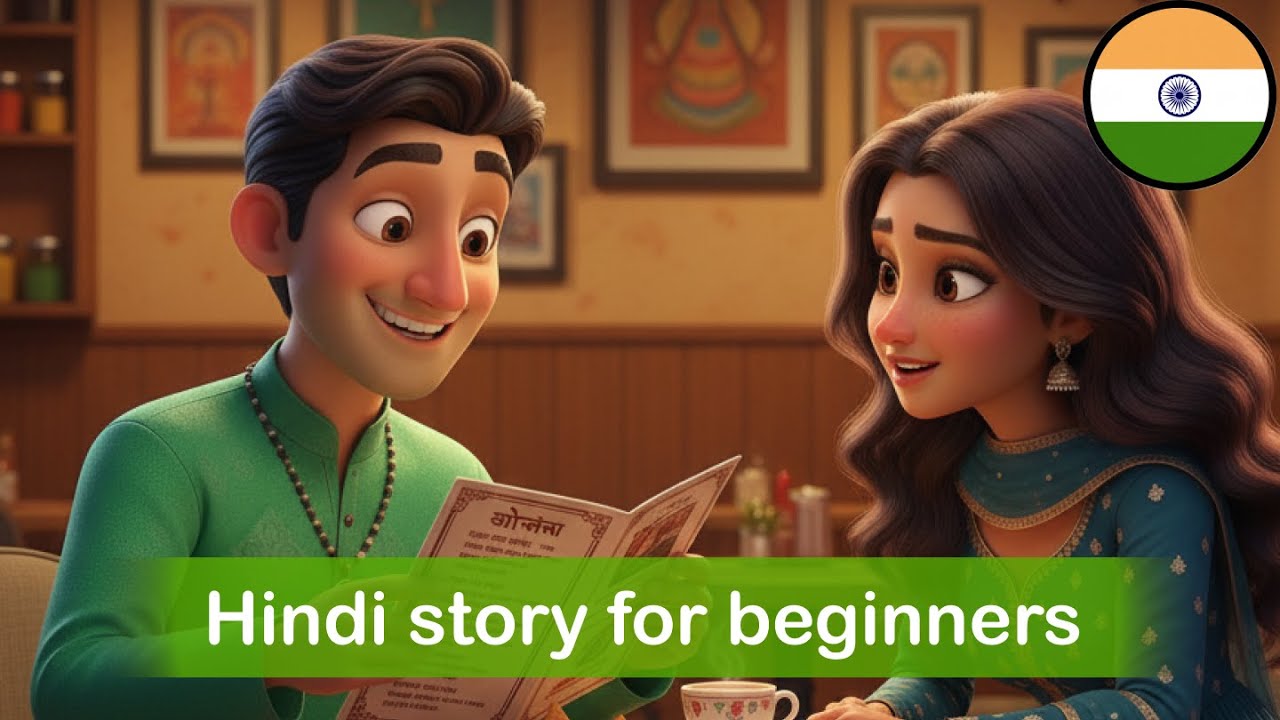
Join Aarav and Priya for a visit to a cozy cafe in this beginner Hindi lesson. You’ll learn essential phrases for ordering popular Indian snacks like samosas and chai, expressing hunger and thirst, and describing your food in this easy-to-follow conversation.
💬 Video Transcript
आरव: नमस्ते प्रिया!
(Aarav: Hello Priya!)
प्रिया: नमस्ते आरव!
(Priya: Hello Aarav!)
आरव: कैसी हो?
(Aarav: How are you?)
प्रिया: मैं ठीक हूँ। तुम कैसे हो?
(Priya: I am fine. How are you?)
आरव: मैं भी ठीक हूँ। देखो, यह एक छोटा कैफ़े है।
(Aarav: I am also fine. Look, this is a small cafe.)
प्रिया: हाँ, यह कैफ़े बहुत अच्छा है।
(Priya: Yes, this cafe is very nice.)
आरव: मुझे भूख लगी है।
(Aarav: I am hungry.)
प्रिया: मुझे भी भूख लगी है।
(Priya: I am also hungry.)
आरव: और मुझे प्यास भी लगी है।
(Aarav: And I am also thirsty.)
प्रिया: हाँ, मुझे भी प्यास लगी है।
(Priya: Yes, I am also thirsty.)
आरव: चलो, कुछ खाते हैं।
(Aarav: Let’s eat something.)
प्रिया: हाँ, चलो।
(Priya: Yes, let’s.)
आरव: देखो, यह मेन्यू है।
(Aarav: Look, this is the menu.)
प्रिया: मेन्यू में क्या-क्या है?
(Priya: What is on the menu?)
आरव: मेन्यू में समोसा है।
(Aarav: There is samosa on the menu.)
प्रिया: वाह! मुझे समोसा पसंद है।
(Priya: Wow! I like samosa.)
आरव: मेन्यू में चाय भी है।
(Aarav: There is also tea on the menu.)
प्रिया: और कॉफ़ी भी है।
(Priya: And there is coffee too.)
आरव: हाँ, चाय और कॉफ़ी, दोनों हैं।
(Aarav: Yes, tea and coffee, both are there.)
प्रिया: तुम्हें क्या चाहिए?
(Priya: What do you want?)
आरव: मुझे एक समोसा चाहिए।
(Aarav: I want one samosa.)
प्रिया: ठीक है। मुझे भी एक समोसा चाहिए।
(Priya: Okay. I also want one samosa.)
आरव: और पीने के लिए? तुम्हें चाय चाहिए या कॉफ़ी?
(Aarav: And for drinking? Do you want tea or coffee?)
प्रिया: मुझे चाय चाहिए। मुझे गरम चाय पसंद है।
(Priya: I want tea. I like hot tea.)
आरव: ठीक है। मुझे कॉफ़ी चाहिए। मुझे गरम कॉफ़ी पसंद है।
(Aarav: Okay. I want coffee. I like hot coffee.)
प्रिया: तो, दो समोसे…
(Priya: So, two samosas…)
आरव: हाँ, दो समोसे। एक मेरे लिए, एक तुम्हारे लिए।
(Aarav: Yes, two samosas. One for me, one for you.)
प्रिया: और एक चाय…
(Priya: And one tea…)
आरव: और एक कॉफ़ी।
(Aarav: And one coffee.)
प्रिया: हमारा ऑर्डर तैयार है।
(Priya: Our order is ready.)
आरव: हाँ। वाह! समोसे आ गए।
(Aarav: Yes. Wow! The samosas have arrived.)
प्रिया: मेरी चाय भी आ गई।
(Priya: My tea has also arrived.)
आरव: और मेरी कॉफ़ी भी।
(Aarav: And my coffee too.)
प्रिया: समोसा देखो। यह गरम है।
(Priya: Look at the samosa. It is hot.)
आरव: हाँ, बहुत गरम है। तुम्हारी चाय कैसी है?
(Aarav: Yes, it’s very hot. How is your tea?)
प्रिया: मेरी चाय भी गरम है।
(Priya: My tea is also hot.)
आरव: यह समोसा बहुत अच्छा है।
(Aarav: This samosa is very good.)
प्रिया: हाँ, यह समोसा बहुत स्वादिष्ट है।
(Priya: Yes, this samosa is very delicious.)
आरव: तुम्हारी चाय कैसी है?
(Aarav: How is your tea?)
प्रिया: मेरी चाय बहुत अच्छी है।
(Priya: My tea is very good.)
आरव: और मेरी कॉफ़ी? मेरी कॉफ़ी भी बहुत अच्छी है।
(Aarav: And my coffee? My coffee is also very good.)
प्रिया: यह कैफ़े सच में बहुत अच्छा है।
(Priya: This cafe is really very good.)
आरव: हाँ, खाना और पीना, सब कुछ अच्छा है।
(Aarav: Yes, the food and drink, everything is good.)
📝 Essential Vocabulary
Here are some key words and phrases from Aarav and Priya’s conversation. Listen to the pronunciation and practice them yourself.
| Hindi Word | English Translation | Listen |
|---|---|---|
| कैफ़े | Cafe | |
| भूख | Hunger | |
| प्यास | Thirst | |
| चाहिए | Want / Need | |
| समोसा | Samosa | |
| चाय | Tea | |
| कॉफ़ी | Coffee | |
| गरम | Hot | |
| स्वादिष्ट | Delicious | |
| पसंद है | To like |
🔍 Grammar Focus
Let’s look at two simple but essential grammar points from the dialogue.
1. Expressing “I want” with मुझे … चाहिए (mujhe … chāhie)
In Hindi, to say you want something, you use the structure मुझे (mujhe - to me) + the item + चाहिए (chāhie - is wanted). This is different from the English “I want”. Notice how Aarav and Priya use it to order:
मु``झे एक समोसा चाहिए``।(I want one samosa.)मु``झे चाय चाहिए``।(I want tea.)मु``झे कॉफ़ी चाहिए``।(I want coffee.)
This structure is extremely useful for shopping and ordering food.
2. Using भी (bhī) for “also” or “too”
The word भी (bhī) is used to add the meaning of “also” or “too”. It is usually placed directly after the word it modifies. You can see it used many times in the conversation:
मैं ``भी ठीक हूँ``।(I am also fine.)मु``झे भी भूख लगी है``।(I am also hungry.)मे``न्यू में चाय भी है``।(There is also tea on the menu.)मे``री चाय भी आ गई``।(My tea has also arrived.)
Pay attention to its placement to understand what is being emphasized as “also”.
🎙 Say It Out Loud
Let’s practice ordering food! Say these phrases from the dialogue out loud. Don’t worry, your voice stays right here in your browser.
कैसी हो? How are you? मुझे भूख लगी है। I am hungry. चलो, कुछ खाते हैं। Let's eat something. मुझे एक समोसा चाहिए। I want one samosa. हमारा ऑर्डर तैयार है। Our order is ready.
🃏 Flip & Learn
Practice the key phrases from the lesson with these flashcards.
💡 Key Takeaways
Here are the most important points to remember from this lesson:
- To say you are hungry, use
मु``झे भूख लगी है``।(mujhe bhūkh lagī hai). To say you’re thirsty, useमु``झे प्यास लगी है``।(mujhe pyās lagī hai). - The essential structure for ordering something is
मुझे[item]चाहिए।(mujhe [item] chāhie), which means “I want [item].” - The word
भी(bhī) means “also” or “too” and is placed after the word you want to emphasize. - You can describe food and drinks using simple adjectives like
ग``र``म(garam - hot),अ``च्छ``ा(acchā - good), andस्``वादिष्``ट(svādiṣṭ - delicious). - To ask someone what they want, you can say
तुम्हें क्या चाहिए? (tumhẽ kyā chāhie?).
🎯 Practice Quiz
Test your understanding of the dialogue with these questions.
Quick check
Quick check
Quick check
✍️ Fill in the Blanks
Let’s test your spelling and memory! Fill in the missing words below. Use correct spelling.
Fill in the blank
Fill in the blank

Back PandaTwin
Aarav here! We're building this course a lesson at a time, and your support is what keeps it moving.


