
Making a Sandwich in Hindi: Kitchen Vocabulary & Simple Dialogue 🥪
Learn essential Hindi food vocabulary and basic conversation skills by following Aarav and Priya as they make a delicious sandwich together. Perfect for A1 beginners.
- Video 42 of 77 in this unit
- Beginner · A1 — First words, greetings, and basic phrases
- Explore — extra practice and context, on Explore and Immersion
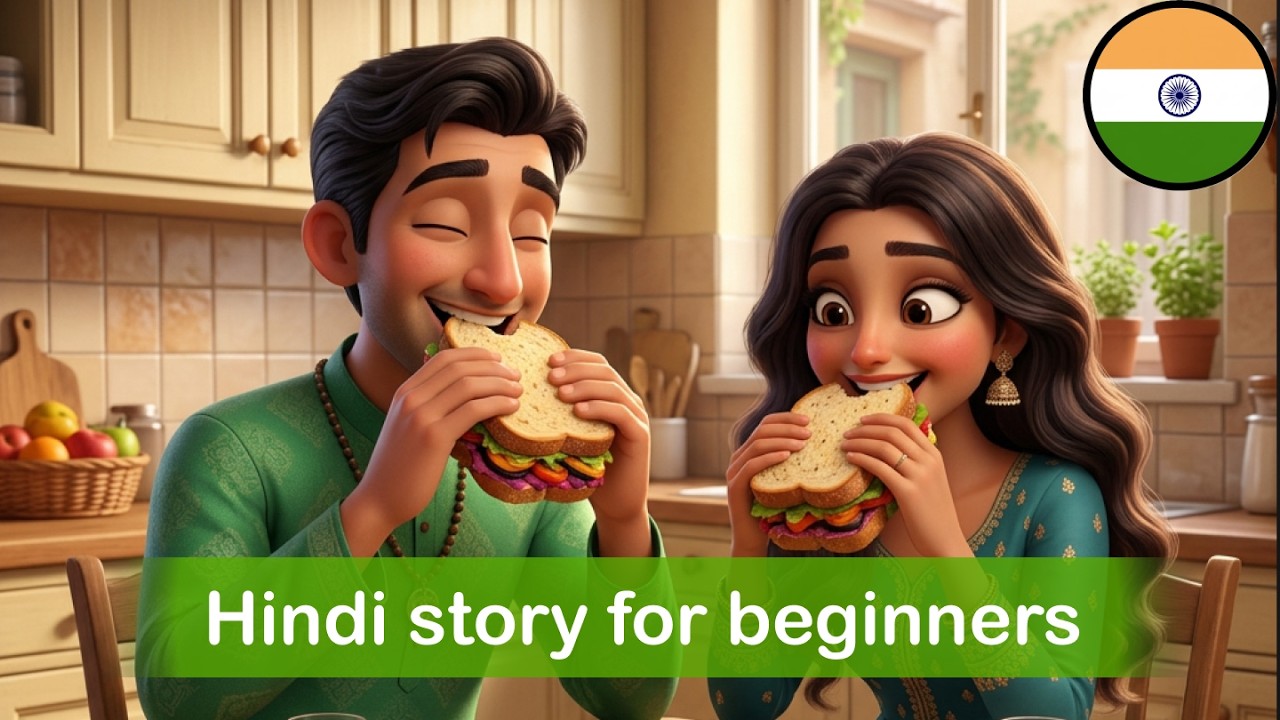
In this beginner Hindi lesson, you’ll join Aarav and Priya in the kitchen as they decide to make a sandwich. This simple, slow-paced dialogue is perfect for learning how to talk about food, express hunger, describe ingredients, and follow basic instructions in Hindi.
💬 Video Transcript
आरव: नमस्ते प्रिया! तुम कैसी हो?
(Aarav: Hello Priya! How are you?)
प्रिया: नमस्ते आरव! मैं ठीक हूँ। तुम कैसे हो?
(Priya: Hello Aarav! I am fine. How are you?)
आरव: मैं भी ठीक हूँ। पर मुझे भूख लगी है।
(Aarav: I am also fine. But I am hungry.)
प्रिया: अरे, मुझे भी बहुत भूख लगी है।
(Priya: Oh, I am also very hungry.)
आरव: हम क्या खाएँ?
(Aarav: What should we eat?)
प्रिया: चलो, सैंडविच बनाते हैं। यह आसान है।
(Priya: Let’s make a sandwich. It is easy.)
आरव: हाँ! यह बहुत अच्छा विचार है। चलो सैंडविच बनाते हैं।
(Aarav: Yes! This is a very good idea. Let’s make a sandwich.)
प्रिया: ठीक है। देखो, यह ब्रेड है।
(Priya: Okay. Look, this is bread.)
आरव: हाँ, यह सफ़ेद ब्रेड है। यह बहुत नरम है।
(Aarav: Yes, this is white bread. It is very soft.)
प्रिया: और यह मक्खन है।
(Priya: And this is butter.)
आरव: यह पीला मक्खन है। मुझे मक्खन पसंद है।
(Aarav: This is yellow butter. I like butter.)
प्रिया: मैं ब्रेड पर मक्खन लगाती हूँ।
(Priya: I am putting butter on the bread.)
आरव: तुम ब्रेड पर मक्खन लगाओ। बहुत अच्छा!
(Aarav: You put butter on the bread. Very good!)
प्रिया: अब, हमें कुछ सब्ज़ियाँ चाहिए।
(Priya: Now, we need some vegetables.)
आरव: देखो, यह एक खीरा है।
(Aarav: Look, this is a cucumber.)
प्रिया: हाँ, यह एक लंबा, हरा खीरा है।
(Priya: Yes, this is a long, green cucumber.)
आरव: मैं खीरा काटता हूँ।
(Aarav: I am cutting the cucumber.)
प्रिया: ठीक है। तुम खीरा काटो। गोल काटो।
(Priya: Okay. You cut the cucumber. Cut it in round slices.)
आरव: यह देखो। खीरा कट गया।
(Aarav: Look at this. The cucumber is cut.)
प्रिया: बहुत अच्छे, आरव। अब टमाटर।
(Priya: Very good, Aarav. Now the tomato.)
आरव: यह एक टमाटर है। यह बड़ा, लाल टमाटर है।
(Aarav: This is a tomato. This is a big, red tomato.)
प्रिया: मैं टमाटर काटती हूँ। मैं भी गोल काटती हूँ।
(Priya: I am cutting the tomato. I am also cutting it in round slices.)
आरव: ठीक है। तुम टमाटर काटो।
(Aarav: Okay. You cut the tomato.)
प्रिया: यह देखो। टमाटर भी कट गया।
(Priya: Look at this. The tomato is also cut.)
आरव: अब क्या करें?
(Aarav: What should we do now?)
प्रिया: अब हम सैंडविच बनाते हैं।
(Priya: Now we make the sandwich.)
आरव: बहुत अच्छा! कैसे?
(Aarav: Very good! How?)
प्रिया: पहले, ब्रेड पर खीरा रखो।
(Priya: First, put the cucumber on the bread.)
आरव: ठीक है। मैं ब्रेड पर खीरा रखता हूँ।
(Aarav: Okay. I am putting the cucumber on the bread.)
प्रिया: अब, ब्रेड पर टमाटर रखो।
(Priya: Now, put the tomato on the bread.)
आरव: मैं ब्रेड पर टमाटर रखता हूँ।
(Aarav: I am putting the tomato on the bread.)
प्रिया: बहुत बढ़िया। अब दूसरी ब्रेड ऊपर रखो।
(Priya: Excellent. Now put the other bread on top.)
आरव: यह लो। मैंने दूसरी ब्रेड रख दी।
(Aarav: Here you go. I have put the other bread.)
प्रिया: देखो! हमारा सैंडविच तैयार है।
(Priya: Look! Our sandwich is ready.)
आरव: वाह! यह बहुत अच्छा लग रहा है।
(Aarav: Wow! It looks very good.)
प्रिया: हाँ, यह बहुत सुंदर है। चलो, खाते हैं।
(Priya: Yes, it is very beautiful. Let’s eat.)
आरव: चलो, खाते हैं।
(Aarav: Let’s eat.)
प्रिया: हम्म… यह सैंडविच बहुत स्वादिष्ट है।
(Priya: Mmm… this sandwich is very delicious.)
आरव: हाँ, यह सच में बहुत स्वादिष्ट है। धन्यवाद, प्रिया।
(Aarav: Yes, it is really very delicious. Thank you, Priya.)
प्रिया: धन्यवाद, आरव।
(Priya: Thank you, Aarav.)
📝 Essential Vocabulary
Here are some of the key words and phrases you’ll hear in the video. Listen and repeat to practice your pronunciation.
| Target Language | English Translation | Listen |
|---|---|---|
| भूख | Hunger | |
| सैंडविच | Sandwich | |
| बनाना | To make | |
| विचार | Idea | |
| ब्रेड | Bread | |
| मक्खन | Butter | |
| सब्ज़ियाँ | Vegetables | |
| खीरा | Cucumber | |
| टमाटर | Tomato | |
| स्वादिष्ट | Delicious |
🔍 Grammar Focus
This dialogue showcases two fundamental concepts in Hindi: present tense verb endings and simple commands.
1. Simple Present Tense: -ता (tā) and -ती (tī)
In Hindi, the ending of a present tense verb changes based on the gender of the person performing the action. Notice how Aarav (masculine) and Priya (feminine) talk about what they are doing.
- When the speaker is masculine, the verb stem ends in -
ता हूँ(tā hū̃). - When the speaker is feminine, the verb stem ends in -
ती हूँ(tī hū̃).
Examples from the script:
- Aarav (masculine):
मैं खीरा काटता हूँ। (I am cutting the cucumber.) - Priya (feminine):
मैं टमाटर काटती हूँ। (I am cutting the tomato.) - Aarav (masculine):
मैं ब्रेड पर टमाटर रखता हूँ। (I am putting the tomato on the bread.) - Priya (feminine):
मैं ब्रेड पर मक्खन लगाती हूँ। (I am putting butter on the bread.)
2. Informal Commands (Imperatives)
When giving a friendly command or instruction to someone you use “तुम” (tum) with, you change the verb ending. To do this, you take the root of the verb and add the suffix -ओ (-o).
Examples from the script:
- Priya tells Aarav:
तुम खीरा काटो। (You cut the cucumber.)- The verb root is
काट(kāṭ - to cut).
- The verb root is
- Aarav tells Priya:
तुम ब्रेड पर मक्खन लगाओ। (You put butter on the bread.)- The verb root is
लगा(lagā - to apply/put).
- The verb root is
- Priya tells Aarav: …
ब्रेड पर टमाटर रखो। (…put the tomato on the bread.)- The verb root is
रख(rakh - to put/place).
- The verb root is
🎙 Say It Out Loud
Now that you’ve seen the vocabulary and grammar in action, let’s practice speaking. Try saying these phrases from the lesson aloud. Your voice is not recorded and stays in your browser.
मुझे भूख लगी है। I am hungry. चलो, सैंडविच बनाते हैं। Let's make a sandwich. मैं ब्रेड पर टमाटर रखता हूँ। I am putting the tomato on the bread. यह सैंडविच बहुत स्वादिष्ट है। This sandwich is very delicious.
🃏 Flip & Learn
Use these flashcards to test your memory on key phrases from the dialogue.
💡 Key Takeaways
Here are the most important points to remember from this lesson:
- Expressing Hunger: To say you are hungry, use the phrase
मुझे भूख लगी है।(mujhe bhūkh lagī hai). - Food Vocabulary: You learned essential words for making a snack:
ब्रेड(bread),मक्खन(butter),खीरा(cucumber), andटमाटर(tomato). - Gendered Verbs: Remember that present tense verbs for “I” change based on your gender. Use
-ता हूँif you are male (e.g.,मैं काटता हूँ) and-ती हूँif you are female (e.g.,मैं काटती हूँ). - Simple Commands: To give a friendly instruction, add
-ओto the verb stem, likeकाटो(cut!) orरखो(put!).
🎯 Practice Quiz
Check your understanding with these questions based on the lesson.
Quick check
Quick check
Quick check
✍️ Fill in the Blanks
Let’s test your spelling and memory! Fill in the missing words below. Use correct spelling.
Fill in the blank
Fill in the blank

 🎮 Bonus round

Back PandaTwin
Aarav says: Every lesson you share helps someone find their way into a new language. Thank you for being part of this.


