
Talking About Sports in Hindi: Cricket Dialogue & Vocabulary 🏏
Learn beginner Hindi with a slow, easy-to-follow dialogue about two friends, Aarav and Priya, playing cricket. Master basic greetings, questions, and sports vocabulary.
- Video 8 of 71 in this unit
- Beginner · A1 — First words, greetings, and basic phrases
- Explore — extra practice and context, on Explore and Immersion
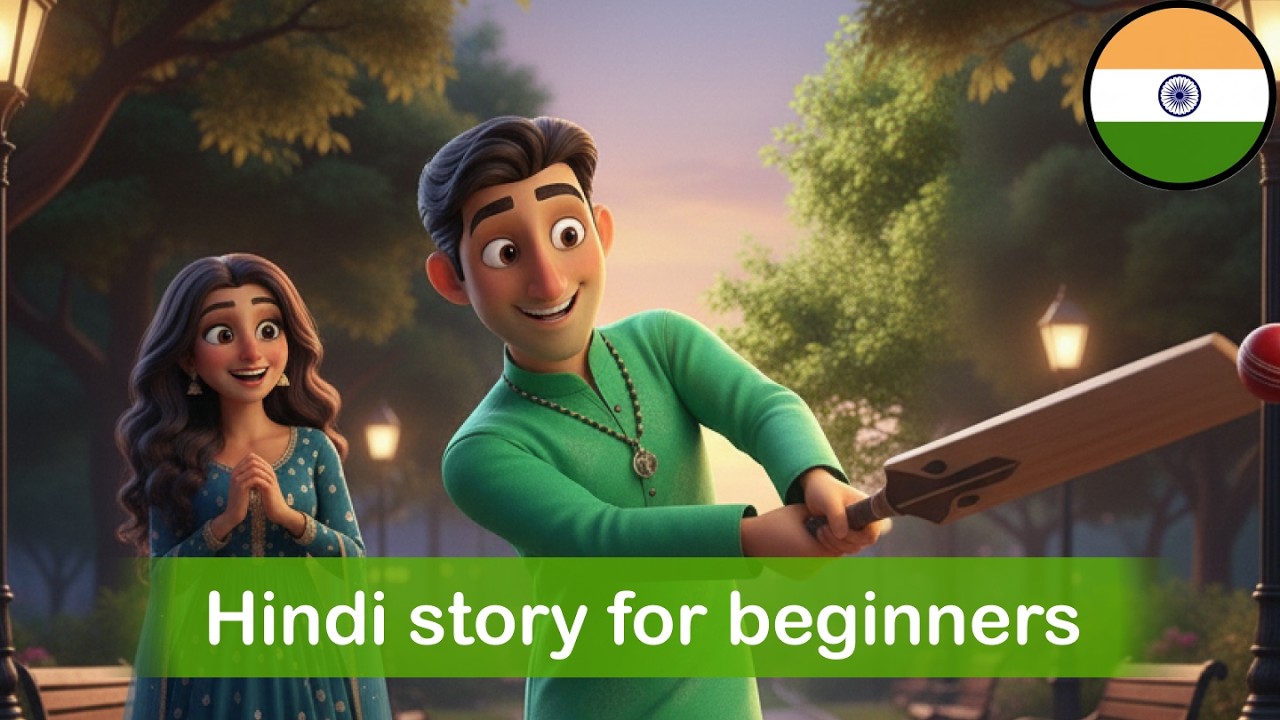
In this slow Hindi listening practice for A1 beginners, you’ll join two friends, Aarav and Priya, as they meet up to play cricket. You will learn essential vocabulary for sports, how to ask and answer simple questions, and how to describe objects using basic adjectives.
💬 Video Transcript
आरव: नमस्ते प्रिया!
(Aarav: Hello Priya!)
प्रिया: नमस्ते आरव! तुम कैसे हो?
(Priya: Hello Aarav! How are you?)
आरव: मैं ठीक हूँ। तुम कैसी हो?
(Aarav: I am fine. How are you?)
प्रिया: मैं भी ठीक हूँ। आरव, तुम्हारे हाथ में क्या है?
(Priya: I am also fine. Aarav, what is in your hand?)
आरव: देखो। यह मेरा बल्ला है।
(Aarav: Look. This is my bat.)
प्रिया: वाह! यह एक बल्ला है। यह बड़ा है।
(Priya: Wow! This is a bat. It is big.)
आरव: हाँ, यह बड़ा बल्ला है। और यह मेरी गेंद है।
(Aarav: Yes, this is a big bat. And this is my ball.)
प्रिया: तुम्हारी गेंद लाल है। यह बहुत अच्छी है।
(Priya: Your ball is red. It is very good.)
आरव: धन्यवाद। क्या तुम क्रिकेट खेलती हो?
(Aarav: Thank you. Do you play cricket?)
प्रिया: हाँ, मैं खेलती हूँ। मुझे क्रिकेट पसंद है।
(Priya: Yes, I play. I like cricket.)
आरव: बहुत अच्छा! चलो क्रिकेट खेलते हैं।
(Aarav: Very good! Let’s play cricket.)
प्रिया: हाँ, चलो खेलते हैं! यह बहुत मज़ेदार है।
(Priya: Yes, let’s play! It is very fun.)
आरव: ठीक है। पहले मैं बैटिंग करता हूँ।
(Aarav: Okay. First I will bat.)
प्रिया: और मैं बॉलिंग करती हूँ।
(Priya: And I will bowl.)
आरव: हाँ। तुम बॉलिंग करो। मैं बैटिंग के लिए तैयार हूँ।
(Aarav: Yes. You bowl. I am ready for batting.)
प्रिया: ठीक है, आरव। यह लो गेंद!
(Priya: Okay, Aarav. Here, take the ball!)
आरव: मैंने गेंद को मारा! देखो, गेंद दूर गई।
(Aarav: I hit the ball! Look, the ball went far.)
प्रिया: वाह! तुमने बहुत अच्छा मारा।
(Priya: Wow! You hit it very well.)
आरव: धन्यवाद। एक बार और खेलते हैं।
(Aarav: Thank you. Let’s play one more time.)
प्रिया: ठीक है। मैं फिर से गेंद फेंकती हूँ।
(Priya: Okay. I will throw the ball again.)
आरव: मैं तैयार हूँ।
(Aarav: I am ready.)
प्रिया: यह लो दूसरी गेंद!
(Priya: Here, take the second ball!)
आरव: मैंने इसे भी मारा!
(Aarav: I hit this one too!)
प्रिया: तुम बहुत अच्छा खेलते हो, आरव।
(Priya: You play very well, Aarav.)
आरव: शुक्रिया, प्रिया। अब तुम्हारी बारी है।
(Aarav: Thank you, Priya. Now it is your turn.)
प्रिया: मेरी बारी? ठीक है! मुझे बल्ला दो।
(Priya: My turn? Okay! Give me the bat.)
आरव: यह लो बल्ला। अब तुम बैटिंग करो।
(Aarav: Here, take the bat. Now you bat.)
प्रिया: और तुम बॉलिंग करो।
(Priya: And you bowl.)
आरव: हाँ, मैं बॉलिंग करता हूँ। तुम तैयार हो?
(Aarav: Yes, I am bowling. Are you ready?)
प्रिया: हाँ! मैं पूरी तरह तैयार हूँ।
(Priya: Yes! I am completely ready.)
आरव: ठीक है। यह देखो गेंद!
(Aarav: Okay. Look at this ball!)
प्रिया: मैंने मारा! मैंने गेंद को बल्ले से मारा!
(Priya: I hit it! I hit the ball with the bat!)
आरव: अरे वाह! प्रिया, तुमने भी बहुत अच्छा मारा!
(Aarav: Oh wow! Priya, you also hit it very well!)
प्रिया: धन्यवाद! क्रिकेट खेलना बहुत मज़ेदार है।
(Priya: Thank you! Playing cricket is very fun.)
आरव: हाँ, बहुत मज़ेदार है। हम एक अच्छी टीम हैं।
(Aarav: Yes, it is very fun. We are a good team.)
प्रिया: हाँ, हम बहुत अच्छी टीम हैं।
(Priya: Yes, we are a very good team.)
आरव: हम कल फिर खेलेंगे?
(Aarav: Will we play again tomorrow?)
प्रिया: हाँ, ज़रूर। हम कल फिर खेलेंगे।
(Priya: Yes, of course. We will play again tomorrow.)
आरव: ठीक है। अब शाम हो गई है।
(Aarav: Okay. It is evening now.)
प्रिया: हाँ, मैं अब घर जाती हूँ।
(Priya: Yes, I am going home now.)
आरव: ठीक है। अलविदा, प्रिया।
(Aarav: Okay. Goodbye, Priya.)
प्रिया: अलविदा, आरव।
(Priya: Goodbye, Aarav.)
📝 Essential Vocabulary
Here are some key words and phrases from the video. Listen and repeat to practice your pronunciation.
| Target Language | English Translation | Listen |
|---|---|---|
| बल्ला | Bat | |
| गेंद | Ball | |
| खेलना | To play | |
| पसंद है | To like | |
| बड़ा | Big | |
| लाल | Red | |
| मज़ेदार | Fun | |
| तुम्हारी बारी है | It’s your turn |
🎙 Say It Out Loud
Time to practice your pronunciation! Read these sentences from the dialogue aloud. Your browser will listen and give you feedback, but nothing is recorded.
मैं तैयार हूँ। I am ready. यह मेरा बल्ला है। This is my bat. मुझे क्रिकेट पसंद है। I like cricket. अब तुम्हारी बारी है। Now it is your turn. चलो क्रिकेट खेलते हैं। Let's play cricket.
🔍 Grammar Focus
Let’s look at two important grammar points from Aarav and Priya’s conversation.
1. Possessive Adjectives: मेरा (merā) and मेरी (merī)
In Hindi, the word for “my” changes depending on the gender of the noun it describes. You’ll use मेरा (merā) for masculine nouns and मेरी (merī) for feminine nouns.
In the dialogue, Aarav says:
यहमे``र``ाबल्ला है।(Yeh merā ballā hai.) - This is my bat.- He uses
मेराbecauseब``ल्ल``ा(bat) is a masculine noun.
- He uses
यहमे``र``ीगेंद है।(Yeh merī gend hai.) - And this is my ball.- He uses
मेरीbecauseगेंद(ball) is a feminine noun.
- He uses
Remember to match the possessive adjective to the gender of the object you are talking about!
2. Asking Yes/No Questions with क्या (Kyā)
The word क्या (kyā) is very versatile. It can mean “what,” but when you place it at the beginning of a sentence, it turns the sentence into a yes/no question. The word order of the rest of the sentence doesn’t change.
Notice how Aarav asks Priya if she plays cricket:
क्यातुम क्रिकेट खेलती हो? (Kyā tum cricket kheltī ho?) - Do you play cricket?
To answer, Priya simply starts with “yes” or “no”:
हाँ,मैं खेलती हूँ।(Hā̃, ma͠i kheltī hū̃.) - Yes, I play.
This is a very common and easy way to form questions in Hindi.
क्रिकेट) is more than just a sport; it’s a national passion that unites people from all walks of life. You’ll find children playing it in neighborhood parks and streets, just like Aarav and Priya. Knowing a little about cricket is a great way to start a conversation and connect with people.🃏 Flip & Learn
Review what you’ve learned with these flashcards.
💡 Key Takeaways
Here are the most important points to remember from this lesson:
- Basic Greetings: You can greet someone with
नमस्तेand ask how they are withतुम कैसे हो?(to a male) orतुम कैसी हो?(to a female). - Essential Sports Vocabulary: You learned the words for bat (
बल्ला), ball (गेंद), and to play (खेलना). - Using Possessives: The word for “my” changes based on the noun’s gender:
मेराfor masculine nouns (मेरा बल्ला) andमेरीfor feminine nouns (मेरी गेंद). - Forming Questions: To ask a simple yes/no question, just add
क्याto the beginning of a statement. - Making Suggestions: Use
चलो(chalo) to mean “let’s,” as inचलो खेलते हैं(Let’s play).
🎯 Practice Quiz
Test your knowledge of the vocabulary and grammar from this dialogue.
Quick check
Quick check
Quick check
✍️ Fill in the Blanks
Let’s test your spelling and memory! Fill in the missing words below. Use correct spelling.
Fill in the blank
Fill in the blank

Back PandaTwin
Priya here! We're building this course a lesson at a time, and your support is what keeps it moving.


