
Taking a Train Trip in Hindi: Beginner Dialogue & Travel Vocabulary 🚂
Join Aarav at the train station in this A1 Hindi dialogue. Learn essential travel vocabulary, how to describe objects, and ask simple questions about possessions.
- Video 8 of 64 in this unit
- Beginner · A1 — First words, greetings, and basic phrases
- Explore — extra practice and context, on Explore and Immersion
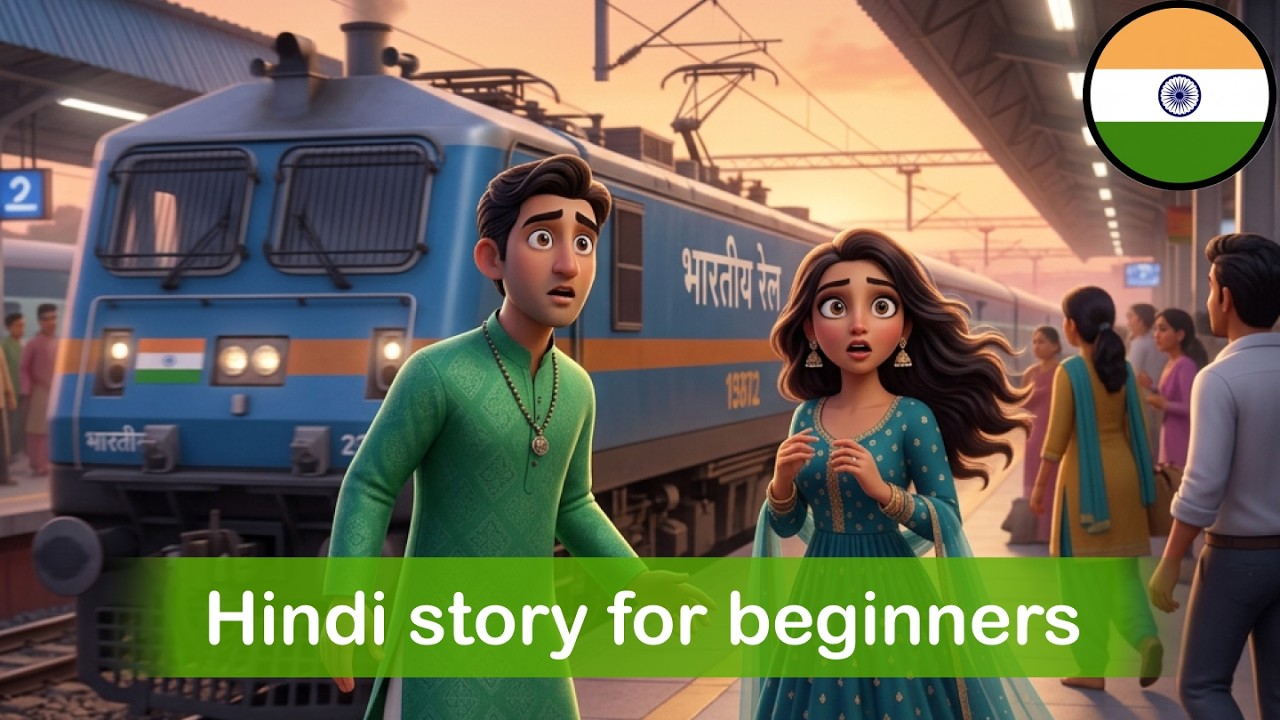
Join Aarav and Priya for a simple conversation at the train station. This beginner Hindi lesson will teach you how to talk about your travel plans, describe objects like a train or a bag, and ask and answer questions about what you have with you.
💬 Video Transcript
प्रिया: नमस्ते, आरव!
(Priya: Hello, Aarav!)
आरव: नमस्ते, प्रिया!
(Aarav: Hello, Priya!)
प्रिया: तुम यहाँ क्या कर रहे हो?
(Priya: What are you doing here?)
आरव: मैं गाँव जा रहा हूँ।
(Aarav: I am going to the village.)
प्रिया: अरे वाह! तुम गाँव जा रहे हो?
(Priya: Oh, wow! You are going to the village?)
आरव: हाँ, मैं अपने दादा के पास जा रहा हूँ।
(Aarav: Yes, I am going to my grandfather’s place.)
प्रिया: यह बहुत अच्छी बात है। तुम्हारी ट्रेन कहाँ है?
(Priya: That’s very good. Where is your train?)
आरव: मेरी ट्रेन वहाँ है। देखो, वह नीली ट्रेन।
(Aarav: My train is there. Look, that blue train.)
प्रिया: हाँ, मैंने देखी। ट्रेन बहुत बड़ी है।
(Priya: Yes, I saw it. The train is very big.)
आरव: हाँ, यह ट्रेन बहुत बड़ी और बहुत लंबी है।
(Aarav: Yes, this train is very big and very long.)
प्रिया: तुम्हारे पास टिकट है?
(Priya: Do you have a ticket?)
आरव: हाँ, मेरे पास टिकट है। देखो, यह मेरा टिकट है।
(Aarav: Yes, I have a ticket. Look, this is my ticket.)
प्रिया: बहुत अच्छा। और तुम्हारा बैग कहाँ है?
(Priya: Very good. And where is your bag?)
आरव: यह मेरा बैग है। यह एक छोटा बैग है।
(Aarav: This is my bag. It is a small bag.)
प्रिया: तुम्हारे बैग में क्या है?
(Priya: What is in your bag?)
आरव: मेरे बैग में मेरे कपड़े हैं।
(Aarav: I have my clothes in my bag.)
प्रिया: सिर्फ़ कपड़े हैं?
(Priya: Only clothes?)
आरव: नहीं, मेरे बैग में एक किताब भी है।
(Aarav: No, I also have a book in my bag.)
प्रिया: एक किताब? बहुत अच्छा।
(Priya: A book? Very good.)
आरव: हाँ, मुझे किताब पढ़ना पसंद है।
(Aarav: Yes, I like to read books.)
प्रिया: तुम्हारे पास पानी की बोतल है?
(Priya: Do you have a water bottle?)
आरव: हाँ, मेरे पास पानी की बोतल भी है। देखो।
(Aarav: Yes, I also have a water bottle. Look.)
प्रिया: बहुत बढ़िया, आरव। तुम्हारी यात्रा अच्छी हो।
(Priya: Excellent, Aarav. Have a good journey.)
आरव: धन्यवाद, प्रिया। ओ! ट्रेन चल रही है।
(Aarav: Thank you, Priya. Oh! The train is moving.)
प्रिया: हाँ, ट्रेन चल रही है। तुम जल्दी जाओ।
(Priya: Yes, the train is moving. You go quickly.)
आरव: ठीक है। मैं जा रहा हूँ। अलविदा, प्रिया!
(Aarav: Okay. I am going. Goodbye, Priya!)
प्रिया: अलविदा, आरव! फिर मिलेंगे।
(Priya: Goodbye, Aarav! We’ll meet again.)
आरव: हाँ, फिर मिलेंगे!
(Aarav: Yes, we’ll meet again!)
📝 Essential Vocabulary
Here are some key words and phrases from Aarav’s conversation that are essential for talking about travel.
| Target Language | English Translation | Listen |
|---|---|---|
| गाँव | Village | |
| ट्रेन | Train | |
| टिकट | Ticket | |
| बैग | Bag | |
| किताब | Book | |
| पानी की बोतल | Water bottle | |
| बड़ा / बड़ी | Big | |
| छोटा | Small | |
| लंबा / लंबी | Long | |
| यात्रा | Journey / Trip |
🔍 Grammar Focus
This dialogue is full of useful grammar for beginners. Let’s look at how to describe things using simple adjectives.
Describing Nouns with Adjectives
In Hindi, adjectives (words that describe nouns) usually come before the noun they are describing. They also change their form to “agree” with the gender of the noun.
Nouns in Hindi have a grammatical gender, either masculine or feminine. Let’s see some examples from the script:
1. Masculine Nouns
The word बैग (baig) is masculine. Notice the adjective used to describe it:
छो``ट``ाबैग(chhoṭā baig) - a small bag
Adjectives describing masculine nouns often end in -आ (-ā).
2. Feminine Nouns
The word ट्``रे``न (ṭren) is feminine. Look at the adjectives used to describe it:
वहनी``ल``ीट्रेन(vah nīlī ṭren) - that blue trainट्रेन बहुतब``ड़``ीहै।(ṭren bahut baṛī hai) - The train is very big.यह ट्रेन बहुतलं``ब``ीहै।(yah ṭren bahut lambī hai) - This train is very long.
Adjectives describing feminine nouns often change their ending to -ई (-ī).
So, बड़ा (baṛā) becomes बड़ी (baṛī), लंबा (lambā) becomes लंबी (lambī), and नीला (nīlā) becomes नीली (nīlī) when describing a feminine noun like ’train'.
🎙 Say It Aloud
Practice speaking these key phrases from the dialogue. Your voice stays on your device and isn’t recorded anywhere.
बहुत अच्छा। Very good. मैं गाँव जा रहा हूँ। I am going to the village. तुम्हारे पास टिकट है? Do you have a ticket? तुम्हारे बैग में क्या है? What is in your bag? तुम्हारी यात्रा अच्छी हो। Have a good journey.
🃏 Flip & Learn
Practice the key phrases from the dialogue with these interactive flashcards.
💡 Key Takeaways
Here are the most important points to remember from this lesson:
- To say where you are going, use the pattern:
मैं[place]जा रहा हूँ।(I am going to [place]). - To say you possess something, use:
मेरे पास[item]है।(I have [item]). - Adjectives usually come before the noun and must agree with its gender (e.g.,
छो``ट``ाबैगbutब``ड़``ीट्रेन). - Essential travel vocabulary includes
ट्``रे``न(train),टि``क``ट(ticket), andबैग(bag). - Useful phrases for parting are
अ``लविद``ा(Goodbye) andफि``र मिलेंग``े(See you again).
🎯 Practice Quiz
Test your knowledge of the vocabulary and grammar from the video.
Quick check
Quick check
Quick check
✍️ Fill in the Blanks
Let’s test your spelling and memory! Fill in the missing words below. Use correct spelling.
Fill in the blank
Fill in the blank

Back PandaTwin
Your support pays for new lessons, original art, and audio across every course.


